
Germany's Tomahawk Purchase 2026 Fills a Gap and Confirms America's License Power
 Dr. Klaus Weber
Germany's Tomahawk Purchase 2026 Closes a Gap and Confirms America's License Power
Germany intends to purchase Tomahawk cruise missiles and ground-based Typhoon launch systems from the United States. This news sounds like a quick response to a specific military gap. In reality, it describes a larger European problem: Berlin can close a range gap, but it does not acquire strategic sovereignty with this purchase. It buys time, American approvals, and a piece of deterrence, the political availability of which continues to be decided in Washington.
The Purchase Replaces an American Stationing with German Dependence
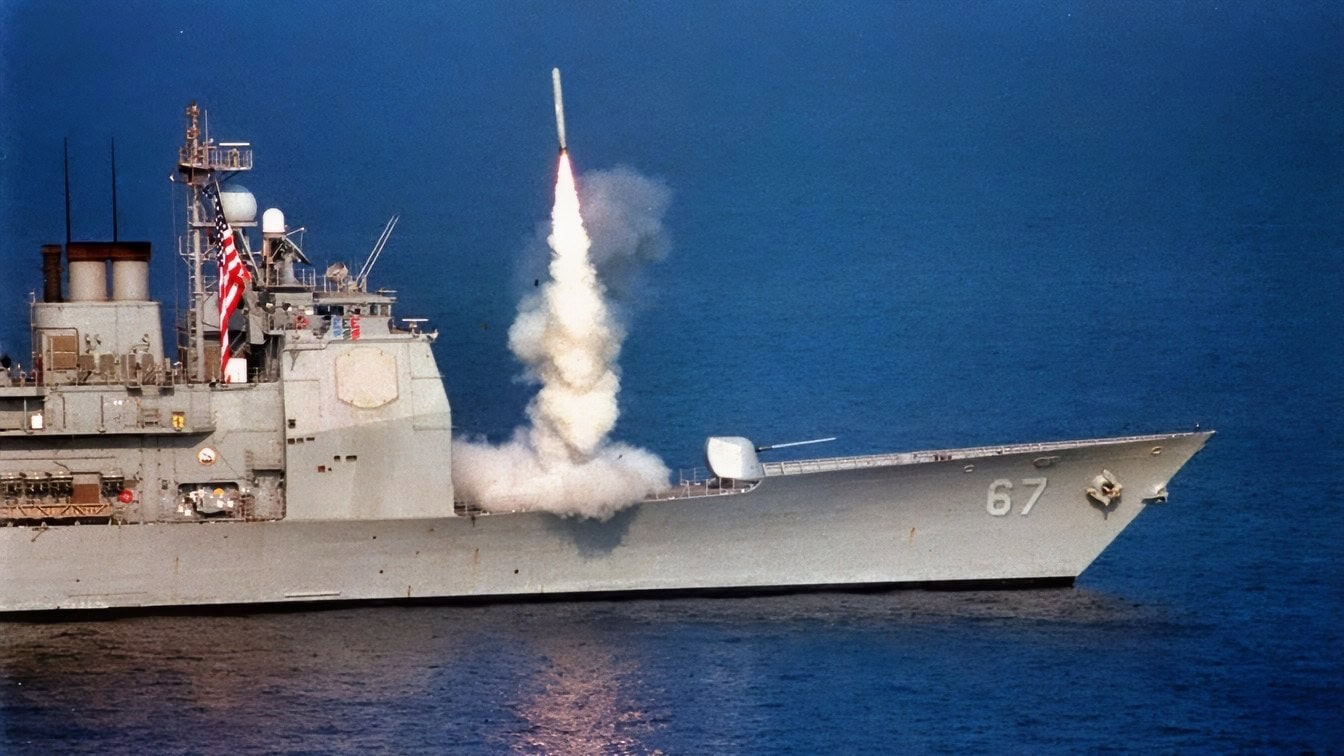
Chancellor Friedrich Merz said on Thursday before lawmakers that he had reached an agreement with the US government on the sidelines of the NATO summit in Ankara. According to German government sources, Washington is expected to approve the procurement of Tomahawk missiles and Typhoon launch systems in August. The quantities remain classified. Politically, the step is clear enough: a planned US stationing on German soil is now a German purchase of American systems.
This is more than a technical procurement decision. The Biden administration had planned to temporarily station a US unit with Typhoon systems, Tomahawk, and SM-6 in Germany in 2024. This solution was intended to serve as a bridge until European systems became available. When the Trump administration hinted at a reduction of the US presence in Germany in May 2026, that very bridge was torn down. Boris Pistorius then spoke of a capability gap. Merz is now closing it not through European production, but through the national acquisition of the same American instruments.
Tomahawk Highlights the Range Issue More Brutally than Taurus
The military logic is understandable. The German Taurus has a range of about 500 kilometers. A Tomahawk can cover several times that range, depending on the version. For deterrence on NATO's eastern flank, this is not a detail. Those who want to threaten Russian command, logistics, and air defense structures deep in the operational area need systems beyond the classic tactical range. Ukraine has shown since 2022 that precision strikes against supply lines, airfields, and command nodes can influence the course of the war, even if they do not decide it alone.
But precisely for this reason, the institutional question is so important. Germany cannot seriously claim to create European autonomy in the short term with Tomahawk. The system is American, the export approval is American, and central software and maintenance issues remain American in nature. In a crisis, it matters not only whether a missile is in the depot. It matters who supplies spare parts, who approves upgrades, who technically supports operational profiles, and what political conditions are attached to re-procurement and integration.
ATACMS Production in Unterluess is Progress, but No Full Technological Control
At the same time, Lockheed Martin and Rheinmetall signed an agreement at the NATO Defence Industry Forum to produce ATACMS in Unterluess. Defense News reports that it would be the first production site outside the United States. Rheinmetall points to the expansion of the site, a new artillery ammunition factory, and a rocket engine production that is expected to deliver components starting in 2027. A European and Ukrainian demand of 600 to 800 ATACMS per year is mentioned.
This is industrially significant. It creates capacity in Europe and relieves a US line that is increasingly focused on the Precision Strike Missile successor. Yet, the crucial sentence lies in the fine print: The step depends on US government approvals because technology transfer and joint ventures require Washington's consent. Europe will thus gain production space, but not automatically technology ownership. This is better than pure import dependence, but worse than autonomous system leadership.
The British $50 Billion Initiative Can Coordinate, but Not Work Magic
Britain is trying to politically bundle the same deficiency at the NATO level. London announced in Ankara an initiative of around $50 billion over ten years for Deep Precision Strike. Twelve European partners are to finance capabilities that can hit targets from 300 kilometers and, in some cases, beyond 2,000 kilometers. This includes the German-British Trinity House program for stealth and hypersonic weapons, Stratus as a Storm Shadow successor with France and Italy, as well as the British entry into the US-Australian Precision Strike Missile program.
NATO itself announced on July 7 a multinational Ground-Based Precision Strike Capabilities High Visibility Project with Denmark, France, Italy, Norway, Turkey, and the UK. This is institutionally sensible. Joint development can share costs, enforce interoperability, and increase production volumes. But it does not replace a clear European procurement governance. ELSA, Trinity House, Stratus, ATACMS, PrSM, and Tomahawk do not yet form a family of European weapons, but rather a portfolio of national stopgap solutions with transatlantic licensing nodes.
Germany's Actual Gap is Not Just Range, but Planning Capability
The Federal Republic is once again reacting late to a foreseeable development. By 2023, it was already clear that the US would shift its priorities more towards the Indo-Pacific. By 2024, it was clear that the US stationing in Germany was only meant to be a temporary solution. By 2025, it was foreseeable that European programs would hardly deliver operationally ready systems before 2030. Nevertheless, Berlin finds itself in 2026 once again facing the familiar choice: buy American, promise European, improvise nationally.
The special fund has not broken this pattern. It has accelerated many things, but it has not improved Germany's ability to set military priorities early, reliably, and industrially consistently. The problem was similar with tanks, air defense, and ammunition. Money was mobilized, but production capacity, contract logic, and technical sovereignty followed more slowly. The Tomahawk purchase is therefore not an exception, but a symptom of the turning point in the German model.
Deterrence Requires American Systems, Autonomy Requires European Decisions
One should not criticize the purchase romantically. For the next few years, Tomahawk is likely the only realistic option to quickly make Germany's conventional deep strike capability credible. Those facing a Russian threat cannot wait for an ideal European system to mature in the 2030s. Deterrence is always also a question of timing.
But herein lies the paradox. Germany buys American Tomahawks to close a gap that became visible through uncertain American stationing commitments. Rheinmetall is to build ATACMS, but only if Washington approves the technology transfer. Britain is raising $50 billion for European deep strike while simultaneously entering a US-Australian missile program. Europe is becoming more capable, but not necessarily more independent.
The uncomfortable conclusion is this: More American weapons in German hands can strengthen NATO in the short term. However, they can also prolong the illusion that European sovereignty arises from procurement. Sovereign is not who can pay for a cruise missile. Sovereign is who can develop, produce, modernize, replace, and politically deploy it. Germany is taking a necessary step with Tomahawk. It is just not the step that Berlin would like to sell as European autonomy.
Sources
- Defense News / Reuters, July 9, 2026: Germany to buy US Tomahawks in shift toward own long-range capability.
- Defense News, July 7, 2026: Germany set to become first international site for ATACMS missile production.
- NATO, July 7, 2026: Allies meet strike capability requirements with multinational initiatives.
- UK Government, July 9, 2026: $50bn boost for European deep precision strike capabilities.
Germany is purchasing Tomahawk cruise missiles and Typhon launch systems from the United States in 2026 to address a military capability gap. This acquisition reflects a shift from U.S. troop stationing to German procurement of American systems, highlighting ongoing reliance on U.S. technology for deterrence. The quantities involved remain classified, with approval expected from Washington in August 2026.
- Germany plans to purchase Tomahawk missiles and Typhon launch systems from the U.S.
- The acquisition is a response to a military capability gap in Europe.
- The quantities of the systems remain classified.
- The deal was announced by Chancellor Friedrich Merz at a NATO summit.
- The U.S. government is expected to approve the procurement in August 2026.