
Ghana advises against the road to Dakar — the Bamako-Senegal corridor shows how far JNIM extends the war in 2026
 Marie Dubois
Ghana Advises Against the Route to Dakar — the Bamako-Senegal Corridor Shows How Far JNIM is Extending the War in 2026
Accra has not issued a simple consular note. On August 21, the Ghanaian Ministry of Foreign Affairs urged Tijani pilgrims to forgo the route to Senegal and to prefer flying. In other words, a coastal state that is not at the center of the Sahelian theater now admits that a journey to Dakar passes through corridors whose security can no longer be taken for granted. For those who have served in the Sahel, this is a very concrete signal: when a ministry changes the way civilians should reach a West African capital, the threat is no longer confined to the Malian or Burkinabe front. It has begun to dictate the geography of movement.
The Ghanaian text remains measured. It does not say that Senegal is threatened as a state. It states that several road corridors to Dakar have become too risky for a long collective journey. The nuance is important. The problem is not a jihadist breakthrough on the coast; the problem is the transformation of the logistical axes of Western Sahel into spaces of harassment, predation, and partial prohibition.
The Corridor is No Longer a Safe Hinterland
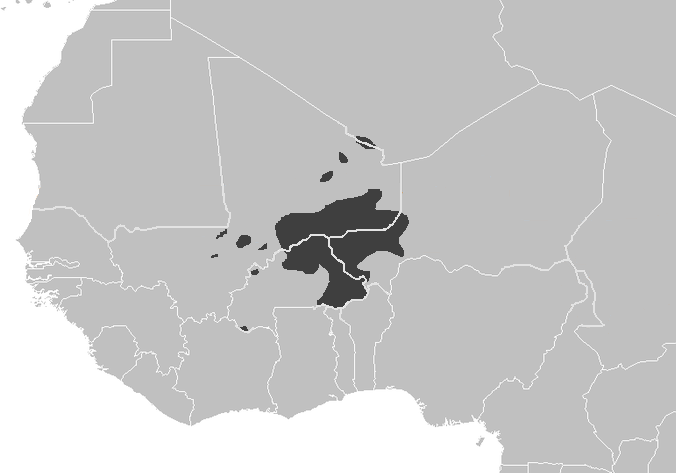
The Ghanaian authorities cite two facts that deserve to be read as military indicators rather than mere transport difficulties. First, about 4,000 empty containers were reportedly stuck in Bamako at the beginning of the year because drivers refused the return trip to Dakar. Second, the Malian army had to escort nearly 1,000 trucks per week in June to maintain the supply flow to the capital. When a state has to put soldiers on civilian convoys at this rate, it means that the road has ceased to be a simple infrastructure. It becomes an object of battle.
On the ground, the logic is clear. JNIM does not need to hold every section permanently to achieve a strategic effect. It only needs to make a few crossing points unpredictable, impose insurance costs, make drivers hesitate, and force the state to disperse units to protect slow columns. In western Mali, the road is not just a line on a map. It is a logistical tube connecting Bamako to the Atlantic. Threatening it strikes at the economy, the perception of control, and administrative morale simultaneously.
Why Accra is Reacting Now
The choice of Ghana is not abstract. In February, eight Ghanaian traders were killed in Titao, northern Burkina Faso. Since then, Accra knows that a Ghanaian national engaged in regional trade or pilgrimage can find themselves exposed well beyond national borders. The advice to take a flight to Dakar thus resembles a consular protection decision, but it primarily reveals a silent strategic revision: coastal states are beginning to treat Sahelian routes as contaminated operational spaces.
This is new in its intensity. For years, the capitals of the Gulf of Guinea have reasoned in terms of future spillover, as if the threat always came tomorrow. However, the Ghanaian message says the opposite: the degradation is already sufficient to alter a mass religious movement. This means that the strategic depth between the Malian-Burkinabe core and the coastal states has shortened. Not in kilometers. In decision time.
JNIM Seeks Less Conquest than Attrition of Corridors
One must guard against exaggeration. There is no evidence at this stage that JNIM is preparing a direct push on Dakar. The available intelligence does not show a classic conquest maneuver towards Senegal. On the other hand, everything indicates a now-familiar method: stretching the war through roads, convoys, markets, and supply points. It is a war of attrition. And it works because Sahelian armies remain obliged to cover too much space with too little protected mobility.
JNIM understands very well that a truck immobilized in Kayes, a terrified driver on the Bamako-Dakar axis, or a group of pilgrims diverted to air travel produces a disproportionate political effect. Each traffic deviation is then read by the populations as further proof that the state no longer fully controls the roads. In this type of conflict, the psychology of movement counts almost as much as combat losses.
Regional Consequences for Senegal, Mali, and Coastal States
- For Mali, the dependence on escorts confirms that securing the western corridor absorbs forces that cannot be employed elsewhere.
- For Senegal, even without a massive jihadist presence on its territory, the function of the Atlantic outlet becomes vulnerable to a crisis manufactured upstream.
- For Ghana and other coastal states, the threat is no longer just combat infiltration but the contamination of commercial, religious, and human networks that connect the Sahel to the coast.
Here we find an old lesson from the Sahelian theater: armed groups often win not by holding cities, but by choosing which roads must remain open, which become too costly, and at what pace states exhaust themselves trying to reopen them. From Europe, this looks like a transport issue. From the ground, it is a form of diffuse siege.
The signal sent by Accra therefore deserves to be taken seriously. When Ghana recommends flying to reach Dakar, it implicitly acknowledges that the western Sahel is no longer separated from the coast by a reliable buffer zone. The next fragile area is not necessarily a capital. It could be a corridor, a truck regrouping point, or a mundane stretch where military escort stops too early. In the Sahel, this is often where the war first advances.
Ghana's Ministry of Foreign Affairs advised against road travel to Dakar on August 21, 2026, citing security risks from JNIM's influence. The Malian Army is escorting around 1,000 trucks weekly to ensure supply routes remain open. The report highlights a significant shift in the perception of Sahelian transport corridors, indicating they are now viewed as operationally contaminated spaces.
- Ghana advises against road travel to Dakar due to security concerns.
- Malian Army escorts approximately 1,000 trucks weekly to maintain supply flow.
- 4,000 empty containers were blocked in Bamako due to driver refusals.
- JNIM is influencing logistics and security along key transport routes.
- The situation indicates a strategic shift in how coastal states view Sahelian routes.