
Ghana and Burkina Faso Militarize the Tema Corridor — Escorted Convoys Against JNIM
 Marie Dubois
Ghana and Burkina Faso Militarize the Tema Corridor — Armed Convoys Against JNIM
Accra, August 12, 2026. In the offices of the Ministry of Defense, Ghana's interim minister Cassiel Ato Baah Forson and his Burkinabe counterpart, General Célestin Simporé, signed a military cooperation agreement. Armed escorts for commercial trucks, coordinated patrols along the border, intelligence sharing: the text, sober, describes a war routine. Officially, it is about "securing cross-border trade corridors" and "protecting economic stability."
Unofficially, it is an admission: the road connecting Ouagadougou to the port of Tema now passes through areas that neither the Ghanaian army nor the Burkinabe Defense Forces truly control.
A Vital Corridor That Is Shrinking
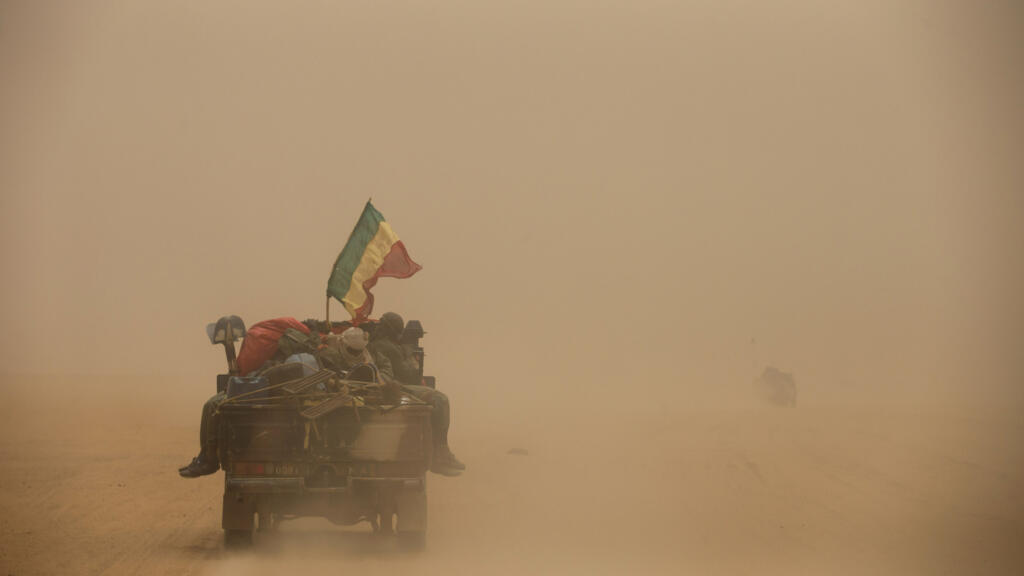
The Tema-Ouagadougou corridor is not just any route. For Burkina Faso, a landlocked country of over 22 million inhabitants, it is the main maritime gateway. Since relations with Abidjan have deteriorated, an increasing share of Burkinabe trade has shifted from Abidjan to Tema and Takoradi. The more traffic increases, the more lucrative the target becomes.
And the threat is not theoretical. On February 14, in Titao, northern Burkina, JNIM killed seven Ghanaian traders who were heading to the market. The Ghanaian embassy in Ouagadougou confirmed the group's responsibility. Ghanaian traders were already on the front line before the ministers signed anything.
Escort as the Only Sovereignty
A precedent already exists on the Ghanaian side. In June 2025, President John Mahama ordered the army to ensure the security of the Bolgatanga-Bawku-Pulmakom road after a series of attacks on vehicles. Since then, commercial traffic on this route has only moved with military escort.
From experience, I know this model. On the Gao-Anefis axis in Mali, convoy escorts have become the main form of state presence: we protect the column, not the territory around it. Sovereignty is reduced to armed accompaniment. The rest — the villages, the paths, the markets — belongs to whoever moves freely there.
The JNIM Calculation
The Ghanaian singularity is that JNIM almost never attacks on Ghanaian soil. Clingendael analysts have identified three katibas of the group active on the Ghanaian side and about forty incidents since 2022, most non-violent: resting, medical care, shopping, recruitment. JNIM uses northern Ghana as a rear base — hospitals, legally purchased mine explosives, stolen cattle resold, weapons that fuel the Bawku conflict.
This restraint is calculated, not friendly. The group does not strike Ghana because Ghana is useful to it. Each additional escort, each coordinated patrol reduces this utility. The defense agreement thus changes the game: it tells JNIM that its rear base is starting to close.
A Realism That Disrupts the Political Map
There is an irony that Western chancelleries will note. Ghana, a benchmark democracy in West Africa, signs a defense agreement with the junta in Ouagadougou — exiting ECOWAS, allied with Moscow, the very one that expelled French forces. Accra did not choose its partner out of affinity: it chose it because jihad does not respect institutional affiliations.
On the ground, this realism is the only one that holds. The Ghana-Burkina border is 602 kilometers long, and according to former ambassador Boniface Gambila, JNIM fighters "enter Ghana and leave." The posts at Hamile or Paga do not stop anyone in the dry season when every path becomes a passage.
What the Agreement Does Not Resolve
Escorting a convoy is a reaction. An ambush, however, is prepared at a location chosen by the enemy: a narrowing of the path, a ford, a thicket area. To protect a corridor of several hundred kilometers, there would need to be a continuous presence, fixed posts, night patrols. The agreement provides for joint operations and intelligence exchanges — it does not specify who pays, who commands on the ground, or what happens if a convoy escorted by the Burkinabe Defense Forces is hit twenty kilometers from the Ghanaian border.
There remains the powder keg of Bawku. The intercommunal conflict there has caused hundreds of deaths since 2021, and weapons from Burkinabe jihadist arsenals circulate. A military agreement between Accra and Ouagadougou does not extinguish that fire. On the contrary: each tightening of controls can push trafficking deeper into areas where the state does not go.
“Escorting a convoy is admitting that the road belongs to the enemy — and that we only protect what passes over it.”
What to Watch For
The agreement was signed in the midst of the rainy season. The real test will be the dry season when the paths open up and commercial columns head back to Ouagadougou. If JNIM wants to respond to the closure of its rear base, it will strike there: a convoy, once, strong enough for insurers to refuse to cover the corridor.
The question is not whether Accra and Ouagadougou will uphold their commitments. It is whether the escort — which protects trucks — will be sufficient when the enemy targets the entire system: the truck, the road, the market, and the trust of traders who, every morning, choose whether to travel or not.
Ghana and Burkina Faso signed a military cooperation agreement on August 12, 2026, to secure the Tema corridor against threats from JNIM. The agreement includes armed escorts for commercial trucks and coordinated patrols along the border. This move comes in response to previous attacks by JNIM on Ghanaian merchants, highlighting the increasing threat in the region.
- Ghana and Burkina Faso signed a military cooperation agreement on August 12, 2026.
- The agreement includes armed escorts for commercial trucks and coordinated border patrols.
- JNIM has previously attacked Ghanaian merchants, confirming the threat level.
- The Tema-Ouagadougou corridor is vital for Burkina Faso's trade.
- The agreement indicates a shift in military strategy to counter JNIM's influence.