
Global Competition for Drone Carriers: What Makes the Sichuan Ship Strong?
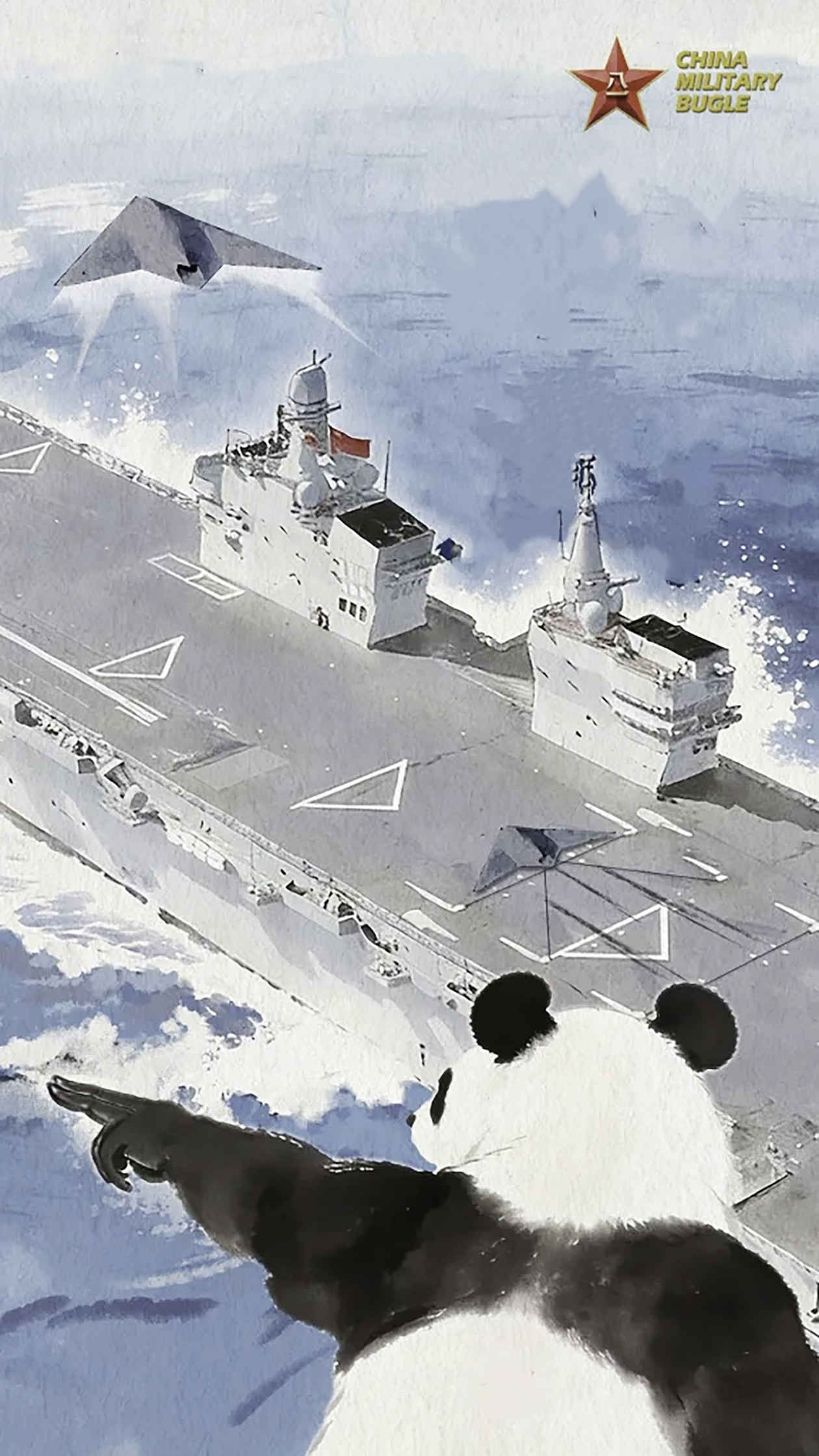
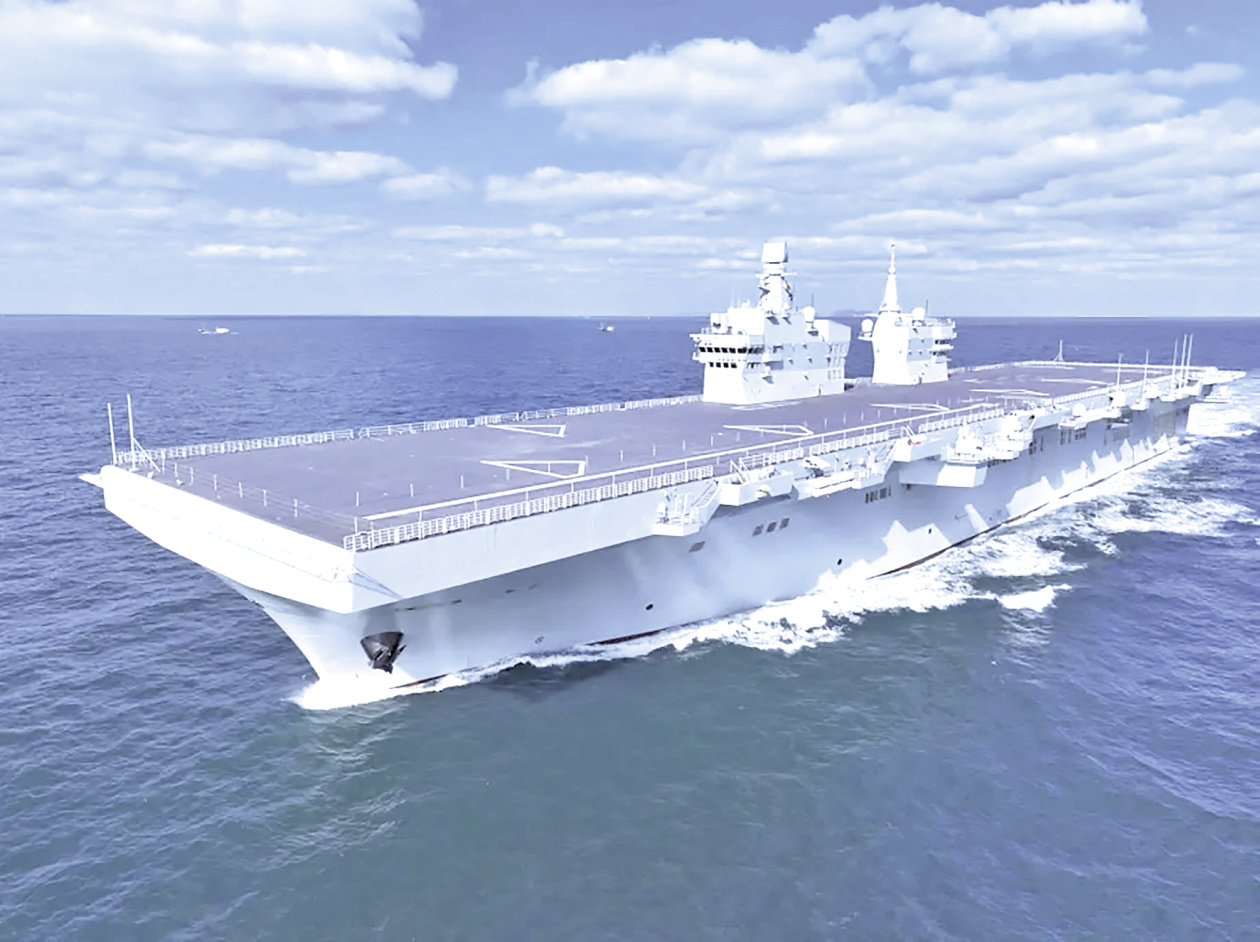
[Global Times Special Correspondent Chen Yang] Editor's Note: According to Xinhua News Agency on October 30, our military's first shipborne reconnaissance-strike integrated stealth drone, the Attack-21, recently successfully took off and landed on China's first 076-type amphibious assault ship, the Sichuan. This marks another breakthrough in the development of China's amphibious assault ships and signifies that the Chinese Navy has the capability to launch and recover fixed-wing stealth drones from large maritime combat platforms. Drone carriers are becoming a key direction for global naval development, with many countries developing and constructing such new vessels. What advantages does the Sichuan, equipped with the Attack-21 drone, have compared to them?
Countries Exploring Drone Integration on Ships
In recent years, with the development of drone technology, navies around the world have placed great importance on the equipment and use of drones. In particular, the role of multi-purpose medium and large drones in maritime reconnaissance, long-duration patrols, and land and ship attacks has received extra attention. For some countries unable to equip conventional aircraft carriers and dedicated carrier-based aircraft, having carriers equipped with such drones is also a viable option.
Turkey's "Anadolu" is widely regarded as the world's first aircraft carrier specifically designed for drone operations. The ship was initially designed as an amphibious assault ship, intended to carry the U.S. F-35B vertical takeoff and landing fighter. However, Turkey's decision to procure the Russian S-400 air defense system led to U.S. sanctions, making the hope of acquiring the F-35B bleak, and the "Anadolu" found itself in a predicament of "having a ship but no aircraft." Turkey then transformed it into the world's first aircraft carrier specifically designed for drone operations and simultaneously developed the TB-3 carrier-based drone. The ship is 231 meters long, 32 meters wide, and has a full-load displacement of about 27,000 tons. The front of the flight deck features a ski-jump ramp, specifically designed for drones like the TB-3 that require short takeoffs. In terms of carrying capacity, its deck can simultaneously accommodate 10 helicopters and 11 attack drones, while the hangar can hold 19 helicopters or 30 attack drones. In April 2023, the ship was officially commissioned and completed the takeoff and landing of the TB-3 drone in November 2024, marking its substantial drone combat capability.
Iran, on the other hand, achieved long-range drone delivery capability at a very low cost by modifying a 40,000-ton container ship. The ship has a runway with a ski-jump ramp for short takeoffs and arrested landings of fixed-wing drones. According to Iranian sources, this modified drone carrier can carry about 60 different types of drones. However, this platform, based on a civilian vessel's simple modification, is not suitable for high-intensity combat, as evidenced by the severe damage it sustained during U.S. airstrikes against Iran this year.
Even countries with formal aircraft carriers are exploring ways to integrate drones onto their ships. The British Navy has completed takeoff and landing tests of drones like the "Mohave" on the "Prince of Wales" aircraft carrier, validating the feasibility of operating drones from large carriers and discovering that the "Mohave" drone, equipped with 16 Hellfire missiles, is more operationally efficient than the F-35B when striking small targets like unmanned surface vessels. Indonesia recently received the retired Italian light aircraft carrier "Giuseppe Garibaldi" and plans to convert it into a drone carrier. Spain also plans to convert its naval flagship, the "Juan Carlos I," into a drone carrier. Additionally, navies from countries like South Korea and Portugal have proposed similar drone carrier plans.
The United States, however, "got up early but arrived late" in the realm of drone carriers. As early as the beginning of the 21st century, the U.S. Navy proposed concepts related to drone carriers and launched the UCLASS (Unmanned Carrier-Launched Airborne Surveillance and Strike System) project in 2010, aiming to develop a carrier-based unmanned attack aircraft capable of striking deep into enemy territory and successfully tested the X-47B unmanned technology demonstrator's takeoff and landing on an aircraft carrier. However, due to technical difficulties, budget constraints, and internal disagreements on requirements, the U.S. Navy changed its operational approach, abandoning the development of carrier-based unmanned attack aircraft in favor of the relatively simpler MQ-25A unmanned refueling aircraft. Even so, this project faced continuous setbacks and only entered the low-rate initial production phase in May 2026. According to the latest assessments, its initial operational capability (IOC) is expected to be delayed until 2029 or 2030. Meanwhile, the U.S. Navy established the first "Unmanned Aerial Combat Center" on the "Bush" aircraft carrier to integrate systems like the MQ-25A unmanned refueling aircraft and explore manned/unmanned collaborative operations.
Sichuan Has Unique Advantages
Compared to the drone carriers already equipped and under development by various countries, the Sichuan, which recently completed the takeoff and landing tests of the Attack-21, has clear advantages.
The Sichuan is the first ship of the 076-type amphibious assault ship independently designed, developed, and built by China, launched and named on December 27, 2024. It innovatively applies a fully automated landing guidance system, a new integrated power system, electromagnetic catapult, and arresting technology, capable of carrying fixed-wing drones, helicopters, and amphibious equipment. Since its first sea trial in November 2025, the Sichuan has steadily conducted various maritime tests as planned, successfully completing the debugging of various equipment and overall operational stability tests. Chinese experts interviewed by the Global Times stated that the biggest difference between the Sichuan and other active drone carriers is that it is equipped with electromagnetic catapults and arresting devices, allowing it to accommodate a wider variety of drones and achieve higher takeoff and landing efficiency.
Experts explain that other countries' drone carriers primarily rely on the flight decks of amphibious assault ships to complete drone takeoffs and landings. To meet the short takeoff and landing requirements on such drone carriers, the performance of the drones is significantly limited—whether it is Turkey's TB-3 or the UK's tested "Mohave," they both use large aspect ratio straight wings to pursue extreme lift, resulting in inherent shortcomings such as slow flight speeds. Additionally, these drones can only rely on their own power for takeoff, lacking sufficient initial speed, which also limits their takeoff weight. Therefore, most drones carried by drone carriers have limited performance, flying slowly and carrying fewer munitions and reconnaissance equipment, making them suitable only for counter-terrorism, counter-insurgency, low-intensity maritime patrols, and precision strikes against asymmetric opponents, but unable to undertake deep penetration strikes or core fleet combat tasks in high-intensity confrontations.
In contrast, the Attack-21 carried by the Sichuan is a dedicated shipborne stealth unmanned attack aircraft. The U.S. website "Defense" reported that the Attack-21 has a takeoff weight exceeding 10 tons, far surpassing the 2 to 3 tons of the TB-3 and "Mohave" drones. It is equipped with various advanced reconnaissance devices and utilizes internal weapon bays to carry precision-guided munitions, with a much faster flight speed, making it a so-called "high-end penetrating combat aircraft" for modern naval warfare. However, these characteristics also mean it cannot take off autonomously from a conventional deck and must use a catapult. Among naval vessels worldwide, only China's 076-type amphibious assault ship, besides a few aircraft carriers, is equipped with electromagnetic catapults and arresting devices, allowing it to carry the Attack-21, a true unmanned combat weapon capable of meeting the needs of future high-intensity naval warfare.
In fact, even compared to U.S. supercarriers equipped with catapults, the Sichuan carrying the Attack-21 has unique technical advantages. The "Defense" website reported that to minimize radar cross-section and enhance battlefield survivability, both the Attack-21 and X-47B adopt a tailless flying wing layout, which brings aerodynamic control challenges during landing. The U.S. Navy previously found during X-47B takeoff and landing tests that carriers experience complex motions such as pitch, roll, and heave in wind and waves, compounded by turbulent airflow, causing the drone to abort landing multiple times due to the flight control system's inability to handle the complex deck wind field. This became one of the technical reasons for the eventual cancellation of the X-47B project. The MQ-25A unmanned refueling aircraft currently deployed on U.S. carriers still uses a conventional aerodynamic layout with a V-tail.
Experts indicate that the advanced technologies such as the fully automated landing guidance system used by the Sichuan, in coordination with the Attack-21 drone, specifically address the autonomous landing challenges of tailless flying wing stealth drones. Additionally, the takeoff weight of the Attack-21 is much lower than that of traditional carrier-based fighter jets, making its structural strength more sensitive to catapult forces. The electromagnetic catapult equipped on the Sichuan can precisely set the thrust curve and final speed of the launch by adjusting the power supply of the linear motor, ensuring it matches the energy required for the Attack-21 to reach takeoff speed. Because of these advantages demonstrated by the Sichuan, the "Defense" website noted that the Pentagon, which had long overlooked the development of unmanned stealth attack aircraft, is now showing signs of reconsidering these capabilities that were previously neglected.
Future Potential
For the Sichuan, completing the takeoff and landing tests of the Attack-21 marks it as the world's first catapult-equipped drone carrier, with even greater development potential in the future.
The U.S. website "Military Observer" analyzed that the Sichuan is the largest amphibious assault ship in the world, retaining the characteristics of traditional amphibious landing operations while incorporating designs such as electromagnetic catapults and dual island structures that highlight new demands for air operations. The electromagnetic catapult system enables it to accommodate more types of drones and carrier-based aircraft; the dual island design separates maritime control, formation command, and air traffic control, as well as drone mission control into two distinct islands at the front and rear, reducing interference between radar and communication equipment, allowing command personnel to focus on their respective areas of operation, and optimizing deck airflow to expand flight visibility, thus better adapting to the new demands centered around drone air operations.
The "Defense" website stated that China is developing various types of drones, and besides the Attack-21, the Sichuan may also carry more types of drones, as well as manned helicopters and even fixed-wing fighter aircraft in the future. Reports indicate that the Sichuan will be fully capable of executing large-scale drone operations as well as traditional amphibious assault tasks. It can deploy drones like the Attack-21 to perform a variety of missions ranging from maritime strikes to intelligence surveillance and reconnaissance; or during amphibious landing operations, it can use stealth unmanned attack aircraft to penetrate enemy air defense systems and strike maritime targets and key inland targets. Additionally, the ship can provide auxiliary support for larger carrier strike groups, allowing main carriers like the Fujian to focus their efforts on core combat tasks. Furthermore, the Sichuan possesses independent deep strike and air defense suppression capabilities, providing a certain level of naval air support suitable for low-intensity missions.
The Sichuan ship of the Chinese Navy successfully conducted takeoff and landing tests with the Attack-21 drone, marking a significant advancement in naval capabilities. This event occurred on October 30, 2023, showcasing China's ability to integrate advanced drone technology into its amphibious assault operations. The Attack-21 drone, designed for high-intensity combat, has a takeoff weight exceeding 10 tons and utilizes advanced launch systems.
- The Sichuan ship is the first amphibious assault ship in China to successfully launch and recover the Attack-21 drone.
- The Attack-21 drone is designed for high-intensity naval combat and has a takeoff weight exceeding 10 tons.
- The Sichuan ship features advanced technologies such as electromagnetic catapults and automatic landing systems.