
"Global Times Reporter Visits Military Expo, Decoding Cutting-Edge Equipment"
[Global Times Report, Reporter Ma Jun] Editor's Note: The current world military technology revolution is accelerating, with cutting-edge technologies represented by artificial intelligence (AI) and unmanned systems reshaping combat forms. What progress has China made in this area? The 11th China (Beijing) Military Intelligent Technology Equipment Expo (referred to as the "Beijing Military Expo"), hosted by the China Command and Control Society, officially opened on the 14th. A reporter from the Global Times was able to take a glimpse into this event.
AI is "Everywhere"
Upon entering the Beijing Military Expo at the National Conference Center, the first impression for the Global Times reporter was that "AI is everywhere"—from common AI recognition and big data analysis to advanced AI assistants and AI pilots, showcasing the tremendous boosting effect of AI on the modern military field. For example, at the booth of China Electronics Technology Group Corporation 28th Research Institute / China Electronics Lais Information Systems Co., Ltd., various capabilities of AI in different fields were displayed, including smart air traffic in the civilian sector and practical applications in combat command.
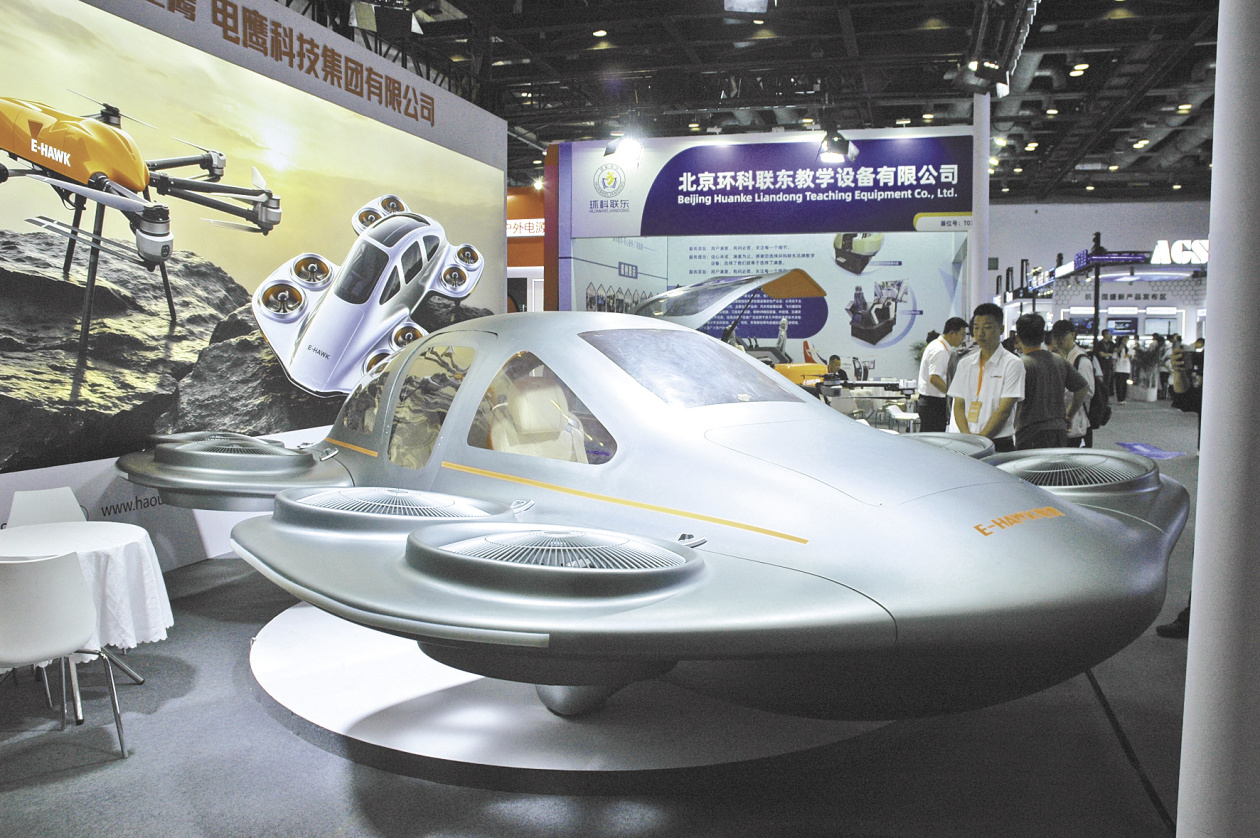
The "Military Intelligence Large Model" showcased in the live video has powerful multimodal and multi-base adaptation capabilities. It can intelligently select models based on application needs and update quickly to respond rapidly to changes in base models, always maintaining optimal status. The Global Times reporter noted that the military intelligence large model can efficiently and accurately identify military targets in reconnaissance photos; it only requires uploading a single photo. With the help of the "Target State Understanding Multimodal Large Model," it can precisely detect and mark two long-range rocket launcher vehicles in the photo, confirming that they are in an upright launch-ready state, while also detailing the complex battlefield environment and harsh weather conditions surrounding the long-range rocket launcher vehicles.
According to the Global Times reporter, with the widespread adoption of satellite remote sensing technology and drones, quickly identifying key targets from the massive number of photos they capture has far exceeded the capabilities of traditional manpower. Countries around the world are researching how to use AI to improve recognition efficiency, but they face various challenges, including low recognition accuracy. The "Military Target Recognition Visual Large Model" exhibited this time includes pre-training with hundreds of thousands of data points, enabling it to accurately identify various military targets in satellite or drone aerial photos, significantly reducing the probabilities of missed detections and false detections. Whether it is an aircraft that closely resembles the ground background in the photo or a vessel hidden in complex scenes like docks, AI can identify and label them one by one.
From a theoretical perspective, the more training data a large model has, the better the training effect and the higher the accuracy of target recognition. However, in the military field, how to provide sufficient target data? The high-precision target characteristic targets showcased by the Beijing Institute of Stealth Engineering at the Beijing Military Expo provide a solution. It is reported that these vehicle targets are 1:1 replicas of various types of real equipment such as main battle tanks, radar vehicles, and rocket launchers, and they achieve multi-spectral simulation of visible light, infrared, and radar characteristics of real targets. They are equipped with intelligent driving chassis and can operate in modes such as manual driving, remote control, and unmanned driving, which can be used for automatic target recognition training, providing real and credible target characteristics for multimodal data collection such as visible light, infrared, and radar.
Future manned-unmanned collaborative combat in air warfare is another direction that countries are vigorously developing. In this regard, China Electronics Technology Group Corporation 28th Research Institute has publicly announced an intelligent collaborative decision-making and control system for aerial formations. It is reported that in complex air combat environments, the cognitive capacity of pilots' brains is approaching physiological limits. The intelligent collaborative decision-making and control system for aerial formations adopts a hierarchical decision-making control architecture, fully integrating domain expert knowledge and machine learning technology, forming a "three-member" system of AI pilots, AI commanders, and AI navigators, achieving functions such as collaborative assisted decision-making, intelligent simulation training, and enhanced navigation reporting, thereby reducing instantaneous decision-making pressure and improving systematic intelligent training efficiency.
This AI system announced by China Electronics Technology Group Corporation 28th Research Institute mainly focuses on mainstream beyond-visual-range air combat, capable of quickly assessing battlefield environments, efficiently allocating targets, and generating collaborative strategies. Its short-term goal is to achieve tactical assistance recommendations, while the long-term goal is autonomous air combat decision-making. According to the Global Times reporter, the role of this AI system throughout the air combat process is to assist decision-making, with the final authority to fire still controlled by the pilot.
Counter-Drone "Innovations"
Recent local conflicts have proven that seemingly inconspicuous drone threats have become a serious challenge that military forces must take seriously. At this year's Beijing Military Expo, counter-drone technology has also become a popular display content among participating companies.
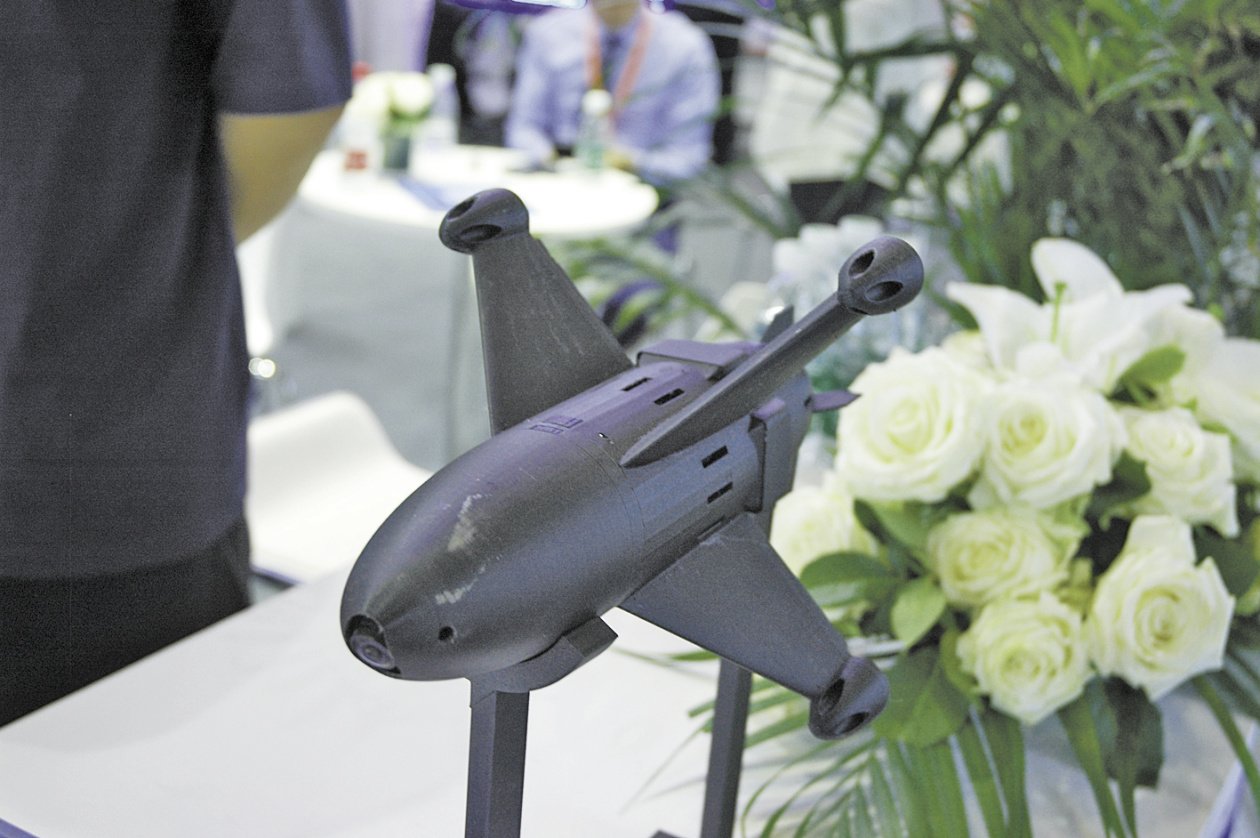
Low-flying drones are typical "low, slow, small" targets, making effective interception very challenging. First, detection is difficult because these drones exhibit suddenness, concealment, and uncertainty, especially with the ground clutter false alarm situations caused by their ultra-low altitude flights, where electromagnetic signals are weak and not easy to track. Secondly, identification is difficult; their infrared signals are also weak, features are not obvious, and they are easily interfered with by other low-flying objects, making it hard to distinguish between real and fake. Thirdly, tracking is difficult because there may be buildings, tall trees, or mountains obstructing the monitoring system near the protected area, leading to discontinuous tracking. Finally, striking is difficult; dealing with low-altitude, ultra-low-altitude small flying targets imposes limitations on weapon use, and traditional air defense missiles may have excessive power, leading to collateral damage.
To address these challenges, the Global Times reporter noted that multiple companies at this year's Beijing Military Expo showcased counter-drone systems composed of different devices. It is understood that to deal with "low, slow, small" targets, the first step is to solve the detection and identification issues. However, traditional methods such as radar, infrared/optical, and electronic reconnaissance have shortcomings in detecting "low, slow, small" targets, so it is necessary to integrate various sensors and achieve detection and tracking of multi-directional, multi-batch targets in complex environments through comprehensive information processing and advanced algorithms.
For example, the distributed drone detection and countermeasure system exhibited by Kongyu Technology integrates various drone detection devices from different mobile platforms such as ground, naval, and aerial, as well as fixed deployment nodes, and uses multimodal detection information fusion technology to accurately identify and track targets. Once an incoming drone is detected, it can use both soft and hard kill methods to interfere with or intercept it.
Another drone threat that poses a significant battlefield challenge is long-range suicide drones. Although these inexpensive drones have relatively fixed flight paths, their sheer numbers make traditional air defense missiles and other interception methods prohibitively expensive. Chinese companies at this year's Beijing Military Expo showcased various high-speed intercept drones, indicating that China is keeping pace with the latest trends in counter-drone technology and continuously innovating.
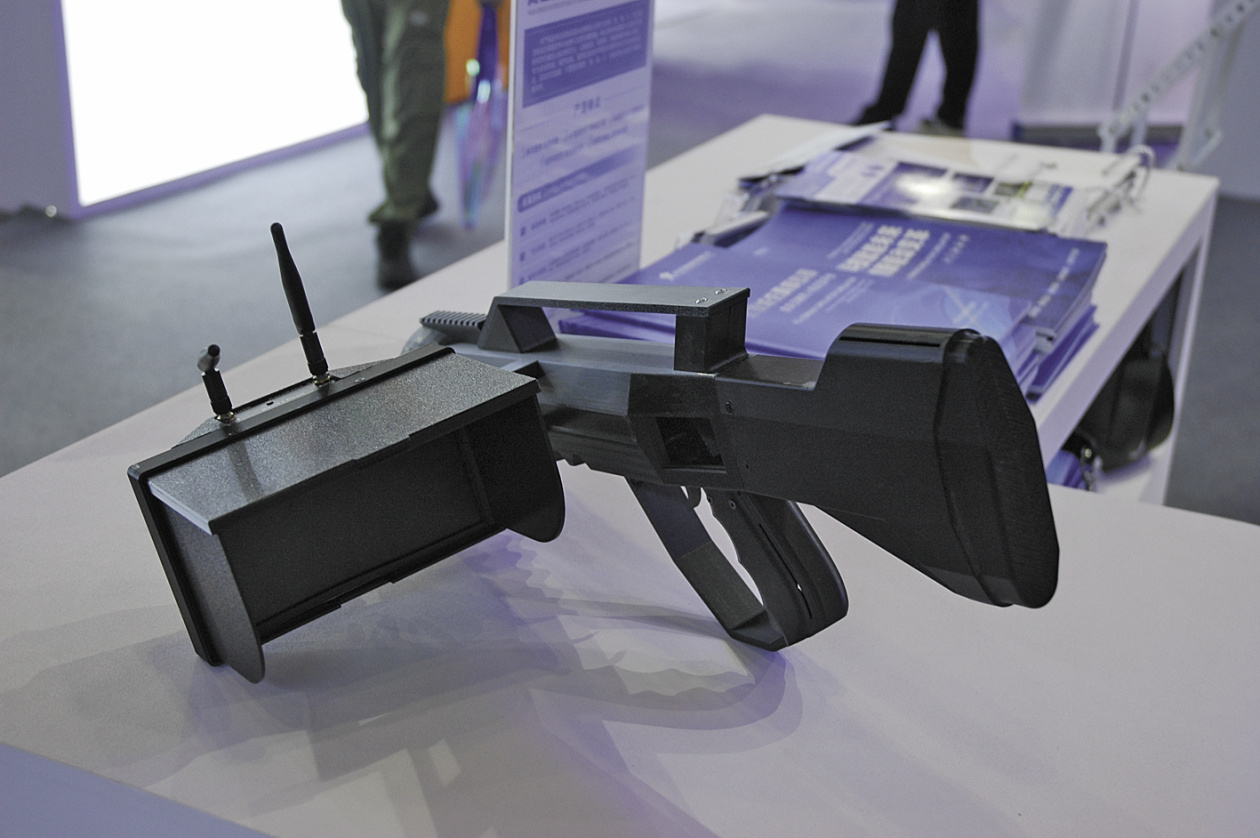
For instance, the single-soldier portable high-speed intercept drone exhibited by Qingdao Junrong Changyue Technology Co., Ltd. emphasizes low cost, high efficiency, and rapid deployment, filling the defensive gap between light weapons and large air defense systems for intercepting drones. According to the Global Times reporter, traditional single-soldier intercept drones either use electromagnetic interference from anti-drone guns, launch net guns at close range, or rely on rifles for aiming and shooting. However, these methods have flaws: the new generation of small drones increasingly uses fiber optics for data transmission, making them immune to electromagnetic interference; net guns have a very short effective range of about 10 meters; and using light weapons to aim and shoot at drones has a very low hit rate.
This single-soldier high-speed intercept drone consists of a shoulder-mounted launch device and an intercept drone. During use, it relies on the display screen of the launch device to identify and lock onto the drone from a distance before launching the intercept drone. The electric-powered intercept drone can fly at speeds of up to 400 kilometers per hour, with an interception radius of 3-5 kilometers and a ceiling of 4000 meters, employing AI machine vision and infrared imaging dual guidance modes to automatically capture and track targets, possessing "fire-and-forget" capability. The operator can reload the intercept drone to prepare for the next target.
The drawback of the single-soldier high-speed intercept drone is that it can only operate "independently," while another type of rocket-shaped intercept drone showcased at the Beijing Military Expo is integrated into a counter-drone system.
It is reported that this intercept drone can obtain target information detected by the counter-drone system through a data link, and then launch towards the general direction of the incoming drone. When approaching the target, it activates the onboard sensors and AI recognition tracking algorithms to search for and lock onto the target. Its design draws on the attack mode of medium-range air-to-air missiles and can even be launched in volleys.
"Robot Dogs" in Collaborative Combat
Unmanned equipment is a hot topic in today's global military field and one of the highlights of this year's Beijing Military Expo, with various companies showcasing a wide range of unmanned equipment for land, sea, and air. In the air, besides the various multi-rotor drones that the public is gradually getting used to, there are also many different configurations of special-purpose drones on display, indicating that China, as a major drone power, has largely achieved "drone freedom." For example, Lingyun Aviation Technology Co., Ltd. launched various columnar dual-rotor unmanned helicopters that can be used for fire support, battlefield logistics delivery, high-altitude patrol, and other military purposes, or perform special tasks such as equipment lifting, urban firefighting, and rescue material transportation in the civilian sector.
It is reported that conventional aerodynamic layout unmanned helicopters primarily generate lift from the main rotor and require 10%-20% of engine power to drive the tail rotor for balance, thus placing high demands on engine performance. In contrast, the columnar dual-rotor unmanned helicopter uses two sets of counter-rotating rotors to cancel out torque, eliminating the need for a tail rotor, allowing 100% of engine power to be used for lift, effectively improving payload capacity and endurance. This design also possesses excellent hovering stability and strong resistance to crosswinds, enabling stable operations in harsh environments such as plateaus, islands, and complex mountainous areas, which are crucial for complex aerial lifting operations.
In confined spaces such as tunnels, warehouses, and rooms, traditional multi-rotor drones can easily lose control due to collisions. The Global Times reporter noted that for these special application scenarios, some exhibited drones were wrapped in protective cages, featuring coaxial three-blade dual-rotor designs. They utilize laser radar for autonomous positioning, enabling stable autonomous flight or hovering for photo documentation in narrow spaces.
In terms of ground unmanned equipment, this year's Beijing Military Expo showcased various robot dogs. Visually, these robot dogs look quite similar, all capable of carrying loads on their backs or mounting weapons that can shoot steadily, but their internal components are continuously being upgraded. The most significant advancement of these robot dogs is the enhancement of their collaborative combat capabilities. With the help of heterogeneous unmanned system collaborative controllers, they can even achieve information interoperability and joint operations with different unmanned equipment such as drones and robot dogs from different manufacturers. It is reported that aerial drones can perform reconnaissance, positioning, and monitoring tasks, while the heterogeneous unmanned system collaborative controller acts as the "brain," intelligently scheduling and collaboratively controlling the ground robot dogs to execute strike and transport tasks, greatly enhancing combat effectiveness.
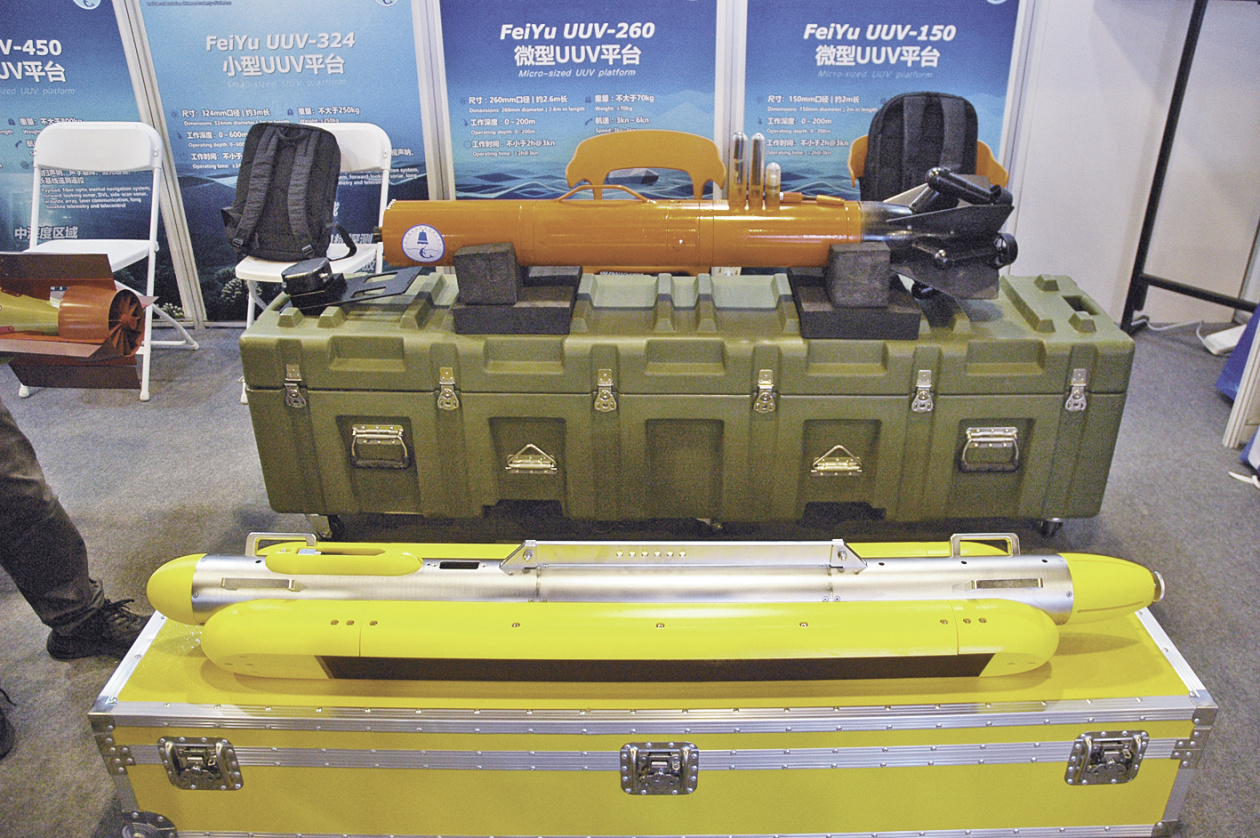
Additionally, the Institute of Acoustics of the Chinese Academy of Sciences showcased various unmanned underwater vehicles. Among them, the "Flying Fish UUV-533" medium platform can operate at depths of up to 4000 meters, equipped with forward-looking sonar, side-scan sonar, fiber optic inertial navigation, underwater light sources, and other equipment to perform environmental measurements, target detection, and other tasks in deep-sea areas, or autonomously navigate close to the seabed for extended periods to search for sunken ships or buried objects.
The 11th China Military Intelligent Technology Equipment Expo opened in Beijing on October 14, 2023, showcasing various advanced military technologies, including AI systems and drones. China Electronics Technology Group Corporation (CETC) presented innovations in military target recognition and anti-drone systems. The exhibition highlighted the integration of AI in military operations, addressing challenges posed by low-altitude drones and emphasizing the development of unmanned systems for collaborative combat.
- The 11th China Military Intelligent Technology Equipment Expo opened on October 14, 2023, in Beijing.
- AI technologies are increasingly integrated into military applications, including reconnaissance and target identification.
- Various anti-drone systems were showcased to address the challenges posed by low-altitude drones.
- China is advancing in unmanned systems and AI for military operations, including collaborative combat between manned and unmanned aircraft.
- New unmanned vehicles and systems were presented, demonstrating China's capabilities in modern warfare.