
Guterres Warns: Situation in the Middle East "Could Get Out of Control"! Latest Developments Overview
Guterres Warns That the Situation in the Middle East "Could Spiral Out of Control"
On the 6th, UN Secretary-General Guterres warned that the situation in the Middle East "could spiral out of control." He called on the parties involved to "stop fighting and engage in serious diplomatic negotiations."
In a statement regarding the situation in the Middle East, Guterres said that all illegal attacks in the region and elsewhere have caused immense suffering and harm to civilians throughout the region and pose a serious threat to the global economy, especially to the most vulnerable groups.
Guterres stated, "It is time to stop fighting and engage in serious diplomatic negotiations."
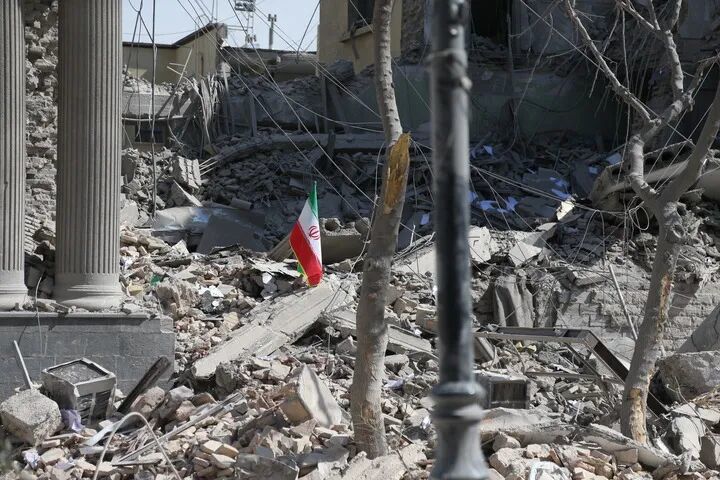
This is a damaged building photographed near Revolution Square in Tehran, Iran. Photo by Xinhua reporter Shadati.
Putin Holds Phone Call with Iranian President
On the 6th, Russian President Putin held a phone call with Iranian President Pezeshkian, once again expressing deep condolences over the deaths of Iran's Supreme Leader Khamenei and his family, as well as Iranian military and political leaders, and the large number of civilian casualties caused by attacks from the United States and Israel on Iran.
According to the Kremlin's website, Putin reiterated Russia's principled position, including the necessity to immediately cease military actions, abandon the use of force to resolve issues in Iran and the Middle East, and return to a path of political and diplomatic resolution as soon as possible. Putin stated that Russia is maintaining close communication with the leaders of the Gulf Cooperation Council member states.
Pezeshkian expressed gratitude for Russia's support for the Iranian people's defense of national sovereignty and independence and provided an update on the current conflict situation.
The two sides agreed to continue to stay in touch through various channels. (Reporter: Jiang Hexuan)
Iranian Officials Warn of Kurdish Armed "Infiltration" Activities
On the 6th, Ahmadian, a representative of Iran's Supreme Leader to the Defense Council, warned the Iraqi Kurdish Autonomous Region (Kurdistan) that if any Kurdish armed groups cross into Iran, all facilities in the Kurdistan region will become targets for strikes.
According to the Iranian Fars News Agency, Ahmadian stated that currently, the Iranian military has only targeted bases of the United States, Israel, and "separatist groups" within the Kurdistan region. However, if the Kurdistan region continues to allow Israel and "separatist groups" to operate within its territory or allows them to cross into Iran, then "all facilities in the Kurdistan region will fall within the scope of Iranian strikes."
On the 5th, the Iranian Islamic Republic News Agency quoted a statement from the Iranian military saying that Iran had launched three missiles hitting targets within the Kurdistan region. The Iranian intelligence agency stated that there are organized attempts to infiltrate into Iran with the support of the United States and Israel and to launch attacks in the border areas.
In response to reports from U.S. media about Iraqi Kurds launching ground attacks within Iran, Aziz Ahmad, deputy director of the Kurdistan regional prime minister's office, denied on social media on the 5th, stating that no Iraqi Kurds have crossed the border, and the related reports from U.S. media are "clearly lies."
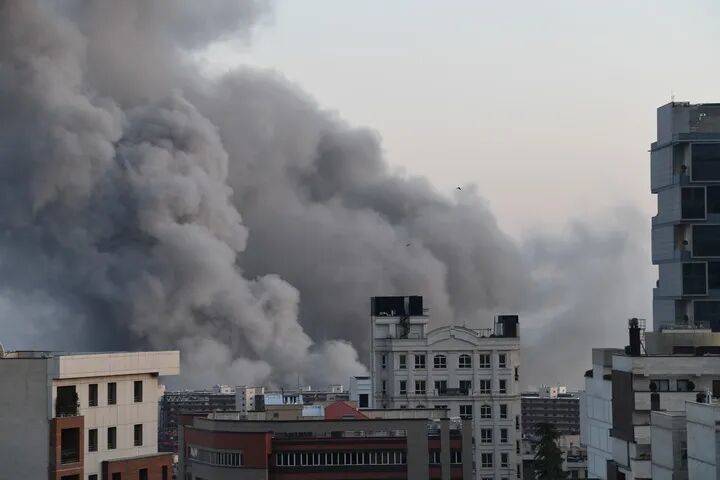
This is thick smoke produced by an explosion photographed in Tehran, Iran, on March 6. Photo by Xinhua reporter Shadati.
U.S. Media: Satellite Images Show Five Radar Systems in the Middle East Attacked
According to a report by CNN on the 6th, since the large-scale attacks by the United States and Israel on Iran on February 28, the media has confirmed through satellite images that five locations with deployed radar systems in several Middle Eastern countries have been attacked by Iran.
CNN published several satellite photos in its report. The photos show that the attacked radar systems are deployed in Saudi Arabia, Jordan, Qatar, and two locations in the UAE.
The report stated that four of the attacked locations had radar systems for the "THAAD" missile defense system. These radar systems are core components of the U.S. military's air defense system, capable of detecting incoming missiles and drones and activating interception systems to shoot them down.
According to several Iranian media reports on the 6th, the Iranian Islamic Revolutionary Guard Corps launched multiple missiles and drones, destroying the U.S. "THAAD" missile defense system radar located in the UAE and Jordan, as well as the U.S. FPS-132 radar located in Qatar.
International Maritime Organization: Attacks on Ships in the Strait of Hormuz Result in Four Deaths and Three Serious Injuries Among Crew Members
On the 6th, the Secretary-General of the International Maritime Organization, Domingos, stated that the ship attack incident that occurred in the Strait of Hormuz that day resulted in at least four crew members losing their lives and three others being seriously injured. He expressed shock and sorrow over this.
The International Maritime Organization issued a statement pointing out that two crew members had already died in previous incidents in the region, and one person is missing. Currently, about 20,000 crew members are trapped in the Gulf region, with increasing safety risks and immense mental pressure.
"Crew members must never become targets of attacks," Domingos said in the statement. "This situation is unacceptable and unsustainable. All parties and stakeholders have an obligation to take necessary measures under international law to ensure the protection of crew members, including safeguarding their rights and welfare, and maintaining freedom of navigation."
The statement did not disclose specific details about the ship attack incident.
According to reports from professional media on the 6th, citing maritime security companies, a tugboat flying the UAE flag was attacked while heading to assist a previously attacked container ship. The involved container ship lost power after being hit by a missile on the 4th, and the crew had abandoned the ship. (Reporter: Gao Wencheng)
Israeli Army Clashes with Hezbollah; UN Peacekeeping Forces in Lebanon Attacked, Two Ghanaian Peacekeepers Seriously Injured
The Ghana Armed Forces issued a statement on the 6th saying that during clashes between the Israeli army and Hezbollah, the headquarters of the Ghanaian contingent of the United Nations Interim Force in Lebanon (UNIFIL) was attacked by missiles, resulting in two Ghanaian peacekeepers being seriously injured.
The statement said the attack occurred in the afternoon of the 6th local time, causing severe damage to the camp facilities, with the officers' mess being directly hit and burned down after a fire broke out. The injured soldiers are currently receiving treatment and their condition is stable. Other personnel in the base are safe and have taken refuge in underground shelters after the incident.
The statement said the Ghanaian government has formally protested to the United Nations, condemning the attack and calling for accountability, while urging all parties in the conflict to fulfill their international obligations to ensure the safety of UN peacekeeping personnel. (Reporters: Shen Feng, Gao Jianfei)
Spanish Prime Minister: U.S. and Israeli Military Actions Against Iran Are "Extremely Serious Mistakes"
On the 6th, Spanish Prime Minister Sanchez stated that the military actions of the United States and Israel against Iran are "extremely serious mistakes." He also emphasized that Spain's deployment of warships to Cyprus is solely to fulfill its defense and assistance obligations to EU partners.

On March 6, in La Rabida, Huelva Province, Spain, Spanish Prime Minister Pedro Sanchez spoke at a press conference during the Spain-Portugal summit. Photo by Xinhua (provided by the Spanish Prime Minister's Office).
In response to U.S. President Trump's criticism of Spain for "refusing to support his actions against Iran as an ally," Sanchez said during the press conference at the Spain-Portugal summit that Spain always acts in accordance with international law. "Among allies, if one party makes a mistake, the other countries should point it out. This war is an extremely serious mistake."
Regarding Spain's deployment of the frigate "Cristóbal Colón" to Cyprus for defensive tasks, Sanchez explained that the ship was dispatched at the request of Cyprus and is primarily responsible for "protection, defense, and rescue" tasks.
The Cypriot government issued a statement on the 2nd saying that a drone attacked the British Akrotiri Air Base in Cyprus, causing "limited damage."
According to an announcement from the Spanish Ministry of Defense, the frigate "Cristóbal Colón" joined the French aircraft carrier Charles de Gaulle task force on the 3rd to carry out escort and training missions. The task force will head to the Mediterranean to provide defensive military support to Cyprus. (Reporters: Meng Dingbo, Xie Yuzhi)
Source: Xinhua News Agency WeChat Official Account
UN Secretary-General Guterres warned of a potential escalation in the Middle East, urging parties to cease hostilities and engage in serious diplomatic negotiations. Iranian officials threatened military action against Kurdish forces if they cross into Iran, while Israeli forces clashed with Hezbollah in Lebanon. Recent U.S. and Israeli military operations targeted Iranian radar systems, and attacks in the Strait of Hormuz resulted in casualties among sailors.
- UN Secretary-General Guterres warns of potential escalation in the Middle East.
- Iranian officials threaten Kurdish forces if they cross into Iran.
- Israeli forces engage in conflict with Hezbollah in Lebanon.
- U.S. and Israeli military actions have targeted Iranian radar systems in the region.
- Casualties reported among sailors in the Strait of Hormuz due to attacks.