
Harbin Ship Retires: PLA Navy Enters the Era of Mass Production from the 052 Starting Point to the 055
 Li Minghui
Harbin Ship Retired: PLA Navy Enters the Era of Mass Production with Type 055 from the Starting Point of Type 052
On the morning of August 28, the Harbin ship, hull number 112, was retired in Qingdao. The official announcement provided straightforward information: this first ship of the Type 052, which was commissioned in 1994, has served for over 30 years, completed more than 100 major missions, safely navigated over 400,000 nautical miles, visited 22 ports in 20 countries, and participated in 17 joint exercises with foreign navies. What is truly worth pondering is not just the glorious retirement of the ship itself, but that the Chinese Navy has finally fully transitioned a generation of experimental main battle ships out of the main force sequence.
What Does the Retirement of the First Type 052 Ship Indicate?
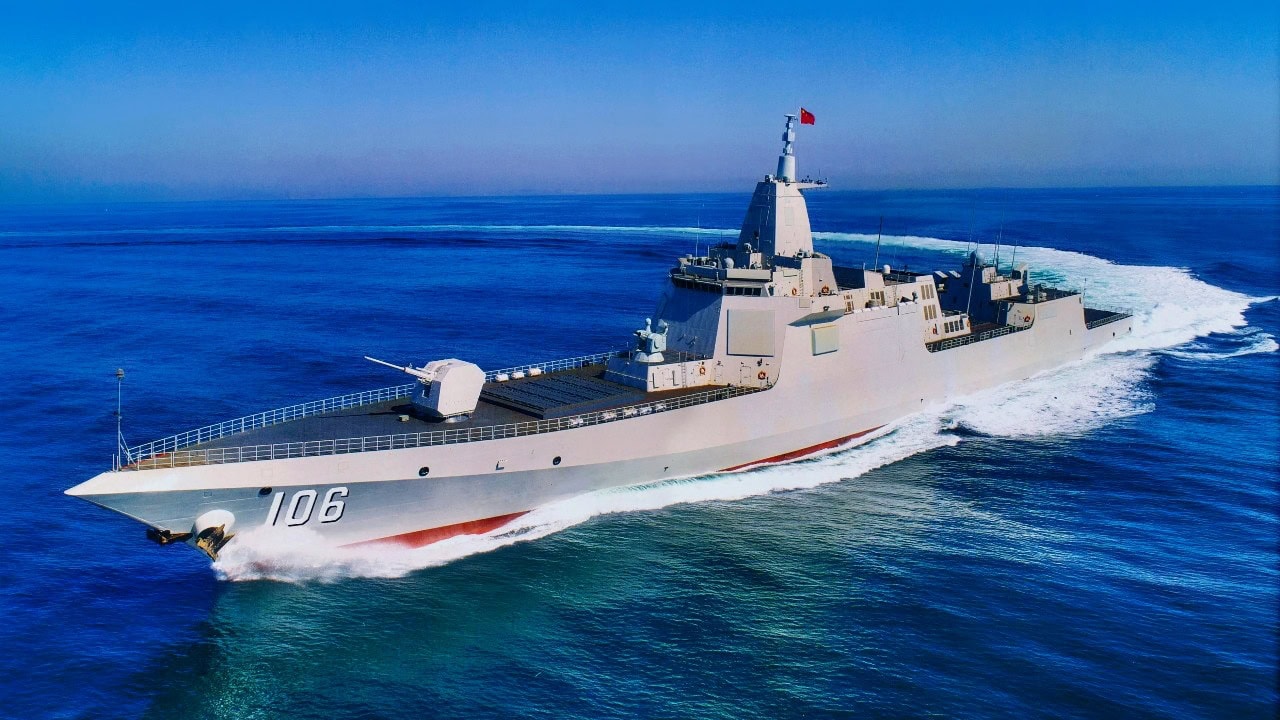
Looking at the Harbin ship's specifications today, they are not particularly impressive: the air defense, anti-ship, and anti-submarine systems on board are all from the technological combination of the 1990s. Even though it can carry 2 helicopters, it is difficult to compare it with the current operational tempo of the Type 052D and Type 055. However, in the early 1990s, the significance of this ship lay precisely in its pioneering role. It marked the starting point of the second generation of domestically produced missile destroyers for the PLA Navy, signifying that for the first time, a large domestic surface ship truly integrated area air defense, anti-ship strike, and carrier aviation onto the same platform.
In simple terms, the Harbin ship is more like a vessel that paved the way. It does not determine how far the Chinese Navy can strike today, but it does set the foundation for the subsequent design teams, crew formations, overseas visits, and transoceanic missions. In 1997, it crossed the Pacific with its fleet to visit the Americas, and later participated in multiple escort missions, joint exercises, and foreign visits—experiences that cannot be captured by mere parameters.
From Single Ship Breakthrough to Mass Production
What is even more telling is the scale of its replacement. Recent public analyses generally agree that the number of modern destroyers and frigates currently in service with the PLA Navy has exceeded 90, with around 10 Type 055 destroyers, the Type 052D still in continuous production, and the Type 054B beginning to take over anti-submarine and area escort tasks. This number may not mean that every ship can immediately achieve the highest combat readiness, but it reflects a more critical change: the core advantage of the Chinese Navy has shifted from finally producing an advanced ship to being able to continuously mass-produce a complete fleet.
This is also the most noteworthy aspect of the Harbin ship's retirement. Thirty years ago, the Type 052 addressed the question of whether it existed; today, the Type 055 and Type 052D address whether there are enough ships and whether they can operate in distant seas for the long term. While both appear to be destroyers, they represent entirely different industrial stages. The former is a prototype engineering mindset, while the latter embodies a systematic mass production mindset.
The Real Weakness Is No Longer in the Hull
However, I believe that the outside world tends to understand this generational transition merely as an increase in tonnage and vertical launch systems, which is a shallow interpretation. What the Chinese Navy lacks today is not the hull platform, but rather how to effectively integrate a large number of new ships into high-intensity deployments in distant seas, joint air defense, anti-submarine coordination, and sustained resupply chains. A ship can be launched, but that does not mean the fleet can operate stably; a shipyard can speed up production, but that does not mean training, maintenance, and command systems can fully synchronize.
The value of the generation of the Harbin ship lies precisely in the accumulation of experience during the transition from never having done it to being able to do it. Now that this ship has been retired to a national defense education base, it serves as a reminder to future generations: the most challenging aspect of the Type 052 was not its weapon parameters, but that it enabled the Chinese Navy to complete its first generational leap. The questions that the Type 055 era must answer are even more practical: when platform upgrades are no longer an issue, how many real distant sea deployments does the PLA Navy need to conduct to transform its numerical advantage into a substantial systemic advantage?
The Harbin ship of the People's Liberation Army Navy was retired on August 28 in Qingdao after over 30 years of service. This retirement marks a significant transition from the 052 class to the more advanced 055 class destroyers, reflecting the Navy's capability to produce modern naval vessels in larger quantities. The Chinese Navy currently operates over 90 modern destroyers and frigates, indicating a shift in focus from individual ship capabilities to a more comprehensive naval fleet structure.
- The Harbin ship was retired on August 28 in Qingdao.
- It served for over 30 years and completed over 100 major missions.
- The Chinese Navy now has over 90 modern destroyers and frigates, including around 10 055 destroyers.
- The transition from the 052 to the 055 class represents a significant advancement in naval capabilities.
- The Harbin ship's retirement signifies a shift from experimental to mass production in naval shipbuilding.