
Hegseth's 3.5 Percent Test Leaves Taiwan in the Gray Zone
 Marcus Chen
Hegseth's 3.5 Percent Test Leaves Taiwan in the Gray Zone
3.5 percent of GDP is now the number Asian allies have to hear first. At the Shangri-La Dialogue in Singapore on May 30, 2026, Pete Hegseth told regional partners that Washington wants more ships, more submarines, more production capacity, and less reliance on the American taxpayer. The United States, he said, will put countries that meet that test at the front of the line for arms sales, industrial cooperation, and intelligence sharing.
That is a real policy signal, not just conference theater. But the harder question is the one Hegseth mostly avoided: what happens to Taiwan, the partner most exposed to Chinese firepower, if US support becomes quieter, more transactional, and dependent on presidential bargaining?
The Spending Threshold Is the Message
Hegseth's speech set a simple standard. The United States is planning a $1.5 trillion defense investment, and it expects allies and partners to move toward 3.5 percent of GDP for defense. Reuters reported the same figure from Singapore, while the official Department of War transcript framed the bargain more explicitly: countries that carry more weight get faster access to US weapons, deeper industrial cooperation, and broader intelligence sharing.
For a navy planner, that logic has appeal. Deterrence in the Western Pacific is not a communique. It is magazine depth, runway repair, fuel storage, air defense coverage, undersea capacity, sealift, and the ability to keep firing after the first week. Japan, Australia, the Philippines, Singapore, and South Korea can all buy pieces of that problem down. They have ports, airfields, geography, money, or all four.
The problem is that a GDP threshold rewards capacity and political alignment, not necessarily exposure. Taiwan is not a treaty ally. It does not host US forces in the same way Japan or the Philippines do. It cannot join the stagecraft of alliance burden-sharing without provoking the very crisis everyone claims to be trying to avoid. Yet Taiwan is the central operational problem in any China contingency.
That is the gap.
Quiet Strength Has an Operational Cost
Hegseth's tonal shift was the most obvious change from last year's Shangri-La appearance. AP described the 2026 speech as a softer approach to China after President Trump's Beijing meeting with Xi Jinping. Bloomberg, carried by Fortune, noted that Hegseth became the first Pentagon chief in more than a decade to avoid mentioning Taiwan in the main Shangri-La speech. USNI News reported that he later said there was no change in US status toward Taiwan, while leaving any future arms-sale decision to Trump.
There is a case for speaking less. Anyone who has served on a destroyer knows that the loudest bridge team is not usually the most competent one. In a crisis, discipline matters. Open military channels with the People's Liberation Army are useful. Washington should not turn every Taiwan sentence into a public loyalty test.
But silence is not cost-free. Taiwan is waiting on a reported arms package worth up to $14 billion. If that package is treated as a bargaining chip after a US-China summit, Beijing will read the quiet differently than Manila or Tokyo reads it. Allies may hear restraint. The PLA may hear optionality.
The operational math does not care about rhetoric. Taiwan needs mobile coastal defense missiles, air defense interceptors, sea mines, drones, hardened command nodes, spare parts, and ammunition stocks. Those systems are not prestige items. They are the difference between a Chinese amphibious and airborne operation that becomes a burning mess in the littorals and one that gains tempo before outside forces can arrive.
The First Island Chain Cannot Be Selective
Hegseth praised countries that are spending more and moving faster. That is deserved in several cases. Japan is building counterstrike capacity and reshaping defense export rules. The Philippines has opened more access points to US forces and is making itself a relevant geography in a Taiwan crisis. Australia is investing in submarines and long-range strike, even if AUKUS timelines remain painfully optimistic. Singapore continues to provide logistics value far beyond its size.
Still, the First Island Chain is not a menu. If Taiwan is weak, the chain breaks at its most important link. If Taiwan is strong but politically isolated from US planning, the chain still bends. A Chinese campaign against Taiwan would not be a clean bilateral event. It would threaten Japanese southwestern islands, pull the Philippines into a proximity problem, and force the United States to decide whether its forward posture is for deterrence or merely for signaling.
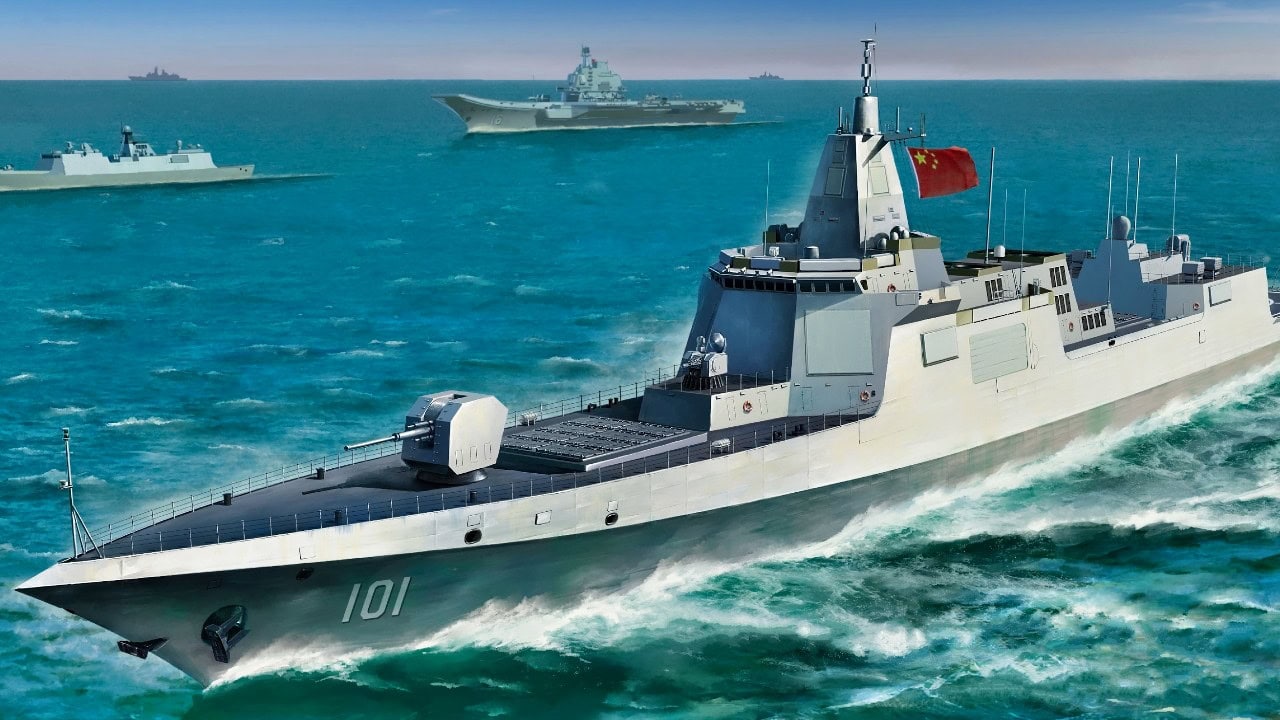
China's force structure is built for this pressure. The People's Liberation Army Navy now fields a large surface fleet built around Type 055 cruisers, Type 052D destroyers, amphibious ships, and a growing carrier arm. The PLA Rocket Force can put US and allied airfields under missile attack from the opening hours. The point is not that China can easily take Taiwan. The point is that Beijing can create a tempo problem: saturate bases, isolate the island, and dare Washington to escalate while diplomatic language stays carefully measured.
A 3.5 percent spending target helps with that only if it converts into deployable combat power. Ten more briefing slides on burden-sharing do not intercept missiles. Faster Foreign Military Sales approvals, co-produced munitions, dispersed fuel, and prepositioned repair kits do.
What Washington Should Prove Next
The administration's Shangri-La line is coherent at the headline level: allies should carry more weight, the United States should preserve military power, and China should not dominate the Pacific. That is a defensible policy. It is also incomplete until Taiwan is handled as an operational requirement rather than a diplomatic inconvenience.
Three tests matter over the next 90 days. First, the Taiwan arms package should move, even if the administration keeps the announcement dry and technical. Second, the Pentagon should show that Middle East operations have not drained the specific Pacific stocks Taiwan would need in a blockade or invasion scenario. Third, the United States should tie the 3.5 percent standard to actual capability outputs: missile cells, submarines, air-defense batteries, hardened airfields, and munitions production capacity.
Hegseth is right that Asia needs partners, not protectorates. But Taiwan cannot be treated as a partner only when it is convenient to say so aloud. The island is already spending more and taking more risk than most countries applauded from the Singapore stage. If Washington wants quiet strength, it has to deliver the strength. Quiet by itself is just a pause the other side can exploit.
Sources
- Department of War transcript of Hegseth's Shangri-La Dialogue remarks, May 30, 2026
- USNI News report on Hegseth's Shangri-La remarks and Taiwan arms-sale comments
- AP report on Hegseth's softer China tone at Shangri-La
- Reuters report carried by GMA on the 3.5 percent defense-spending call and Taiwan arms package
Pete Hegseth announced at the Shangri-La Dialogue on May 30, 2026, that the U.S. expects allies to meet a 3.5% GDP defense spending threshold for enhanced military support. This policy shift raises concerns for Taiwan, which, lacking treaty ally status, may face reduced U.S. support amid increasing Chinese military pressure. The U.S. plans a $1.5 trillion defense investment, emphasizing the need for Taiwan to strengthen its defense capabilities.
- U.S. plans a $1.5 trillion defense investment.
- Countries meeting the 3.5% GDP defense spending threshold will receive faster access to U.S. weapons.
- Taiwan is not a treaty ally and faces unique challenges in U.S. support.
- Hegseth's speech indicated a shift in U.S. tone towards China and Taiwan.
- Taiwan is awaiting a significant arms package worth up to $14 billion.