
Hegseth's NATO Test 2026 Reveals Europe's Patriot and Troop Gap Despite 5 Percent Goal
 Dr. Klaus Weber
Hegseth's NATO Review 2026 Shows Europe's Patriot and Troop Gap Despite 5 Percent Goal
Six months. That is the deadline that Pete Hegseth set on June 18 in Brussels for the American review of the US troop presence in Europe. At the same time, NATO speaks of 5 percent of GDP by 2035 and an additional 90 billion dollars in real defense spending by European allies and Canada in the past year. These two figures do not fit together neatly. They do not show an alliance on the move, but rather an alliance that is being forced for the first time in decades to precisely name the difference between money, armed forces, and American availability.
The American Review is Not a Budget Dispute
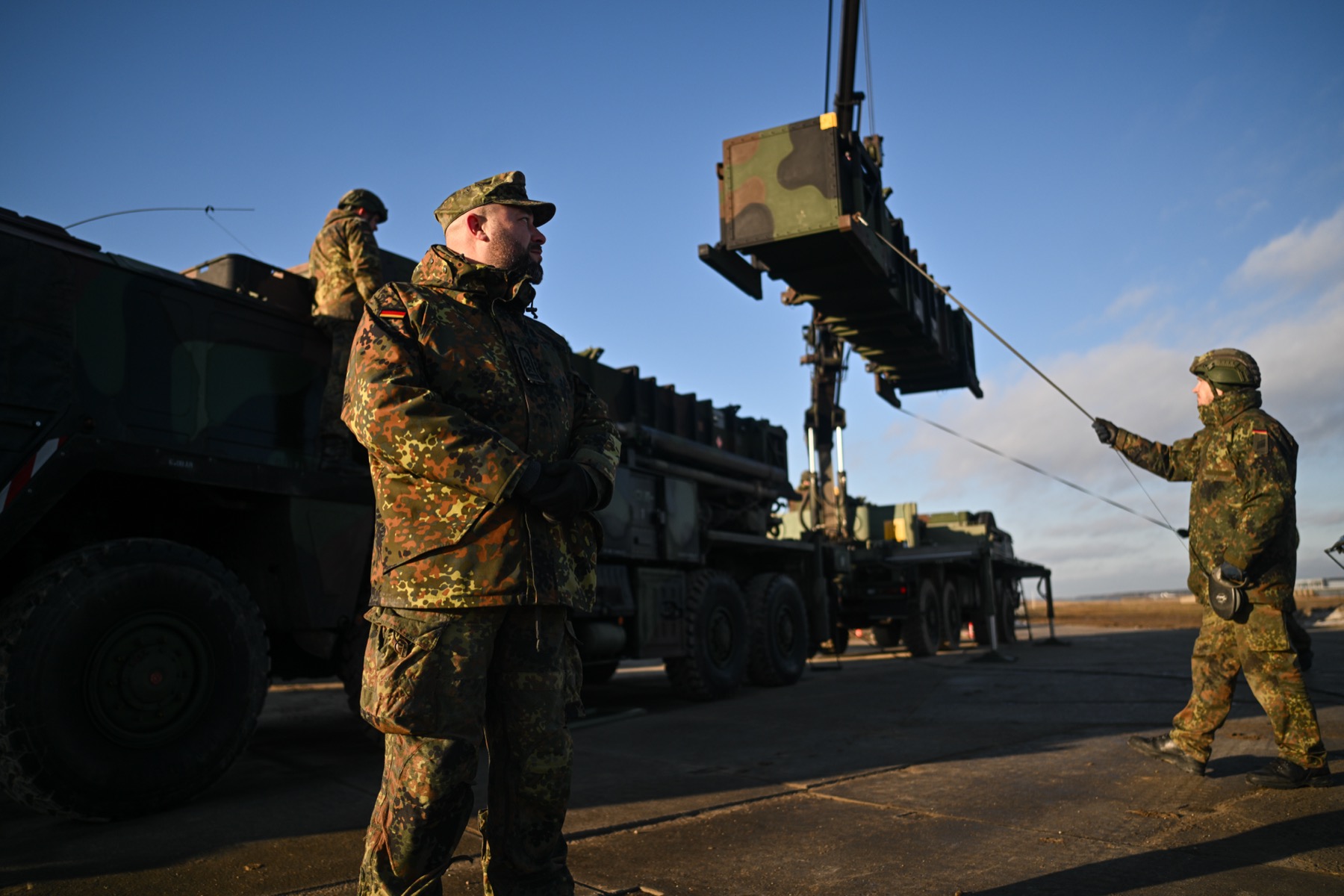
Hegseth's announcement was rhetorically rough, but strategically not new. The US is reviewing which forces will remain in Europe, which capabilities are needed in other regions of the world, and which European commitments exist only on paper. According to Reuters, the review is expected to take up to six months and involve Congress. This is important because Congress has previously set minimum thresholds for the American presence in Europe. Washington cannot simply withdraw overnight. But it can shift NATO's planning assumptions.
That is where the real significance lies. If the US reduces or reweights its contributions to the NATO Force Model, it does not create abstract political gaps, but rather concrete military shortfalls: command capability, strategic airlift, air refueling, integrated air and missile defense, intelligence services, space services, and long-range precision effects. Europe cannot fill these categories with a percentage figure. A budget line does not fire a PAC-3 MSE, and a summit communiqué does not replace a brigade.
5 Percent Does Not Solve the Absorption Problem
Mark Rutte framed European performance positively in Brussels. European allies and Canada would have spent an additional 90 billion dollars in real terms by 2025; nominally, it is 139 billion dollars. At the same time, he made the crucial statement: With one dollar or euro, you do not stop a missile or a tank. This is not a cliché, but the core of the European defense problem.
The 5 percent formula by 2035 consists politically of two parts: about 3.5 percent for classic defense and 1.5 percent for security-relevant infrastructure, resilience, cyber, logistics, and industrial foundations. This division is more sensible than the old 2 percent target because it makes the military infrastructure question visible. But it creates a new temptation. States can book a lot under resilience without immediately generating more deployable units. The old accounting trick does not disappear; it just becomes more sophisticated.
Germany is an instructive case in this regard. The special fund has accelerated procurements, but it has not sufficiently changed the planning and production logic. Those who provide additional billions in 2026 will not receive an additional Patriot squadron, a new ammunition factory at full capacity, or trained battalion staffs in 2026. This is not an argument against higher spending. It is an argument against the illusion that spending is already capability.
Patriot and IRIS-T Show the Industrial Limit
Air defense is the toughest test for this debate. Ukraine needs interceptor missiles now, not after the next medium-term financial planning. Euronews reported on June 17 that Ukraine had pledged or received around eight Patriot systems; Germany had delivered three from Bundeswehr stocks and pledged two more. Germany also delivered six IRIS-T SLM and six IRIS-T SLS. This is politically significant, but militarily only a snapshot.
Patriot and IRIS-T are not interchangeable systems. IRIS-T SLM is a German medium-range system with 360-degree radar, vertical launch containers, and high suitability against aircraft, cruise missiles, and drones in the relevant range band. A complete battery typically includes radar, command post, and several launchers. Patriot, on the other hand, remains the core for many European armies against ballistic missiles, especially with PAC-3 and PAC-3 MSE. That is precisely why the global shortage of Patriot interceptors becomes a strategic bottleneck.
The German-Ukrainian discussions about PAC-3, IRIS-T ammunition, and the PURL mechanism show that Berlin can coordinate, but cannot sovereignly deliver what is industrially scarce outside of Europe. When Hegseth now simultaneously reviews the US presence, two dependencies become visible: the operational dependence on American forces and the industrial dependence on American high-value systems. Both are often treated separately in European debates, although they have the same structure.
The EU Formulates Correctly but Delivers Slowly Institutionally
The European Council used the right terms on June 18: defense readiness by 2030, reduction of strategic dependencies, closing critical capability gaps, air defense, drone and counter-drone capabilities, space services, long-range precision effects, and a stronger European defense industry. The reference to Romanian airspace violations and Russian drone incidents is also politically necessary. The threat is not theoretical; it touches EU territory.
But the institutional speed remains unsatisfactory. The Council calls on the EDA, Commission, and member states to harmonize requirements, pool demand, and advance SAFE and EDIP. This is correct. It is just not the same as a European decision-making body that can say: These five systems will be procured jointly, these three production lines will be guaranteed to be utilized, these ammunition standards will be standardized, these export rules will not block each other in a crisis. Europe has many instruments, but too few hard prioritization mechanisms.
What Hegseth Unintentionally Clarifies
Hegseth's appearance was uncomfortable for European ears but analytically useful. He forces the alliance to no longer treat the American presence as a tacit natural constant. Those who take European defense autonomy seriously do not need to argue anti-American. They just need to stop accounting for American capabilities in European planning as if they were freely available infrastructure.
For Germany, this means a sober priority list. First, air and missile defense must be treated as an industrial permanent task, not as an episodic Ukraine package. Second, brigade and division structures must be backed with ammunition, command resources, medical services, maintenance, and air defense. Third, Berlin must talk less about general sovereignty in the EU and more about binding series production of IRIS-T, PAC-3 alternatives, air defense guns, drone defense, and deep precision effects.
The paradox remains: Europe needs the US to buy time for its own rearmament. But as long as Europe translates this time only into budgets and not into robust capabilities, it gives Washington the argument for the next review right along with it. More money is the ticket to the debate. It is not yet defense.
Sources
On June 18, 2026, NATO and US officials discussed the review of US troop presence in Europe and the need for increased European defense spending. The review is expected to last six months and aims to address the disparity between financial commitments and actual military capabilities. Germany has supplied Patriot and IRIS-T systems to Ukraine, highlighting the ongoing military support and the strategic gaps in European defense.
- US review of troop presence in Europe set for six months.
- NATO aims for 5% of GDP defense spending by 2035.
- European allies pledged over $90 billion in defense spending.
- Germany delivered Patriot and IRIS-T systems to Ukraine.
- The report highlights the gap in European military capabilities.