
Houthi Attacks on Riyadh Airport in 2026 Reveal Saudi Interception Missile Crisis Despite the Mecca Charter
 Ahmed Al-Rashid
The Houthi Attacks on Riyadh Airport in 2026 Reveal a Crisis in Saudi Interception Missiles Despite the Mecca Charter
On October 12, 2026, the closure of Riyadh Airport was extended following consecutive Houthi attacks, just one day after 13 people were killed in a previous strike on the airport. Subsequent reports indicated that one person was killed and 11 others injured in a new attack, while media reports spoke of a decline in Saudi interception missile stockpiles. This is not a story of a fleeting air breach, but a harsh test of the Kingdom's ability to protect its economic hub under relatively cheap fire.
The Problem Is Not in Having the System but in Its Sustainability
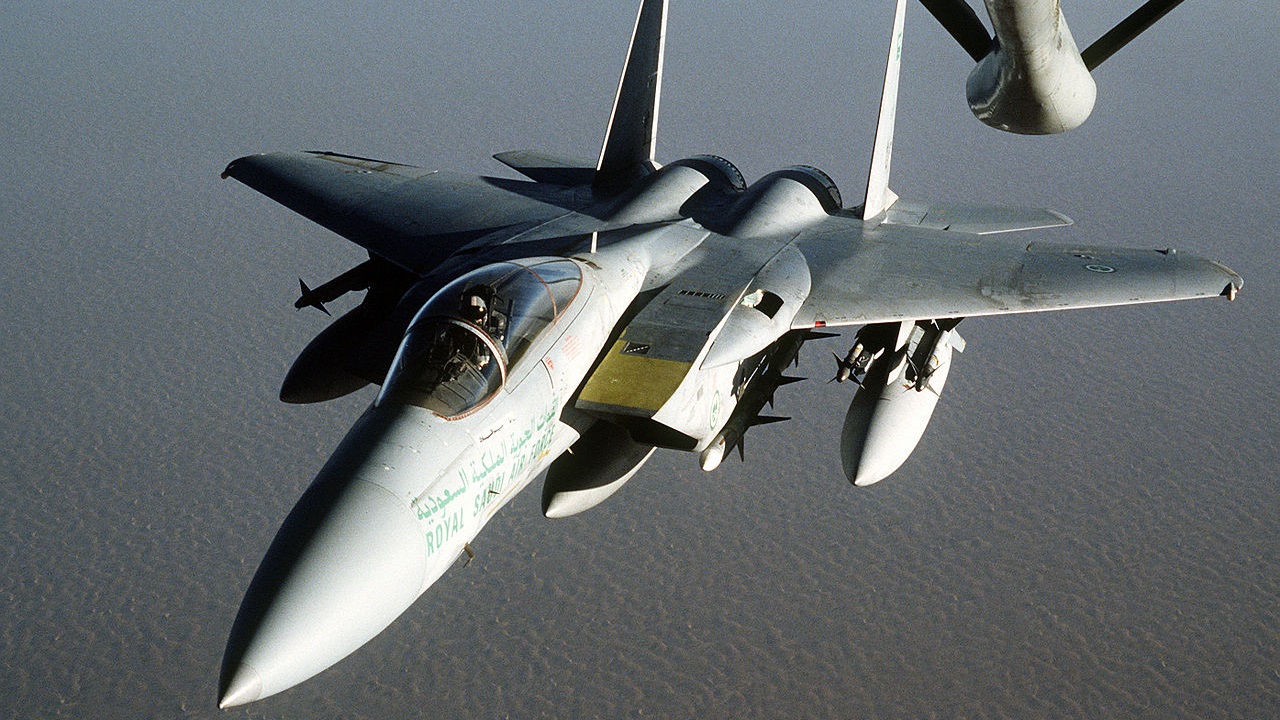
Saudi Arabia has spent billions of dollars on multiple layers of air defense, possessing F-15 fighters and advanced American interception systems, and has sought to add long-range capabilities like THAAD. However, air defense is not measured by the number of batteries on display or the value of contracts. The true measure is the number of targets the state can track, distinguish between, and then intercept daily for weeks, while maintaining a stock sufficient for the next strike.
Houthi ballistic missiles and drones impose an uncomfortable attrition equation. If an armed group launches low-cost munitions, and the Kingdom is forced to use an expensive interception missile each time, tactical success may turn into operational loss. Even successful interceptions do not solve the problems of radars, command centers, crew distribution, and reloading launchers. In military service, we know that munitions that do not reach the front depot in time are not a capability, no matter what the system is called.
Riyadh Airport Is Both a Military and Economic Target
The choice of the airport is not arbitrary. The airport is a gateway for civilian movement, a symbol of economic confidence, and a gathering point for command, control, and logistics services. Its closure after repeated attacks gives the Houthis a political impact greater than the size of the warhead itself. The message to investors and travelers is not that every missile hit its target, but that Saudi airspace is no longer continuously guaranteed.
The sensitivity of the situation increases as Riyadh tries to protect the Kingdom's image as a center for aviation, trade, and tourism under Vision 2030. The strike on the airport does not just halt a flight; it strikes at the political promise that massive spending on infrastructure will make the Kingdom more open and secure. Therefore, the tone of the threat to respond is politically understandable, but it does not answer the fundamental military question: how will airports and oil facilities be protected simultaneously if the firing continues at a high rate?
The Mecca Charter Tests the Difference Between Commitment and Capability
The attacks coincided with Pakistan's confirmation of its full military support for Saudi Arabia under the Mecca Charter, along with Turkey and Egypt condemning the attacks. These developments provide Riyadh with important political cover and may open the door for the deployment of additional crews, aircraft, or air defense units. However, deploying allied forces does not happen with a statement. Rules of engagement, chains of command, rights to use bases, radar data sharing, spare parts stock, and time to reach the front must be defined.
Here lies the gap in the Mecca Charter. The agreement may politically raise the cost of aggression, but it does not intercept a missile within minutes. Additionally, the presence of Pakistani or Turkish forces may help protect specific sites, but it does not immediately compensate for the shortage of interception missiles or the lack of integration between national networks. Allies can add platforms, but they cannot invent a joint command structure during an attack. Practically, the United States will remain the most influential in supply, maintenance, and upgrades, making discussions about Saudi defense independence premature.
Iran Offers Diplomacy While the Houthis Raise the Cost
Tehran's call for Riyadh to pursue diplomacy following the Houthi escalation reveals a clear political paradox. Iran wants to appear as a party capable of reducing tensions, while its Yemeni ally uses pressure on Saudi airports and facilities to improve its negotiating position. This does not mean that every Houthi decision comes directly from Tehran, but it does mean that Riyadh cannot separate its air security from broader regional calculations.
A direct Saudi response may satisfy public opinion, but it carries the risk of expanding the targeting circle, especially if strikes on Yemen turn into a long campaign without a viable political objective. Conversely, merely relying on defensive interceptions leaves the initiative to the adversary and depletes stockpiles. This is the triple capability dilemma that Gulf purchases have long neglected: equipment alone is not enough without training, and training is not enough without an institution capable of planning for stockpiles, early warning, and decision-making.
What to Watch for in the Coming Days
- Will Riyadh announce clear figures on interception missile stockpiles or request urgent shipments from the United States?
- Will the Mecca Charter turn into an actual deployment of Pakistani and Turkish forces, or will it remain at the level of political commitment?
- Will the attacks expand from Riyadh Airport to regional airports and energy facilities, or will diplomatic pressure succeed in stopping them?
- Will Saudi Arabia change the rules for air defense distribution to cover both airports and oil facilities simultaneously?
The Kingdom has the money, aircraft, and partners, but it now faces a test that cannot be resolved by a new deal alone. If the adversary can disrupt a major airport with low-cost means, the question is no longer whether Saudi Arabia can buy better air defense, but whether it can build a sustainable system that fights every day and maintains its ammunition for the next day. Between reliance on American protection and the desire for decision-making independence, the Mecca Charter remains a political promise that has yet to transform into a joint air capability.
Sources
- Reuters, reports from October 11 and 12, 2026, on the attacks on Riyadh Airport and the extension of the closure.
- Al Jazeera, reports from October 12, 2026, on the new attack and the Iranian call for diplomacy.
- i24NEWS, report from October 12, 2026, on the pressures on Saudi interception missile stockpiles.
- Jerusalem Post, report from October 12, 2026, on Pakistan's commitment under the Mecca Charter.
Houthi forces launched attacks on Riyadh airport on October 12, 2026, resulting in 13 fatalities and 11 injuries. The assaults exposed vulnerabilities in Saudi air defense systems, which are reportedly facing a depletion of interceptors. Concurrently, Pakistan expressed military support for Saudi Arabia under the Mecca Agreement, while Iran urged for diplomatic solutions amidst the escalating conflict.
- Houthi attacks on Riyadh airport resulted in 13 deaths and 11 injuries.
- Saudi Arabia's air defense stockpile is reportedly declining.
- The attacks challenge Saudi Arabia's ability to protect its economic infrastructure.
- Pakistan reaffirmed military support for Saudi Arabia under the Mecca Agreement.
- Iran called for diplomacy following the escalation of Houthi attacks.