
Houthi Attacks on Saudi Arabia Test the Saudi-Turkish-Pakistani Mecca Pact in 2026
 Ahmed Al-Rashid
Houthi Attacks on Saudi Arabia Test the Saudi-Turkish-Pakistani Mecca Pact in 2026
[Riyadh] Two days after the Houthi attacks on cities in southern Saudi Arabia and oil facilities, the Pakistani statement on September 10 indicated that any military response had not yet been discussed under the Mecca Pact for mutual defense. This timing is more significant than the diplomatic wording itself. The alliance, presented in August as a new deterrent network, now faces its first real test, not just a maneuver or a signing ceremony.
Limited Attack in Geography, Broad in Significance
Reuters reported that the Houthis attacked southern Saudi cities for the second day, while Associated Press and NPR reported on attacks that ignited fires in oil facilities and resulted in 73 injuries. Saudi Arabia stated that it would take all necessary measures to deter the attacks, while Al Jazeera reported that fighting in Yemen is escalating and warnings have extended into the Saudi interior. This is not yet a full-scale war, but it is precisely the type of crisis that reveals the difference between a statement of solidarity and the ability to respond.
From a military perspective, the Houthis do not need to destroy a major facility to achieve an operational impact. A single missile or drone hitting a sensitive point, or forcing air and transport movements to slow down, is enough to raise insurance costs, deplete air defense batteries, and test early warning procedures. Air defense is not measured by the number of Patriot and THAAD missiles in storage, but by its ability to detect a low-signature target, identify it, engage it, and then keep the network ready for the next attack.
What Pakistan's Hesitation Means
The Pakistani position clearly indicates the limits of the Mecca Pact. The Saudi-Turkish-Pakistani agreement promises consultation and mutual defense, but consultation does not automatically equate to sending aircraft to Yemen. Islamabad is considering three practical considerations: not becoming a direct party in a long war, not opening a political front with Iran, and not committing its forces to an operation that Riyadh or Ankara do not have a shared definition for its conclusion.
Reuters showed in August that the three countries pledged mutual defense, then reported at the end of the month that they agreed to establish a secretariat for the pact. However, the existence of a secretariat does not create an operations room, and the existence of an operations room does not create rules of engagement. So far, we do not see a unified command, nor a publicly announced schedule for the distribution of aircraft and munitions, nor a decision-making mechanism that determines when a Houthi attack becomes an aggression against the members of the pact that requires a response. Here lies the credibility gap that War on the Rocks analysis pointed out before the crisis.
Testing the Triad's Capability
In evaluating armies, I tend to use a simple but harsh triangle: equipment, training, and institutions. Saudi Arabia has advanced equipment and a wide network of bases, Turkey has a growing defense industry and experience in operating drones, while Pakistan provides experienced air and military personnel. However, these elements do not transform into a joint force merely by being gathered in a document.
- Equipment needs a compatible network for linking, communications, and friend-or-foe identification among Patriot, THAAD, aircraft, and reconnaissance systems.
- Training requires joint exercises that go beyond displays, simulating simultaneous missile and drone attacks on oil facilities, cities, and bases.
- Institutions need swift political decisions, a clear chain of command, and rules of engagement that are not written while missiles are falling.
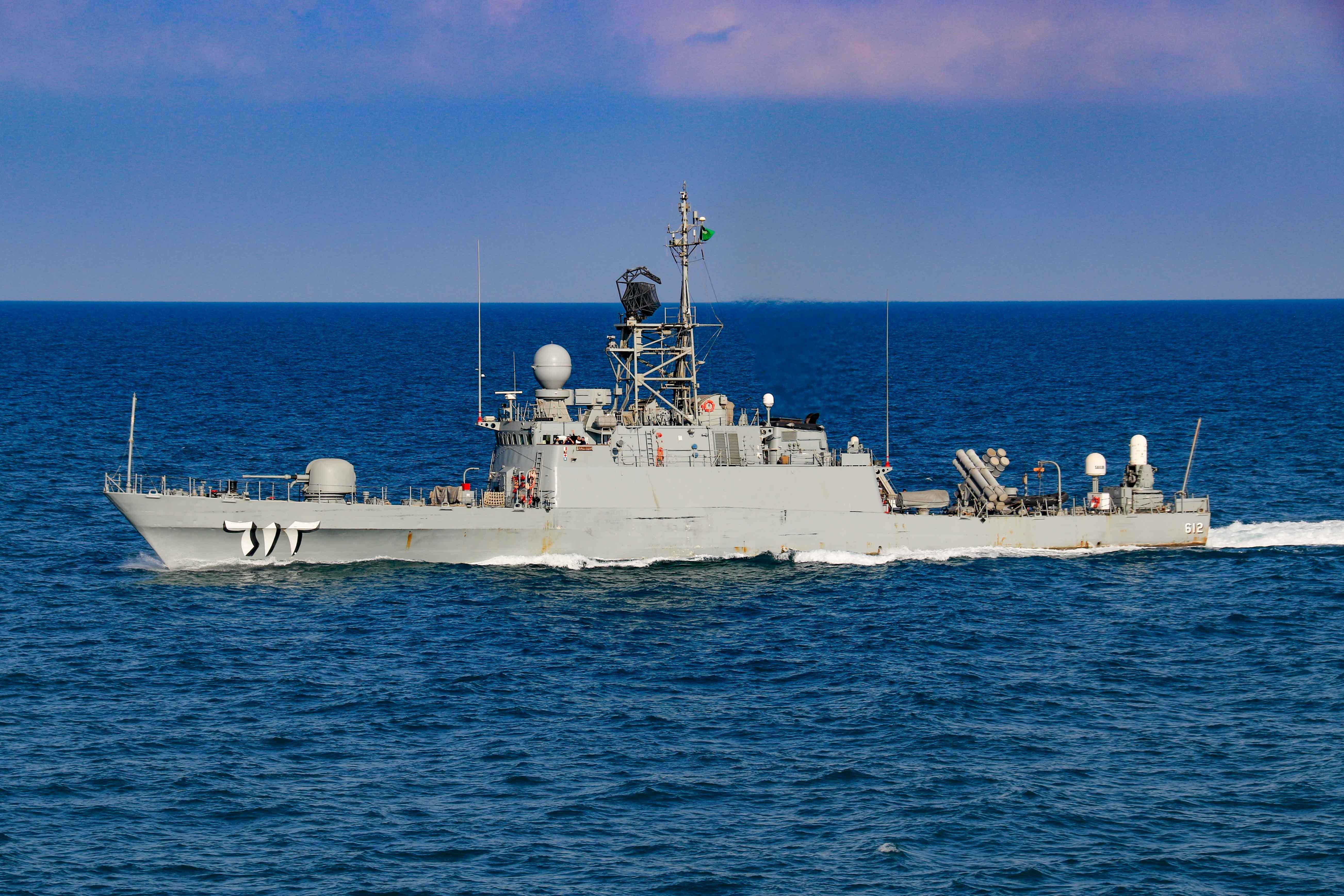
Even the Saudi-American cooperation in aviation, represented by the attached image from a joint air integration exercise in the Gulf, does not eliminate this problem. The partnership with Washington provides Riyadh with early warning and interception capabilities, but it does not automatically grant the Mecca Pact additional American capability. In fact, Saudi Arabia's continued reliance on the American umbrella makes the new agreement closer to a tool for political diversification than a complete military alternative.
Why the Houthis Care About This Hesitation
The Houthis are not monitoring Islamabad's statements out of curiosity. They are measuring whether targeting Saudi Arabia will lead to a direct Saudi response, a broader air campaign, or a rift within the new alliance. The Houthis' declared control over the port of Mocha, and reports of the start of a Yemeni government campaign to retake Sana'a, mean that the western coast and the Red Sea could become leverage connected to attacks inside Saudi Arabia. Regardless of the accuracy of these field reports needing verification, the operational trend is clear: expanding the threat space until defending every point becomes costly.
Therefore, the Saudi response will not be solely military. Riyadh will need to protect vital facilities, distribute stocks, enhance passive defense, and manage messaging with Pakistan, Turkey, and Iran. Bombing Houthi sites may temporarily satisfy public opinion, but it does not solve the problem of cheap drones nor rebuild a shared warning network. As any military officer who has served in the region knows, an air sortie is easier than maintaining readiness after the sixth month.
Conclusion
The first test of the Mecca Pact has not disqualified it, but it has revealed its limits. Saudi Arabia wants an agreement that deters adversaries and reduces reliance on the United States, Pakistan wants to retain decision-making freedom, and Turkey wants to expand its influence without getting involved in an endless Yemeni war. These interests can coexist in times of calm, but they collide at the first missile.
The dilemma is not whether the three countries can buy more aircraft or missiles. They can. The dilemma is whether they can establish a joint decision-making institution that accepts its human and political costs before the battle begins. Until then, the Mecca Pact will remain a strong political message, but the deterrence needed in southern Saudi Arabia is not measured by the number of signatory countries, but by the speed of decision-making when an oil facility ignites.
Sources
- Reuters, September 10, 2026, regarding the lack of discussion of a Pakistani military response under the Mecca Pact and the attacks on Saudi Arabia.
- Reuters, September 9, 2026, regarding the Houthi attacks on southern Saudi cities for the second day.
- Al Jazeera, September 9 and 10, 2026, regarding the escalation of fighting and the testing of the defense pact.
- Associated Press and NPR, September 8, 2026, regarding the fires and injuries in the attacks on Saudi Arabia.
- War on the Rocks, September 9, 2026, regarding the credibility gap in the Mecca Pact.
Houthi forces launched attacks on southern Saudi cities and oil facilities from September 8 to 10, 2026, injuring 73 individuals. Pakistan stated that a military response under the Mecca Pact has not been discussed, highlighting the pact's limitations. Saudi Arabia is implementing measures to deter further Houthi aggression as the situation escalates.
- Houthi forces attacked southern Saudi cities for the second consecutive day.
- 73 injuries reported due to the attacks on oil facilities.
- Pakistan has not yet discussed military response under the Mecca Pact.
- The attacks have raised concerns about the effectiveness of the Mecca Pact.
- Saudi Arabia is taking necessary measures to deter further attacks.