
The Russian GUGI Prepares for War Over Arctic Cables — NATO Reveals a New Underwater Threat 2026
 Dmitri Volkov
The Russian GUGI Prepares for War Over Arctic Cables — NATO Unveils a New Underwater Threat 2026
Russia has not cut any cables near Spitsbergen. And this is what makes the story dangerous. According to Reuters, NATO disrupted a Russian operation in the archipelago area, during which ships and underwater vehicles were practicing the use of secret weapons against underwater infrastructure. This was not a random maneuver, but a training scenario that Moscow could implement in a crisis situation. For Western governments, this is evidence of the preparation of a sabotage tool; for the Russian General Staff, it is a test of how far one can go in the "gray zone" without crossing the threshold of open conflict.
What Happened Near Spitsbergen
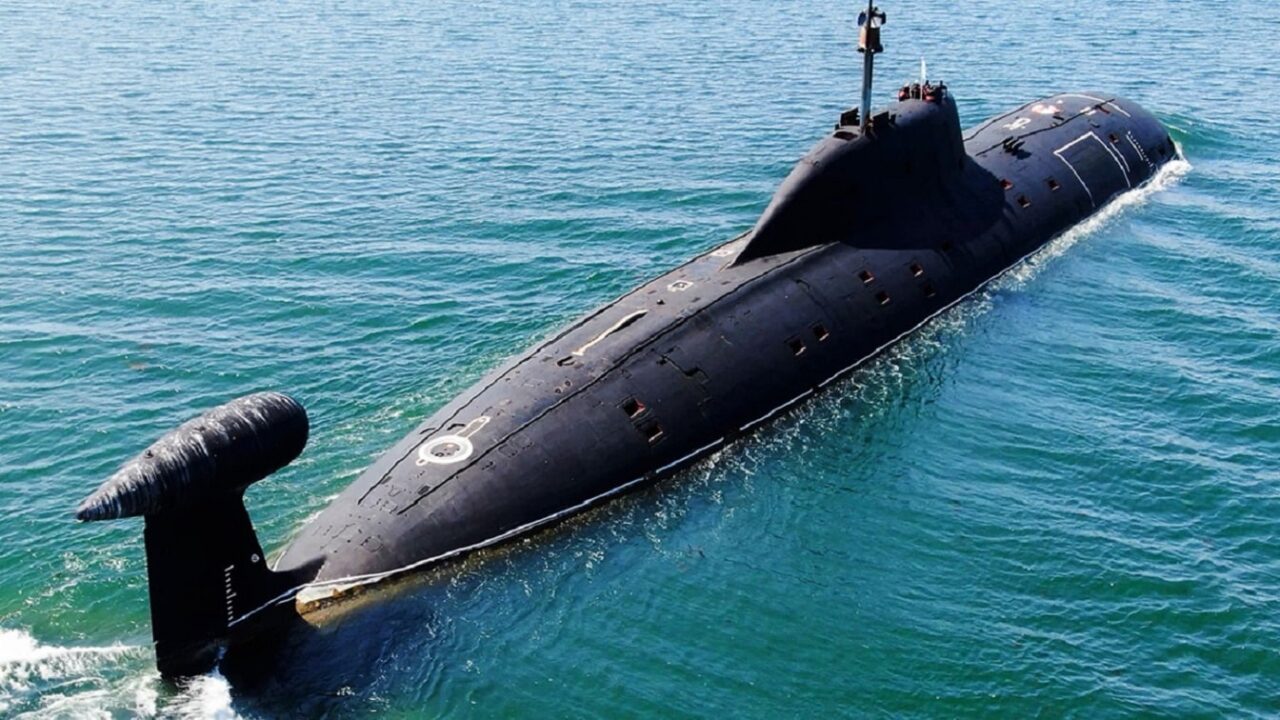
According to a Reuters investigation from September 10, 2026, British and Norwegian forces pursued Russian ships in Arctic waters, where an attack on underwater cables was being practiced using a secret system delivered by an underwater vehicle. Agency sources did not disclose the technical principle of the weapon's operation. British and Norwegian officials then informed Moscow that the operation had been detected. Norwegian Defense Minister Tore Sandvik called it a signal of the impossibility of acting covertly, while emphasizing Oslo's reluctance to escalate.
The main suspect is the Main Directorate of Deep-Sea Research, known by its Russian abbreviation GUGI. Formally, it is a structure of the Navy, but its tasks lie at the intersection of intelligence, oceanography, and special operations. GUGI has deep-sea vehicles capable of surveying cables, pipelines, and other objects at great depths. In peacetime, such activities may appear as scientific or hydrographic work. In wartime, it turns into a covert way to prepare a strike on infrastructure that communication, financial operations, and military command depend on.
Why the Arctic Has Become a Field of Covert War
The Arctic route near Spitsbergen is significant not only for Norway. Underwater lines connect Northern Europe with the North Atlantic communication system, and the archipelago itself is located near Russian military facilities on the Kola Peninsula. Here, three logics of Russian strategy intersect. The first is the defense of the bastion of the Northern Fleet and approaches to the bases of strategic nuclear submarines. The second is control over northern maritime communications. The third is the creation of a threat that is difficult to attribute and even harder to counter with conventional air defense means.
That is why damaging a cable does not have to be the first step. It is enough to survey the route, identify weak points, check the response of patrol forces, and understand how long it would take to restore. In the event of a crisis, Moscow would have the option to choose between physically damaging the line, jamming it, and demonstrating a presence. The military value of such an operation lies not only in the destruction of the object but also in the uncertainty: the opponent is forced to expend resources to protect the entire infrastructure, even if the attack occurs only in one area.
From Soviet Intelligence to the Russian "Gray Zone"
In the Soviet naval tradition, the ocean was viewed as a space of covert confrontation, where underwater intelligence was supposed to prepare the fleet's actions even before the war began. Modern Russia has inherited this logic but adapted it to a weaker economic position. Moscow can no longer constantly compete with NATO in the number of ships and satellites. Therefore, it invests in narrow, high-tech capabilities that can create a disproportionate political effect.
Here, an institutional feature is important. Western militaries are accustomed to measuring threats by the number of missiles, ships, and aircraft. GUGI operates differently: its result may not be captured territory but several weeks of uncertainty, insurance losses, and political disputes over whether the incident was sabotage. In this sense, an underwater vehicle is more valuable than a large surface fleet. It is cheaper, harder to detect, and its use can affect several states at once.
Strategic Consequences for NATO
Allies have received an unpleasant but useful lesson. Arctic surveillance cannot be limited to controlling airspace and the exits of Russian submarines. A constant map of cable routes, autonomous underwater sensors, data exchange between coastal services, and a pre-agreed response mechanism are needed. Otherwise, each new incident will turn into an intelligence dispute rather than a protected military object.
It is telling that the report of the Russian operation appeared against the backdrop of broader pressure on Ukraine's transport corridors and NATO's eastern flank. Reuters also reported on a warning from Poland regarding possible attacks on border crossings. This does not prove a unified plan but shows a common principle: Russia is expanding the conflict field from the front to the logistics, communications, and infrastructure of allies.
The secrecy of the weapon is not a sign of omnipotence. More often, it is a sign that Moscow wants to maintain space for denial.
The Russian GUGI will likely continue such training, even if the current operation ended in retreat. NATO will seek to turn detection into deterrence, while Moscow will aim to prove that any increase in security only raises the cost of protection. In the coming years, underwater cables will become as much an object of military planning as airfields and depots. But this does not mean an inevitable underwater war. If allies create a unified surveillance system and pre-determine consequences for the organizer of sabotage, the advantage of secrecy will diminish. If responsibility dissolves again in the phrasing of "unknown damage," GUGI will achieve exactly what it seeks — strategic influence without an official shot fired.
Russian GUGI conducted operations near Svalbard on September 10, 2026, preparing for potential attacks on underwater cables using secret weapon systems. NATO forces detected and pursued Russian ships during these operations, signaling the challenges of covert military actions. The Norwegian Defense Minister emphasized the implications for Arctic security and the need for enhanced monitoring of underwater infrastructure.
- Russian GUGI conducted operations near Svalbard involving underwater attacks on cables.
- NATO forces detected and pursued Russian ships during these operations.
- Norwegian Defense Minister stated the operation was a signal of the inability to act covertly.
- The operations are part of a broader Russian strategy to control Arctic communications.
- The report highlights the strategic importance of underwater cables for military and civilian infrastructure.