
Houthi Missiles Target Saudi Fighter Near Sanaa, Threatening Airports in the Kingdom After Iranian Flight Carrying 200 Passengers
 Ahmed Al-Rashid
Houthi Missiles Target Saudi Fighter Jet Near Sanaa, Threatening Airports in the Kingdom After Iranian Flight Carrying 200 Passengers
At 5:25 AM on July 3, according to Houthi military spokesman Yahya Saree, the issue was not just an Iranian civilian aircraft, but new rules of engagement over Sanaa. The Houthis claimed that their air defenses fired surface-to-air missiles at Saudi fighter jets attempting to prevent a plane coming from Tehran, carrying over 200 Yemenis among the stranded, injured, and sick, from landing at Sanaa International Airport. The plane eventually landed, and the Houthi threat shifted directly to Saudi airports and its land and maritime interests.
This is not an isolated incident in Yemen's ledger. It is an early test of what remains of the truce between Riyadh and Sanaa after the recent Iran War, and after Tehran resumed using civilian air routes as a political and humanitarian channel at the same time. Militarily, any officer who has served in the region knows that the most dangerous clashes are not those that begin with a declared war decision, but those that start with a civilian aircraft, a monitoring fighter, and an air defense system wanting to assert its presence.
What the Parties Said
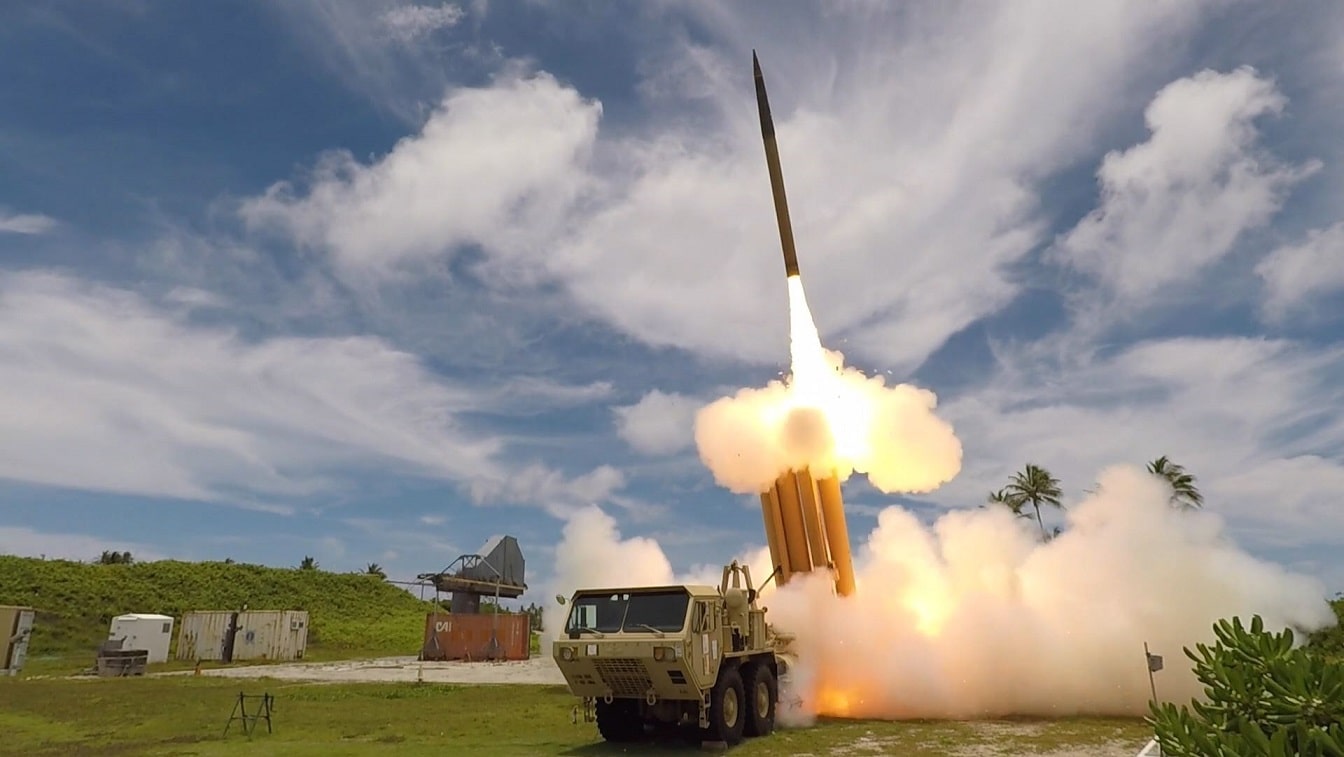
Al Jazeera reported that Saree warned Saudi Arabia against repeating any attempt to breach Yemeni airspace or target Yemen, stating that the response would be comprehensive against airports and vital interests on land and sea. He added that flights between Sanaa and Tehran would continue regardless of the consequences. Houthi media reported that the Iranian plane also transported a Houthi delegation to Tehran to attend the funeral of Iranian leader Ali Khamenei, who was killed in American-Israeli strikes that ignited the Iran War.
The Jerusalem Post noted that the Houthis claimed they fired air defense missiles at a Saudi fighter jet near Sanaa Airport, forcing it to leave the area. The important aspect of the newspaper's report is not just the Houthi narrative, but the addition that the group has been testing missiles in recent weeks to improve range and accuracy. Meanwhile, the Straits Times, citing Reuters, indicated that the Saudi-led coalition considered the Houthi threats an attempt to divert attention from their violations against Yemenis, warning of a firm and unprecedented response to any attempt to target the Kingdom or violate Yemen's sovereignty.
The Military Significance Behind a Minor Aerial Incident
If we take the Houthi narrative as it is, we are faced with a brief engagement between Saudi air surveillance and Houthi air defense. If we consider the implicit Saudi narrative, we are looking at Houthi propaganda to cover the establishment of an Iranian flight route to Sanaa. In both cases, the practical outcome is the same: the Houthis want to turn Sanaa Airport from a humanitarian file into a deterrent card. They are not just saying let the sick land, but they are indicating that any obstruction of the Tehran-Sanaa route could be met with pressure on the airports of Jeddah, Riyadh, Abha, and Jazan.
Here lies Saudi Arabia's longstanding problem in Yemen. The Kingdom possesses significant air superiority, from the F-15SA to the Typhoon, and has defensive layers from Patriot to shorter-range systems, but it faces an adversary that does not need to control the skies to win a political point. The Houthi only needs to launch a missile, or drop a drone near a facility, or create a temporary disruption at a civilian airport. Asymmetrical warfare does not require the weaker party to defeat the Saudi air force; it requires them to make the use of that weapon politically costly.
Houthi Capabilities and Their Limits
It is a mistake to portray the Houthis as a regular air defense force. They do not have a state-level command and control network, nor integrated radars covering all of Yemen, nor a consistent ability to prevent Saudi aviation from operating if Riyadh decides to escalate. But it is equally a mistake to underestimate what they have accumulated since 2015. The group has proven, through attacks on oil facilities and Saudi airports during the years of war, that cheap missiles and drones can penetrate the gaps between air defense, internal security, and civil aviation insurance calculations.
This is the triangle of capability that I often refer to: equipment, training, and organization. The Houthis are not institutionally superior, but they have compensated for that with dispersed launch networks, extensive field experience, and Iranian technical support. Saudi Arabia, on the other hand, has much better equipment, but it always needs to translate technical superiority into a coherent operational decision: when to intercept a plane? When to ignore? When to respond to a threat? And when not to give the Houthis the image they want?
Iran Links Sanaa to a Broader Theater
The flight from Tehran to Sanaa is not a completely innocent humanitarian detail, nor is it an explicit military operation. This is precisely the source of its danger. Iran knows that a civilian aircraft ties the adversary's hands, especially if it carries patients and the injured. It also knows that any Saudi friction with it will make the Houthis appear as the guards of a besieged airport rather than an armed group threatening navigation and facilities. It is a cheap way to reintroduce Yemen into the regional deterrence equation after the Iran War, without firing a single Iranian missile.
For Riyadh, allowing a steady line between Tehran and Sanaa means accepting a quasi-official Iranian influence channel within northern Yemen. Preventing this line by force carries the risk of appearing as a party targeting a flight of patients and civilians. Between these two options lies a vast gray area, which is the preferred environment for the Houthis. As the old military saying goes: whoever chooses the battlefield chooses half the outcome.
Why Riyadh Does Not Want a New War
Saudi Arabia emerged from the Yemen War wanting quieter borders rather than a complete military victory. Prisoner agreements, including a significant exchange in May involving seven Saudis, were part of this approach. Vision 2030, airport security, investments, and the Kingdom's image as a regional platform all make a return to a wide aerial campaign a costly option. Thus, the coalition's response came in the form of a threat rather than action: unprecedented force if the Kingdom is targeted, not the announcement of a new operation.
But deterrence does not live on statements alone. If the Houthis continue to send Iranian flights protected by threats, and if Saudi Arabia responds only with surveillance, the Houthis will understand that the Sanaa-Tehran line has become politically protected. If Saudi Arabia responds forcefully, they may get the escalation that allows them to invoke the rhetoric of siege and aggression. This is a classic dilemma in incomplete wars: the stronger party has more options, but pays a higher price for each option.
What to Watch Now
- Will flights between Sanaa and Tehran become a regular schedule or remain symbolic flights linked to Khamenei's funeral and humanitarian files?
- Will there be visual or radar evidence of Houthi air defense missile launches near the airport?
- Will Saudi Arabia raise air defense readiness around southern and western airports without an official announcement?
- Will Tehran link the Yemeni file to other Gulf files such as Hormuz, Iraq, or southern Lebanon?
In my estimation, the immediate danger is not a comprehensive Saudi-Houthi war in the coming days, but a quiet erosion of the rules of the truce. The Sanaa airport incident indicates that the Yemeni war is not over; it has simply become more selective. Saudi Arabia wants quiet borders and secure airports. The Houthis want to prove that the security of these airports passes through Sanaa. Iran, on the other hand, wants to gain a political air corridor at the cost of a civilian flight. Here lies the paradox: each party claims it does not want escalation, and each party uses tools that only work if the other believes they could ignite escalation.
Sources
- Al Jazeera, July 3, 2026, Yemen’s Houthis threaten Saudi Arabia after alleged airspace intrusion.
- The Jerusalem Post, July 3-4, 2026, Houthis claim missiles forced Saudi warplane from Yemeni airspace.
- Straits Times / Reuters, July 4, 2026, Yemen’s Houthis threaten Saudi targets over Iran flight to Sanaa.
- Caliber.Az, July 4, 2026, Houthis say they forced Saudi warplanes to retreat during Iranian passenger flight.
Houthi forces launched surface-to-air missiles at Saudi fighter jets near Sanaa on July 3, 2026, as an Iranian flight carrying 200 passengers landed. The Houthi spokesperson warned Saudi Arabia against further airspace violations, indicating a significant escalation in military tensions. This incident highlights the ongoing conflict dynamics and the Houthi's intent to assert control over airspace.
- Houthi forces launched missiles at Saudi fighter jets near Sanaa.
- An Iranian flight carrying 200 passengers landed in Sanaa amid tensions.
- Houthi spokesperson warned Saudi Arabia against further airspace violations.
- The incident reflects ongoing military tensions between Houthi forces and Saudi Arabia.
- Houthi forces are testing missile capabilities for improved range and accuracy.