
How Did These Two "Roarers" of the U.S. Military Collide?
On May 17 local time
Two EA-18G "Growler" electronic warfare aircraft of the U.S. military
Were involved in a rare mid-air collision
The two aircraft became entangled, with unusual postures
How did the accident happen?
Reporter Wu Jie
Noticed some details
↓↓↓
Why did a rare error occur during a routine maneuver?
There were signs before the collision of the two aircraft
On May 17 local time, a crash occurred at an Air Force base in Idaho during an airshow, where two EA-18G "Growler" electronic warfare aircraft collided, and the four crew members on board ejected to escape.
Wu Jie introduced that these two "Growler" aircraft belong to the demonstration team of the VAQ-129 squadron, whose main function is to showcase the image and capabilities of the U.S. military through flight performances at various aviation open events.
"I watched their past flight performance videos, and they indeed have many maneuvers, but flying in a close formation is supposed to be a routine action, and it's really rare for an error to occur in such a maneuver."
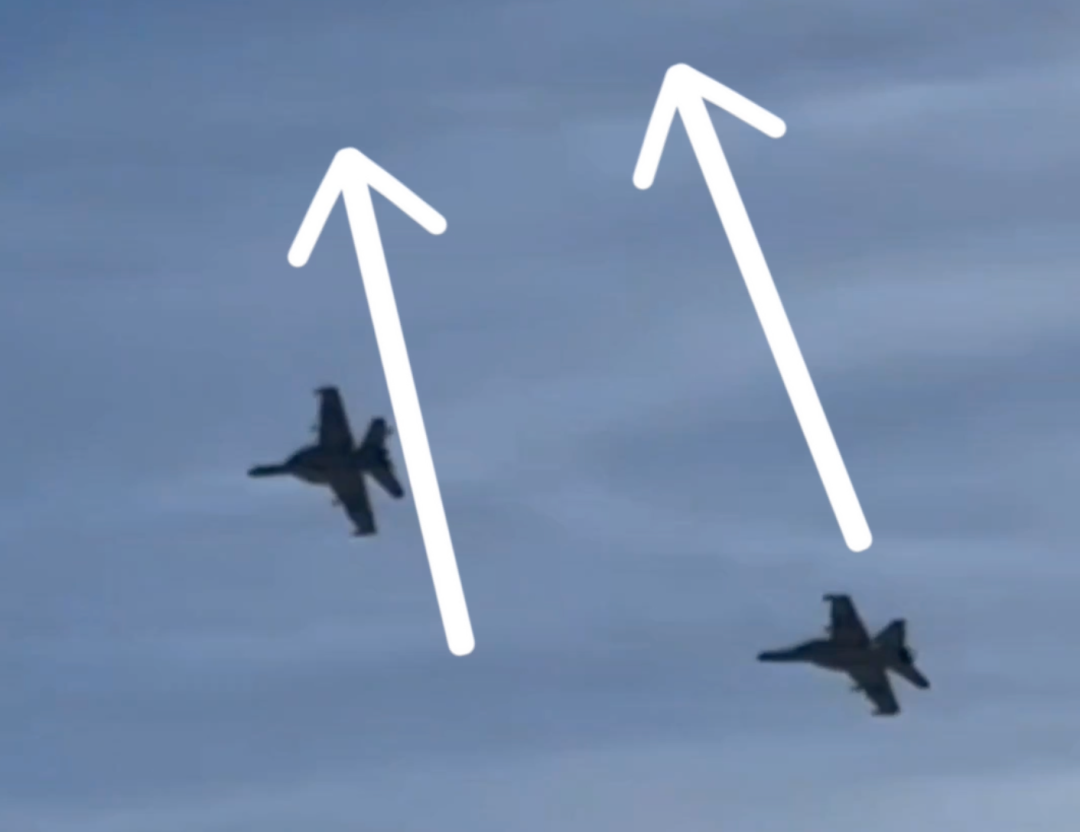
By repeatedly watching the accident video, Wu Jie found that at that time, the two aircraft were adjusting their pitch, heading, and spacing. However, the pitch of the two aircraft was actually different. Initially, the lead aircraft was on the outer side of the turn but at a steeper angle; the wingman was on the inner side with a slightly shallower angle.
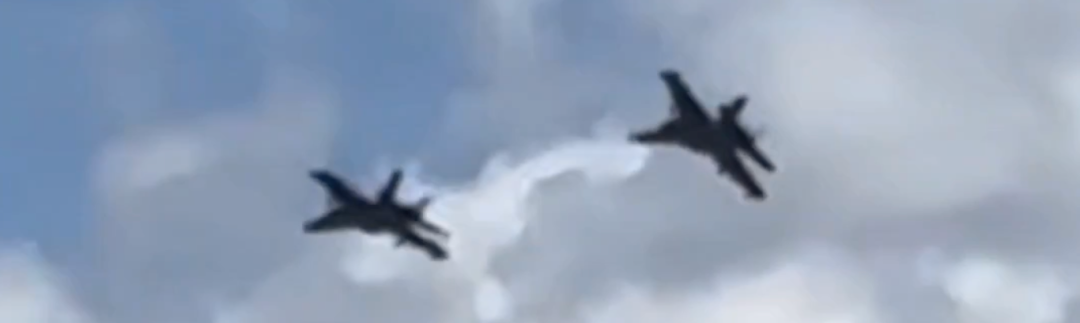
Wu Jie analyzed that the wingman did not adjust properly and flew above the rear of the lead aircraft. At this point, an awkward problem arose: the wingman should have been closely monitoring the lead aircraft and making detailed adjustments based on its movements, but by flying above the lead aircraft, the wingman pilot might not have been able to see the lead aircraft due to the body obstruction. Meanwhile, the lead aircraft, being in front, also found it very difficult to observe the actions of the wingman. Therefore, the two aircraft were flying very fast and very close, yet neither could see the other, and that’s when the tragedy occurred.
Wu Jie stated that the specific cause will depend on the accident report, but it can be seen from the accident video that there were already signs before the collision of the two aircraft. "If the wingman's pilot overlooked some issues, but the EA-18G is a two-seat aircraft, there is still another crew member in the rear cockpit; didn’t he see the problem either?"
Can the pilots of the accident aircraft
Represent the average level of U.S. military pilots?
Some netizens, after watching the accident video of the two "Growler" aircraft colliding, questioned the training level of the pilots.
Wu Jie said: "The skill level of the pilots on these two aircraft cannot represent the average level of U.S. military pilots—because they are flight instructors, and the average level of pilots is what they have trained." One of the important functions of the VAQ-129 squadron is to train flight personnel and electronic warfare officers for frontline combat units.
The EA-18G has experienced two relatively serious crash incidents in 2024 and 2025, one of which was a low-altitude training crash in October 2024 that resulted in the deaths of two crew members. "That's right, Martin-Baker's ejection seats don't create miracles every time."
Reporters丨Wu Jie, Bai Chen, Lin Jingxi, Tian Feng, Liu Mengyuan
On May 17, two U.S. Navy EA-18G Growler aircraft from the VAQ-129 Squadron collided mid-air during an airshow in Idaho, resulting in the emergency ejection of four crew members. The incident was caused by a failure in maintaining proper formation, leading to visibility issues between the aircraft. The pilots involved were flight instructors, raising questions about the training standards.
- Two EA-18G Growler aircraft collided during an airshow in Idaho on May 17.
- Four crew members ejected safely from the aircraft.
- The incident was attributed to a failure in maintaining proper formation and visibility between the aircraft.
- The pilots involved were flight instructors, not representative of average U.S. Navy pilot skill levels.