
J.P. Morgan analysts recently posed a mathematical question in their latest report: dividing the onshore and offshore crude oil storage capacity of Middle Eastern oil-producing countries by their daily production capacity. The conclusion of this question is that if the Strait of Hormuz were to be completely closed, these oil-producing countries would have to stop production after 25 consecutive days, as the oil could not be transported out.
The Strait of Hormuz, which connects the Persian Gulf and the Gulf of Oman, is a global strategic chokepoint. Following the military strikes by the U.S. and Israel against Iran on February 28, the passage through this strait has drawn attention from all parties, especially as Iran has indicated it would "block" the strait, causing widespread panic. How important is the Strait of Hormuz? How would a blockage of this strait affect the global economy? Can Iran actually "block" this strait?
What is the impact of a "blockage"?
Aside from Iran, the major oil-producing countries such as Saudi Arabia, Iraq, Qatar, and the United Arab Emirates all export their crude oil through the Strait of Hormuz. Approximately one-fifth of the world's oil transportation passes through this strait. As one of the top three exporters of liquefied natural gas globally, nearly all of Qatar's liquefied natural gas is transported through the Strait of Hormuz, accounting for about 20% of global supply.
After the U.S. and Israeli attacks on Iran, international oil prices surged, with light crude oil futures for April delivery on the New York Mercantile Exchange rising by 12.4% on the 1st, reaching $75.33 per barrel; May delivery Brent crude oil futures in London rose by 13%, reaching $82.37 per barrel. Analysts predict that if the conflict continues, oil prices could soar to as high as $150 per barrel.
As oil prices rise, freight and insurance costs are also increasing.
Global logistics giants active in this strait region, such as Mediterranean Shipping Company, Maersk, CMA CGM, and Hapag-Lloyd, have recently taken measures to instruct vessels to head to safe areas for risk avoidance, suspend taking new orders, and adjust routes and schedules, while many cargo ships and oil tankers are rerouting around the Cape of Good Hope to avoid the Suez Canal.
The Economist analyzes that the tense situation in the Strait of Hormuz, coupled with soaring insurance costs and tankers rerouting around the Cape of Good Hope, will significantly raise global energy transportation costs.
Has it ever been "closed" before?
Historically, the Strait of Hormuz has never been completely or permanently closed, but each strategic game surrounding this region has had a direct impact on international oil prices and the world economy.
During the Iran-Iraq War from 1980 to 1988, Iran repeatedly threatened to block the Strait of Hormuz and laid mines in the area in 1987, attacking oil tankers. At that time, some tanker crews referred to the strait as the "death corridor." Iran's threats caused oil prices to rise from over $30 per barrel to above $45 per barrel.
At the same time, tanker freight rates also surged due to the tense situation in the strait, sometimes doubling.
In 2018, the U.S. government withdrew from the Iran nuclear deal and reinstated sanctions against Iran. At that time, Iran stated it had the capability to disrupt oil transportation through the Strait of Hormuz. In July of that year, Iran seized a British oil tanker in the Strait of Hormuz. The tension at that time led to a slight increase in oil prices.
In June 2025, the U.S. claimed to have launched a "successful strike" against Iran's Fordow, Natanz, and Isfahan nuclear facilities. Iranian officials subsequently stated that the Iranian parliament had reached a consensus on "the need to close the Strait of Hormuz." After this news broke, Brent crude oil prices in London jumped by 6%.
Can it really be "blocked"?
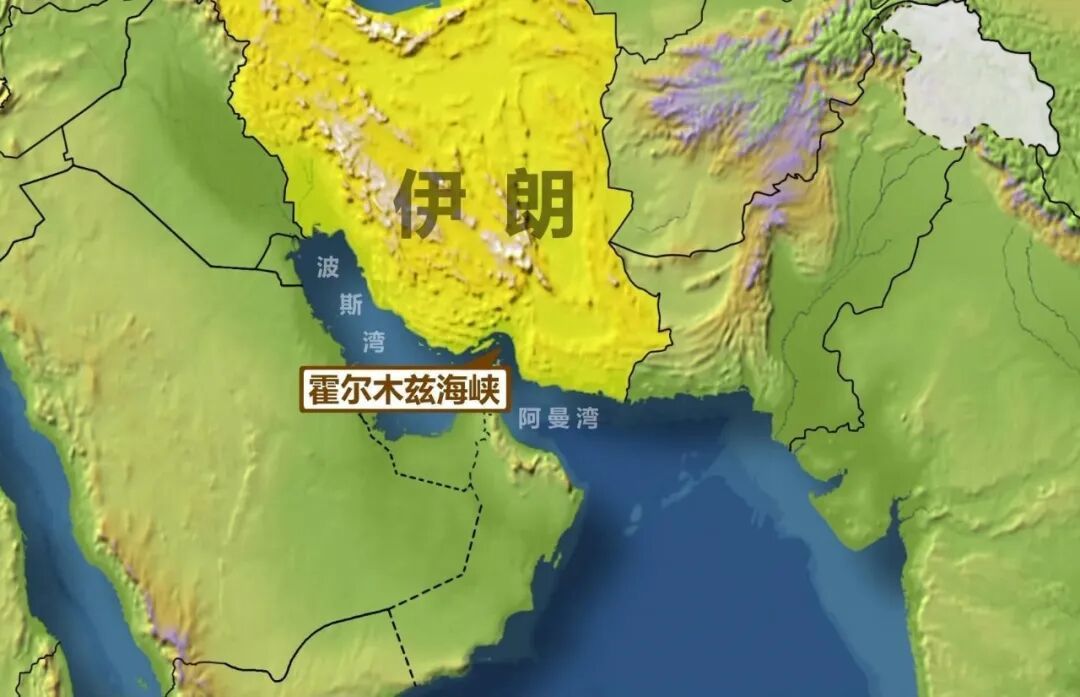
Due to its unique geographical position, the Strait of Hormuz has long been an important location for strategic deterrence by various parties. Although Iran has repeatedly threatened to "block" the strait for a long time, can this major oil transportation "artery" really be blocked?
For Iran, "blocking" the strait involves considering both "willingness" and "capability."
Some analysts believe that Iran has long avoided blocking the Strait of Hormuz because its own oil exports also pass through this route, and closing the strait would effectively cut off an important source of fiscal revenue. Additionally, military experts analyze that for Iran to completely and permanently block the Strait of Hormuz, the simplest method would be to continuously lay mines in the area, but this is very difficult and would also face external military retaliation.
Moreover, as an important energy passage, the Strait of Hormuz is closely watched by the international community. Iran also needs to consider avoiding confrontation with many countries that rely on this energy route.
According to reports from NHK, since Japan relies on the Middle East for 90% of its crude oil imports, a long-term blockage of the Strait of Hormuz would deal a "fatal blow" to the Japanese economy, potentially reducing its GDP by 3%.
In summary, the Strait of Hormuz may not be completely closed for a long time, but the current tense situation may persist, bringing more uncertainty to global energy transportation and economic development.
Source: Xinhua News Agency WeChat Official Account
Reporter: Su Liang
Iran has threatened to blockade the Hormuz Strait following recent military actions by the U.S. and Israel, raising concerns over global oil supply. The Strait is vital for oil transport, with 20% of the world's oil passing through it. Increased tensions have led to rising oil prices and logistical adjustments by shipping companies.
- Hormuz Strait is crucial for oil transport, with 20% of global oil passing through it.
- Iran has threatened to blockade the Strait, impacting global oil prices and logistics.
- Recent military actions by the U.S. and Israel have heightened tensions in the region.