
How to earn the US Army’s Jungle tab in Panama — and lose 10lbs

BASE AERONAVAL CRISTÓBAL COLÓN, Panama — Though many service members venture into the hot, humid terrain of the U.S. Army’s jungle school in Panama, not all leave with the newly authorized-for-wear Jungle tab.
The Panama course, back after a decades-long hiatus, resumed in 2025 as the U.S. military shifted its focus to the Western Hemisphere. In August, the Army confirmed it had approved the small arch-shaped patch — emblazoned with the word “Jungle” — for service-wide wear on the left shoulder. It joins the Special Forces, Sapper and Ranger tabs as wearable markers of additional skill identifiers.
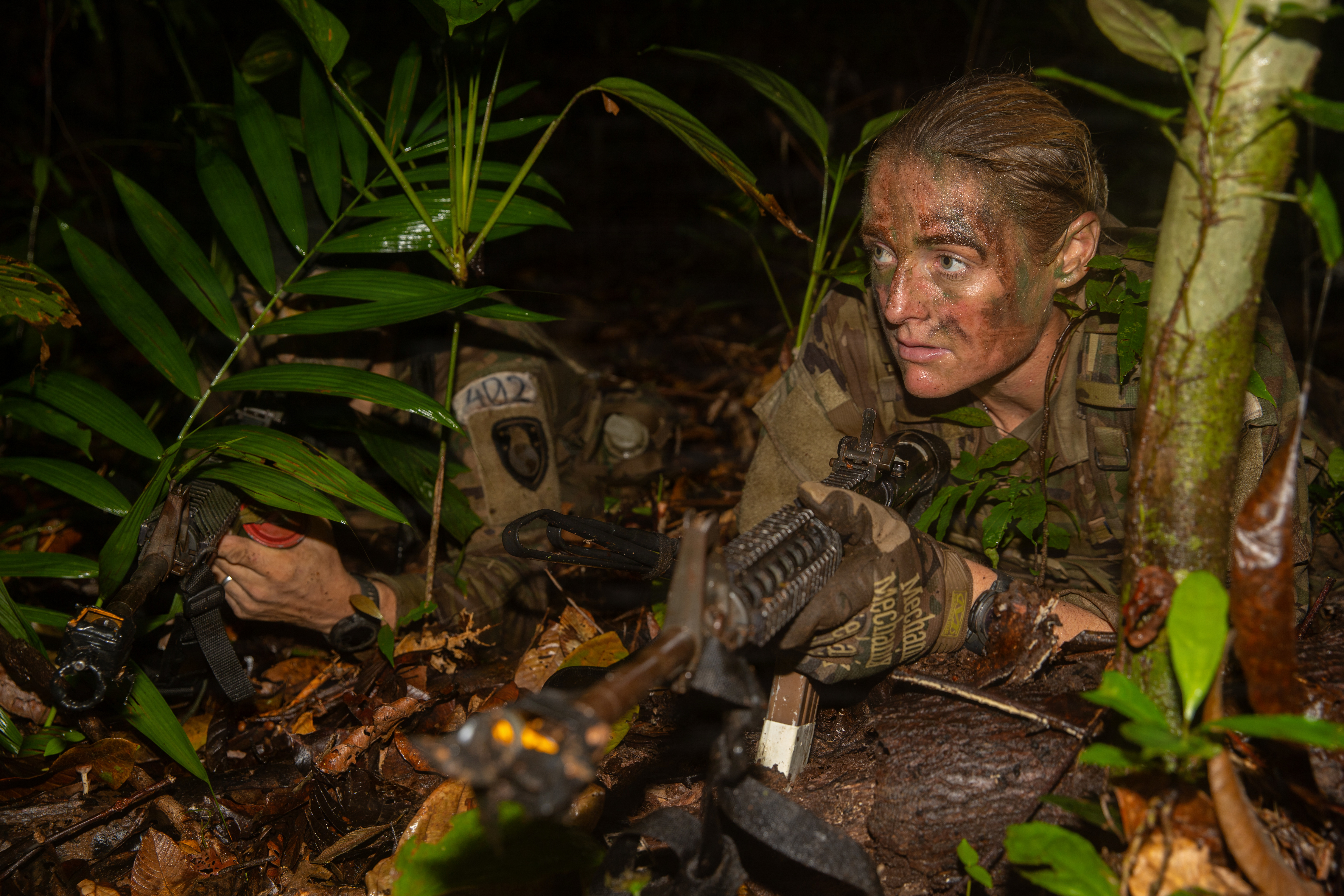
Those who attended the course from 1990 to 1999 at Fort Sherman, now known as Base Aeronaval Cristóbal Colón, are authorized the tab retroactively, as well as those who attended the 12-day jungle school in Oahu, Hawaii, after Fort Sherman’s closure.
The 18-day course includes classes on flora, fauna, machetes, jungle first aid, fire-starting, shelter-building, and more, but showing up and trudging through muddy terrain in crippling Panama humidity is not enough to earn the tab.
“There’s a difference between graduating the course with the tab and finishing the course,” said Lt. Col. Andrew Eagan, the officer in charge of the Jungle Operations Training Course in Panama, or JOTC-P.
Even if students fail one part of the curriculum, as long as their failure presents no medical or safety issues, they must finish the course.
“We direct that you will come and you will do the X number of days of training. There are then five critical tasks across the course that you have to pass in order to graduate with the tab,” Eagen said.
Combat Water Survival Assessment and 5K
Early in the course, participants face physical fitness tests.
The Combat Water Survival Assessment, or CWSA, requires participants to complete a variety of survival tasks in the water, including swimming in combat gear, ditching their equipment and dropping from a meters-high diving board.
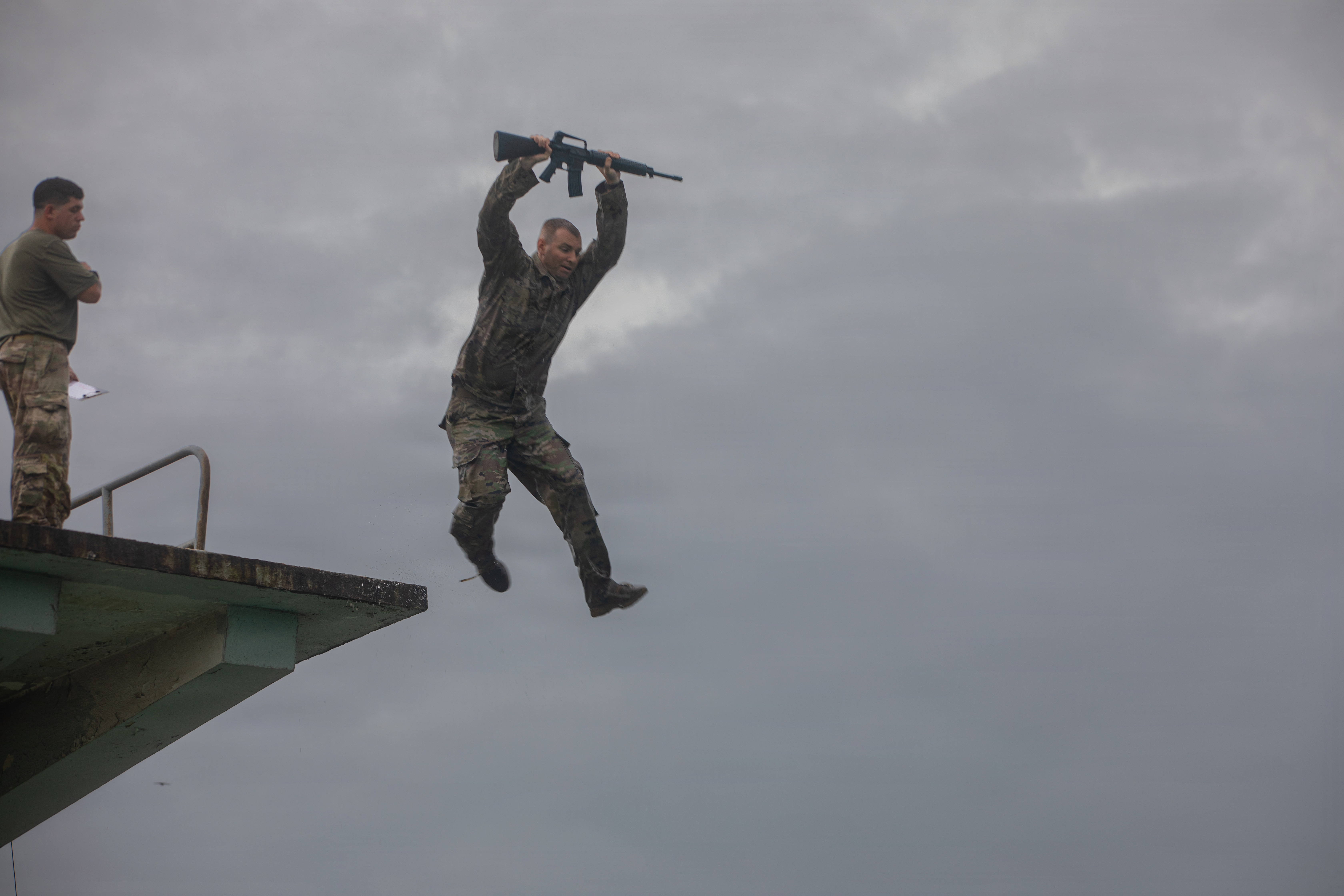
The 5-kilometer run — only 3.1 miles — has proven one of the course’s toughest obstacles for many jungle school candidates. While a 5k might sound like an easy morning workout for most soldiers, the Panama 5k route covers uneven terrain underneath dense, humid canopy. Service members have 40 minutes to complete the run outfitted with full canteens, gear, a rifle and boots. Eagen said the schoolhouse saw a pass rate of 45% to 55% in the first three iterations.
Now that word is spreading about the route, the pass rate is improving. More than 80% of candidates are passing it now, Eagen said. “They’re not undervaluing the difference between 5k here and 5k at the Fort Benning course,” he mused.
Master Sgt. Dale Taylor, a former Ranger School instructor who attended the course in September, said that people approach the run mistakenly thinking it will be a Thanksgiving Day turkey trot. “It’s nothing alike,” he told Military Times from a mosquito-infested bench at the jungle school. “Never in any other assessment in the military do you know for a fact that you will walk a portion of the run,” he said, alluding to the heat, humidity and steep hills. Only “a handful of people,” he said, “could have ran that course from start to finish.”
Knots and Rope Systems
Jungle school students must also pass individual tests on knots and rope systems. Seven knots are tested, Eagan said, and they are used throughout the course. One example is the bowline knot service members tie around their chests to secure themselves on a one-rope bridge across water.
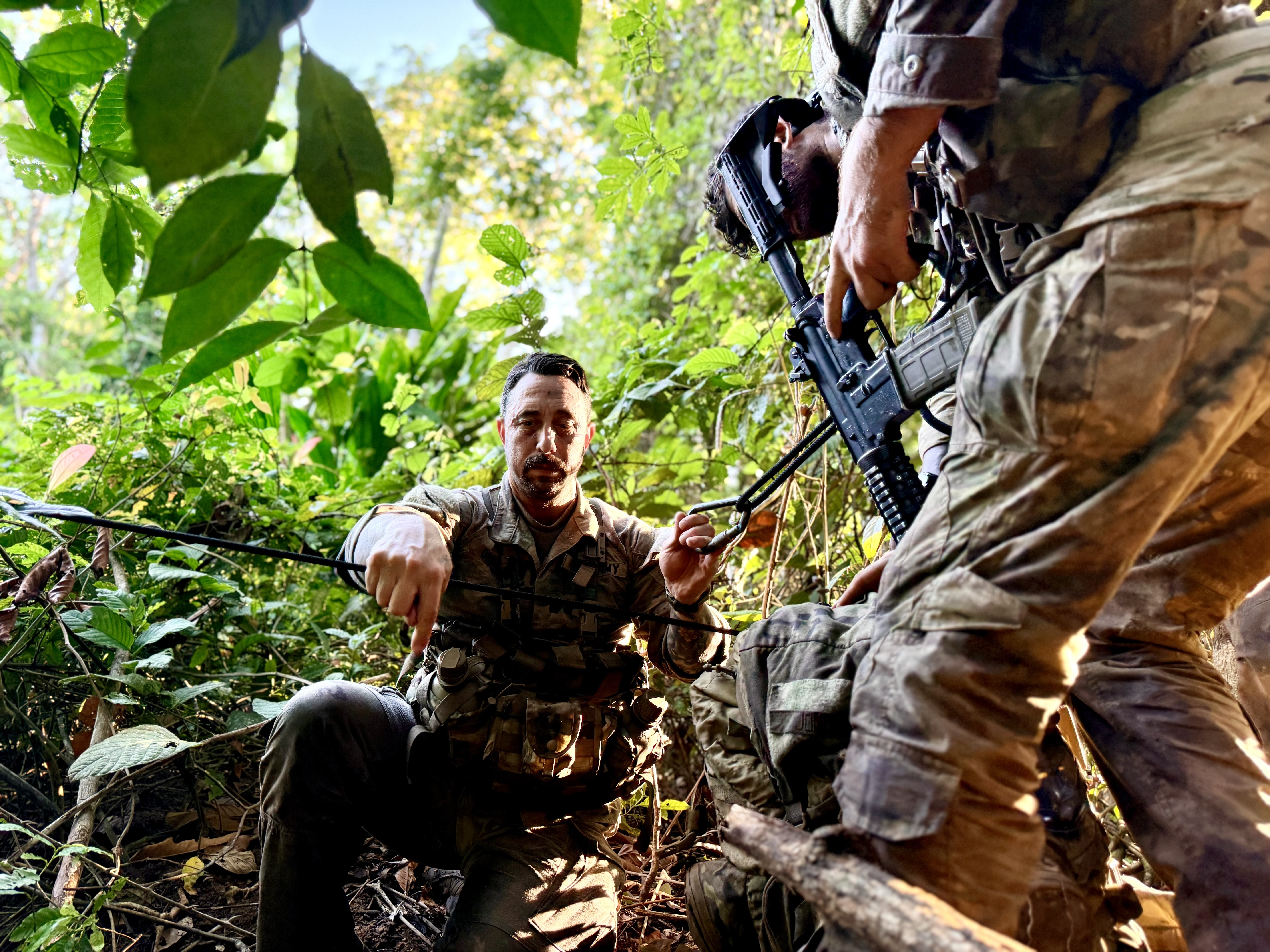
On a sunny practice day after minimal rain, the knots felt like an added step in an already tiresome water squad crossing. But participants know things can change quickly in the jungle: That gentle, bubbling creek could become a rushing waterway after a storm.
Jungle school students must also qualify independently on rope systems.
“You have to pass rope systems, which is individually being able — in a time standard — to tie a one-rope bridge and the Z-pulley system,” Eagen said. A Z-pulley system, he added, can move a dead or injured soldier in unforgiving terrain that does not lend itself to easy casualty evacuation.
The Green Mile
Water movements, traversing uneven terrain and ropes are all part of the final crucible participants must complete to earn a Jungle tab. The notorious Green Mile — in the heart of Panama’s “Green Hell” — is a more-than-four-mile gauntlet at the end of a days-long field training exercise that separates damp, dirty students from graduation.
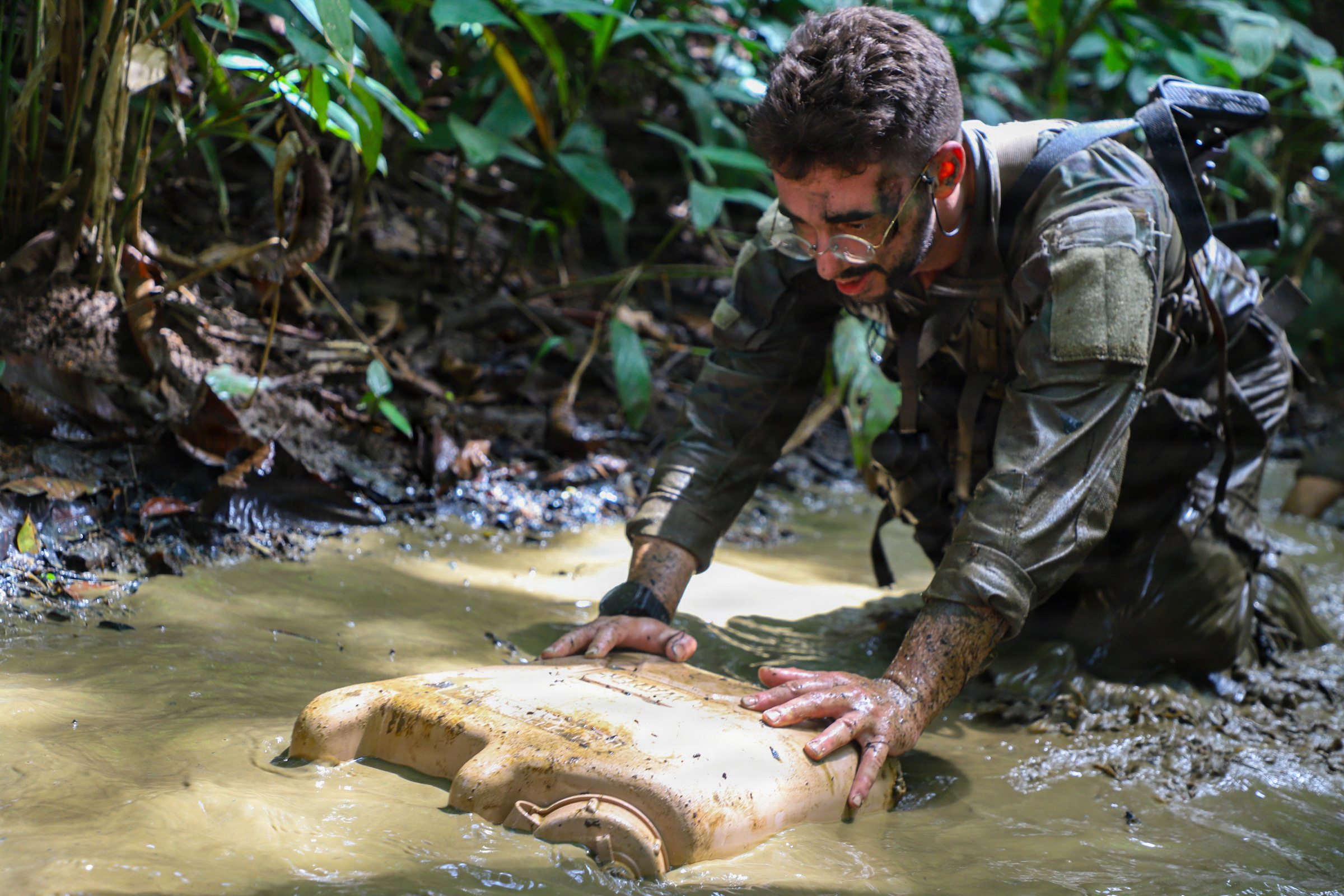
Squads must run through muddy ground, wade through coastlines, climb dizzyingly steep hills — often with the help of ropes — carry a hasty litter and shimmy under barbed wire, all while carrying heavy rucksacks, water jugs and ammo cans.
Movements that might have been easy, even enjoyable, with a full night’s sleep and a cool temperature turn into damp, arduous slogs in the jungle. By the time the squads are stepping off for their final tasks, each person is running on minimal food and sleep. The hours-long trek reflects the course’s demanding nature and relentless bodily strain.
“The biggest difference between a student on day one and the last day is the physical toll the environment took on them,” Eagen said, adding, “[I] haven’t yet seen a student that didn’t lose double digits in weight. They are excessively skinny by graduation.”
Service members at the U.S. Army's Jungle School in Panama undergo rigorous training to earn the newly authorized Jungle tab, which resumed in 2025. The course includes physical fitness tests, survival skills, and a demanding final exercise known as the Green Mile. Participants face challenges such as a 5K run on uneven terrain and must pass critical tasks to graduate with the tab.
- The Jungle School in Panama resumed in 2025 after a hiatus.
- Service members must pass specific physical and survival tests to earn the Jungle tab.
- The pass rate for the 5K run has improved to over 80%.
- Participants typically lose weight during the course due to physical demands.
- The course includes training on knots, rope systems, and survival skills.