
How to Fill the Defense Gap: Europe Faces Dual Challenges as the U.S. Significantly Reduces Military Support for NATO
[Global Times Special Correspondent in Germany, Aoki, Global Times Special Correspondent, He Tinglan] "The United States plans to significantly reduce its military support for NATO." Germany's Der Spiegel reported on the 26th that Washington recently informed its allies that it would gradually reduce the provision of strategic bombers, fighter jets, drones, submarines, and other military equipment to NATO. Of particular concern to European public opinion is that this measure applies to the "NATO force model," which means that the U.S. intends to significantly scale back the military forces available for NATO to call upon in the event of a major crisis or conflict. Austria's Kronen Zeitung commented on the 27th that the new U.S. plan will have a new round of impact on NATO. Germany's Berliner Morgenpost stated that this "will have far-reaching effects on European security." Observers believe this matter once again highlights the rifts within NATO.
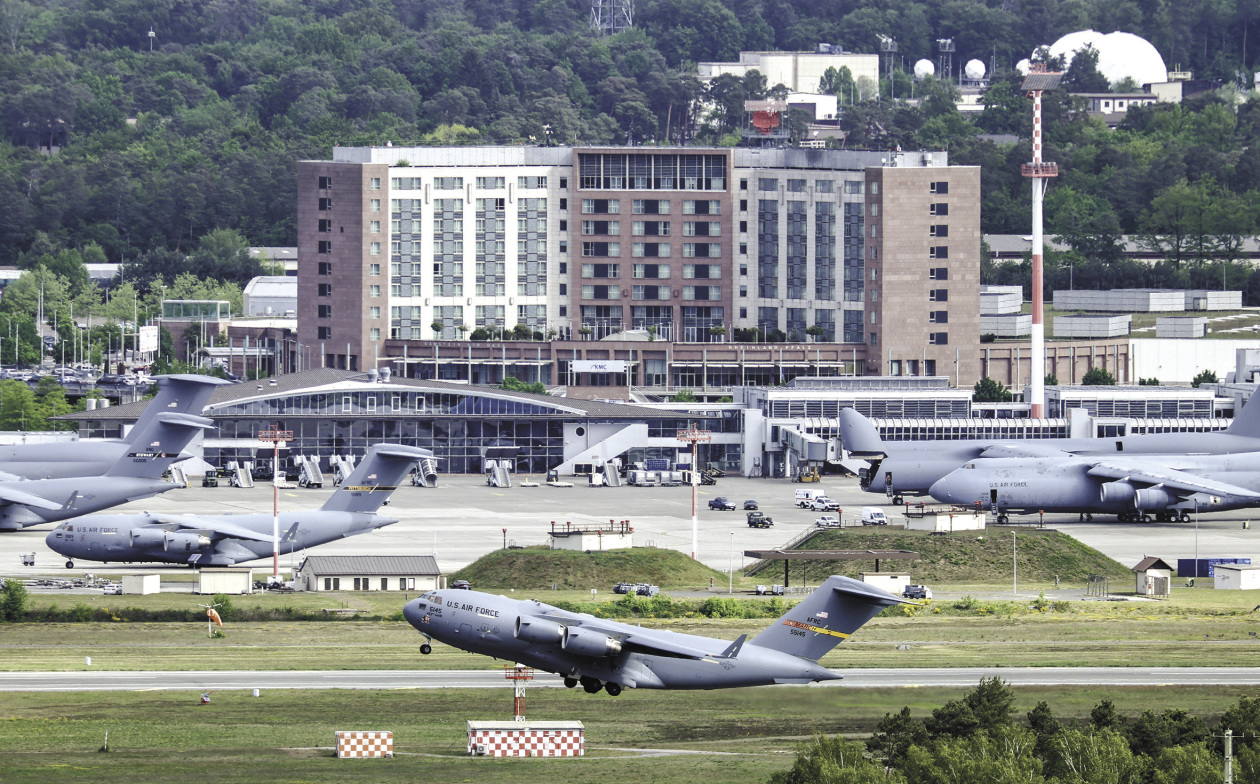
The number of strategic bombers may be halved
Der Spiegel disclosed that a special envoy from U.S. Secretary of Defense Lloyd Austin recently informed senior officials at NATO headquarters that Washington will "significantly reduce the provision of key military capabilities," planning to cut the number of fighter jets it provides by one-third and intends to completely stop providing submarines. The U.S. Navy plans to reduce the number of destroyers provided to NATO. Additionally, the U.S. may also significantly reduce its investment in armed drones. The report stated that this move by the U.S. aims to further pressure Europe to quickly fill the resulting gaps. According to Reuters, sources revealed that the U.S. plans to halve the number of strategic bombers it provides to NATO.
According to a report by the UK’s Independent on the 26th, the aforementioned measures by the U.S. apply to the so-called "NATO force model," which outlines how national militaries provide forces to NATO to ensure a rapid response in the event of a major crisis or conflict. The Polish television website quoted analysts as saying that this means the potential impact of the measure may be more profound than changes involving "the deployment or rotation of thousands of soldiers." The media also cited military sources on the 27th, revealing that the U.S. plans to reduce its deep strike capabilities deployed in Europe by half.
The European edition of Politico quoted anonymous diplomats on the 26th as saying that the specific plan from the U.S. has not yet been finalized, and no timeline for reducing military support has been set. The U.S. is expected to provide more details at a troop formation meeting in early June.
A NATO spokesperson told Der Spiegel that NATO has been "overly reliant" on the U.S. in force planning, and as Europe and Canada increase their defense investments, the division of responsibilities within the alliance may change. NATO Secretary General Jens Stoltenberg refused to provide details on the U.S. plan to reduce military contributions last Friday. He stated that the U.S. contribution to the "NATO force model" is under discussion, as the U.S. "cannot be everywhere at once."
The European edition of Politico reported on the 26th that the U.S. plan reflects a "long-standing effort" by the Trump administration to weaken America's role in NATO. It also indicates that Washington is shifting its military focus to other regions.
Doubts have quietly seeped in
Recently, the deployment arrangements of U.S. troops in Europe have experienced a series of twists and turns. In early May, Trump announced the withdrawal of 5,000 U.S. troops from Germany and stated that some of the troops withdrawn from Germany might be stationed in Poland. Just a few days later, the Pentagon suddenly announced the cancellation of plans to deploy a U.S. force of over 4,000 troops to Poland. U.S. Vice President Mike Pence explained that this was a "routine rotation delay." His statement did not quell the controversy, as Trump then announced an increase of 5,000 troops to Poland.
Although Polish Foreign Minister Sikorski described the events as "some communication errors" and stated that "all's well that ends well," the European edition of Politico saw a U.S. diplomatic cable indicating that the contradictory messages released by the U.S. had caused "significant political and psychological shock" to Poland. The lesson learned by European countries is that U.S. defense of the continent remains important, but its actions have become unpredictable. "Doubts have quietly seeped in." An article on the website of the Atlantic Council stated that Washington's erratic behavior has raised concerns among some of its closest allies.
The European edition of Politico analyzed that the recent series of events foreshadows a core issue that will face the NATO leaders' summit in July: Should European countries heed Stoltenberg's call to continue relying on U.S. weapon systems, or should they rely more on their own capabilities? Germany's Berliner Morgenpost reported on the 26th that Europe is preparing for a reduction in U.S. military support, and related work aimed at establishing a "more European NATO" has quietly begun.
However, an article on the European website Modern Diplomacy on the 27th argued that the EU cannot bear the consequences of completely severing ties with the U.S. in the short term, and its efforts to strengthen defense also face dual challenges both internally and externally. Internally, the EU's attitude towards Trump is not uniform, and how to coordinate and promote a broad military integration plan is also a question. Externally, although the EU and the UK have made efforts to ease relations, the role that the UK, as one of Europe's military powers, should play in EU defense is a complex issue. The article mentioned that the UK and the U.S. have traditionally had a "special relationship," but this bilateral relationship is also undergoing a process of deterioration.
U.S. media: Iceland has been closely monitoring the developments
The changes in transatlantic relations have led some European countries to consider adjusting their long-standing policies, with particular attention being paid to Iceland "turning its gaze towards the EU." The U.S.-based website Voice of America reported on the 27th that for decades, Iceland has had reservations about joining the EU, but now the situation in the North Atlantic has changed. With the U.S. government repeatedly issuing "takeover" threats regarding Greenland, the political atmosphere in Iceland has shifted. For a country with a population of 400,000, no standing army, and traditionally relying on NATO for protection, the idea of solely depending on Washington is no longer taken for granted. The Icelandic government plans to hold a national referendum in August, and although this referendum only concerns whether the country will restart negotiations to join the EU, it marks a historical turning point.
"The Greenland crisis has undoubtedly touched sensitive nerves." Icelandic Prime Minister Katrín Jakobsdóttir said in a previous interview with The New York Times. The report stated that when U.S. leaders confused Iceland with Greenland in a slip of the tongue earlier this year, many Icelanders "gasped." The EU is not a military power, but as the reliability of the U.S. as a security partner declines, European leaders are weighing various options, while Iceland has been closely monitoring the developments. The New York Times also reported that what is happening in Iceland reflects a broader trend among Nordic countries. For example, a leader of Norway's opposition party is pushing for a renewed debate on Norway's EU membership.
The U.S. plans to significantly reduce military support to NATO, including a one-third reduction in fighter jets and a halving of strategic bombers. This decision, which also includes stopping submarine support and cutting destroyers, aims to pressure European nations to enhance their own military capabilities. The implications of these changes are being discussed among NATO allies, particularly in Germany and Poland, as the alliance reassesses its reliance on U.S. military resources.
- U.S. plans to reduce military support to NATO significantly.
- Strategic bombers provided to NATO will be halved.
- Fighter jets will be reduced by one-third, and submarines will no longer be provided.
- The U.S. aims to pressure Europe to fill the military capability gap.
- NATO's reliance on U.S. military support is being questioned.