
HQ-9B Gobi Rapid Maneuver Training: PLA Air Defense System Shifts from Fixed Positions to Area Denial
 Li Minghui
HQ-9B Gobi Rapid Maneuver Training: PLA Air Defense System Shifts from Fixed Positions to Area Denial
From September 23 to 26, multiple defense media outlets reported on China's HQ-9 series long-range air defense system conducting maneuver and live-fire training in the Gobi region. Military Observation Magazine focused on the rapid redeployment capabilities of the HQ-9B units, while the Spanish defense media Zona Militar revealed training footage from the Gobi. Previously released training photos by the Chinese military network also showed that the relevant units have advanced long-range air defense from mere position guarding to lifting, relocating, deploying, and coordinated firing in complex terrain.
What This Training Truly Demonstrates
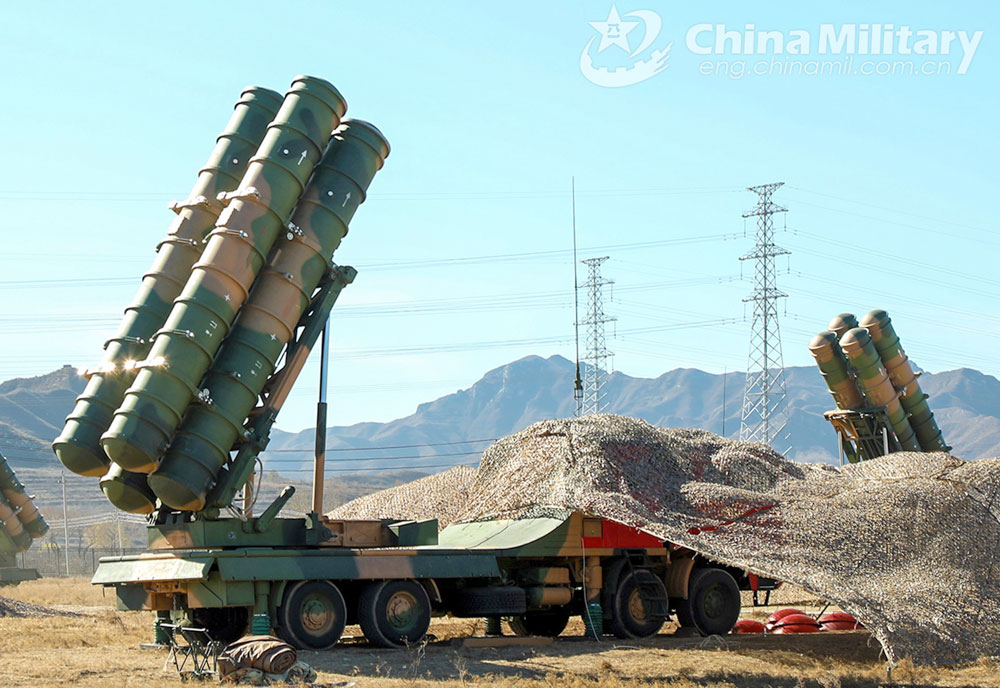
The HQ-9B is generally regarded as an improved variant of the HQ-9 family, with public information commonly suggesting its interception range covers approximately 100 kilometers of airspace, but the specific radar configuration, missile batches, and effective range cannot be confirmed solely based on training photos. Compared to fixed positions, the value of wheeled launchers lies not just in their mobility but in their ability to maintain communication between radar, command vehicles, launchers, and reloading vehicles, thereby shortening the time required to transition from march to combat readiness. The flat terrain, sparse roads, and good long-distance observation conditions of the Gobi are particularly suitable for testing this process.
In simple terms, the paper range of an air defense system is merely a ceiling; the real bottom line in wartime is whether it can survive and relocate under enemy reconnaissance and long-range fire coverage. If this training becomes a regular subject, it indicates that the PLA is treating long-range air defense units as deployable combat nodes rather than as permanent shields next to airports and command posts.
Implications for the Taiwan Strait and Western Direction
In the Taiwan Strait scenario, the significance of the HQ-9B does not lie in solely blocking the Taiwan Strait but in providing layered protection for airports, missile positions, and large command nodes. Mobile deployment can reduce the efficiency of an opponent establishing a fixed strike list through satellites and electronic reconnaissance, and it can create overlapping coverage with medium-range air defense, short-range air defense, and fighter patrols. For the U.S. military, this would increase the number of decoys, electronic warfare, and anti-radiation weapons needed to suppress the PLA's air defense network.
However, I do not believe that a single training exercise in the Gobi is sufficient to prove that the HQ-9B has resolved all issues. The desert environment is completely different from the high humidity, maritime clutter, and dense electromagnetic interference of the Taiwan Strait; what was publicly demonstrated in training was vehicle mobility, not complete saturation interception data. More realistic shortcomings may lie in ammunition supply, backup radar, and damaged vehicle repairs: the air defense network is like a fishing net; no matter how strong a single node's performance is, sustained combat capability still depends on whether the gaps in the net can be quickly filled.
Production Capacity and System Are More Critical Than Individual Vehicle Performance
The most noteworthy aspect of this news is that it shifts the focus from missile range back to the military-industrial system. If the HQ-9 units are to maintain a state of mobility in multiple directions simultaneously, they will require stable chassis supply, phased array radar production capacity, data link upgrades, and training ammunition consumption quotas. The naval training news released by the Chinese military network on September 24 is not directly related to this army air defense report, yet both indicate that the PLA's equipment development is shifting from showcasing individual weapons to examining whether units can integrate equipment into continuous training cycles.
Source: Military Watch Magazine (September 26), Zona Militar (September 23), Chinese Military Network English Version (September 24). Regarding the specific range, deployment numbers, and training results of the HQ-9B, public information is insufficient; this article is based solely on publicly available data analysis.
The real question is not whether the HQ-9B can rapidly deploy in the Gobi, but whether this mobility can be maintained for several days under high-intensity airstrikes in the Taiwan Strait, while continuously receiving radar, missile, and maintenance supplies. How many rounds of joint service air defense exercises the PLA will publicly disclose next may provide a clearer answer than a single photo of a launch vehicle.
The People's Liberation Army (PLA) conducted rapid mobility training for the HQ-9B air defense system in the Gobi Desert from September 23-26. This training showcased the system's capability to transition from static positions to mobile operations in complex terrain, enhancing communication and operational readiness. The exercises indicate a strategic shift in the PLA's air defense approach, emphasizing deployable combat units over fixed defenses.
- The PLA conducted rapid mobility training for the HQ-9B air defense system in the Gobi Desert from September 23-26.
- The training demonstrated the ability to transition from static defense to mobile operations in complex terrain.
- The HQ-9B is considered an improved model with an interception range of approximately 100 kilometers.
- The exercises aimed to enhance communication and operational readiness among various units involved in air defense.
- The training reflects a shift in the PLA's approach to air defense, treating units as deployable combat nodes rather than static defenses.