
U.S. Air Force moves to upgrade aging E-3 AWACS planes
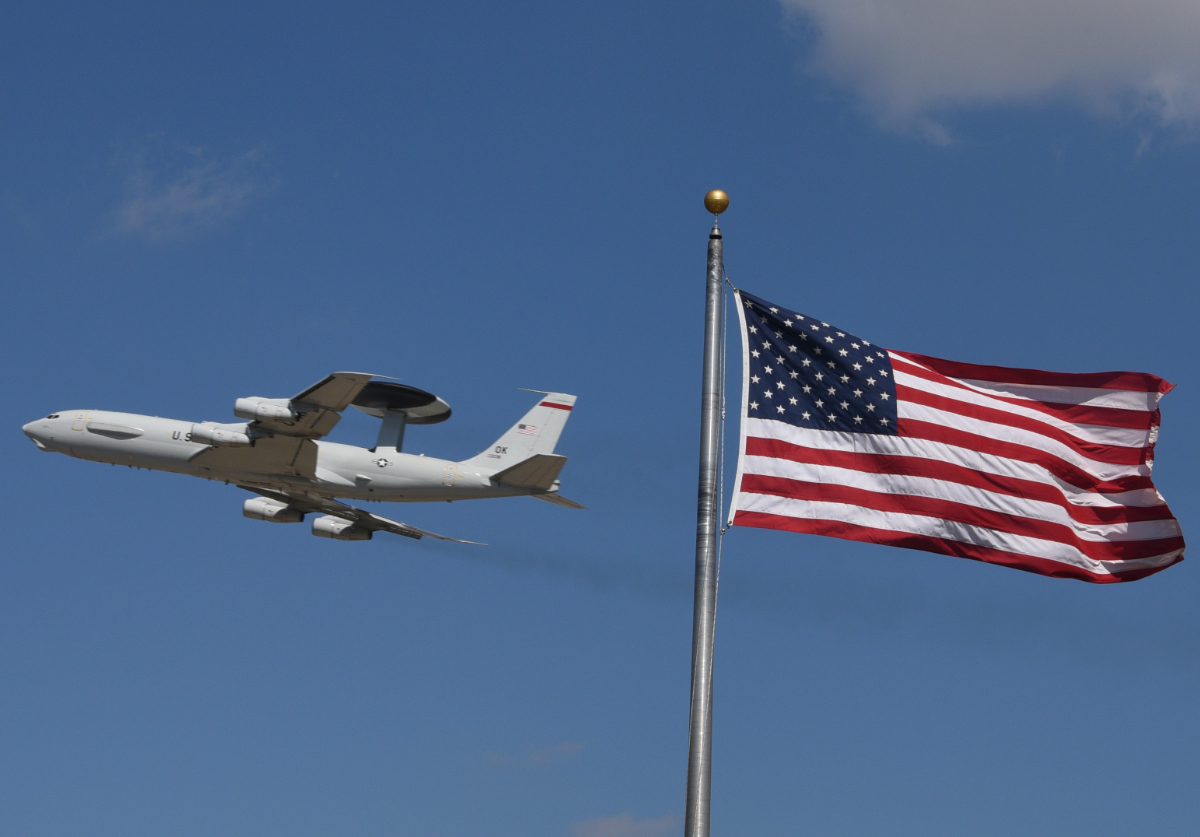
The U.S. Air Force is looking for a contractor to replace an aging encryption unit on its E-3G AWACS radar planes after the manufacturer warned it can no longer keep up with changing National Security Agency security requirements, according to a sources-sought notice posted Sept. 25 on the federal contracting website.
The part, known as the DAR-400, is a data-at-rest unit that stores encrypted mission data on board the aircraft. The Air Force called it mission-critical and said it is in critical need of an obsolescence fix to avoid disrupting operations. Its maker, General Dynamics Mission Systems, told the service the DAR-400 cannot support or be upgraded to meet new NSA requirements.
Because the unit holds encrypted data for several of the plane’s mission and computing systems, the notice said, a failure would directly affect both operations and data security.
The Air Force already has a replacement. It is providing a government-owned solution based on the KG-204, which it said complies with current Department of War and NSA mandates. The contractor would install and integrate that equipment across the fleet. The notice did not give a cost estimate, schedule or number of units.
The notice is market research, not a solicitation. The Air Force Life Cycle Management Center’s intelligence, surveillance, reconnaissance and special operations directorate is asking companies of all sizes, including small businesses, to describe their capabilities by Oct. 12. The responses will help decide whether the work is set aside for small businesses.
The Air Force listed its operational E-3G fleet at 15 aircraft. The Boeing 707-based planes carry a large rotating radar dome on top of the fuselage and serve as airborne command posts, tracking aircraft and directing U.S. and allied forces. The fleet is based at Tinker Air Force Base, Oklahoma.
One E-3G was destroyed in a drone and missile attack on Prince Sultan Air Base in Saudi Arabia on March 27, 2026, during the war with Iran.
Air Force leaders have said for years that the E-3 is increasingly difficult to keep flying and that its Cold War-era radar is outdated. The radar dome takes 10 seconds to complete one rotation and refresh its picture of the sky.
Its planned replacement, Boeing’s E-7 Wedgetail, remains in dispute between the Pentagon and Congress. The Department of War tried to cancel the E-7 in its fiscal 2026 budget, but lawmakers blocked the move. The fiscal 2026 defense policy law also barred the Air Force from retiring any of its E-3s if the fleet would fall below 16. In March 2026, the Air Force signed about $2.4 billion in contracts to buy developmental E-7s.
The department then requested no money for the E-7 in its fiscal 2027 budget. Congressional committees have since written about $1.55 billion for the program into their bills, but the final amount has not been settled.
With the E-7’s future unresolved, the Air Force plans to keep the E-3G flying, and the DAR-400 replacement is one of the upgrades needed to do that.
Content preview only. Full article available at source. View Full Article
The U.S. Air Force is seeking a contractor to replace the DAR-400 encryption unit on its 15 E-3G AWACS radar planes at Tinker Air Force Base, Oklahoma, due to obsolescence and compliance issues with NSA security requirements. The Air Force has a government-owned solution based on the KG-204 to ensure operational continuity and data security. This upgrade is critical to maintaining the aircraft's mission capabilities.
- The U.S. Air Force is replacing the DAR-400 encryption unit on E-3G AWACS planes.
- General Dynamics stated the DAR-400 cannot meet new NSA requirements.
- The Air Force has a government-owned replacement based on the KG-204.
- The operational E-3G fleet consists of 15 aircraft.
- The fleet is based at Tinker Air Force Base, Oklahoma.