

Summary and Key Points: The M250 weighs about 13 pounds with a bipod, compared to roughly 17 pounds for the M249 SAW it replaces. That is a real four pounds off a gun that men have been cursing for nearly 40 years. Then you load it. The 6.8x51mm cartridge is heavier than 5.56, and once the belts go in the pouches, the gunner is carrying about 3.6 pounds more than he did with the SAW and roughly 200 fewer rounds. The Army’s bet is that each of those rounds does enough additional work to cover the difference — and it may be right, because the 6.8 was built to defeat body armor at ranges where 5.56 never had an answer.
The M250: All the Details
The Army finally built a squad machine gun for the war it expects to fight.
Whether it built one for the soldier who has to carry it is another question.
The SIG Sauer M250 replaces the M249 SAW, which served American squads for nearly 40 years.
It’s lighter than the gun it replaces; it hits harder, and it reaches farther.
However, every one of those gains came with a price tag, and some of those bills are still coming due. Here’s the good, the bad, and what it means for the squad.
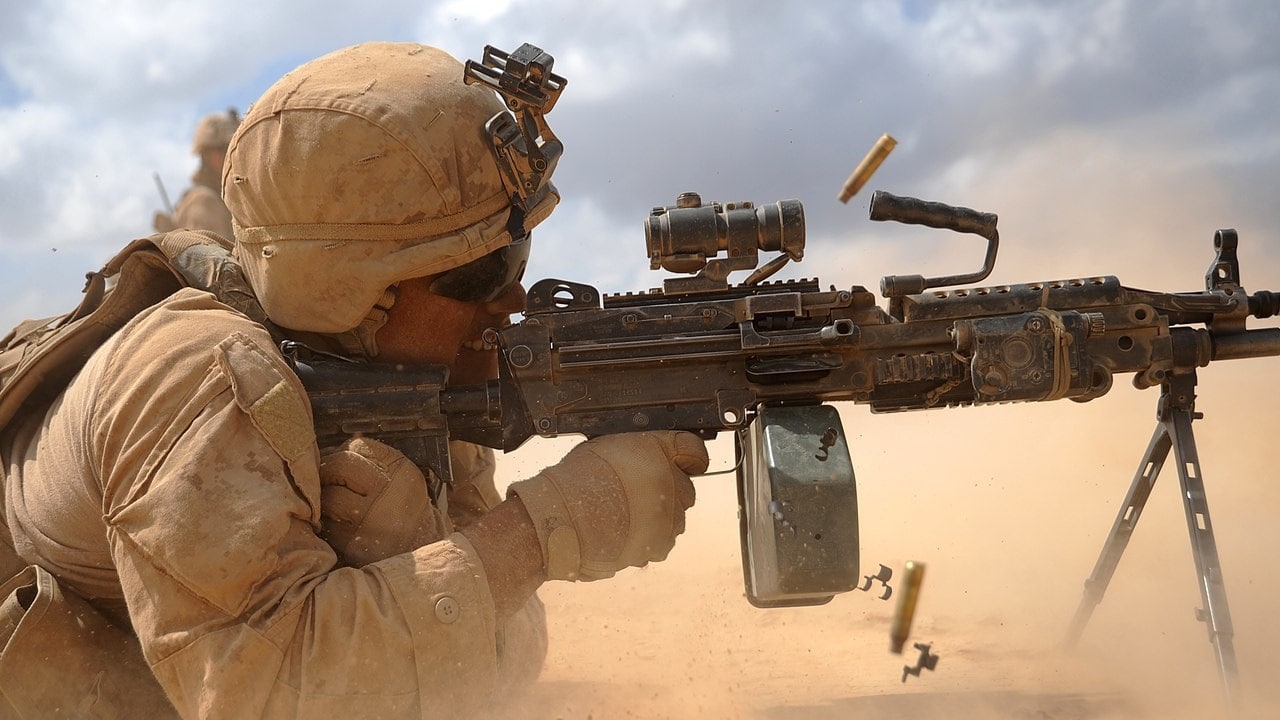
Lance Cpl. Luther Sackett, a rifleman from Rockyford, Co., engages targets during a live-fire and maneuver exercise here Jan. 29. Sackett, and other Marines with Light Armored Reconnaissance Platoon, Weapons Company, Battalion Landing Team 2/4, 11th Marine Expeditionary Unit, conducted live-fire weapons shoots and trained with the French Army Jan. 28-Feb. 5.
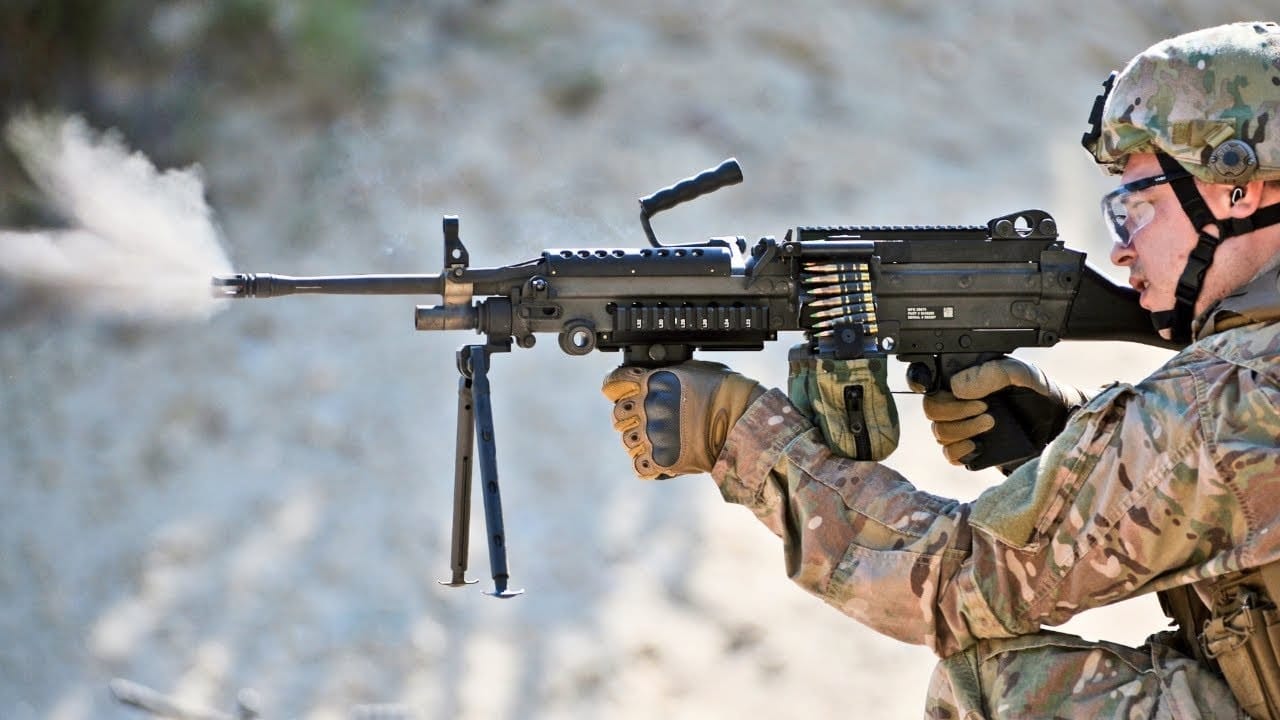
M249 SAW. Image Credit: Creative Commons.
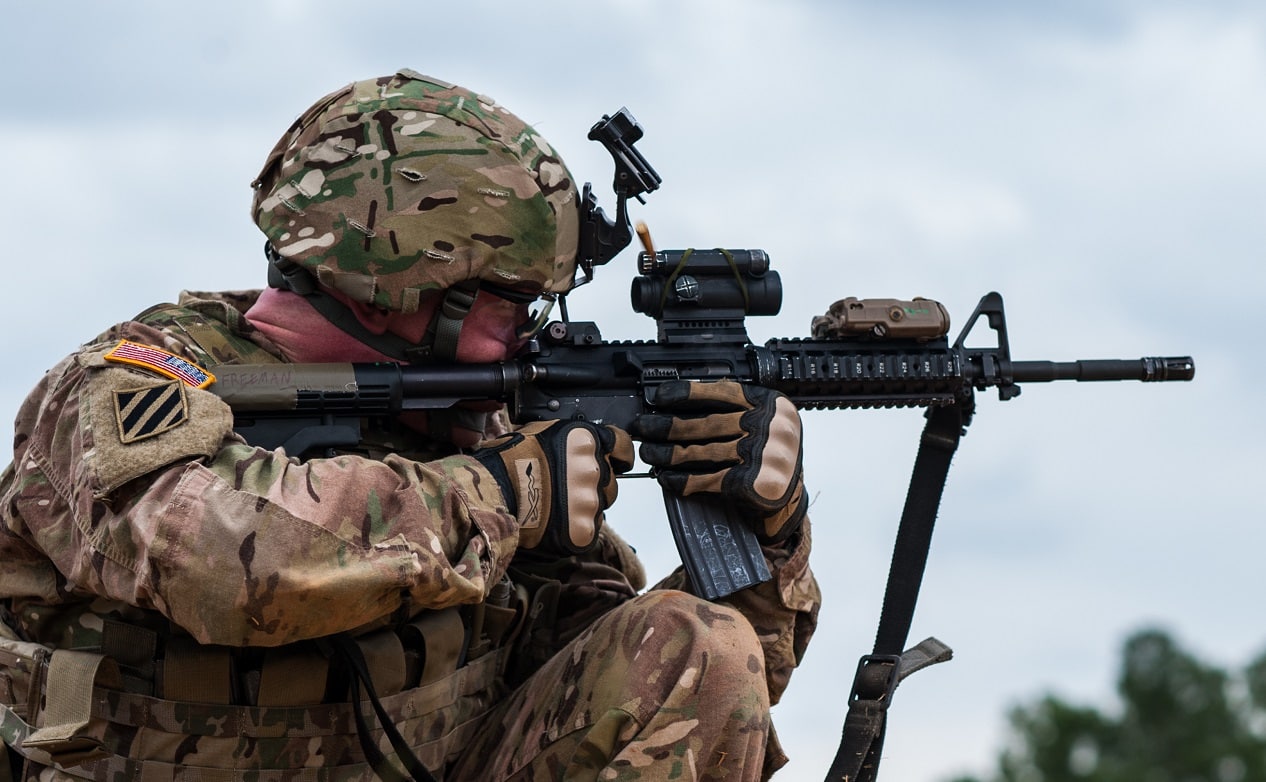
Capt. Kirk Freeman with the 98th Training Division and a member of the U.S. Army Reserve Marksmanship Team, qualifies with his M4 rifle during the first day of the U.S. Army Forces Command Weapons Marksmanship Competition Sept. 21, 2015, at Fort Bragg, N.C. The three-day FORSCOM competition features 27 marksmen from the U.S. Army, U.S. Army Reserve, and the National Guard in events for the M9 pistol, the M4A1 rifle, and the M249 SAW, or Squad Automatic Weapon, to recognize Soldiers who are beyond expert marksmen. The multi-tiered events challenge the competitors’ ability to accurately and quickly engage targets in a variety of conditions and environments. (U.S. Army photo by Timothy L. Hale/Released)
What The Army Bought
SIG won the Next Generation Squad Weapon competition in April 2022, beating out Textron Systems, a Lone Star Future Weapons team, and a General Dynamics team, according to Defense News.
The package included the M7 rifle, the M250 automatic rifle, and a new 6.8mm round intended to bridge the gap between 5.56 and 7.62.
That cartridge is the heart of the program.
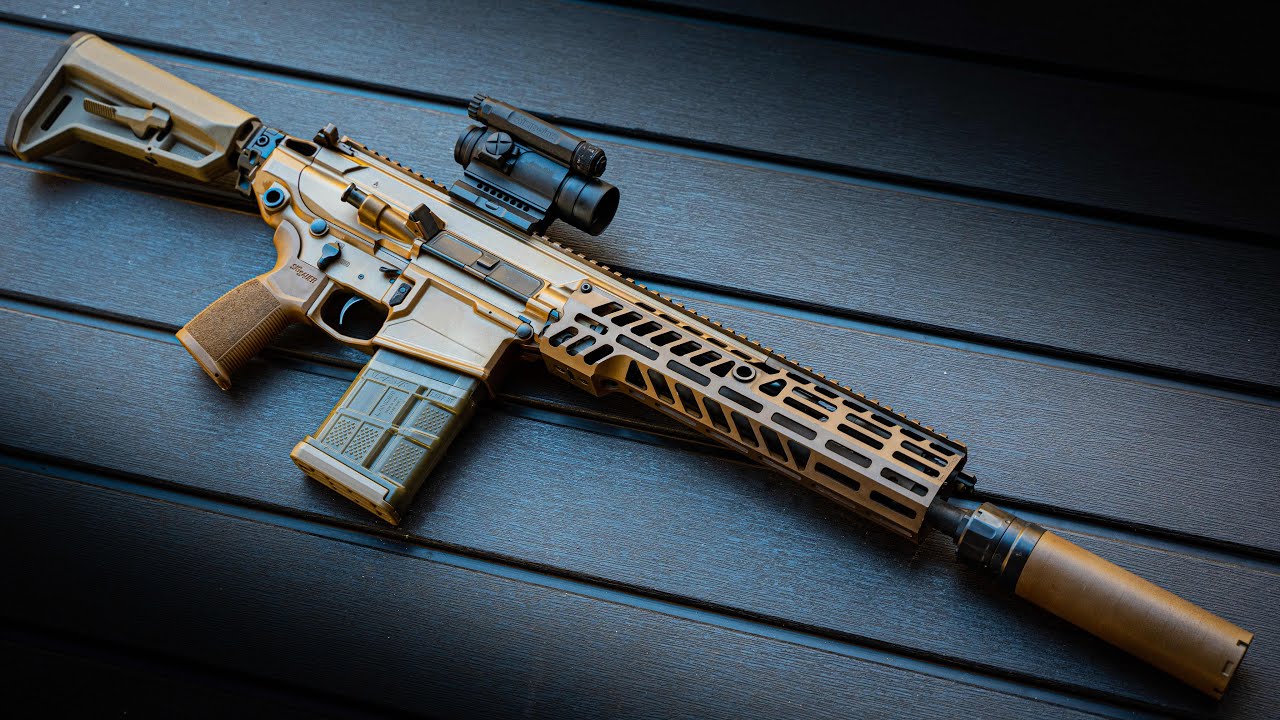
XM7. Image Credit: Creative Commons.
Army Recognition reports that the 6.8x51mm runs at pressures exceeding 80,000 psi, with muzzle velocities near 3,000 feet per second.
For those keeping score at home, that’s well above what most rifle cartridges operate at.
The gun itself weighs about 13 pounds with a bipod and 14.5 pounds with a suppressor, per Task & Purpose. The 101st Airborne got it first.
The Minnesota National Guard’s 34th Infantry Division began training on it at Camp Ripley in September 2025. The Army’s FY2026 budget request calls for 2,636 more.
The Case For The M250
Start with the reason it exists.
Our potential adversaries now field body armor as standard issue, and they’re likely to engage from longer ranges.
The Army laid out its goal of defeating protected and unprotected targets at the squad level. The 5.56 round was never designed for that fight. The 6.8 mm was.
Then there’s the gun. At 13 pounds, it’s about four pounds lighter than the 17-pound M249.
It has fully ambidextrous controls, a collapsible stock, and a suppressor designed in from the start rather than bolted on later.
A suppressed automatic rifle makes it harder for the enemy to locate your gun, and it makes it easier for the squad leader to be heard.
SIG is also listening.
At AUSA 2025, Soldier Systems Daily showcased an improved M250 featuring a streamlined gas system, an improved bipod, a hinged handguard for faster barrel changes, and a wider trigger guard for gloved hands.
None of that is glamorous. All of it is the kind of stuff gunners notice. Task & Purpose also reported that the M250 rollout has gone smoother than the early days of the M7.
The Ammunition Issues Bear Watching
Here’s the catch. The gun is lighter, but the bullets aren’t.
Defense News reported that once you factor in the heavier 6.8mm ammunition, the M250 gunner carries a net 3.6 pounds more than an M249 gunner and 200 fewer rounds.
Read that again.
More weight.
Fewer rounds.
For an automatic rifleman, volume of fire is the job.
Suppression depends on keeping rounds going downrange, and every belt the gunner can’t carry is fire the squad doesn’t have in a long fight.
The Army bets that each 6.8mm round does more work.
That may prove true.
However, it’s a bet that won’t be settled on a test range.
The optic is another sore spot.
The Vortex XM157 fire control system that pairs with the M250 took a beating in Pentagon testing.
Task & Purpose reported soldiers rated its usability “below average/failing,” with a low probability of completing a 72-hour wartime mission without a critical failure.
Then there’s cost and logistics.
Defense News put the price of the two weapons at up to $4.7 billion over a decade, with another $2.7 billion for the optic.
Every M250 also needs a new ammunition supply chain, since the 6.8x51mm is a brand-new cartridge.
Most of our allies still shoot 5.56 and 7.62. Tellingly, Task & Purpose reported that Israel planned to buy the M250 chambered in 7.62x51mm instead.
The Verdict
So is the M250 the right gun? In my opinion, it’s the right gun for the right threat.
A squad facing armored infantry at 500 meters and beyond needs more than a 5.56 bullet hose.
The M250 gives it that.
However, the Army owes its gunners an honest answer on ammunition load.
A lighter gun means little if the man behind it runs out of ammo halfway through a firefight.
The optic has to work, too.
Fix those two, and the M250 has a real shot at earning the same reputation as the SAW.
The Army built a squad machine gun for the war it expects to fight. Now it has to make sure the soldier can carry that fight.
About the Author: Steve Balestrieri
Steve Balestrieri is a National Security Columnist. He served as a US Army Special Forces NCO and Warrant Officer. In addition to writing on defense, he covers the NFL for PatsFans.com and is a member of the Pro Football Writers of America (PFWA). His work was regularly featured in many military publications.