

There’s a lot of discussion these days about the stealthy, quiet operation of diesel-electric submarines. More than 40 countries around the world operate submarines with either diesel-electric propulsion or air-independent propulsion systems.
While these submarines are indeed very quiet because the only sound they should make in the water comes from their propellers and electric generators, battery limits severely restrict their submerged endurance and speed.
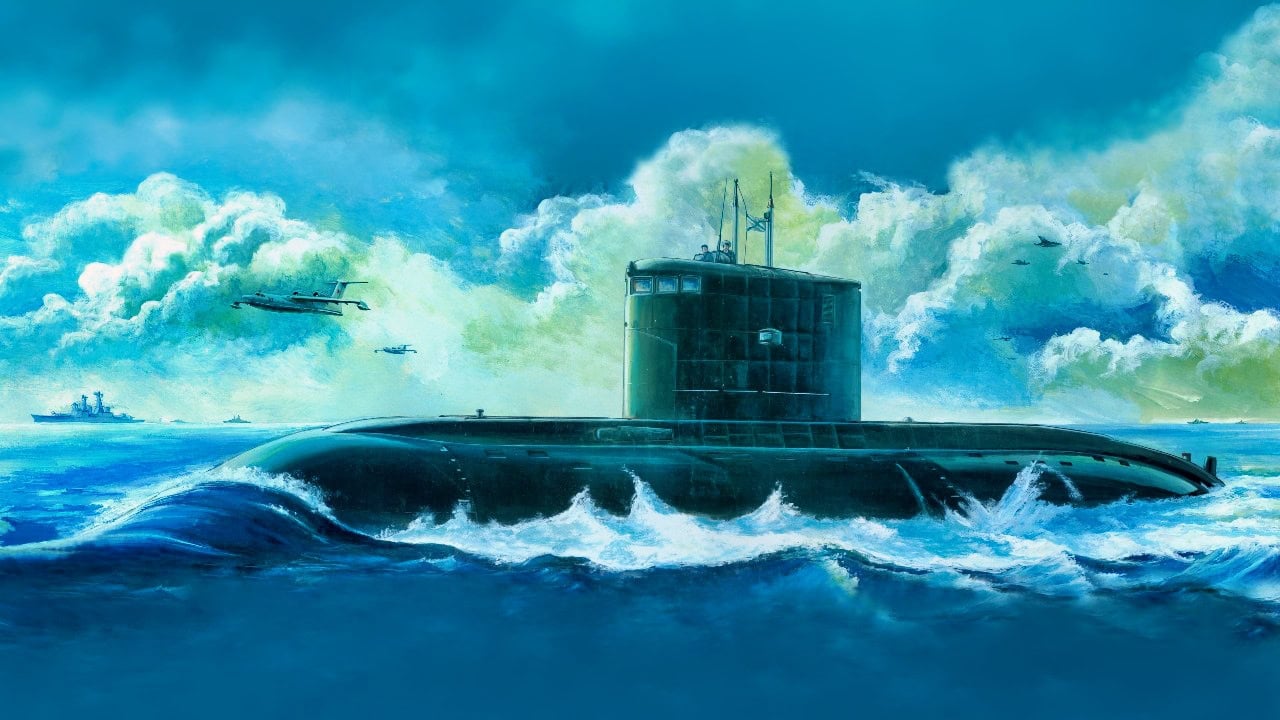
Kilo-Class Submarine
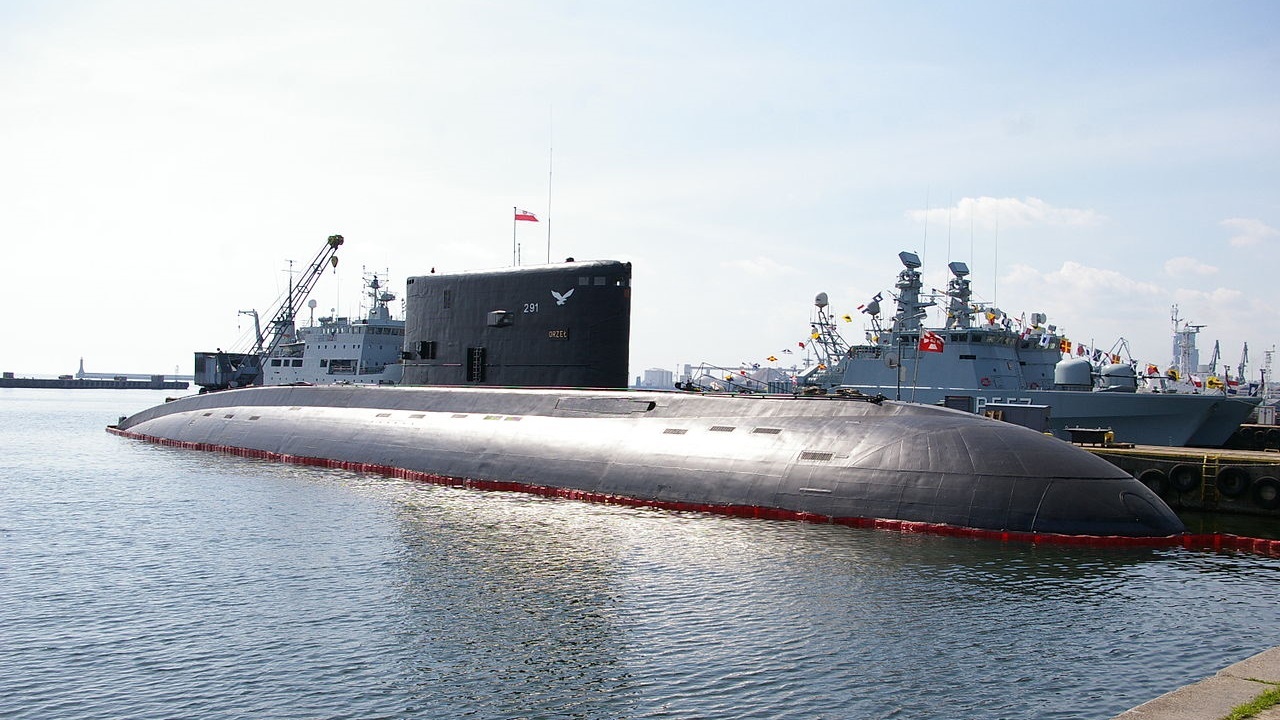
Polish Navy submarine, Kilo-Class.
As long as these submarines operate in waters where these limitations do not become liabilities, in shallow coastal waters where nuclear-powered submarines tend not to venture, they are very good.
On The Hunt For a Soviet Whiskey-class Sub
I once had an experience with a Soviet diesel submarine while I was in the Navy.
It was in early April 1984 in the Mediterranean, off the coast of Rota, Spain.
The aircraft carrier USS John F. Kennedy was returning from her cruise off the coast of Lebanon and was due to return to her homeport in Mayport, Florida, transiting the Straits of Gibraltar to break out into the Atlantic Ocean.
We were briefed that one of our attack submarines was in contact with a Soviet diesel submarine they had classified as a Whiskey-class diesel boat, and we were going to head for it, launch our SH-2F Seasprite, and pick up the trail.
This was something of a game the US Navy played with the Soviets.
Often, our own SSNs trailed Russian submarines everywhere they went.
They made these contact reports daily, and our surface ships got orders to their position so our airborne ASW assets could track them and practice lining them up for kill shots with an MK-46 torpedo.
This could go on for days or weeks with the Russian sub never knowing US ships, subs, and aircraft were tracking him.
Going To Sea As If To War
The Cold War was a very different time posture-wise for the US Navy. Its ships went to sea as if to war.
Ships sailed fully fueled, at 110% provisioning levels, and all weapons magazines were full, including nuclear weapons.
A war with the Soviets could break out at any moment and perhaps without warning. Some of the first battles would be fought at sea across the world’s oceans by some 1200 ships and submarines from the combined US and Soviet navies.
The battle would be for control of the world’s sea lanes.
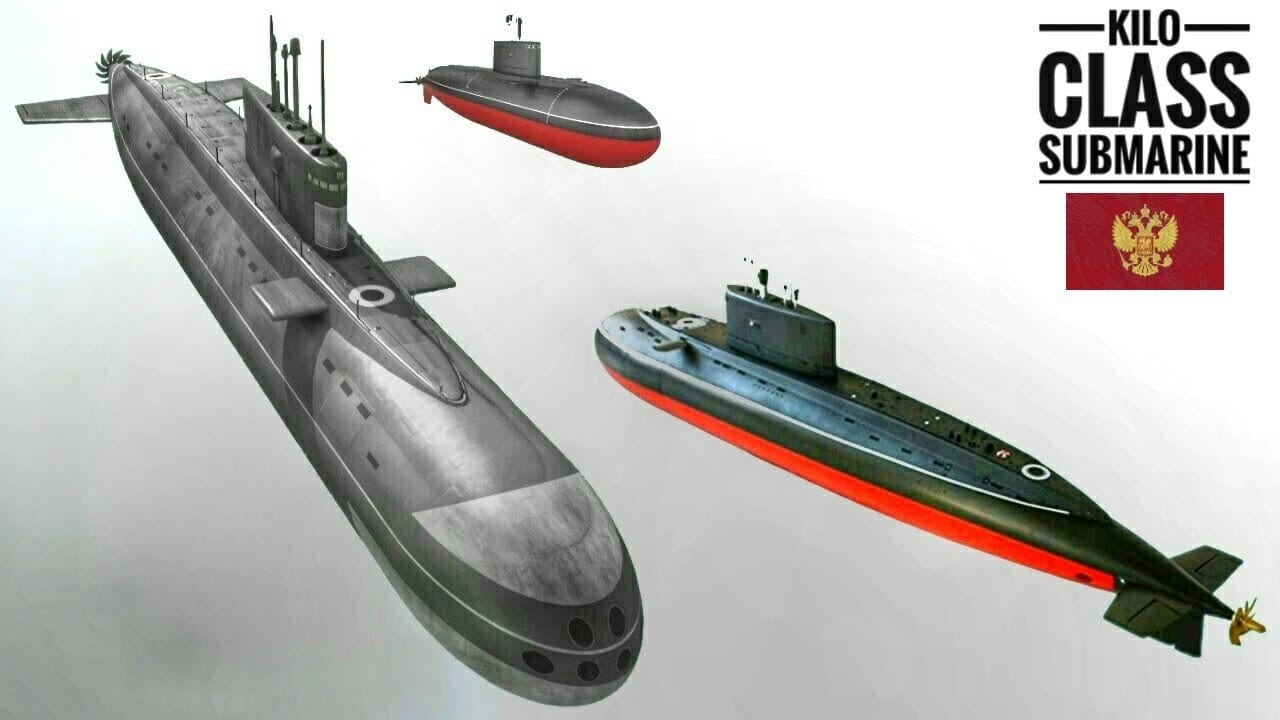
Kilo-class Submarine. Image Credit: Creative Commons.
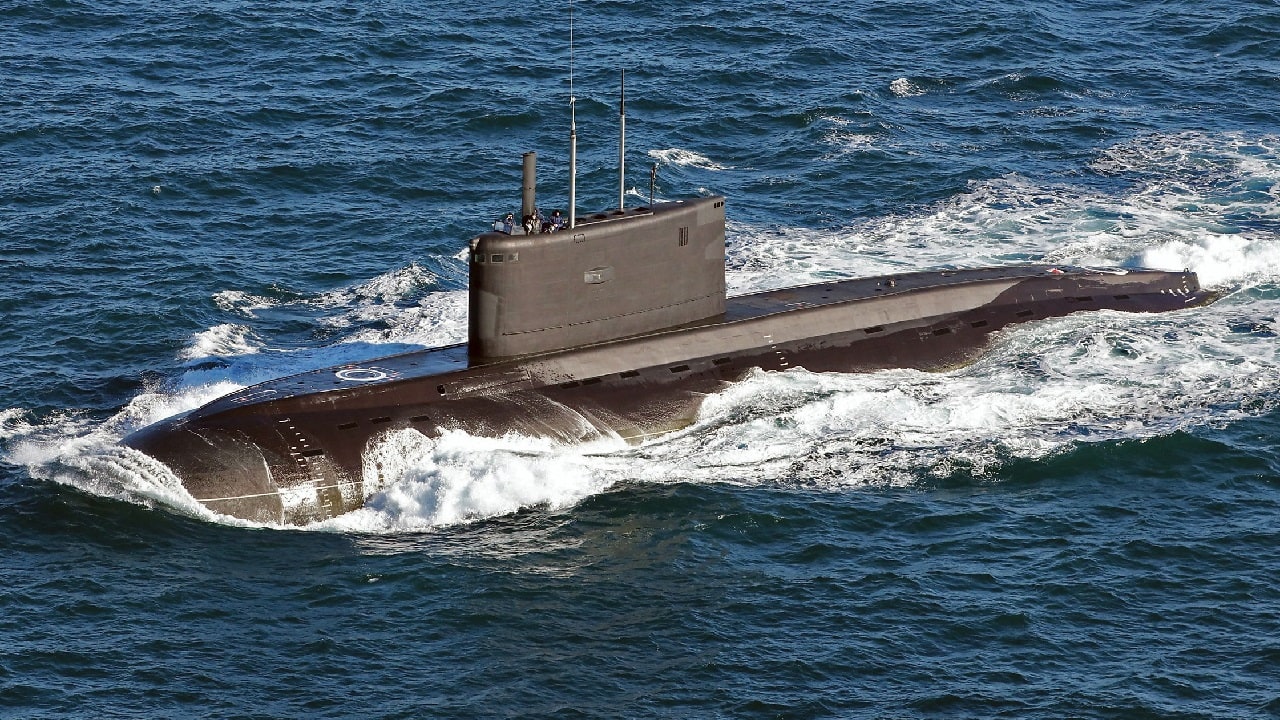
Pictured is a Kilo-Class Russian Submarine in the English Channel. The image was taken from Royal Navy Wildcat HMA2 Helicopter of 815 Naval Air Squadron. Kilo class is the NATO reporting name for the diesel-electric attack submarine.
Two aircrewmen were available for my helicopter; the most senior would remain on the ship in the combat information center, manning a LOFAR analysis panel.
This stood for Low Frequency Analyzer and Recorder.
This AT&T technology used sound spectrographs that processed low-frequency underwater sounds between 100 and 150 Hz.
While the operator could hear the sounds on headphones, the noise was also recorded on head-sensitive paper on a moving roll, providing a visual display.
You could “see” the sound, too.
Each submarine has a distinct sound signature that appears as different frequency lines on the paper graph.
The system was good enough to detect individual submarines within a class.
The Navy maintained a library of audio and graphic representations of these sounds, which it constantly updated and analyzed for the fleet.
By comparing characteristic frequencies against a reference guide, we could narrow it down to the exact submarine type.
To ensure surface ships and planes wouldn’t mistake a US submarine for a Soviet one, US submarines had specific frequency markers on certain equipment that were dead giveaways that it was a US submarine.
You can’t take back a MK-46 torpedo once it’s left the hardpoint and is in the water.
You had to be 100% certain.
As the more junior and less experienced crewman, I would be in the helicopter with a rack of 15 sonobuoys that could be fired out and float down into the water on parachutes.
Sonobuoys Can See Sound
The sonobuoys came in two varieties with different uses: the passive listening DIFAR and the active, pinging DICASS.
The DIFAR buoys were our workhorse; they had directionally arranged hydrophones that pointed you toward a sound source by bearing.
If you got a signal, you would drop 2 more at half-mile-or-so intervals.
These 3 buoys would then triangulate the sound source’s location and update in real time as it moved. From this, you would know its course, speed, and bearing.
The pilot and co-pilot would see this on a green computer screen on the center panel between their seats. Then it was just a matter of lining up on its nose on the opposite course and lowering the magnetic anomaly detector on its cable.
This system detected the anomaly that a large ferromagnetic mass creates in the waves of the Earth’s magnetic field.
A submarine would slightly bend these waves. In the aircraft, I watched a heated needle move on a roll of heat-sensitive paper.
When I saw the needle start to rise, it meant we were approaching the target; when it peaked and started to fall off again, I would call “MAD-MAN” over the radio, and the co-pilot would mark the location on his screen.
We would then circle and do this a second and then a third final time, with me calling out “MAD-MAN” each time.
The third time, the MK-46 would be dropped from below 500 ft altitude and about 50-100 yards from the submarine, right on his nose.
His own sonar hydrophone operator would detect the high-speed whine of the torpedo spooling up and its active sonar pinging their hull.
No matter what he did, trying to evade it was useless.
He would get that torpedo and a massive omnidirectional blast wave right in the face and his own forward torpedo room.
An Elusive Foe Hiding In The Noise Of The Ocean
On that day, in those relatively warm waters, the Whiskey proved very hard to separate from other noisier shipping traffic in range of the buoys; instead of a single sound source, the DIFAR buoys picked up several, and we had to filter out their frequencies to try and get a single signal direction.
The Whisky used a low-speed creeping motor and moved at about 2 kts, which reduced our detection range to less than half a mile.
That submarine skipper knew his business.
He used the other traffic to reduce the sound he put in the water.
We estimated his depth to be between 300 and 400 feet.
When I looked out of the aircraft, all I saw was the waves of the sea below us.
After 8 or 9 buoys were expended, the ship notified us that they had a solid range, bearing, and speed of the Whiskey inside the buoys.
Our helicopter received all radio signals from our buoys and data-linked them back to the ship and its combat information center using a UHF microwave transceiver.
My headphones at max volume could pick up the submarine, and it sounded like a household fan running at low speed, with a slight metallic whine.
If you didn’t know what to listen for, you would miss it.
We then made 3 torpedo runs on the sub using the magnetic anomaly detector until we ran low on fuel and had to head back to the ship.
The Hunt Was A Training Exercise, And I Was In The Dark
I was young and very excited about the whole thing, and when we returned, I couldn’t wait to get down to CIC to debrief and listen to the recording.
I let out a bit of air when I got there.
While I could hear the Whiskey much more clearly now that I was outside the aircraft, its presence in those waters was nothing to write home about.
They knew exactly which submarine it was by hull number, where it was based in the Black Sea, when it had left port, and a pretty good idea of who its commander was too.
What I had imagined as a daring undersea Cold War skirmish against the Soviet Navy was little more than a training exercise for us against a foe who never even knew he was being hunted.
About the Author: Sean Spoonts
Sean Spoonts is the former Editor-In-Chief of SOFREP.com. He is a military analyst, writer, and commentator whose work has appeared in Newsweek, CS News, Ukrinform, and various military/veteran media networks and professional publications, including the Military Intelligence Professional Bulletin. He is a U.S. Navy veteran, having served as an Aviation Anti-Submarine Warfare Operator and Search and Rescue Helicopter Aircrewman.