

When I was in the US Navy, there were certain places and ships you just did not want to be assigned to.
Places like Diego Garcia, Adak, Alaska, Keflavik, Iceland, and just about any aircraft carrier, except for one.
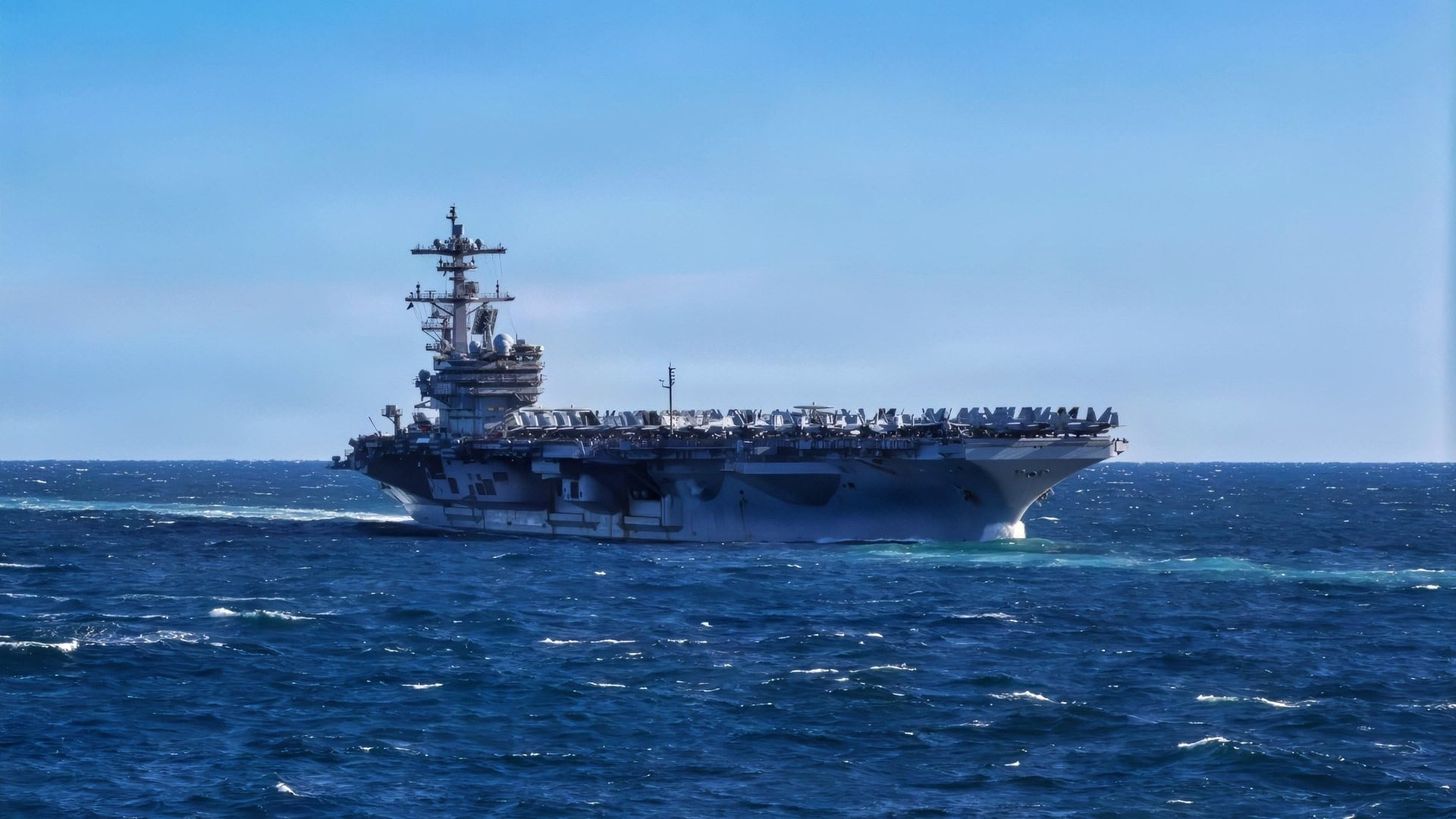
The USS George H.W. Bush Carrier Strike Group sails in formation during a strait transit exercise in the Atlantic Ocean, Feb. 8, 2026. The George H.W. Bush Carrier Strike Group is at sea as an integrated warfighting team. Composite Training Unit Exercise (COMPTUEX) is the Joint Force’s most complex integrated training event and prepares naval task forces for sustained high-end Joint and combined combat. Integrated naval training provides combatant commanders and America’s civilian leaders highly capable forces that deter adversaries, underpin American security and economic prosperity, and reassure Allies and partners. (U.S. Navy photo by Mass Communication Specialist 3rd Class John R. Farren)
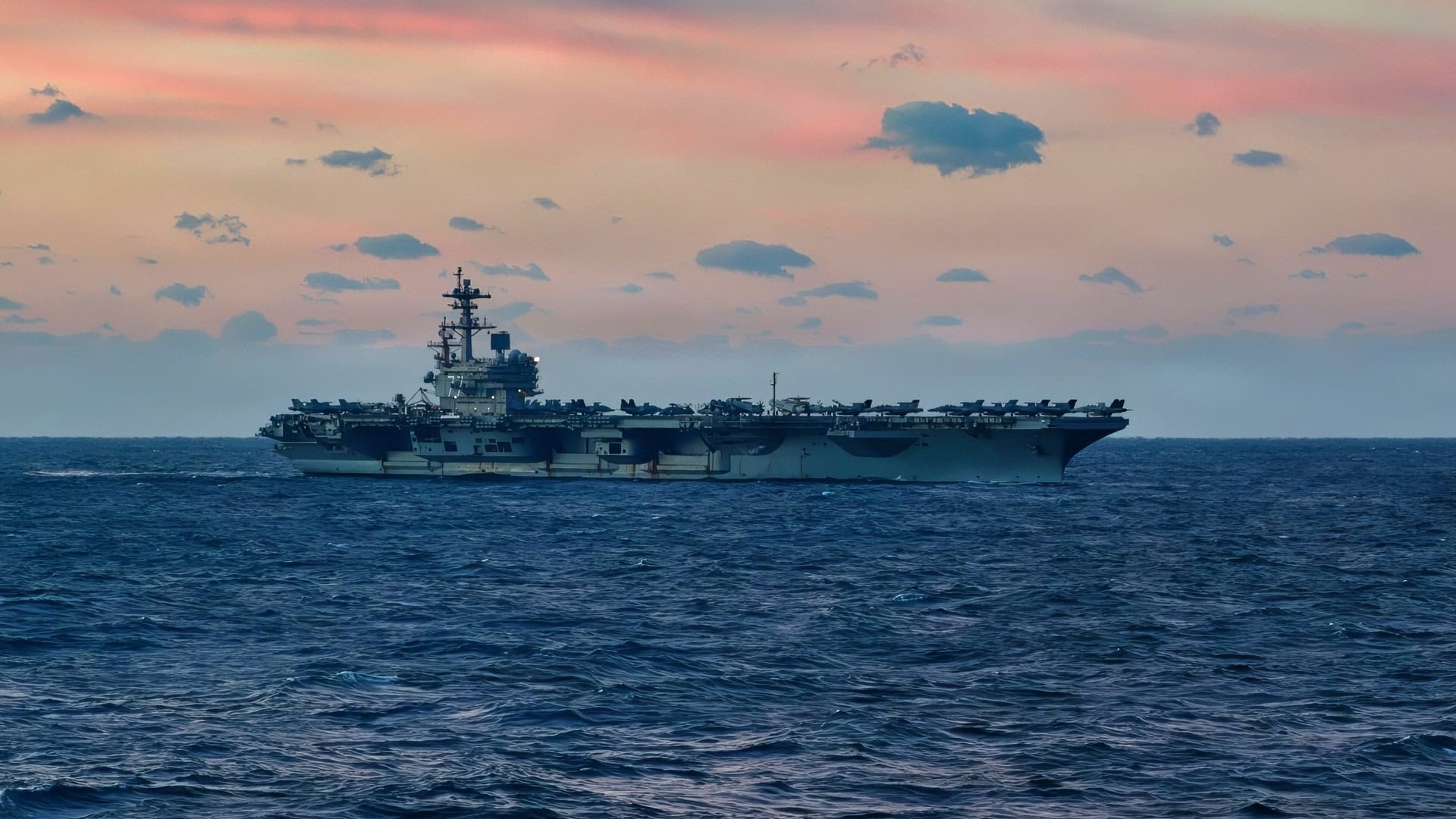
The Nimitz-class aircraft carrier USS George H.W. Bush (CVN 77) sails in the Atlantic Ocean, Feb. 6, 2026. The George H.W. Bush Carrier Strike Group is at sea as an integrated warfighting team. Composite Training Unit Exercise (COMPTUEX) is the Joint Force’s most complex integrated training event and prepares naval task forces for sustained high-end Joint and combined combat. Integrated naval training provides combatant commanders and America’s civilian leaders highly capable forces that deter adversaries, underpin American security and economic prosperity, and reassure Allies and partners. (U.S. Navy photo by Mass Communication Specialist 3rd Class John R. Farren)
Aircraft carriers were so undesirable that they threatened you with them at the Aviation Anti-Submarine Warfare Operators A-School Course. “How’d you like to be chockin’ and chaining on a carrier deck next week? Your last test score makes it seem like you are itching to go.” This referred to being an Aviation Bos’n Mate who lives and works on the flight deck.
The running joke was that “ABs” working on carriers had flunked out of some of the Navy’s best schools.
As a neophyte ASW operator in training, I could expect to be assigned to one of four ASW aircraft in operation during the Cold War: The P-3 Orion, the SH-3 Sea King, the S-3B Viking, and the SH-2f LAMPS Seasprite.
Two were fixed-wing, two were helicopters, and two were assigned to aircraft carriers. Each had its own upside and downside.
Because the instructors at the school came from every platform, I made it a habit to ask them about the pros and cons of each platform as I considered which one I preferred to serve on.
In this discussion, it was never really so much about the aircraft itself as where it operated.
The P-3 Orion was shore-based, but you’d deploy for 6 months to Adak, Alaska, or Keflavik, Iceland, depending on which coast your squadron was based out of.
The SH-2F Seasprite was also shore-based and made 3–4-month deployments on frigates, destroyers, and cruisers.
The S-3B Viking and SH-2 Sea King helicopters went aboard carriers and would go to sea for God knows how long.
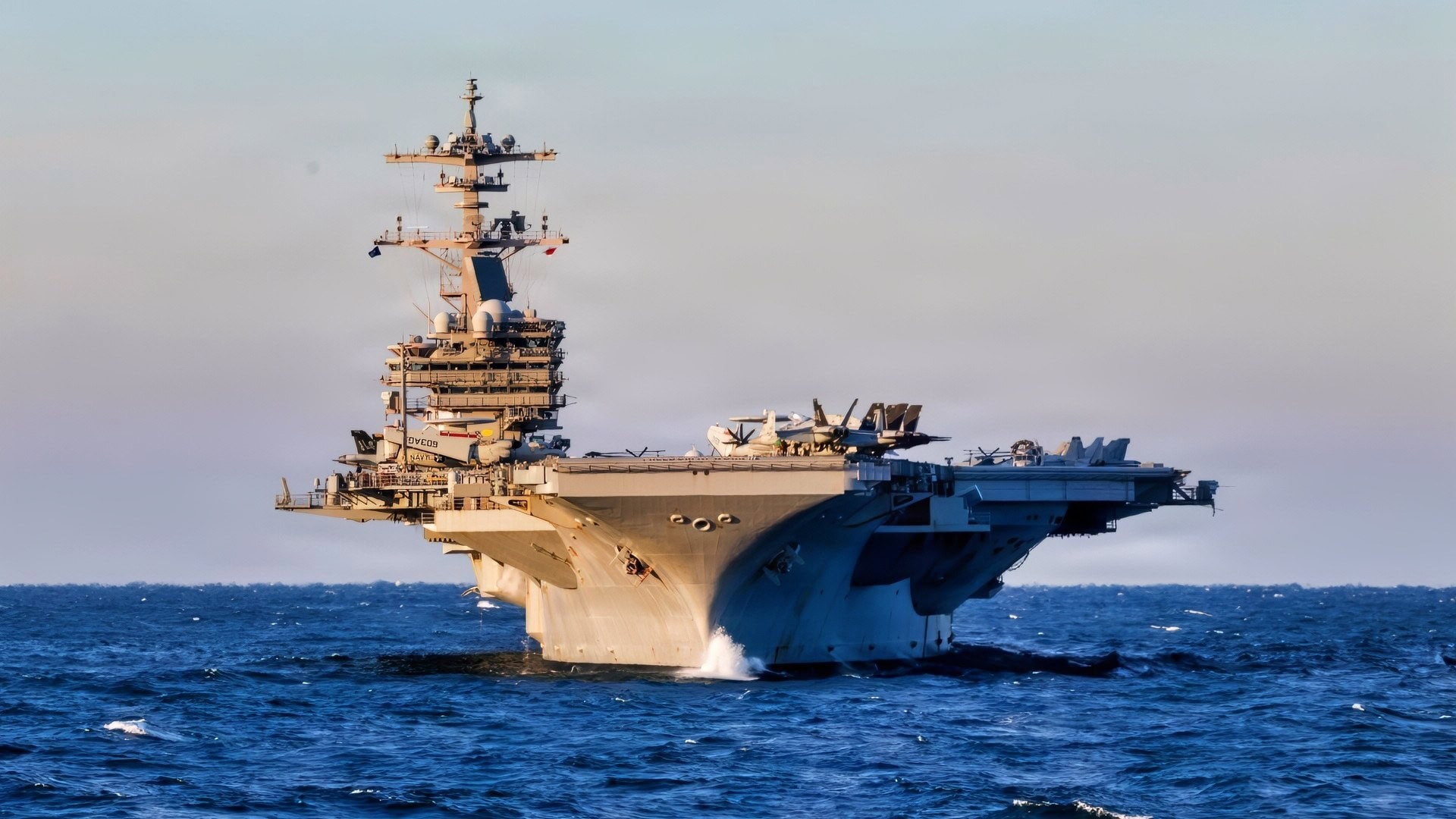
The Nimitz-class aircraft carrier USS George H.W. Bush (CVN 77) sails in the Atlantic Ocean, Feb. 6, 2026. The George H.W. Bush Carrier Strike Group is at sea as an integrated warfighting team. Composite Training Unit Exercise (COMPTUEX) is the Joint Force’s most complex integrated training event and prepares naval task forces for sustained high-end Joint and combined combat. Integrated naval training provides combatant commanders and America’s civilian leaders highly capable forces that deter adversaries, underpin American security and economic prosperity, and reassure Allies and partners. (U.S. Navy photo by Mass Communication Specialist 3rd Class John R. Farren)
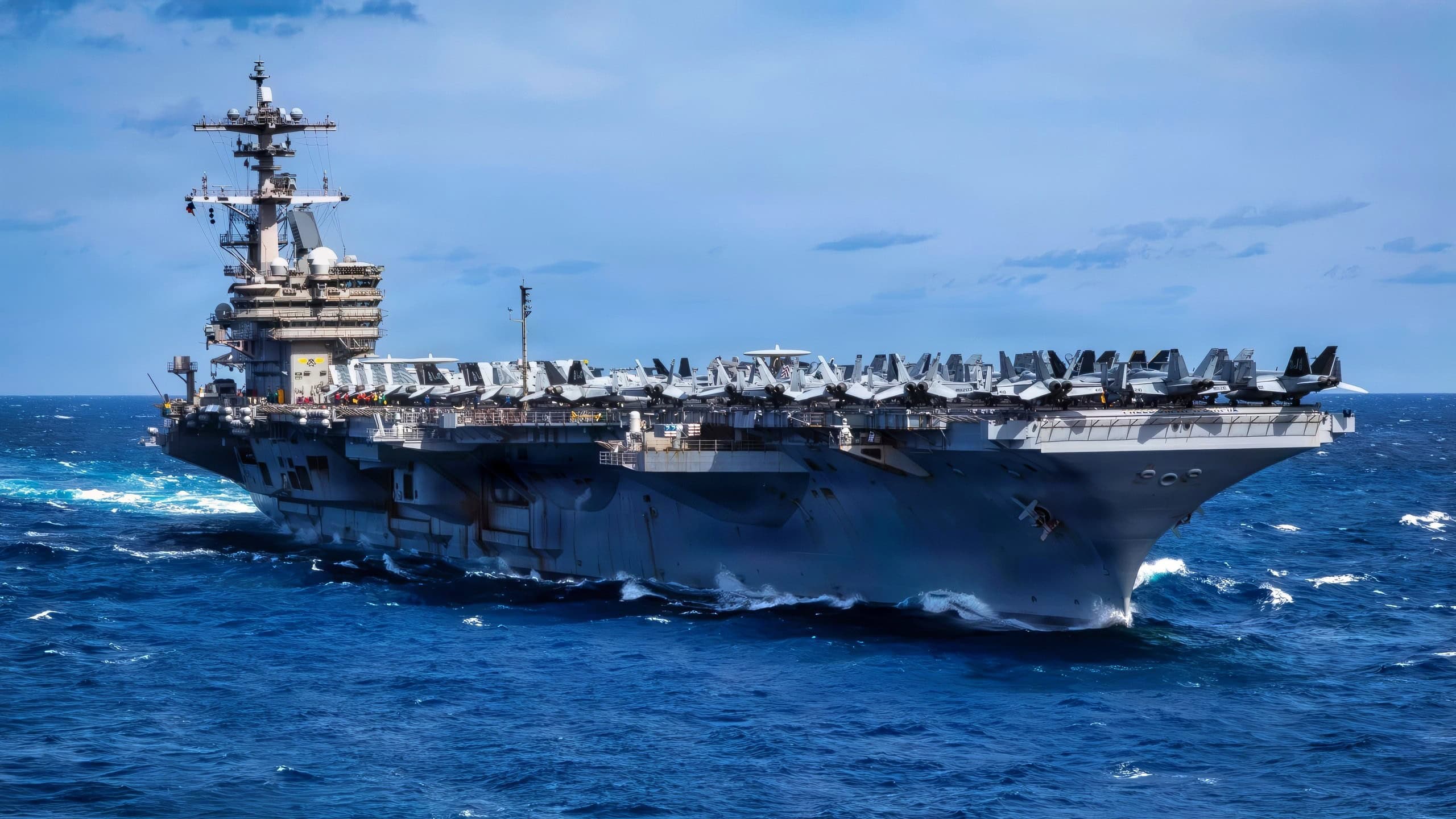
The Nimitz-class aircraft carrier USS George H.W. Bush (CVN 77) transits the Atlantic Ocean, Feb. 15, 2026. The George H.W. Bush Carrier Strike Group is at sea training as an integrated warfighting team. Composite Training Unit Exercise (COMPTUEX) is the Joint Force’s most complex integrated training event and prepares naval task forces for sustained high-end Joint and combined combat. Integrated naval training provides combatant commanders and America’s civilian leaders highly capable forces that deter adversaries, underpin American security and economic prosperity, and reassure Allies and partners. (U.S. Navy photo by Mass Communication Specialist 2nd Class Mitchell Mason)
For enlisted sailors, the ship you get assigned to makes all the difference in whether your time at sea will be enjoyable or take a miserable toll on your psyche.
Not all ships are alike; some that you might not think are a cakewalk actually are. Serving on a Navy Tug was very desirable.
They operated in port, and you were stationed ashore. You worked “banker’s hours” for the most part and had most weekends off.
Some craft were so ridiculously fun that sailors might wait for years for a chance to serve on them.
From the late 1970s to the early 1990s, the Navy operated six Pegasus-class hydrofoil patrol craft.
These 48-knot vessels, with a crew of 21, patrolled and conducted counter-narcotics interdiction in the Caribbean out of Key West Naval Station in Florida.
I shouldn’t have to explain further; you get the idea.
When I spoke to those who served aboard carriers on the SH-3 Sea King helicopter or S-3B Viking, all discussion centered on the trials and tribulations of living aboard. Here are the 5 things that stuck with me.
Long Deployments Aboard The USS Never-Docks
Recent long deployments of the carriers USS Gerald Ford and USS Abraham Lincoln in the Middle East have done nothing in the last 40 years to dispel the notion that aircraft carriers go to sea and stay there a very long time.
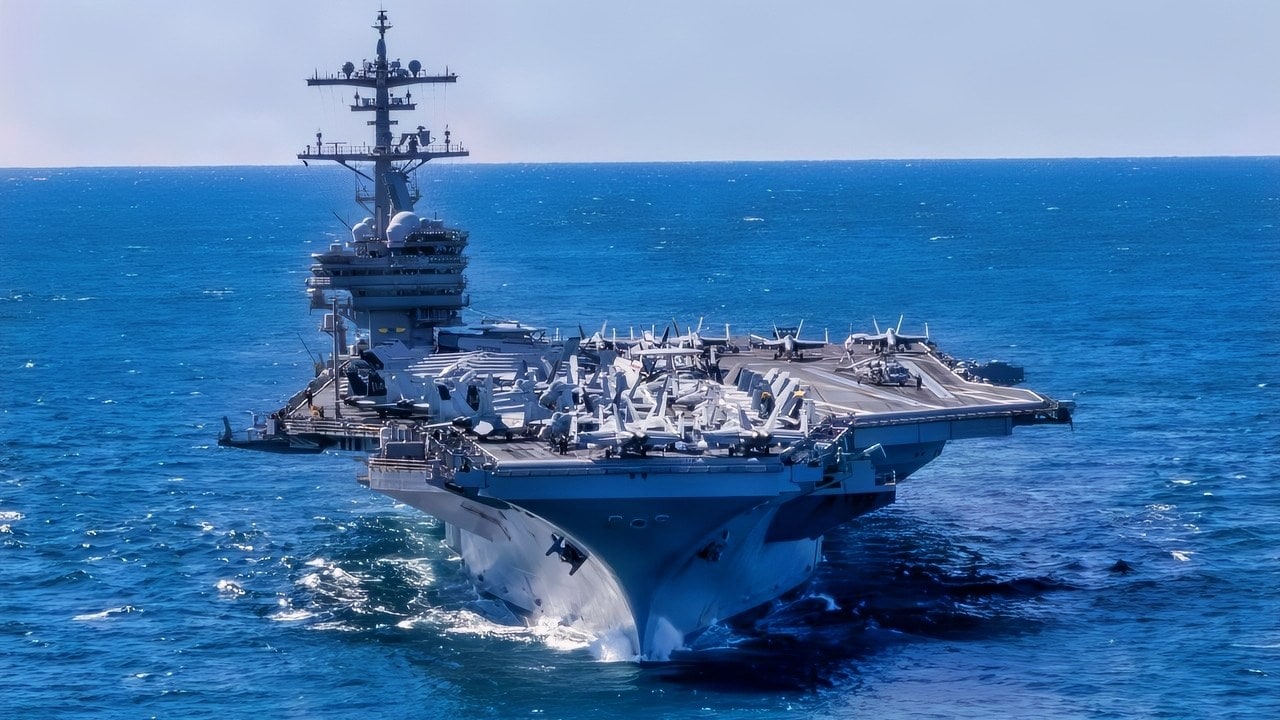
The Nimitz-class aircraft carrier USS George H.W. Bush transits the Atlantic Ocean, Feb. 8, 2026. The George H.W. Bush Carrier Strike Group is at sea training as an integrated warfighting team. Composite Training Unit Exercise (COMPTUEX) is the Joint Force’s most complex integrated training event and prepares naval task forces for sustained high-end Joint and combined combat. Integrated naval training provides combatant commanders and America’s civilian leaders highly capable forces that deter adversaries, underpin American security and economic prosperity, and reassure Allies and partners. (U.S. Navy photo by Mass Communication Specialist 2nd Class Jayden Brown)
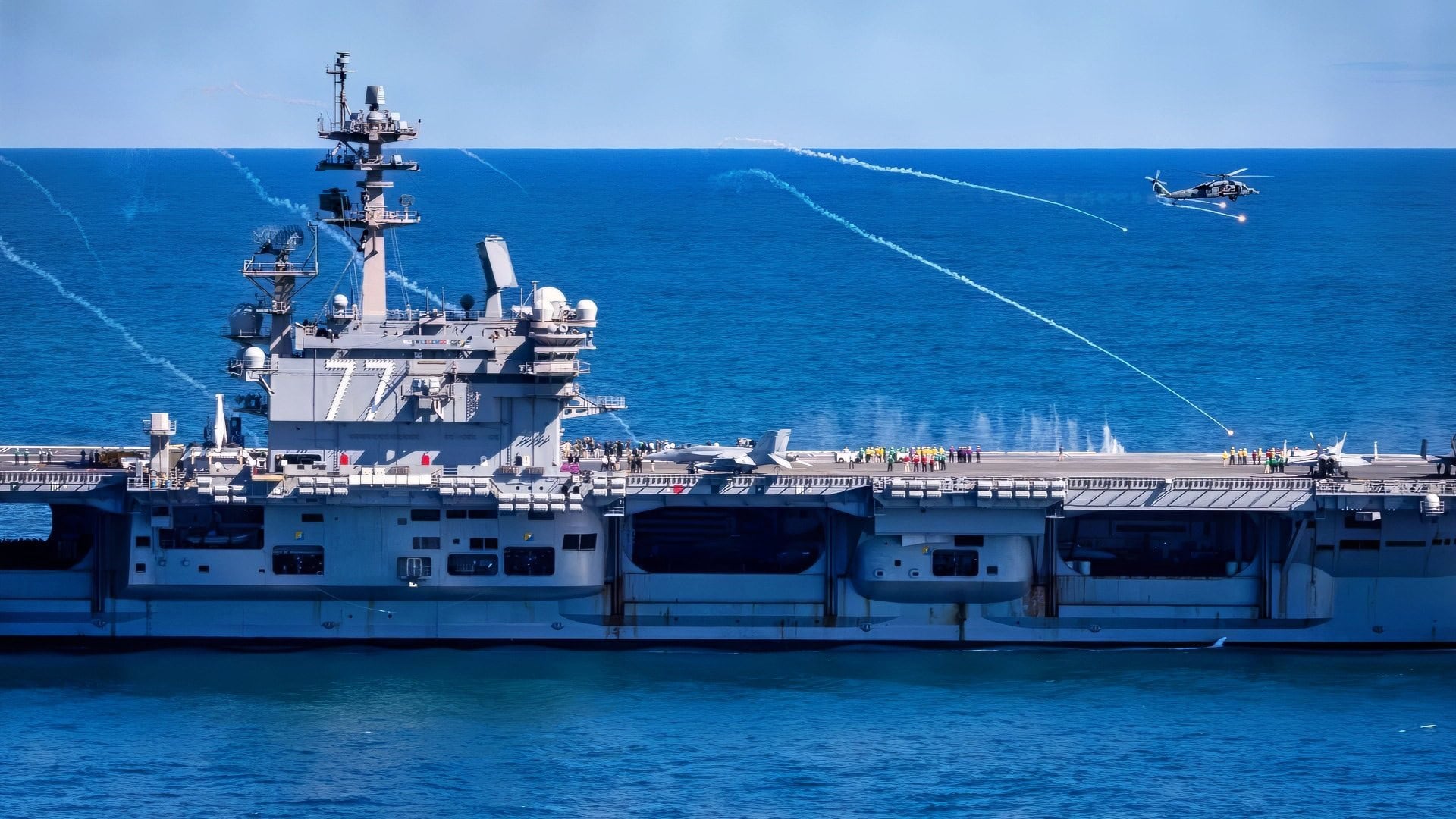
(Oct. 5, 2025) An MH-60S Sea Hawk attached to the “Dusty Dogs” of the Helicopter Sea Combat Squadron (HSC) 7 fires flares above the Nimitz-class aircraft carrier USS George H.W. Bush (CVN 77) in support of the Titans at Sea Presidential Review. The Titans of the Sea Presidential Review is one of many events taking place throughout the country to showcase maritime capabilities as part of the U.S Navy’s 250th birthday. America is a maritime nation. For 250 years, America’s Warfighting Navy has sailed the globe in defense of freedom. (U.S. Navy photo by Mass Communication Specialist 2nd Class Mitchell Mason)
An aircraft carrier is the centerpiece of the fleet and maintains a very high operational tempo while at sea.
While a destroyer with a crew of 250 can put into most small ports without difficulty, a nuclear-powered aircraft carrier with a crew of over 5,000 can only put into a major city, or it will be overrun with sailors who will promptly eat and drink a small port town dry.
Some countries are also a bit squeamish about nuclear reactors (and weapons) sitting in one of their major ports for fear of an accident rendering it useless with radioactive contamination for a couple of hundred years.
For this reason, nuclear carriers often have to drop anchor offshore and use boats to bring the crew ashore for liberty.
An aircraft carrier is also a major strategic asset that requires extensive security to make a port call safely. Not all ports meet these requirements, so exotic ports of call in faraway places are not on an aircraft carrier’s itinerary.
Working All Day In The Sun Or Working For Weeks Without Ever Seeing The Sun At All.
Carriers are over 1,000 feet long with well over 200,000 square feet of internal volume.
Hundreds work on deck in the sun, rain, cold, and sleet 12 hours a day, while others in the engineering spaces below can go weeks without ever coming up on deck to see the Sun at all.
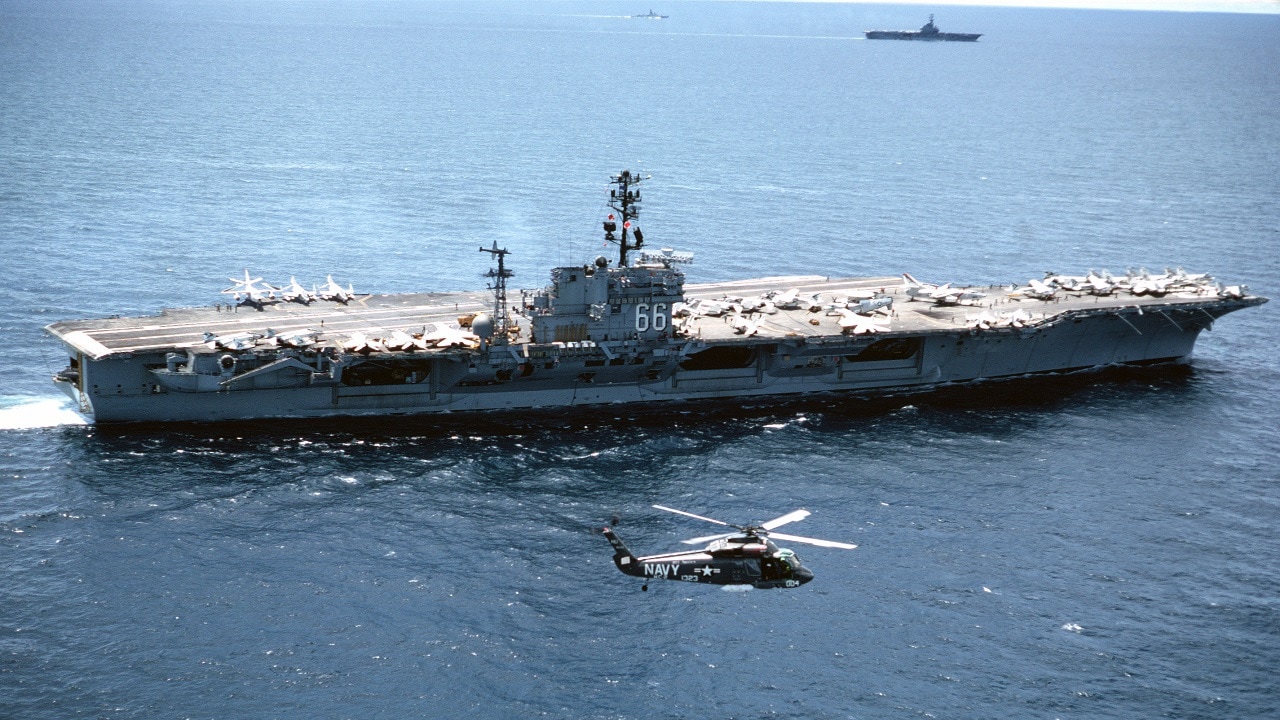
A Helicopter Combat Support Squadron 2 (HC-2) UH-2 Seasprite helicopter flies off the starboard side of the aircraft carrier USS AMERICA (CV 66) while the ship is underway. An unidentified aircraft carrier is in the background.
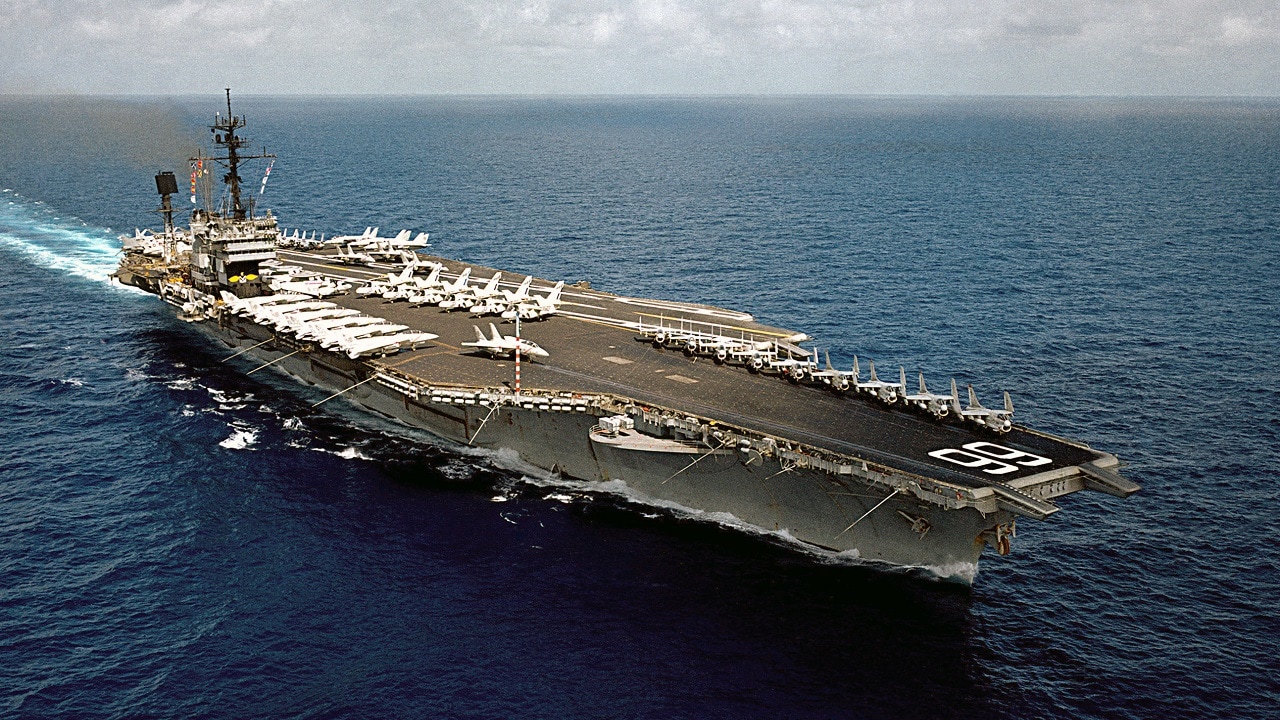
The U.S. Navy aircraft carrier USS America (CV-66) underway in the Indian Ocean, 24 April 1983. America, with assigned Carrier Air Wing 1 (CVW-1), was deployed to the Mediterranean Sea and the Indian Ocean from 8 December 1982 to 2 June 1983.
During flight operations, only duty personnel are allowed on deck, and this is strictly enforced.
The crew does not have the run of the ship; you mostly stick to the work, berthing, recreation, and mess areas you are assigned to. It can feel very restrictive even on a ship as large as a carrier.
You Get In Line To Get In Line
For almost everything, you must stand in line.
You line up to go aboard; you line up to get ashore. You line up for chow, a haircut, or the ship’s store.
Sick call has a line. There can be a line to shower or use the bathrooms.
Imagine living at Disney World for 6 months lining up for rides all day, and you have some idea of what life is like aboard a carrier.
You have 180 roommates.
On the older Nimitz-class carriers, lower enlisted ranks lived in berthing compartments with 180 people.
They are kept dimly lit 24 hours a day because operations are 24 hours a day as well.
Bunks are stacked as 3-high, aptly named “Coffin Racks,” and are assigned by seniority.
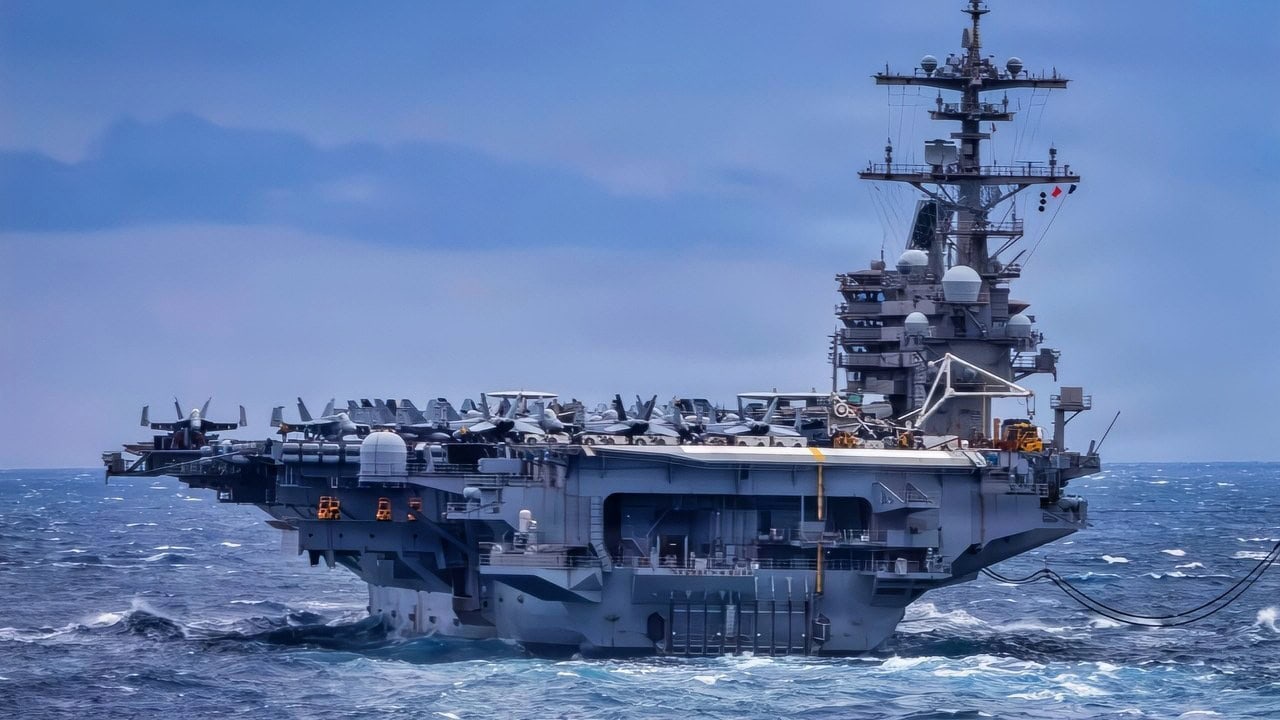
The Nimitz-class aircraft carrier USS George H.W. Bush (CVN 77) and the Henry J. Kaiser-class fleet replenishment oiler USNS John Lenthall (TAO 189) transfer cargo and JP-5 during a replenishment at sea in the Atlantic Ocean, Feb. 15, 2026. The George H.W. Bush Carrier Strike Group is at sea training as an integrated warfighting team. Composite Training Unit Exercise (COMPTUEX) is the Joint Force’s most complex integrated training event and prepares naval task forces for sustained high-end Joint and combined combat. Integrated naval training provides combatant commanders and America’s civilian leaders highly capable forces that deter adversaries, underpin American security and economic prosperity, and reassure Allies and partners. (U.S. Navy photo by Mass Communication Specialist 2nd Class Mitchell Mason)
If you are very junior, you sleep on the bottom rack, inches above the floor, and you learn to sleep with 180 other people snoring, coughing, and passing gas around you.
Privacy consists of a curtain you can pull closed.
You can’t wear earplugs, either; you must hear the general quarters alarm or someone trying to wake you up for your watch.
Imagine Trying To Sleep In A Running Factory.
A nuclear-powered aircraft carrier is among the largest and most complex machines ever built by human hands.
Within this enormous machine, more than 5,000 people who operate it also live inside it.
It runs 24 hours a day at sea and conducts flight operations for most of that period; it is never quiet.
Day and night the crews live and sleep under the noise of jet engines, planes being launched and slamming back down on the deck, bells ringing to mark the time, announcements on the 1MC, running ventilation fans, pumps, machinery, toilets flushing, everything you can think of, for months on end.
There Was One Aircraft Carrier That Was A Cruise Ship By Comparison
As for that one carrier I mentioned early that wasn’t like any of the others, I am referring to the USS Lexington, a conventionally powered carrier dating back to WWII.
She was homeported at Pensacola, Florida, and was used for naval aviator flight school and their carrier qualifications.
She never deployed for 6 months, and serving aboard her was said to be like a cruise ship compared to the alternatives.
Hearing all that, my choice seemed clear.
Being from Florida, the polar region cold of Adak, Alaska, and Keflavik, Iceland held no attraction for me, nor did the excruciatingly long cruises and living conditions of an aircraft carrier.
I selected the SH-2F Seasprite and deployments on frigates on the East Coast.
These ships only deployed for 3-4 months at a time and visited ports both large and small every couple of weeks.
With a crew of about 250, there was a short line for chow in the galley, but that was about it.
On my first deployment on a frigate, I met sailors who had previously served on carriers; they all seemed to be on a frigate now for the same reasons I was warned to avoid carriers in the first place.
About the Author: Sean Spoonts
Sean Spoonts is the former Editor-In-Chief of SOFREP.com. He is a military analyst, writer, and commentator whose work has appeared in Newsweek, CS News, Ukrinform, and various military/veteran media networks and professional publications, including the Military Intelligence Professional Bulletin. He is a U.S. Navy veteran, having served as an Aviation Anti-Submarine Warfare Operator and Search and Rescue Helicopter Aircrewman.