

F-15 Aerospace History: The maneuver had no precedent in fighter aviation. Two hundred miles west of Vandenberg Air Force Base, Maj. Wilbert “Doug” Pearson pushed his F-15A, serial 76-0084, nicknamed the Celestial Eagle, to Mach 1.22 over the Pacific, then hauled the jet into a 3.8g pull to a 65-degree climb, a zoom profile designed to throw the aircraft up through 38,000 feet like the first stage of a rocket.
As the Eagle’s speed decayed back through Mach 0.93, the 18-foot missile on its centerline released automatically and lit its motor.
Minutes later and 345 miles above the Earth, the missile’s third stage struck a satellite moving at orbital velocity, and the only aircraft-launched satellite kill in history was complete.
The Zoom Climb: How the Celestial Eagle Shot Actually Worked
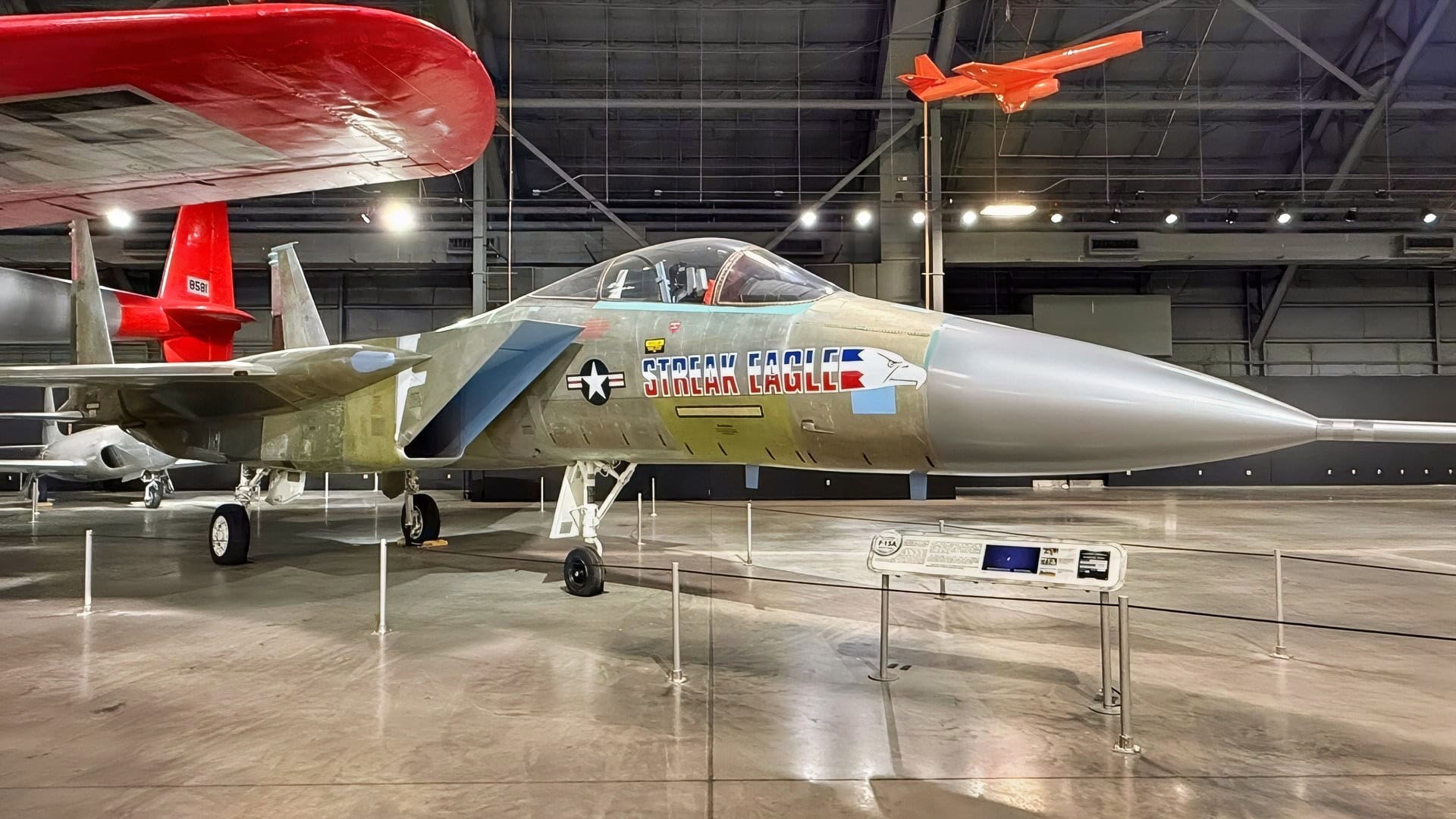
F-15A Fighter. Image Credit: 19FortyFive.com Original Image.
The weapon was the ASM-135, built by LTV, a three-stage missile weighing about 2,700 pounds that used the F-15 itself as its booster. A rocket motor borrowed from the SRAM nuclear standoff missile formed the first stage, an Altair 3 formed the second, and the payload was the part that made the system remarkable: the Miniature Homing Vehicle, a 30-pound interceptor with an infrared seeker and no warhead at all.
The math made explosives redundant. Closing on its target at roughly 15,000 miles per hour, the little vehicle carried more destructive energy in pure velocity than any warhead of its size could deliver, the kinetic-kill principle that later generations of missile defense would be built on. NASA scientists studying the aftermath theorized the impact converted enough energy into heat to vaporize the satellite’s plastics and coat its shattered metal in soot.
The system had been carefully worked out. Captive-carry flights began in 1982, and in January 1984, Maj. Ralph Filburn launched an ASM-135 from another F-15 against a point in empty space, proving the profile.
In August 1985, President Ronald Reagan authorized the step nobody had taken from an airplane: a live intercept of an orbiting satellite, with Congress formally notified before the shot. On the afternoon of September 13, everything worked the first time. Pearson’s climb put the missile into its window, the stages flew as designed, and the homing vehicle guided itself straight into a target crossing the sky at nearly five miles per second.
Solwind P78-1: The Satellite That Was Still Doing Science
The target gave the triumph its asterisk. Solwind P78-1 was a US solar observatory, launched from Vandenberg in February 1979, and by 1985 it was failing badly: its batteries were degrading to the point of triggering automatic shutdowns, its last tape recorder had died that spring, and five of its instruments were dead.
But two instruments were still working, still returning data, and the little spacecraft had a scientific legacy out of proportion to its size. Its coronagraph had made Solwind the first satellite in history to discover a comet, and it ultimately found nine of them, all sungrazers, before the Air Force selected it as a target. Its mission was actually extended by several weeks so that it would still be operating when the missile arrived.
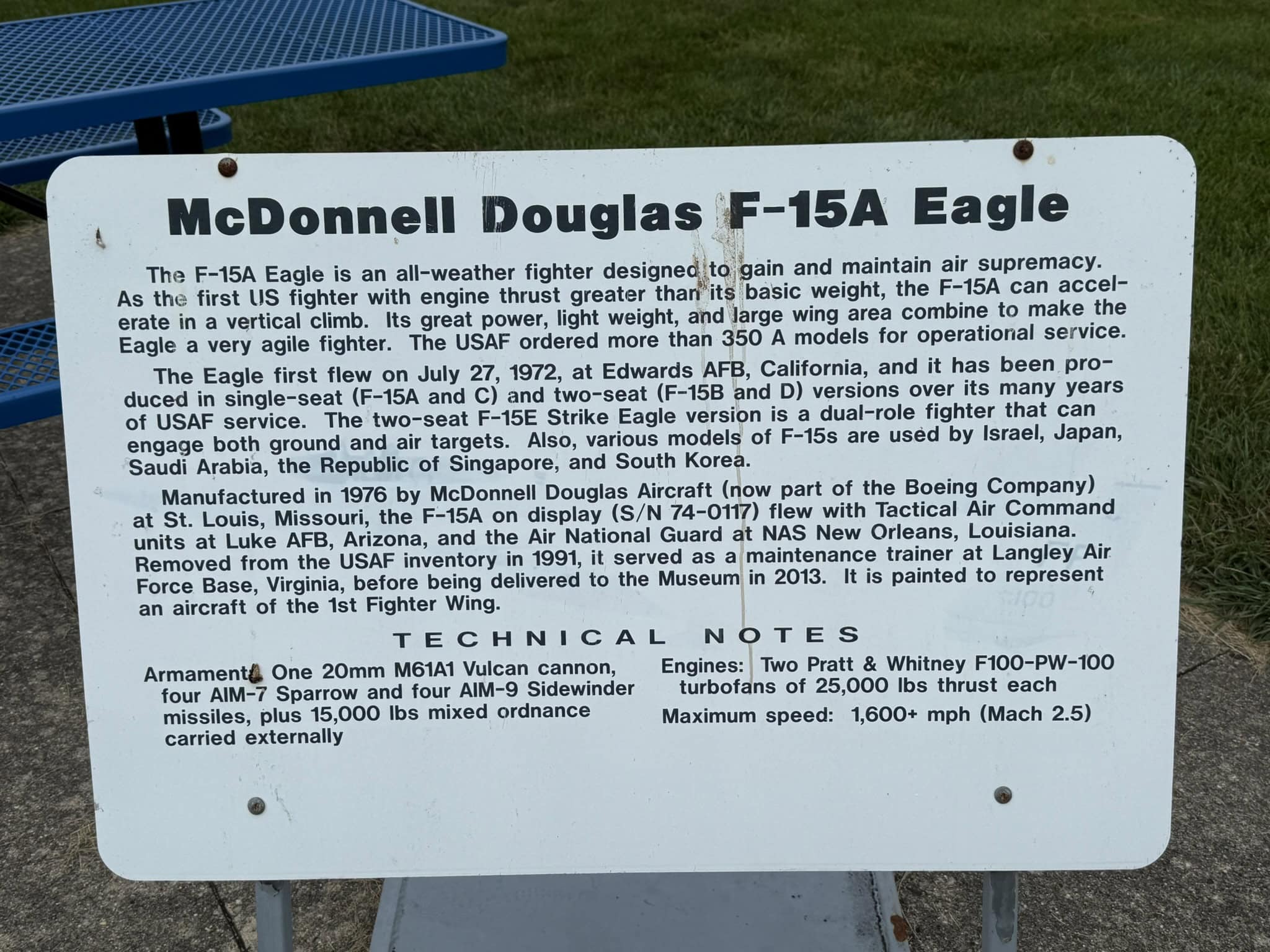
F-15A. 19FortyFive Photo Taken Outside of the National Museum of the U.S. Air Force.
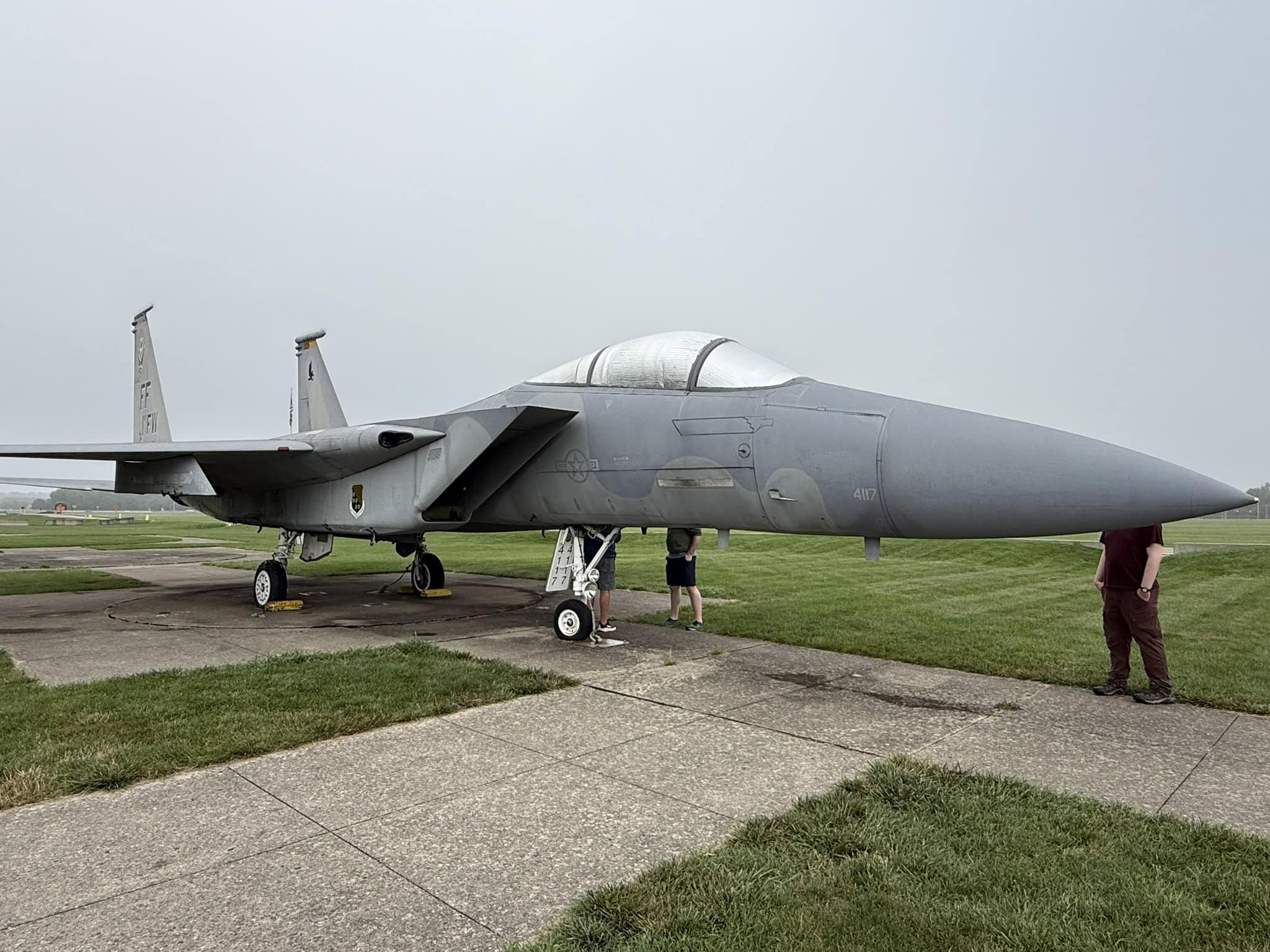
F-15A. 19FortyFive Photo Taken Outside of the National Museum of the U.S. Air Force.
Solar physicists objected publicly, arguing that whatever the satellite’s age, it remained central to American coronal research, and that a working observatory had been expended as target practice. NASA, which learned of the plan only that July, modeled the consequences and projected that debris from the intercept would persist in orbit into the 1990s, driving the agency to plan heavier shielding for its future space station.
The modeling proved optimistic. The intercept produced 285 cataloged pieces of debris, and the last tracked fragment did not fall out of orbit until May 2004, nearly nineteen years after the shot.
The Test Was So Successful That Congress Banned It Within Months
By the measures the Air Force cared about, the Celestial Eagle flight was close to a perfect trial, and the service was ready to build on it.
Plans called for a force of over a hundred ASM-135s flown by modified F-15 squadrons on both coasts, a dispersed, aircraft-launched anti-satellite capability no adversary could preempt on the ground. None of it happened.
Concern about weapons in space and the debris the test had just demonstrated was already moving through Congress, and in December 1985, lawmakers banned further ASM-135 tests against objects in space.
The Air Force flew additional shots against virtual points in 1986, but a weapon that could never again be tested against what it was built to kill had no path into the inventory. Amid treaty politics with Moscow, lukewarm institutional support, and rising costs, the program was canceled in 1988 after fifteen missiles had been built and five flown.
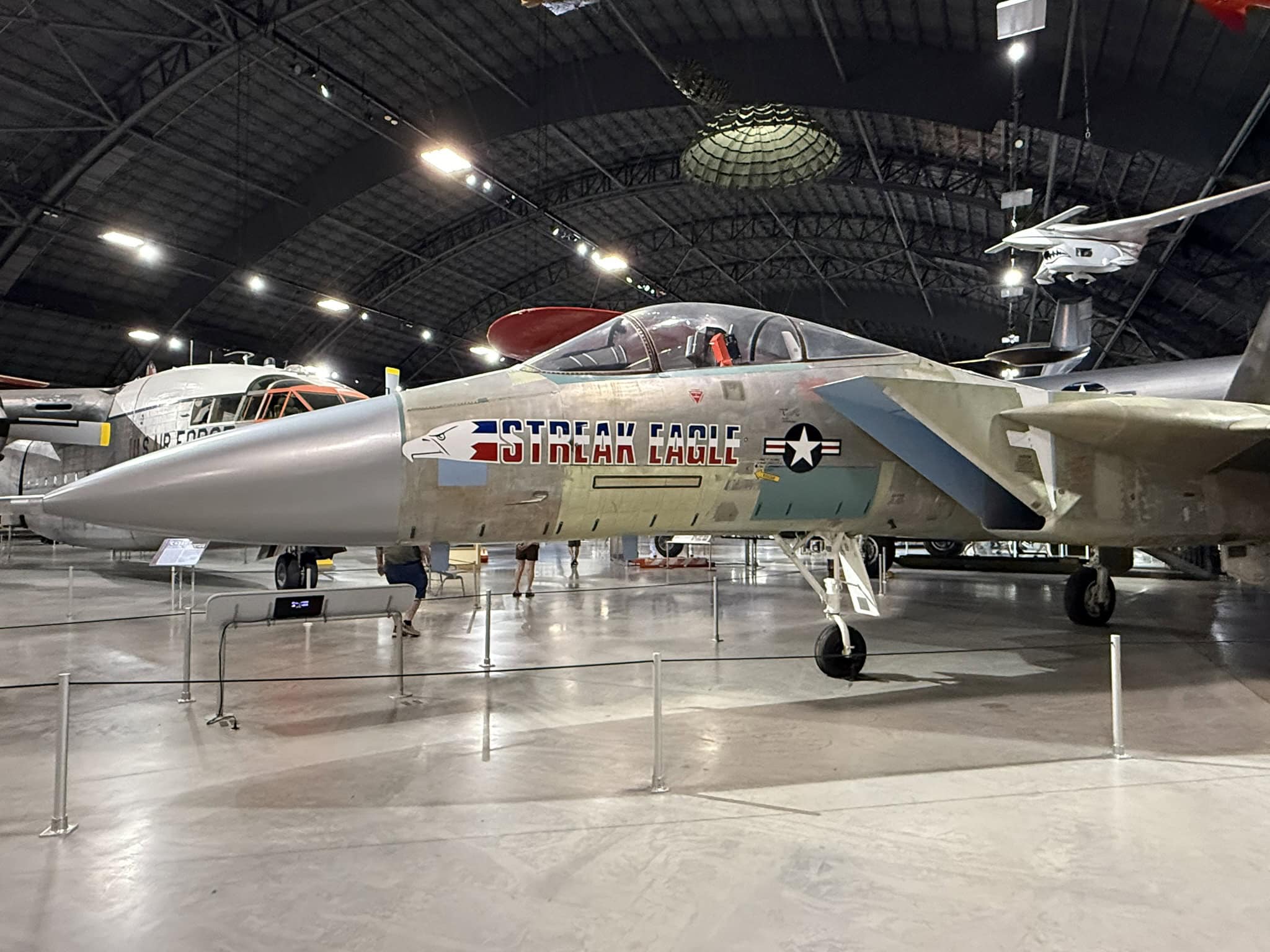
F-15A. 19FortyFive Photo Taken Outside of the National Museum of the U.S. Air Force.
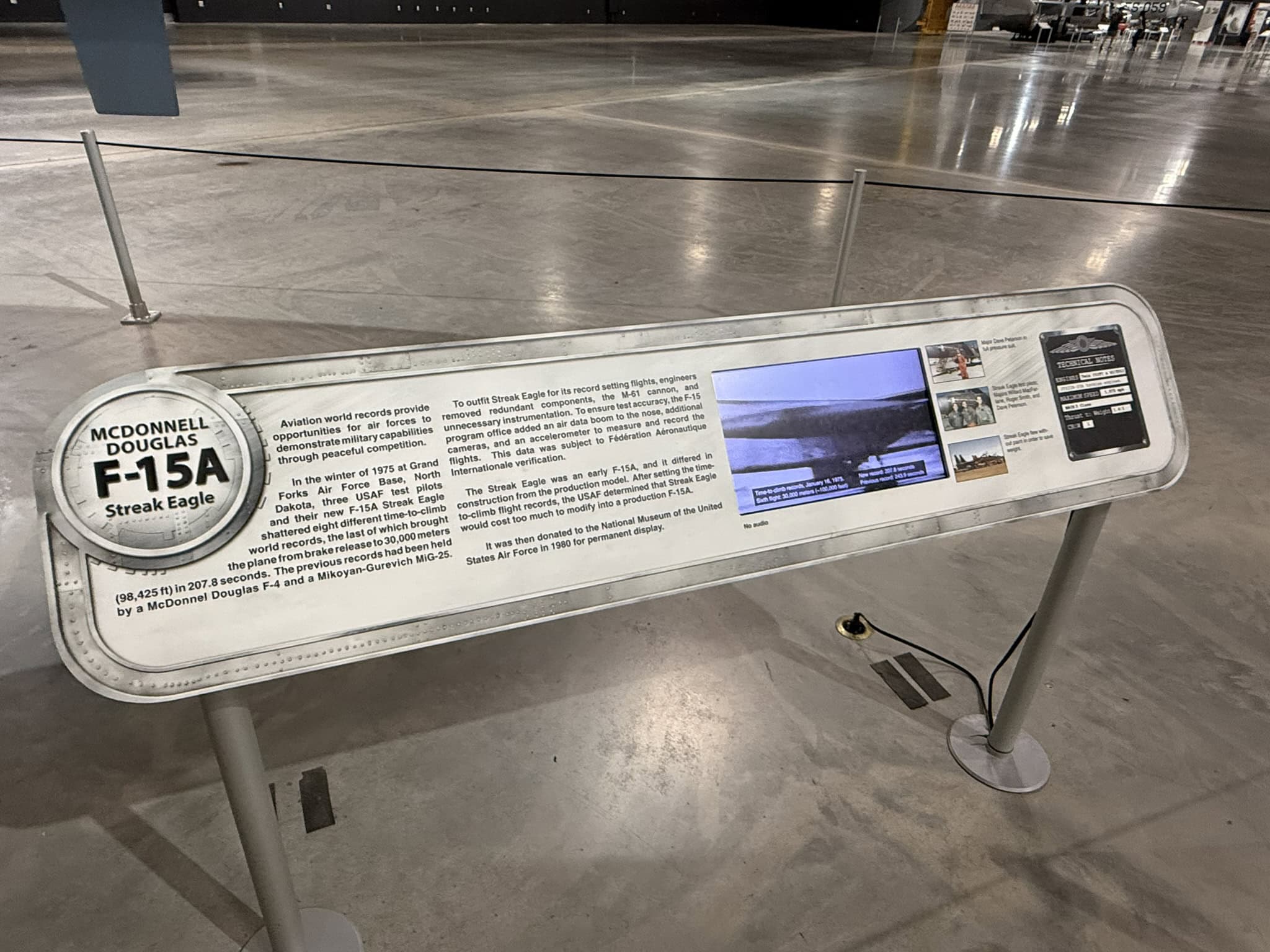
F-15A. 19FortyFive Photo Taken Outside of the National Museum of the U.S. Air Force.
The result is a record unlikely to be equaled. One aircraft, one pilot, one missile, one satellite: the F-15 became and remains the only airplane ever to destroy a spacecraft, its anti-satellite career opening and closing on the same afternoon.
Forty Years Later: The Lesson of 1985 Is Written Into Policy
Every destructive anti-satellite event since has been, in one way or another, the world relitigating that September afternoon.
In 2007, China destroyed a weather satellite with a ground-launched missile and produced the worst debris event in history. In 2008, the United States used a ship-launched SM-3 to bring down a failed intelligence satellite in a one-off operation and has not conducted a destructive intercept since.
India followed with its own test in 2019, and in November 2021 Russia’s Nudol intercept of a defunct satellite scattered more than 1,500 trackable fragments and sent the crew of the International Space Station into their escape capsules for shelter. By the Secure World Foundation’s count, as reported by the Arms Control Association, the world has conducted 16 destructive anti-satellite tests since 1968, producing more than 6,300 cataloged pieces of debris.
The American answer arrived in April 2022, when the United States declared a unilateral moratorium on destructive direct-ascent anti-satellite testing, the first spacefaring nation to do so. Carnegie analysts noted the pledge largely codified what had been de facto American practice since 2008, and Vice President Kamala Harris framed the ambition plainly: “I call on all nations to join us.” As of this year, more than 30 nations have made the same pledge, while Russia, China, and India remain outside it, and the commitment remains a standing American policy.
The location of the announcement completed a circle: Harris declared it at what is now Vandenberg Space Force Base. The satellite the F-15 killed had been launched from Vandenberg, it died two hundred miles off Vandenberg’s coastline, and thirty-seven years later, the policy renouncing such tests was announced from Vandenberg’s ground.
The airplane outlived the program by decades. In 2007, a Florida Air National Guard sergeant digging through records discovered that one of the F-15As the Guard was still flying every day was 76-0084 itself, the Celestial Eagle, its history largely forgotten by the unit.
That September 13, on the twenty-second anniversary of the shot, the Guard flew a commemorative sortie it called Celestial Eagle Remembered, and the pilot in the cockpit of 76-0084 was an F-15 pilot named Pearson, the son of the man who had aimed the same airplane at a satellite and hit it.
No aircraft has killed a spacecraft since, and under the moratorium the United States declared in 2022, none is likely to try in peacetime.
About the Author: Harry J. Kazianis
Harry J. Kazianis (@Grecianformula) was the former Senior Director of National Security Affairs at the Center for the National Interest (CFTNI), a foreign policy think tank founded by Richard Nixon based in Washington, DC. Harry has over a decade of experience in think tanks and national security publishing. His ideas have been published in the NY Times, The Washington Post, The Wall Street Journal, CNN, and many other outlets worldwide. He has held positions at CSIS, the Heritage Foundation, the University of Nottingham, and several other institutions related to national security research and studies. He is the former Executive Editor of the National Interest and the Diplomat. He holds a Master’s degree focusing on international affairs from Harvard University.