
In 2026, China's Navy Ship 546 and Supply Ship 902 Pass 180 Kilometers East of Miyako Island
 Tanaka Takashi
In 2026, the Chinese Navy's Frigate 546 and Supply Ship 902 Pass 180 Kilometers East of Miyako Island
What the Japan Maritime Self-Defense Force's patrol aircraft observed was not a flashy aircraft carrier strike group. Around 1 AM on July 25, the Chinese Navy's Jiangkai II-class Frigate 546 and Fuchi-class supply ship 902 were moving northwest approximately 180 kilometers east of Miyako Island. This brief announcement, released by the Joint Staff Office on July 30, reflects the changes occurring around the Nansei Islands well.
The Significance of Passing with a Supply Ship
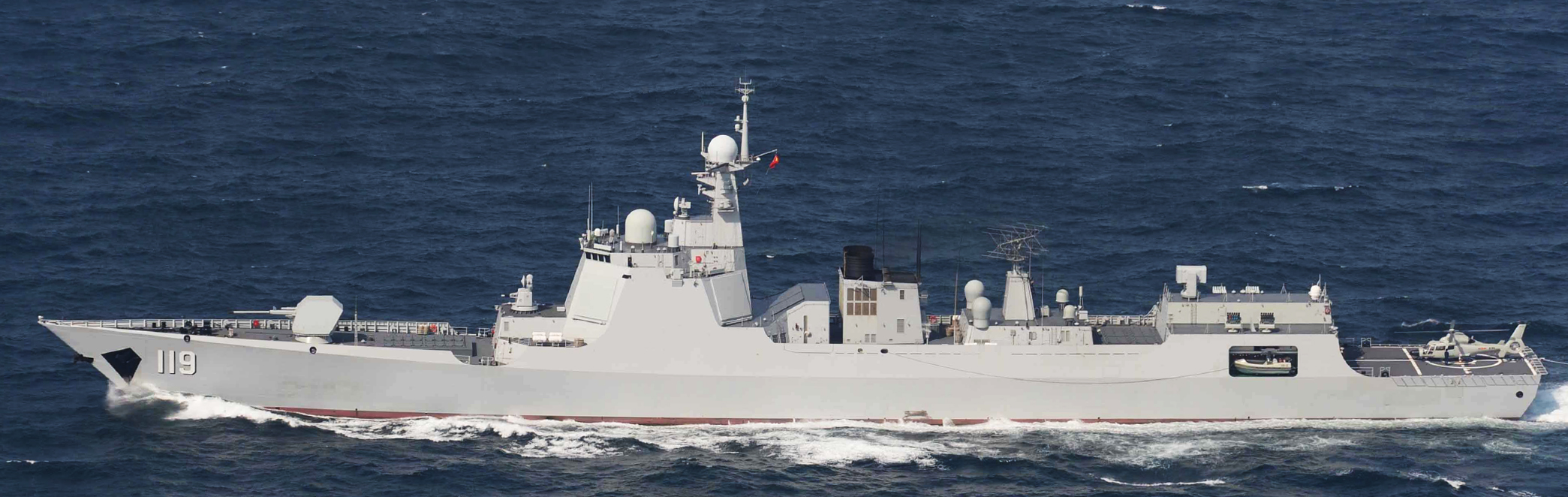
The confirmed Frigate 546 is a Jiangkai II-class equivalent to the 054A type, a general-purpose escort ship weighing about 4,000 tons, balanced in anti-air, anti-submarine, and anti-surface capabilities. Ship 902 is a Fuchi-class supply ship, capable of providing fuel and supplies at sea. If it were just combat ships, it could be interpreted as a mere show of force, but the formation accompanied by a supply ship suggests that it was not only about moving out from the East China Sea to the Pacific but also indicates the possibility of training based on a certain period of activity.
What I focus on is not the type of ships themselves but the route. The Ministry of Defense explained in updated materials from June that Chinese vessels are using multiple straits around the Nansei Islands to advance into the Pacific via more diverse routes. Stars and Stripes also reported that in late June, ten Chinese vessels passed through straits around Japan, with multiple passages such as the Miyako Strait, Osumi Strait, and around Yokodate Island being used simultaneously.
Continuity with Live-Fire Exercises Off Okinotorishima
Viewing this movement as a solitary navigation would be an underestimation. On July 19, it was reported that the Chinese 052D-class destroyer Kaifeng conducted machine gun firing training within Japan's claimed EEZ, approximately 180 kilometers southwest of Okinotorishima. According to The Diplomat, the ship was operating alongside the 055-class destroyer Anshan, the 903A-class supply ship Keke Xili Lake, and a Russian Navy frigate. The Japanese government was more concerned about navigation safety and the expansion of Sino-Russian cooperation than the illegality itself.
In the words of Tanaka, there are two layers of capability and intent. In terms of capability, the Chinese Navy has begun to use the areas around Miyako, Osumi, Tsushima, and Okinotorishima not as separate points but as a continuous training area. In terms of intent, there is a political effect of repeatedly showing Tokyo that "the first island chain is not a closed wall." The presence of the supply ship makes this message more practical.
The Burden of Surveillance on the JMSDF
The JMSDF is believed to have conducted confirmation and surveillance with P-1 patrol aircraft and vessels this time as well. However, the issue is not just whether they can detect them. Surveillance of the Nansei Islands is only established by combining aircraft, escort ships, land-based radar, and U.S. military intelligence. If the Chinese side operates small formations at high frequency, the Japanese side will have no choice but to maintain a state of readiness each time. This is a competition of attrition, not a collision.
For the Japan-U.S. alliance, the focus is not simply on the number of vessels. While the U.S. Navy operates aircraft carriers and nuclear submarines in the Western Pacific, Japan is responsible for the foundational work of strait surveillance and SLOC (Sea Lines of Communication) protection. When personnel shortages and maintenance period constraints overlap, a paradox arises where routine surveillance itself detracts from emergency preparedness.
The passage of Frigate 546 and Supply Ship 902 this time is not the beginning of a crisis. Rather, it is a movement that uses a non-crisis state to routinely test Japan's surveillance capabilities.
The real challenge is not that Chinese vessels appeared 180 kilometers east of Miyako Island. When the Japanese side begins to treat it as "just another passage," the tension of southwestern defense quietly wears away.
Chinese Navy frigate 546 and supply ship 902 passed 180 km east of Miyako Island on July 25, 2026, as part of a training operation. This movement indicates a shift in Chinese naval routes and is monitored by the Japanese Self-Defense Forces. The presence of the supply ship suggests logistical support for extended operations.
- Chinese Navy frigate 546 and supply ship 902 passed 180 km east of Miyako Island on July 25, 2026.
- The vessels are part of a training operation, not just a show of force.
- The movement reflects a change in Chinese naval routes through the southwestern islands.
- The Japanese Self-Defense Forces monitored the passage with P-1 patrol aircraft.
- This movement is part of a broader pattern of Chinese naval activity in the region.