
In 2026, Four Chinese Coast Guard Vessels Approached Near the Senkaku Islands, Revealing the Burden of Japan's Coast Guard PL201 Mission
 Tanaka Takashi
In 2026, Four Chinese Coast Guard Vessels Approached Near Senkaku, Revealing the Burden on Japan Coast Guard PL201's Mission
Looking at a photo of the white hull of patrol vessel PL201 crossing the rough East China Sea, the author first considered not the size of the vessels but the length of time spent on site. On July 7, four vessels from the Chinese Coast Guard were confirmed around the Senkaku Islands, two of which entered what Japan claims to be its territorial waters and approached Japanese fishing boats. The Japan Coast Guard explained that it issued a demand for the vessels to leave and had expelled the Chinese ships outside of its territorial waters by around 9:20 AM.
The Nature of Pressure Demonstrated by the Four Coast Guard Vessels
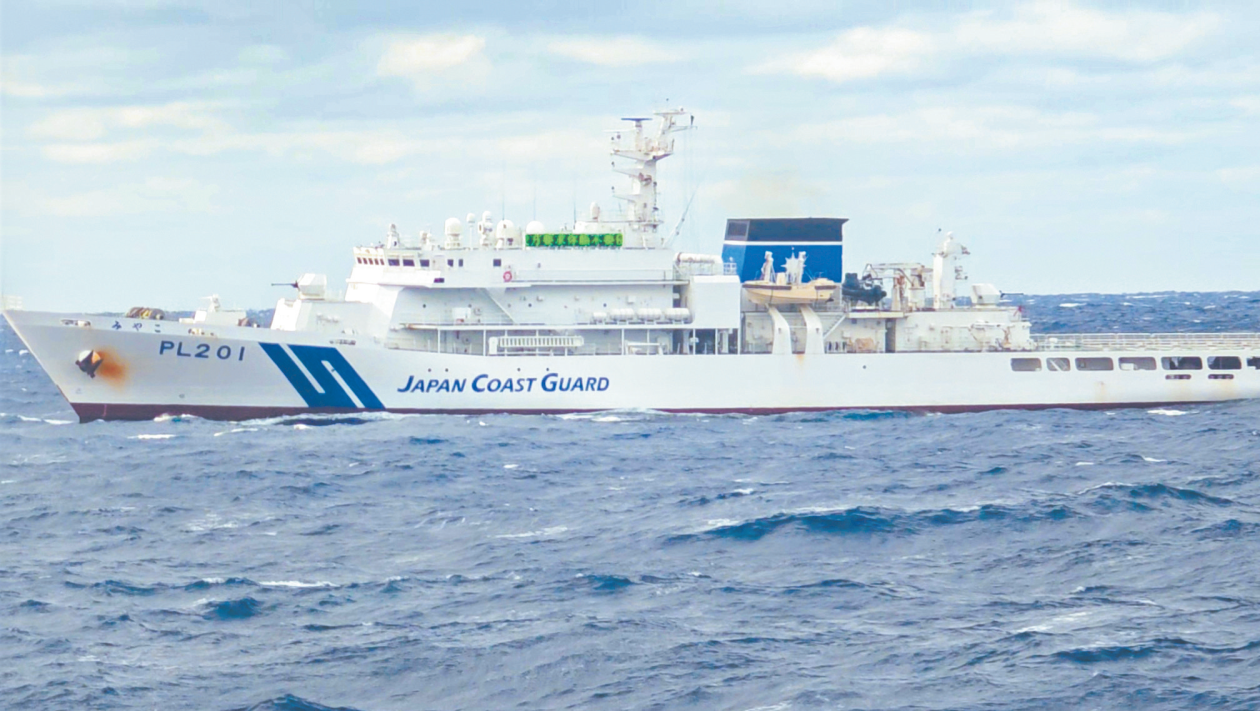
This incident is not merely a back-and-forth over territorial claims. According to AFP reports, Japan deployed patrol vessels to ensure safety because two Chinese ships approached its fishing boats. On the other hand, the Chinese Coast Guard announced that it issued warnings and expelled the Japanese fishing boat "Zuihōmaru" because it entered the territorial waters near China's Red Tail Islet, known in Japan as Taisho Island. As usual, the claims from both sides do not align, but the operational facts are clear. The Chinese side not only made claims but also provoked Japan's protective mission by approaching the fishing boats.
What complicates matters for the Japan Coast Guard is that the opponent is the Coast Guard, not the Navy. Patrol vessels are required to exercise restraint as law enforcement agencies. If the Japan Maritime Self-Defense Force's escort ships were deployed, the level of crisis management would rise, so the initial response must be handled by the Coast Guard. However, Chinese Coast Guard vessels are becoming larger and increasing their continuous deployment capabilities. If we separate capability from intent, it can be seen that they are already capable of long-term presence on site, and in terms of intent, there is a growing tendency to focus on Japanese fishing boats to establish de facto jurisdiction.
The Political Environment After Taiwan Remarks
This maritime incident cannot be separated from the low-temperature state of Japan-China relations. In November 2025, after Prime Minister Takai mentioned Japan's military response possibilities related to a Taiwan emergency, the Chinese side strongly protested, reportedly applying pressure through calls for travel restrictions and export limitations on some Japanese companies. While Coast Guard activities around the Senkaku have been ongoing, during periods of high political friction, small approaches on site can easily be used as diplomatic signals.
It is noteworthy that the recent Chinese announcement emphasized "law-based expulsion." This is a method of discussing control in terms of law enforcement rather than military intimidation. It resembles tactics seen in the South China Sea, but in the case of Senkaku, the opponent is Japan, and there is the backdrop of the Japan-U.S. Security Treaty. Therefore, it seems that the Chinese side is choosing to combine Coast Guard, fishing boats, and survey vessels to increase the response costs for the opponent rather than rapidly escalating to military conflict.
The Gap That PL201 Alone Cannot Fill
The Japan Coast Guard's patrol vessels are excellent. Their on-site judgment is calm. However, there are limits to continuous monitoring of the vast waters from the southwestern islands to Senkaku and the northern waters of Taiwan by the Coast Guard alone. The information-gathering capabilities of the Japan Maritime Self-Defense Force's P-1 patrol aircraft, SH-60K patrol helicopters, and escort ships are essential in the background, but the patrol vessels with white hulls are at the forefront during peacetime. This division of roles between white and gray is at the core of Japan's response to gray zone situations.
- Four Chinese vessels were confirmed, two of which entered the territorial waters claimed by Japan.
- Japan implemented fishing boat protection and issued a demand for departure, announcing the exit around 9:20 AM.
- The Chinese side positioned the same fishing boat as an "intrusion" and explained it as their law enforcement activity.
The issue is not just whether the Chinese Coast Guard vessels can be expelled. It is about how quietly the sea can be maintained for Japanese fishing boats to continue their normal operations.
The Range Supported by the Alliance
The United States has repeatedly stated that the Senkaku Islands are covered by Article 5 of the Japan-U.S. Security Treaty. This deterrent effect remains significant. However, the U.S. military does not directly engage in the hours-long on-site responses involving Coast Guard vessels and fishing boats. While the Japan-U.S. alliance is a mechanism to deter large wars, it is not a mechanism to shoulder the daily war of attrition at Senkaku. Confusing this can lead to an overestimation or underestimation of the alliance's value.
In the author's view, what Japan should urgently pursue is not new hardline statements but increasing the speed of information sharing among the Coast Guard, Maritime Self-Defense Force, local fishermen, and the Cabinet Secretariat. During the Cold War's anti-submarine warfare, the time it took for detected submarine information to reach the command center was crucial in determining victory or defeat. The same applies to the gray zone at Senkaku. The true weakness is not just the number of ships. It lies in whether political decisions to protect small fishing boats can keep pace with the five minutes on site.
On July 7, 2026, four Chinese Coast Guard vessels approached the Senkaku Islands, with two entering Japanese territorial waters and engaging with Japanese fishing boats. The Japan Coast Guard issued a demand for the Chinese vessels to leave, which they complied with by around 9:20 AM. This incident highlights the ongoing territorial tensions between Japan and China in the East China Sea.
- Four Chinese Coast Guard vessels were confirmed near the Senkaku Islands.
- Two Chinese vessels entered Japanese claimed territorial waters.
- Japan's Coast Guard demanded the Chinese vessels to leave the area.
- The incident reflects ongoing territorial disputes between Japan and China.