
In 2026, North Korea's Launch of 10 Short-Range Ballistic Missiles Tests Japan's Immediate Air Defense and Japan-U.S.-South Korea Cooperation
 Tanaka Takashi
North Korea's Launch of 10 Short-Range Ballistic Missiles in 2026 Tests Japan's Air Defense Readiness and Japan-U.S.-South Korea Cooperation
In the early hours of August 24, the South Korean Joint Chiefs of Staff detected approximately 10 short-range ballistic missiles launched from around Pyongyang towards the Sea of Japan. The Japanese government has not confirmed any damage from the falls, but the key point this time is not whether they hit their targets, but rather that multiple targets were launched in a short period to measure the detection, identification, and reporting cycle of the allied forces. North Korea continues to excel not only in capability but also in conveying intent, and the choice of timing at the end of the exercises itself serves as a political signal.
Launch Pattern Aiming for Saturation
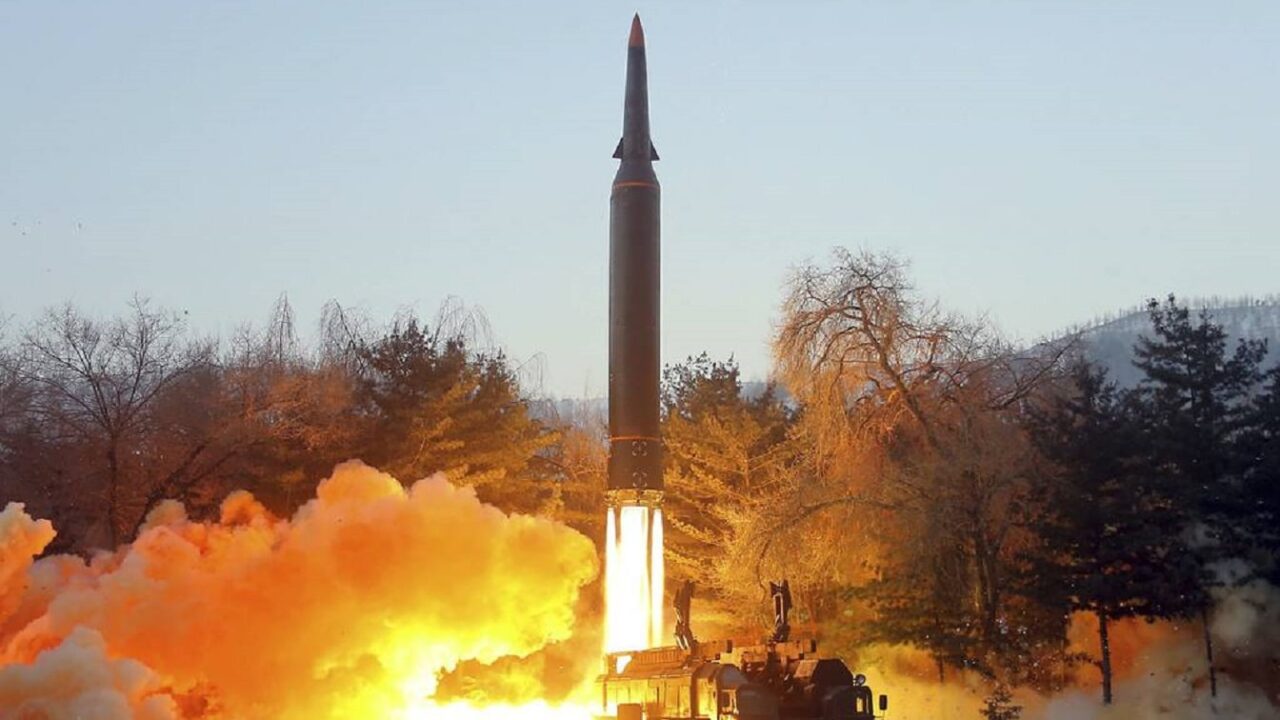
If it were a single demonstration, it would end as a diplomatic message. However, when launching short-range ballistic missiles in volleys, the aim is not so much the interception success rate itself but rather the saturation of command and control. The Japan Maritime Self-Defense Force's Aegis ships, the Japan Air Self-Defense Force's PAC-3, and U.S. early warning assets are high-performance, but the few minutes from detection to engagement decision for simultaneous targets become the most expensive resource. It should be considered that North Korea is observing where the bottlenecks in those decisions occur before directly hitting the Japanese mainland.
Calculated Timing Targeting the End of Exercises
The fact that this coincided with the end of the U.S.-South Korea exercises cannot be overlooked. If it were merely a display of capability, it could have been done on another day. The deliberate alignment with this situation is to test the response speed of Japan-U.S.-South Korea cooperation and to observe whether the deterrence on the Korean Peninsula appears weak when Washington's attention is diverted to other theaters. Recent U.S. military operations have also been burdened by responses in the Middle East, and North Korea knows how to turn that fluctuation in capacity into a propaganda opportunity.
Reinforcements Japan Should Rush
- To refine the sharing of detection data between the JMSDF Aegis ships and U.S. warning assets to the second level
- To review not only terminal air defense including PAC-3 but also the endurance of reloading and ship rotation
- To revise J-Alert and local evacuation procedures from single-response to continuous launch response
In the author's view, Japan's true weakness is not the performance deficiency of its intercept missiles. Rather, it lies in the inability of political and administrative decision-making to escape the peacetime speed when multiple launches occur. North Korea's recent launch was a test questioning how quickly Japan, the U.S., and South Korea can share the same situational picture, rather than the power of the warheads themselves.
North Korea launched approximately 10 short-range ballistic missiles from around Pyongyang towards the Sea of Japan on August 24, 2026. The Japanese government reported no damage, but the launches were intended to test the detection and response capabilities of Japan and the U.S.-South Korea alliance. This action coincided with U.S.-South Korea military exercises, indicating a strategic move by North Korea to assess allied response times.
- North Korea launched approximately 10 short-range ballistic missiles towards the Sea of Japan.
- The Japanese government confirmed no damage from the missile launches.
- The launches were timed to coincide with U.S.-South Korea military exercises.
- The purpose was to test the response capabilities of Japan and the U.S.-South Korea alliance.
- The report highlights the need for Japan to improve its missile defense coordination.