
In 2026, the PLA J-16 Leads 49 Military Aircraft Across the Median Line, Escalating Pressure in the Taiwan Strait Gray Zone
 Li Minghui
2026 PLA J-16 Leads 49 Military Aircraft Crossing the Median Line, Pressure in the Taiwan Strait Gray Zone Escalates
On November 3, Taiwan's defense department released a set of unusual numbers: within 24 hours, 49 PLA military aircraft, 6 naval vessels, and 6 civilian ships were detected, with 31 aircraft crossing the so-called median line of the strait, entering Taiwan's central, southwestern, and eastern air defense identification zones. The J-16 in the accompanying image is not the entirety of this operation, but it represents one of the PLA's most commonly used long-range air superiority and anti-ship strike platforms.
What the 49 Sorties Really Changed
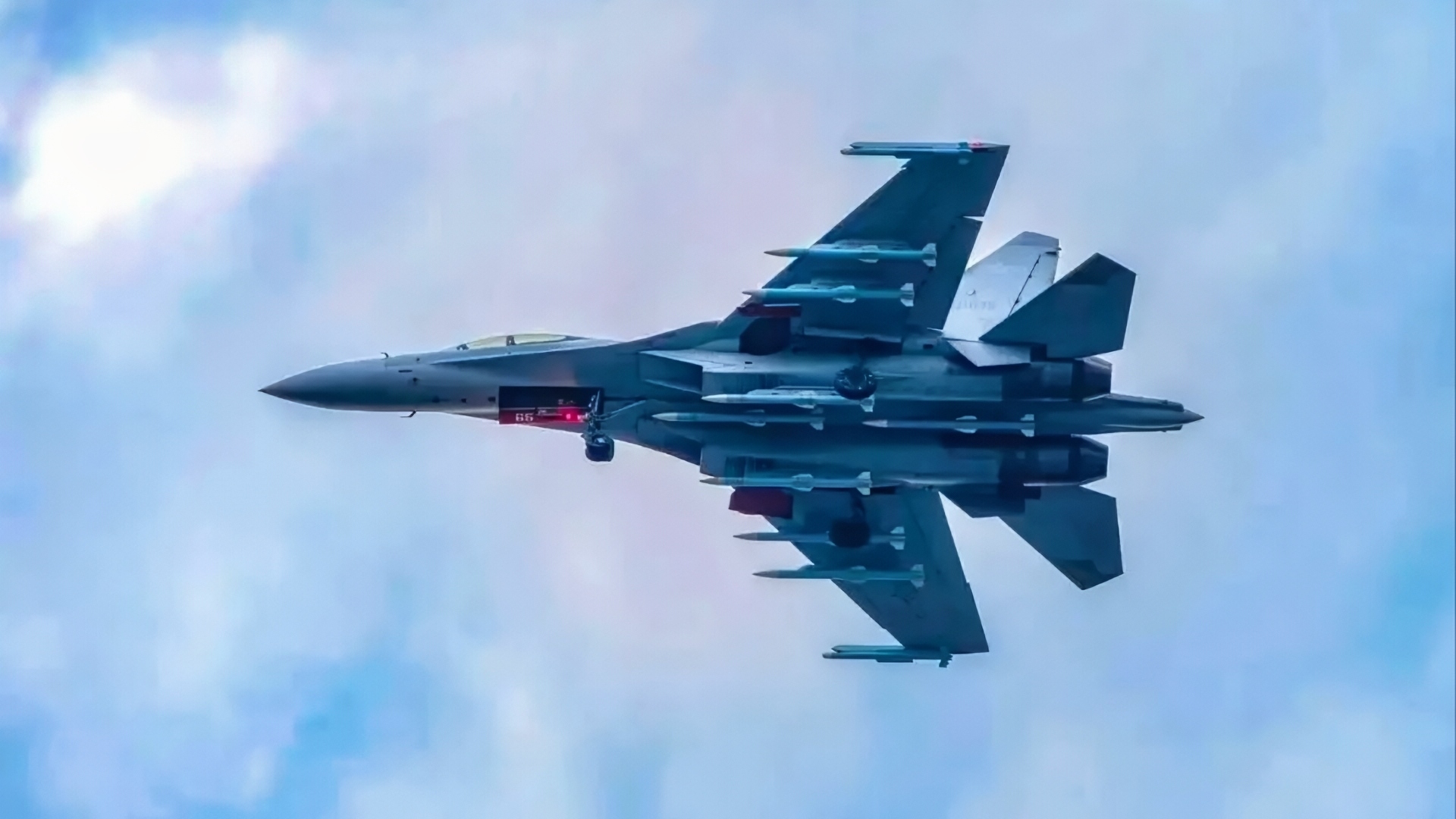
The 49 sorties in a single day do not equate to a preparation for an attack. Taiwan had previously reported different scales of activities, such as 19 and 32 sorties, and on November 4, reported another 22 aircraft and 7 naval vessels. In other words, what is truly worth analyzing is not the peak of a single day, but rather that high-intensity activities did not immediately return to zero after the peak.
The 31 sorties crossing the median line are particularly significant. The median line was originally an informal buffer zone for both sides to reduce the risk of misjudgment, but it is increasingly resembling a training boundary that can be repeatedly penetrated. The J-16, equipped with long-range air-to-air missiles and anti-ship weapons, when combined with early warning aircraft, electronic warfare aircraft, and drones, serves not only to create pressure for Taiwanese aircraft to scramble but also to practice how to simultaneously incorporate Taiwan's eastern and southwestern airspace into reconnaissance and strike chains.
From Aerial Harassment to Maritime Control Exercises
During the same period, Taiwan's security department stated that the Chinese navy and coast guard had deployed over 100 vessels in the western Pacific, with the Liaoning and Fujian aircraft carrier groups appearing in the Philippine Sea and South China Sea, respectively. This number includes coast guard and civilian vessels and cannot be directly equated to a combat fleet, but it shows that the PLA is extending pressure in the Taiwan Strait outward, testing the situational awareness capabilities of Taiwan, the Philippines, and the United States in the western Pacific.
If military aircraft, naval vessels, and coast guard ships are viewed separately, it is easy to misinterpret them as three unrelated news items; however, when placed on the same map, they resemble a layered control model. Military aircraft are responsible for compressing warning times, naval vessels maintain a presence at sea, while coast guard and civilian ships provide a deniable and sustainable gray zone façade. In simple terms, it is about practicing the most challenging segment of handling the onset of war in a manner that is below the threshold of war.
The Costs for Taiwan Are Also Rising
The Taiwanese side has stated that it has deployed fighter jets, naval vessels, and shore-based missile systems for monitoring. This response can be sustained during single-day operations, but if high-intensity activities become a weekly norm, the issue shifts from "Can we detect?" to "Can we maintain readiness over the long term?" Pilot rotations, aircraft lifespan, missile stockpiles, and maintenance cycles will expose pressure earlier than the numbers from single interceptions.
The author believes that Beijing is currently more likely establishing a set of normal mechanisms that can be escalated at any time, rather than having already decided to take immediate military action. However, normalization itself will also change risk calculations: when median line crossings, carrier outer line activities, and coast guard patrols occur simultaneously, Taiwan's warning window will shorten, and any miscommunication could push the gray zone toward a crisis.
Three Indicators That Truly Need Tracking
- Whether the military aircraft crossing the median line consistently maintains above 20 sorties;
- Whether activities stably cover Taiwan's eastern region, not just the southwestern airspace;
- Whether PLA naval vessels, coast guard, and civilian ships begin to show clearer coordinated formations.
These three indicators are more indicative of whether there is a structural change in the Taiwan Strait situation than a single-day record. The 49 sorties are a warning, but not a conclusion. What is truly worth questioning is whether the PLA can sustain such high-intensity operations for several weeks and maintain the same command and coordination efficiency after military reforms and high-level adjustments?
Sources
Taiwan News November 3 Taiwan Military Activity Report; Taiwan News November 4 Western Pacific Naval Deployment Report; South China Morning Post Report on PLA Naval and Air Activities.
On November 3, 2026, 49 Chinese military aircraft, including J-16 fighter jets, crossed the median line of the Taiwan Strait, escalating tensions in the region. This included 31 aircraft entering Taiwan's air defense identification zone. Concurrently, over 100 Chinese naval and coast guard vessels were deployed in the Western Pacific, indicating a coordinated military presence. Taiwan responded by deploying its own fighter jets and naval assets to monitor the situation.
- 49 PLA aircraft detected in 24 hours
- 31 aircraft crossed the median line into Taiwan's air defense identification zone
- Chinese naval and coast guard vessels deployed over 100 ships in the Western Pacific
- Taiwan scrambled fighter jets and naval vessels in response
- PLA is testing Taiwan's situational awareness capabilities