
In 2026, the U.S. Navy Sends Destroyer RFI to South Korean Shipyard to Pressure Japan
 Tanaka Takashi
In 2026, the U.S. Navy Sends RFI for Destroyers to South Korean Shipyards, Applying Pressure on Japan
In the discussions surrounding the U.S. Navy's shortage of vessels, what caught my attention the most was not the political statement of "Can ten ships be built quickly in South Korea?" It was the RFI (Request for Information) sent by the U.S. Department of Defense and the U.S. Navy to South Korean shipyards, reported by Yonhap News on July 8 and confirmed by Naval News on July 10. The focus is on destroyer-class surface combatants and medium fleet replenishment oilers, which should be seen as a step beyond mere industrial observation.
The RFI Targets Destroyers and Replenishment Ships
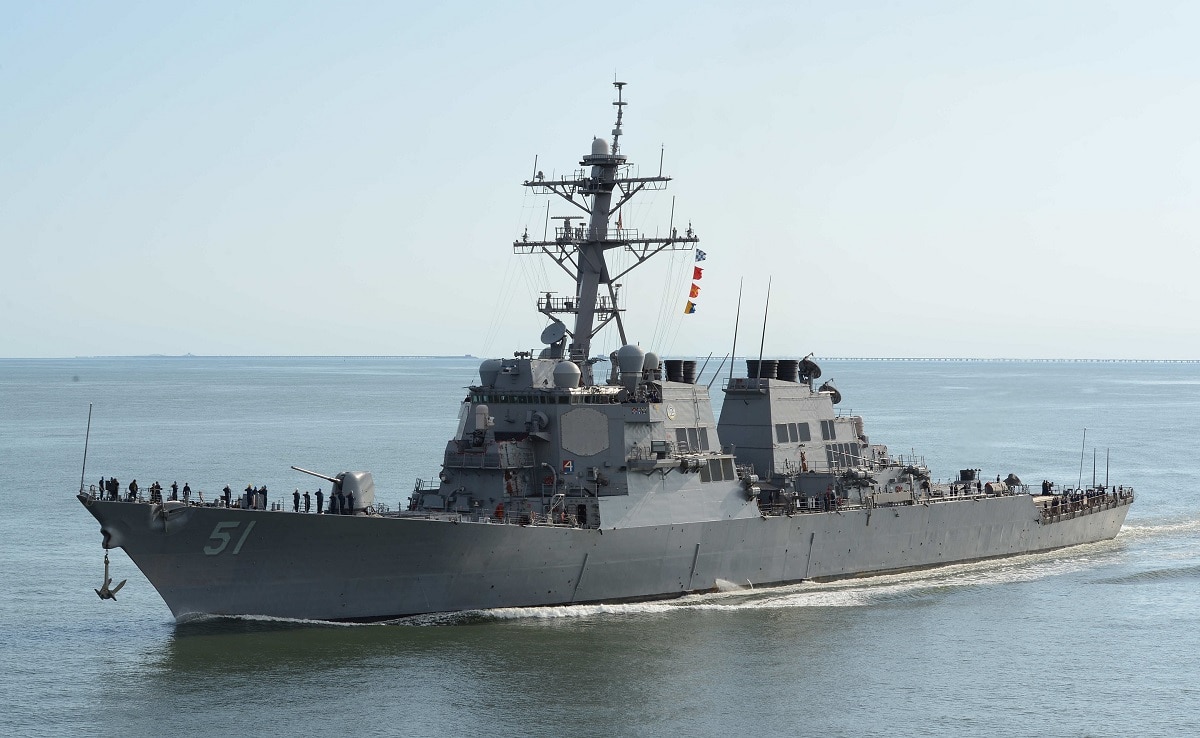
According to Yonhap News, HD Hyundai Heavy Industries and Hanwha Ocean submitted their design capabilities, shipbuilding track records, design personnel, and annual construction capacities to the U.S. side for the destroyers. Samsung Heavy Industries is also said to have responded regarding the medium replenishment oilers. Naval News has confirmed that the U.S. side issued two RFIs for destroyer-class surface combatants and fleet replenishment tankers.
An RFI is not a contract. Under U.S. federal procurement regulations, it is a procedure to understand pricing, delivery times, and market capabilities. However, considering the U.S. Navy's shipbuilding plans and congressional discussions, it seems that this is moving from the stage of "Can it be done?" to exploring "Which legal exceptions can be used to make it happen?"
South Korea's Strength Lies in KDX-III Experience
The reason South Korea attracts the U.S. Navy's interest is not just the volume of commercial shipbuilding. Hanwha Ocean and HD Hyundai have built the Sejong the Great-class Aegis destroyers, or KDX-III, which are large surface combatants using the same Aegis combat system as the U.S. Navy's Arleigh Burke-class. While they are not identical ships, they can be compared in terms of design philosophy and integration complexity.
Additionally, Hanwha has acquired the Philadelphia Shipyard in the U.S., HD Hyundai has partnered with Huntington Ingalls Industries, and Samsung has teamed up with General Dynamics NASSCO. The South Korean government has proposed directing $150 billion of its investment quota towards shipbuilding and related supply chains for the U.S. This indicates a political design to connect allied shipbuilding capabilities to the industrial base within the U.S.
The Issue for Japan is Not Competition but Speed
This development should not be dismissed as merely an unpleasant competitive news story for Japan. Japan also has significant capabilities in shipbuilding, with companies like Mitsubishi Heavy Industries, JMU, and Imabari Shipbuilding involved in both naval and commercial vessels. In fact, discussions have continued on the U.S. side regarding shipyards in Japan and South Korea. However, South Korea is quickly tying together acquisitions, partnerships with U.S. companies, and government investment quotas into a single narrative.
From the perspective of the Japan Maritime Self-Defense Force, the issue is not the ships themselves but their maintenance and support. The operational area of the 7th Fleet encompasses Yokosuka, Sasebo, Busan, Jinhae, Guam, and the Philippine Sea. The ability to share responsibilities for not only new destroyers but also regular repairs, replenishment ships, ammunition loading, and electronic equipment upgrades among allies will affect actual operational availability. In some cases, increasing the number of days existing ships can be at sea may be more effective in the short term than simply adding a younger ship to the fleet.
Legal Barriers Still Remain
However, it is also dangerous to overestimate this situation. To build combat vessels for the U.S. Navy overseas, it is necessary to overcome congressional national security exceptions, budget measures, confidentiality protections, combat system integration, and political opposition from U.S. labor unions and shipbuilding states. Naval News also points out that congressional approval is required for foreign-built vessels, and opposition is expected.
- The RFI targets destroyer-class surface combatants and medium fleet replenishment oilers.
- South Korean companies involved include HD Hyundai, Hanwha Ocean, and Samsung Heavy Industries.
- The KDX-III is an approximately 8,500-ton Aegis destroyer and is likely to be a relevant comparison for the U.S.
- South Korea has proposed a $150 billion shipbuilding investment quota for the U.S.
The real question is not whether the U.S. will use allied shipyards, but whether it can incorporate allied shipyards into the U.S. Navy's schedule from peacetime, not just wartime.
Japan does not need to panic about falling behind South Korea here. However, it is also not a situation where silence is acceptable. If countries with the capability to build Mogami-class, Aegis-equipped ships, submarines, and replenishment ships remain on the periphery of discussions about U.S. Navy repairs, replenishment, and joint construction, they will lose influence in the practical aspects of the Japan-U.S. alliance. Counterintuitively, Japan's weakness lies not in shipbuilding technology but in the speed at which politics presents industrial cooperation as a security agenda.
In July 2026, the U.S. Navy submitted a Request for Information (RFI) to South Korean shipyards for the construction of destroyers and medium fleet replenishment ships. This move reflects a strategic shift in U.S. naval procurement, aiming to explore legal exceptions for utilizing allied shipyards. South Korean firms, including HD Hyundai and Hanwha Ocean, are involved in this initiative, which may enhance military cooperation between the U.S. and South Korea.
- The U.S. Navy submitted an RFI to South Korean shipyards for destroyers and replenishment ships.
- The RFI indicates a shift in U.S. Navy procurement strategy.
- South Korean companies involved include HD Hyundai Heavy Industries, Hanwha Ocean, and Samsung Heavy Industries.
- The U.S. is considering integrating allied shipyards into its naval construction plans.
- Political and legal challenges remain for building U.S. Navy vessels overseas.