
India and Australia Can Build a Pacific Sensor Network Before AUKUS Delivers
 S.W
S.WIndia and Australia Can Build a Pacific Sensor Network Before AUKUS Delivers
India’s Chief of Naval Staff, Admiral Krishna Swaminathan, is in Australia on September 10, 2026. The headline is diplomatic. The useful part is not. The two navies already operate the P-8 maritime patrol aircraft, conduct anti-submarine warfare training, and hold staff talks. Their immediate opportunity is to connect those activities into a working picture of the eastern Indian Ocean and the South Pacific.
That would matter more in a crisis than another communiqué about a free and open Indo-Pacific. China’s July ballistic-missile launch into the South Pacific, reported by The Australia Today, was a reminder that Canberra and Wellington can receive only a short warning when a major military event occurs far from their traditional patrol areas. The problem is not a shortage of platforms. It is the time required to detect, classify, share, and act on a contact.
The Visit Has an Operational Test
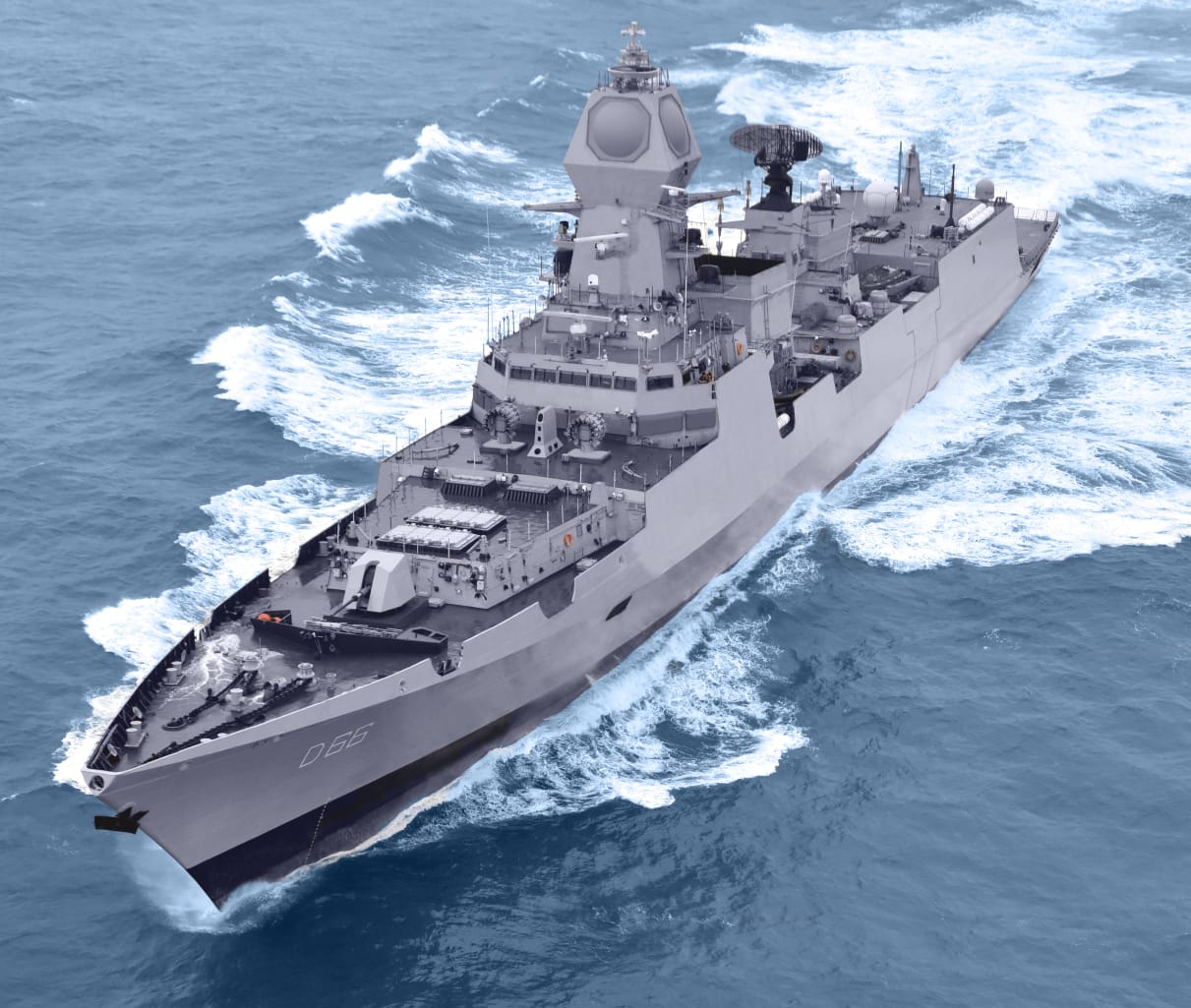
India and Australia have enough institutional machinery. AUSINDEX began in 2015 and now includes anti-submarine warfare. Indian ships have joined Australia’s Exercise Kakadu, while Australia has participated in India’s MILAN. The navies held their seventeenth staff talks in Sydney in August, according to The Australia Today, and the July defence-industry roundtable added a practical channel for equipment and sustainment discussions.
The question for Admiral Swaminathan and Vice Admiral Matt Buckley is whether these events produce a common operating picture or remain separate training certificates. A P-8I and an Australian P-8A are powerful sensors, but an aircraft that finds a submarine and cannot pass a usable track to a partner has created information, not shared maritime control.
The P-8 Fleet Is the Fastest Route to More Awareness
The P-8 is not a magic anti-submarine weapon. It is a long-range patrol aircraft built around radar, electro-optical sensors, acoustic processing, and sonobuoys. Australia operates the P-8A; India operates the P-8I; New Zealand also flies the type. That common platform creates an unusually practical foundation for cooperation across three very different defence establishments.
- Common procedures: crews can standardize contact reports, acoustic data formats, and rules for passing tracks between national networks.
- Wider coverage: Indian aircraft can contribute from the eastern Indian Ocean while Australian and New Zealand aircraft cover approaches farther south and east.
- Faster decisions: a shared maritime picture reduces the delay between detection and tasking a surface ship, helicopter, or additional patrol aircraft.
The geography makes the arithmetic compelling. A submarine moving at 15 knots covers 360 nautical miles in a day. If a patrol aircraft’s contact report sits inside a national system for six hours before another navy receives it, the target may have moved 90 nautical miles before the next search begins. Better networking does not make the ocean smaller. It prevents avoidable gaps from becoming operational geography.
India Is a Partner, Not an Alliance Substitute
Canberra should not mistake useful cooperation for an alliance commitment. India buys Russian weapons and continues to protect its freedom of action on Ukraine. It also has its own priorities in the Indian Ocean, including Chinese naval activity around the approaches to the Arabian Sea and the western Pacific. New Delhi will cooperate where the mission is concrete; it will resist language that makes it look like an auxiliary of US or Australian policy.
That is not a weakness. It is the reason a narrow maritime arrangement can work. Information sharing about submarine activity, commercial shipping, and unusual naval movements is easier to defend politically than a promise to fight in a Taiwan contingency. India can contribute to maritime awareness without accepting Canberra’s entire threat narrative, and Australia can gain access to Indian operating experience without demanding treaty-level alignment.
There is also a human limit. The current professional military education exchange moves only a handful of officers each year. That is token capacity for a problem that depends on trust and reflex. A classified network is useful only when watch officers know how a partner reports uncertainty, how a commander handles a false contact, and who can authorize the release of sensitive data.
New Zealand Makes the Network More Valuable
New Zealand is the quiet multiplier. It operates the same P-8 family and has signed arrangements with India covering maritime cooperation, hydrography, nautical cartography, and mutual logistics support. Those agreements give the Indian Navy a more formal connection to the South Pacific, but they also create a test of whether the network serves Pacific states rather than merely extending the reach of larger navies.
A sensible first step would be a standing information-sharing protocol focused on maritime safety, submarine activity, and long-range surveillance. The arrangement should begin with exercises and white-shipping data, then add classified tracks only after procedures have been tested. A second step would be recurring war games for disaster relief and maritime law enforcement. Those missions sound modest, but they build the habits needed when the contact is ambiguous and the political cost of an error is high.
What This Means for the Indo-Pacific
The 2026 Australian National Defence Strategy reportedly describes India as Australia’s most important defence partner in the northeast Indian Ocean. The wording is justified only if it produces something measurable: more hours on station, fewer unexamined gaps, shorter reporting delays, and crews that have worked together before a crisis.
This is also a useful corrective to AUKUS expectations. Nuclear-powered submarines may eventually change the undersea balance, but the schedule is long and the industrial burden is severe. A sensor network can improve deterrence this year with existing aircraft, existing crews, and a limited amount of secure connectivity. It will not stop a Chinese submarine by itself. It can make the submarine harder to hide.
The immediate test is simple: can India, Australia, and New Zealand turn three national P-8 fleets into one faster maritime picture?
If the answer is yes, Admiral Swaminathan’s visit will have produced more than another bilateral signal. If the answer is no, the region will keep buying exquisite platforms while losing the first and most important contest at sea: knowing what is there.
Sources
India and Australia are enhancing their maritime cooperation by building a Pacific sensor network, with a focus on the eastern Indian Ocean and South Pacific. This initiative, highlighted by the visit of India's Chief of Naval Staff on September 10, 2026, aims to improve situational awareness using P-8I and P-8A aircraft. New Zealand's involvement further strengthens this collaborative effort to address regional security challenges.
- India and Australia are enhancing maritime cooperation through a Pacific sensor network.
- The P-8I and P-8A aircraft are central to this cooperation.
- India's Chief of Naval Staff visited Australia on September 10, 2026.
- The cooperation aims to improve maritime awareness in the Indian Ocean and South Pacific.
- New Zealand is also involved in the sensor network initiative.