
India's 2026 BrahMos Expansion Gives the Philippines a Sharper Sea Denial Edge
 Marcus Chen
India's 2026 BrahMos Expansion Gives the Philippines a Sharper Sea Denial Edge
India and the Philippines are in final-stage talks to expand Manila's BrahMos missile inventory, according to Reuters on November 5. Follow-on reporting has put the possible package near $800 million. The number matters, but the military question is simpler: can Manila turn a small number of mobile launchers into a credible sea-denial problem for the Chinese navy?
A Deal That Is Still Pending
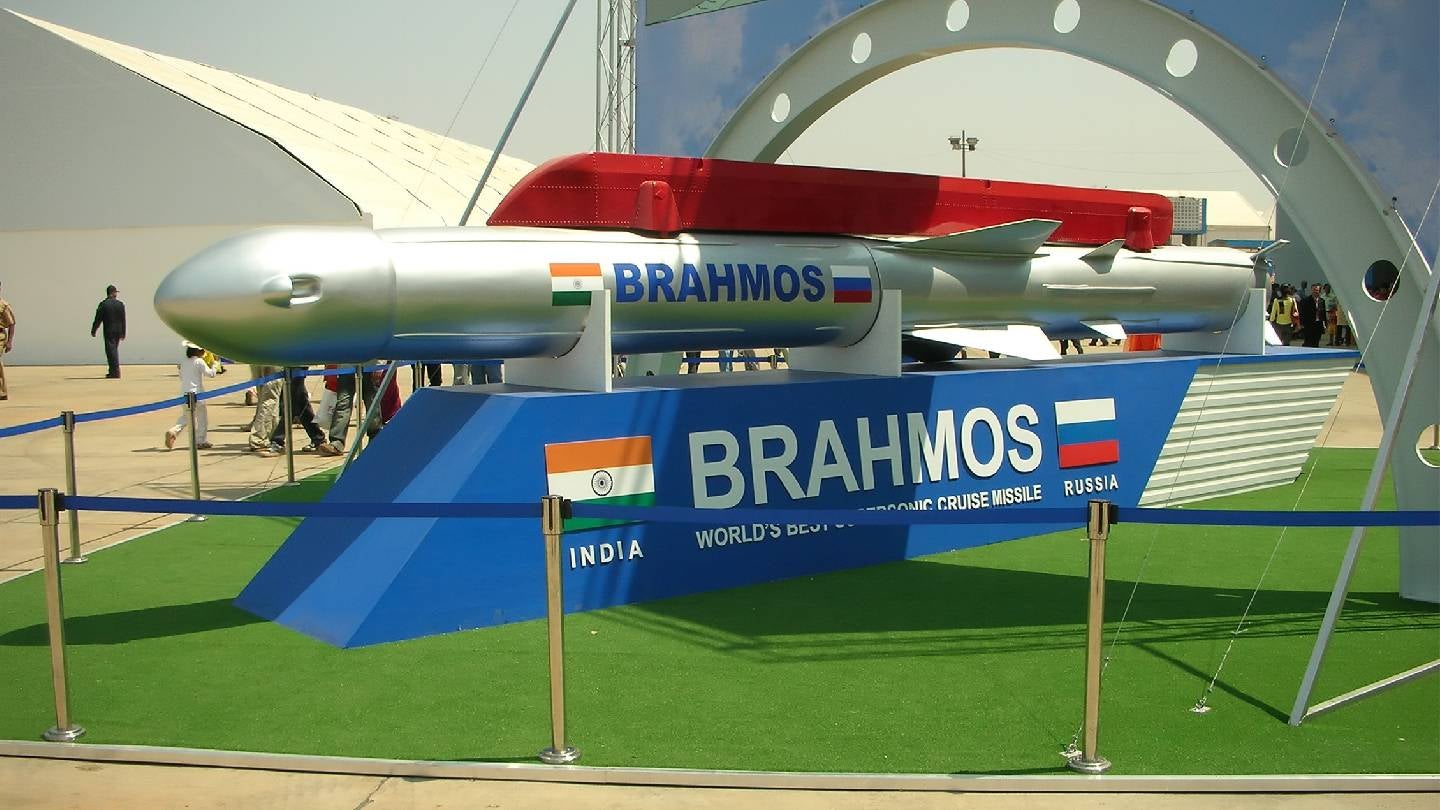
The reported expansion is not a signed contract yet. Reuters described the negotiations as being in their final stage, while Firstpost and the Times of India reported an estimated value of roughly $800 million. That distinction is important. A headline about a deal can become a headline about a delay once financing, missile quantities, basing, training, and maintenance are negotiated.
Manila already has a baseline. Its original 2022 contract with BrahMos Aerospace was worth about $375 million and covered a shore-based anti-ship system. The new package would therefore be more than a symbolic repeat purchase. It could add missiles, launch vehicles, command-and-control equipment, training, and perhaps additional batteries. Until the Philippines or India publishes the line items, the exact force structure is 待确认.
Why BrahMos Changes the Local Calculation
BrahMos is a jointly developed Indian-Russian supersonic cruise missile. The export configuration is generally described as flying at roughly Mach 2.8 to 3 and using a sea-skimming terminal approach. Depending on the missile variant and export restrictions, public descriptions place the range from the original 290-kilometer class toward longer-range versions. The important point is not a brochure maximum. It is the combination of speed, mobility, and a large warhead carried by a road-mobile coastal defense unit.
A Philippine battery does not need to sink a Chinese destroyer to have operational value. It needs to force that destroyer to stay farther from a coast, a resupply route, or a contested shoal. That creates a geometry problem for the People's Liberation Army Navy. A warship operating inside a missile engagement zone must spend more time on air defense, electronic warfare, scouting, and route selection. It also becomes more dependent on intelligence about launcher locations.
That is sea denial, not sea control. Manila will not use BrahMos to keep the South China Sea open by itself. It can use the missile to make selected approaches dangerous, especially around the western approaches to the Philippine archipelago and near facilities that support maritime surveillance. The difference is operationally meaningful.
The Range Is Only as Good as the Sensor Network
Coastal missiles do not see targets by themselves. The Philippine Navy and Marine Corps need a kill chain that links shore radar, maritime patrol aircraft, drones, ships, and allied intelligence to the launch unit. Without that network, a 290-kilometer missile is a very expensive weapon aimed at an empty patch of ocean.
This is where the United States and Japan become relevant without owning the missile. Washington has expanded access to Philippine bases and has supplied surveillance support, while Manila is building a wider maritime picture with aircraft, drones, and coastal sensors. Japan is also becoming a practical defense partner. BrahMos gives those sensors a faster way to convert detection into a threat, but only if data can move from a remote sensor to a concealed launcher before the target changes course.
The vulnerability is obvious. Fixed radar sites can be jammed or struck. Trucks can be tracked when they move. Command posts can be attacked. A small missile force survives through dispersal, decoys, redundant communications, and frequent relocation. Buying more launchers helps, but it does not solve the problem if the Philippines stores them in predictable facilities or trains too slowly to sustain operations under pressure.
Why This Is Bigger Than a Philippine Arms Purchase
India's export campaign is widening the Indo-Pacific's missile market. Indonesia signed a BrahMos agreement in 2026, and the Philippines is now considering a much larger follow-on package. This gives New Delhi influence in the same maritime theater where China is contesting access, while offering Southeast Asian states a supplier that is neither Washington nor Beijing.
For the Philippines, the political advantage is as important as the missile. A system bought from India is easier to describe as national defense than as a permanent American firing position. It strengthens Manila's bargaining position without requiring the government to claim that it can defeat China in a major war. The missile says: access to Philippine waters will carry a cost.
Beijing will also have to decide how to respond. More pressure around Philippine outposts could be used to test whether the batteries are operational, but harassment creates the very targeting and alliance cooperation that Manila wants. The better Chinese counter is surveillance, deception, stand-off weapons, and political pressure aimed at keeping the system unfired. A missile that never launches can still shape naval behavior.
The Hard Part Comes After Delivery
The $800 million figure will attract attention. Readiness should attract more. The Philippines needs enough reloads to train crews and absorb losses, secure communications that survive jamming, mobile launchers that can hide across an archipelago, and a replenishment plan that does not depend on emergency foreign deliveries. It also needs rules for who can authorize a shot during a gray-zone confrontation.
The BrahMos expansion would give Manila a serious new tool, but it will not create an anti-China shield. Its value will come from integration with Philippine sensors, American and Japanese intelligence, and a force that can relocate faster than an opponent can target it. The missile is the visible part of the deterrent. The kill chain and the logistics tail are the real weapon.
India and the Philippines may be close to a deal. The harder test begins when the launchers arrive. If Manila builds the network around them, China will have to treat more of the Philippine coastline as a weapons problem. If it buys missiles without the supporting architecture, the $800 million package will be another impressive inventory list that cannot reliably influence a fight.
Sources
- Reuters, November 5, 2026, reporting final-stage India-Philippines talks on an expanded missile sale.
- Firstpost and The Times of India, November 5, 2026, reporting an estimated $800 million BrahMos package.
- Naval News, July 2026, reporting Indonesia's BrahMos agreement and the missile's expanding Indo-Pacific export footprint.
- BrahMos Aerospace public system descriptions and Philippine government announcements on the original 2022 coastal-defense contract.
India and the Philippines are in final-stage negotiations to expand the BrahMos missile inventory, potentially valued at $800 million. This expansion aims to enhance the Philippines' sea denial capabilities against the Chinese navy. The package may include additional missiles, launch vehicles, and command-and-control equipment, although the deal has not yet been finalized as negotiations continue.
- India and the Philippines are negotiating an $800 million expansion of the BrahMos missile inventory.
- The new package may include missiles, launch vehicles, and command-and-control equipment.
- BrahMos is a supersonic cruise missile developed by India and Russia.
- The Philippines aims to enhance its sea denial capabilities against the Chinese navy.
- The deal is not yet finalized, pending negotiations on various aspects.