
Insufficient Ammunition Stockpiles and Lack of Allied Support, U.S. Joint Chiefs Chairman Says Risks of Military Action Against Iran Are High
[Global Times Special Correspondent in the U.S. Li Yong, Global Times Reporter Xian Yifan, Global Times Special Correspondent Pei Ming] Will the U.S. and Iran reach a nuclear agreement, or will military conflict break out? The new round of negotiations held between the two countries on the 26th is viewed by some analysts as “deciding everything.” As the U.S. side hints that “the president is inclined to carry out preliminary strikes against Iran in the coming days” to apply pressure, U.S. Army Joint Chiefs of Staff Chairman Mark Milley reportedly reminded President Trump at the White House that military action against Iran could carry significant risks and might embroil the U.S. in a prolonged conflict. According to the U.S. Washington Post, Milley’s concerns stem from the U.S. ammunition stockpile being insufficient and the lack of support from some Middle Eastern allies. As the U.S. government weighs the pros and cons, its second aircraft carrier, the USS Ford, arrived at Souda Bay in Crete, Greece, on the 23rd. Iran is also preparing for any situation. According to Iran's state television on the 24th, the Islamic Revolutionary Guard Corps conducted military exercises in the southern coastal region of the country, aimed at “practicing the latest tactics against existing threats.”
Trump: 100% wrong
The Washington Post quoted informed sources on the 24th, stating that Milley reminded Trump and government officials at the White House last week that any large-scale military action against Iran would face challenges. Due to ongoing support for Israel and Ukraine, the U.S. ammunition reserves have been significantly depleted. At a Pentagon meeting this month, Milley also expressed concerns about the scale and complexity of potential attacks on Iran and the possible casualties among U.S. forces. He believes that any action would become more difficult due to the lack of support from allies. “How are we supposed to accomplish the mission?” a former Pentagon official said, “especially when Arab countries won’t let us fly over their airspace.”
According to the U.S. news site Axios, Milley’s views are considered highly credible within the U.S. government because he previously led two major operations that were successful: the strike on Iranian nuclear facilities in June last year and the forcible control of the Maduro couple in January this year. Sources say that Milley fully supports U.S. military action regarding Venezuela, but is more cautious in discussions about Iran. He believes that launching a large-scale military operation against Iran carries higher risks and is more likely to lead to entanglement and U.S. military casualties.
Axios also mentioned that other senior U.S. officials have differing views on attacking Iran: Vice President Pence has consistently expressed doubts about the risks and complexities; Secretary of State Rubio has taken a wait-and-see approach, neither strongly advocating for strikes nor clearly opposing them.
In response to related reports, White House spokesperson Kelly stated that Trump would listen to a wide range of opinions on specific issues and make decisions based on what is “most beneficial for U.S. national security.” Trump posted on social media that claims Milley “opposes us going to war with Iran” are “100% wrong,” and although he does not wish to see military conflict between the U.S. and Iran, he believes that if it does occur, the U.S. will “easily win.”
U.S. military actions raise numerous doubts
Multiple U.S. media outlets reported that as the U.S. government weighs the pros and cons of striking Iran, it has assembled the largest military force in the Middle East since the 2003 invasion of Iraq. The U.S. has deployed an aircraft carrier strike group in the Middle East, and according to AFP, its second carrier strike group arrived at Souda Bay in Crete, Greece, on the 23rd and is expected to be deployed soon. The Washington Post stated that the arrival of the USS Ford in the Middle East means that about one-third of the U.S. active fleet is now deployed in the region.
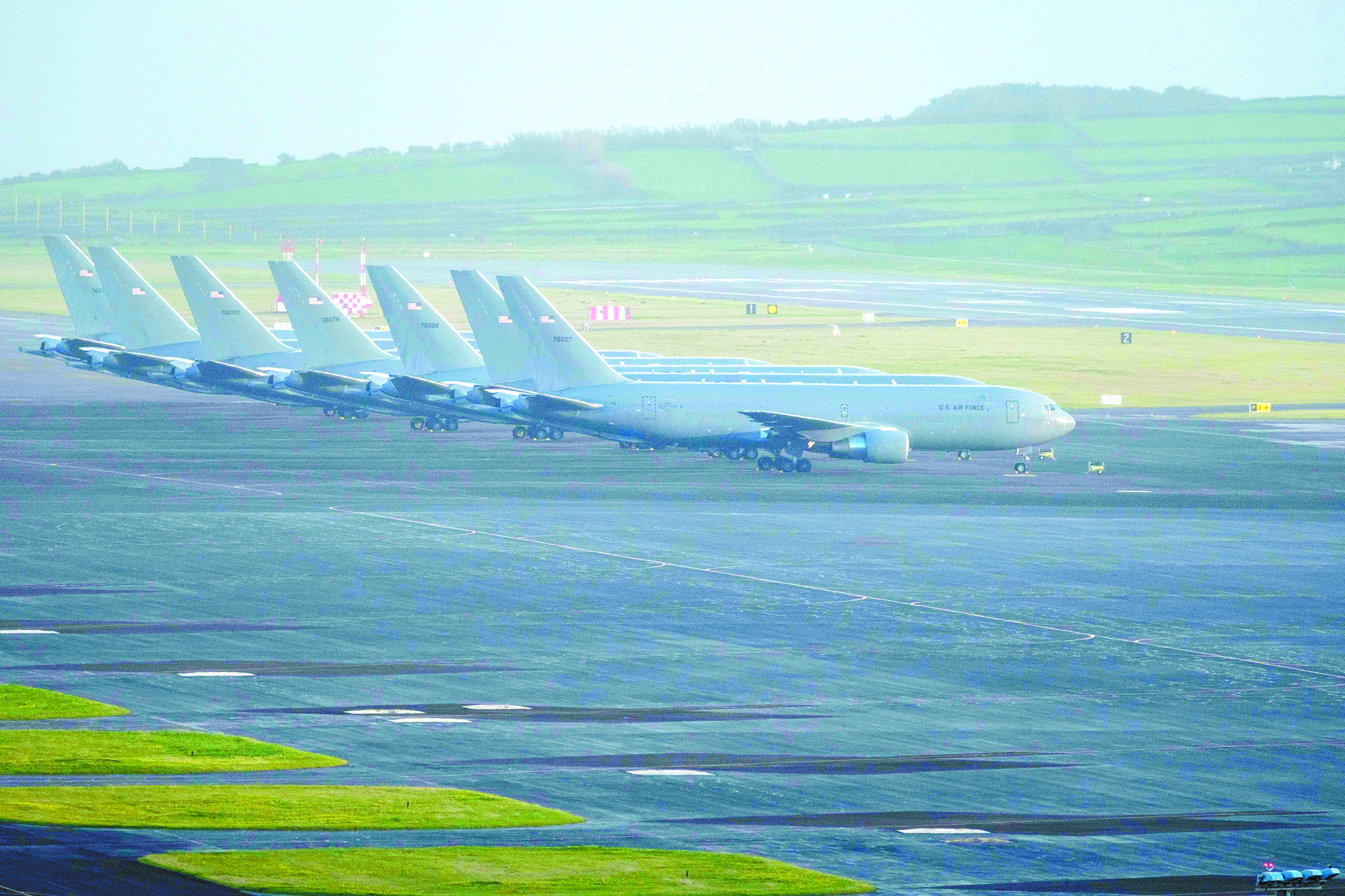
Additionally, according to the Israel Times, a batch of U.S. refueling and transport aircraft arrived at Ben Gurion Airport near Tel Aviv on the 22nd. Since mid-February, over 85 U.S. refueling aircraft and more than 170 transport aircraft have flown to the Middle East. Media outlets like AFP reported that the U.S. currently has hundreds of fighter jets deployed in the Middle East, along with 9 destroyers and 3 littoral combat ships.
The Washington Post analyzed that the potential scale of U.S. actions against Iran could vary significantly based on different objectives set by Trump. If the goal is to disrupt Iran's missile program, the U.S. would need to strike hundreds of targets within the country. A former U.S. defense official stated that targets could include missile launch facilities (many of which are mobile), supply stations, and air defense systems. If the U.S. aims to overthrow the current Iranian regime, the scope of strikes would expand dramatically to thousands of locations, including command and control centers, security agencies, and key buildings closely linked to Iran's Supreme Leader Khamenei. Analysts say that operations of such scale could take weeks or even months, consume more ammunition, and expose U.S. forces to more intense retaliation.
The Financial Times quoted an Israeli intelligence official on the 24th, stating that according to Israeli assessments, even if the second U.S. carrier strike group is deployed, its military capability can currently only sustain four to five days of intensive airstrikes or a week of lower-intensity attacks.
The Washington Post also reported that regarding whether to conduct limited strikes, some U.S. officials expressed opposition, believing it could trigger “an unpredictable tit-for-tat cycle of violence.” However, some officials expressed support, arguing that Iran's previous responses to U.S. and Israeli airstrikes have been relatively mild, such as issuing prior warnings before retaliating.
According to the Iranian news agency, the commander of the Iranian Army, Hatami, stated in a speech on the 23rd that the enemy is adopting a strategy of “strategic attrition,” hoping to weaken Iran's will to resist through frequent military actions. The Iranian people will rise up with firm determination and will never allow their evil schemes to succeed.
According to the Associated Press on the 24th, in light of escalating tensions related to Iran, the U.S. State Department has ordered “non-essential” American diplomats and their families to leave Lebanon. The report cited a State Department official saying that ongoing assessments of the regional security environment indicate that reducing the size of the U.S. embassy in Lebanon is a “prudent move,” retaining only essential personnel on duty. The BBC reported that an airport staff member told Reuters that about 50 U.S. embassy staff have been ordered to leave, with 32 of them and their families departing from Beirut Airport on the 23rd.
This Thursday will decide everything?
CNN reported on the 24th that regarding the issue of Iran, reaching an agreement with the country and avoiding any form of military confrontation remains Trump's top priority. The new round of negotiations between the two countries is scheduled for the 26th in Geneva, Switzerland, with U.S. representatives including presidential envoy Witte and Trump’s son-in-law Kushner. The report cited informed sources revealing that Iran is still working on a plan that could bridge the differences and is expected to share this plan with the mediator Oman before this crucial negotiation. “This Thursday will decide everything, either war or an agreement,” said a source familiar with the negotiations in the Middle East.
The Iranian news agency stated that all signs indicate that while the prospects for U.S.-Iran negotiations are unclear, there is still a possibility of achieving results. If Tehran and Washington do not cross red lines and reach an agreement on the principles while ensuring the peaceful nature of Iran's uranium enrichment, this will effectively prevent the escalation of tensions and lay the foundation for regional stability.
The U.S. military is deploying two aircraft carrier strike groups to the Middle East amid concerns over ammunition shortages and lack of support from allies for potential military action against Iran. Iranian forces are conducting military exercises in response to the escalating tensions. The U.S. State Department has ordered non-essential personnel to evacuate from Lebanon due to the heightened security risks. Discussions regarding a potential nuclear agreement or military conflict are ongoing.
- U.S. military is facing ammunition shortages due to ongoing support for Israel and Ukraine.
- Two U.S. aircraft carrier strike groups are being deployed to the Middle East.
- Iran is conducting military exercises in response to perceived threats.
- U.S. officials express concerns about the risks of military action against Iran.
- The U.S. State Department ordered non-essential personnel to leave Lebanon.