
Intensive Multinational Exercises for Cold Region Operations

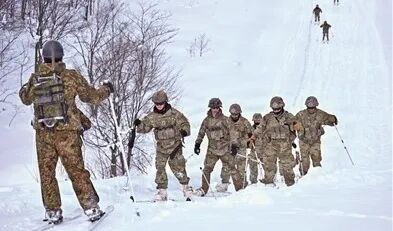
U.S. soldiers and Japan Self-Defense Force members conduct skiing training during the "Northern Wind 26" exercise.
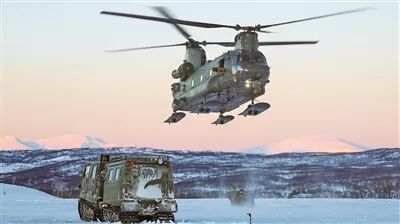
A British military helicopter equipped with a ski landing gear conducts supply airlift training.
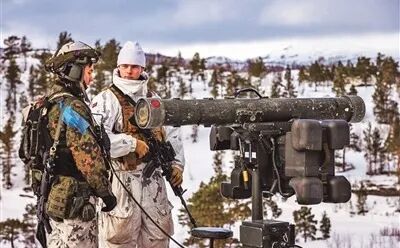
Finnish and Norwegian soldiers conduct coordinated low-altitude air defense operations training.
In eastern Turkey, fighter jets roar, while the sound of artillery echoes across the snowy plains of Hokkaido, Japan, and the Finnish Lapland Ranger Brigade conducts covert maneuvers. Recently, multiple countries' militaries have simultaneously conducted operational exercises and readiness mobilizations in frigid regions.
This round of intensive training exercises is not coincidental. Influenced by global climate change and escalating geopolitical competition, the strategic value of high-latitude cold regions and harsh high-altitude areas is increasingly gaining attention. Many countries in Europe and the U.S. frequently organize related exercises, aiming to overcome the limitations that cold weather imposes on military operations. In the past, severe cold was a significant obstacle to military survival. Today, armies capable of reliable operations in cold conditions are more likely to gain the initiative on icy battlefields.
Turkish fighter jets complete "anti-freeze" tests
In cold conditions, the "anti-freeze" capability of weapons and equipment is the first hurdle. On January 24, Turkey's domestically developed "Free Bird" advanced trainer/light attack aircraft completed rigorous testing in harsh cold environments in Erzurum, eastern Turkey.
This test serves as a demonstration of Turkey's strength in the global defense market and is also a promotional advertisement directed at NATO member countries. Erzurum is approximately 2,000 meters above sea level, and during the test, temperatures dropped to minus 21 degrees Celsius. For modern fighter jets, such an environment is a "touchstone" for onboard batteries, electronic devices, and hydraulic systems.
In cold environments, the performance of the aircraft's onboard batteries can significantly decline, electronic devices are prone to failure, and even the hydraulic seals of the landing gear may harden and leak, leading to serious accidents. Turkish engineers focused on testing two indicators: the braking performance of the "Free Bird" advanced trainer/light attack aircraft on icy runways and the responsiveness of the digital flight control system at ultra-low temperatures.
The results showed that all tests met the standards. Its maximum flight speed is 1.2 Mach, and it has received an order from the Spanish Air and Space Force. Turkey aims to prove through this test that the "Free Bird" advanced trainer/light attack aircraft can maintain all-weather stable operation in cold conditions.
The UK leverages Norway to advance into the Arctic frontier
On the northern flank of Europe, the UK Royal Navy and Air Force are highlighting their strategic layout through "Operation Clockwork." During the operation, British helicopters such as the "Merlin," "Wildcat," and "Chinook" were stationed at the Bardufoss Air Force Base located within the Arctic Circle.
These helicopters are all equipped with ski landing gear to prevent the fuselage from getting stuck in the snow. Pilots conducted low-altitude maneuvers in the Norwegian fjords and mountains while simultaneously testing the maintenance and support capabilities of aviation equipment under extreme cold conditions. British Royal Marines operated BVS10 "Viking" amphibious armored vehicles in the snowy plains to coordinate with helicopter operations. Training activities included skiing, wilderness navigation, building snow shelters, and foraging for survival, aimed at preparing for the NATO "Cold Response 26" multilateral exercise scheduled for March.
Norway has become a key foothold for the UK to advance into the Arctic. In 2023, the UK Royal Navy established the "Viking Camp" in Øverbygd, Norway, and subsequently deployed helicopters and 1,500 personnel to the camp each year. In September 2025, the UK and Norway reached an agreement for the export of five Type 26 frigates, and the two countries also signed a key defense cooperation agreement to promote deep naval integration. Both sides plan to form a joint fleet, share equipment, and conduct regular training in the Arctic to respond to Russian submarine activities in the North Atlantic.
U.S.-Japan joint cold weather operations training
As the Pentagon designates the Arctic as a "potential strategic competition corridor," U.S. readiness anxiety continues to rise. The U.S. Department of Defense is developing equipment for underwater detection and polar satellite communications while also compiling a "Arctic and Extreme Cold Weather Operations Manual" for frontline U.S. forces.
The manual is comprehensive, covering everything from extreme cold troop deployment and logistics support to snow ambushes and emergency evacuations on ice, even listing examples of special support requirements under extreme cold conditions.
On the training ground, the U.S. military has introduced a "dunking course." Soldiers are required to jump into icy lake water to simulate self-rescue after ice breakage. The training not only tests physical fitness but also trains soldiers to remain calm and execute tactical maneuvers under the risk of hypothermia.
In late January, paratroopers from the U.S. 11th Airborne Division went to Hokkaido, Japan, to jointly conduct the "Northern Wind 26" exercise with the Japan Self-Defense Force. The exercise primarily focused on fire support and maneuvering operations in cold environments. During the exercise, U.S. M252A1 81mm mortars coordinated with Japanese 120mm mortars for drills. U.S. UH-60 "Black Hawk" helicopters frequently took off and landed in low-visibility snowy conditions, completing tasks such as troop deployment, supply replenishment, and casualty evacuation.
Finland provides cold weather training grounds for multiple countries
While the U.S. and UK are still adapting to cold weather battlefields, the Finnish Defense Forces have become a benchmark for polar operations. The British newspaper The Times reported that during the NATO "Joint Viking" exercise, the Finnish Ranger Brigade, acting as the hypothetical enemy, directly defeated participating U.S. forces due to their familiarity with the terrain and snow mobility capabilities. The exercise directorate had to request Finland to reduce the intensity of their attacks to ensure the exercise could proceed normally.
The Finnish Ranger Brigade is stationed in the Lapland region, with its subordinate special assault battalion and air defense battalion focusing on honing independent combat and survival capabilities in environments with limited sunlight and temperatures below minus 30 degrees Celsius. For Finnish soldiers, the cold is not an obstacle but a natural cover.
Since Finland joined NATO, it has brought much-needed polar combat experience to member countries. Starting at the end of 2025, Finland will mobilize 15,000 active and reserve personnel along the Russian-Finnish border to conduct large-scale joint exercises with the UK, Sweden, and Poland.
Finland is also responsible for operating NATO's Arctic Joint Training and Assessment Center. Every winter, the Finnish Ranger Brigade provides survival and combat training in cold environments for multinational forces. The U.S. has also ordered 11 icebreakers from Finland, four of which will be built in Finland and the rest in the U.S., further deepening military cooperation in polar regions between the two countries.
(Lin He)
(China Defense News, February 6, 2026, Fourth Edition)
U.S. and Japanese forces conducted joint cold weather exercises in Hokkaido, focusing on fire support and mobility. Turkish forces tested the Free Bird aircraft in extreme cold, while UK forces enhanced Arctic capabilities through operations in Norway. Finland is providing training for NATO allies in cold weather operations, reflecting a broader trend of military readiness in response to geopolitical tensions.
- U.S. and Japan conducted joint exercises in Hokkaido, focusing on cold weather operations.
- Turkey tested its Free Bird aircraft in extreme cold conditions.
- UK forces are enhancing their Arctic capabilities through exercises in Norway.
- Finland is providing training for NATO forces in cold weather operations.
- Multiple nations are increasing military readiness in response to geopolitical tensions.