
Iran and Qatar Talks in November 2026 Test Gulf Defenses After Eight Months of War
 Ahmed Al-Rashid
Iran and Qatar Talks in November 2026 Test Gulf Defenses After Eight Months of War
On November 2, 2026, Doha was hosting communications between Iranian and Qatari officials aimed at reaching an understanding to end the U.S.-Israeli war on Iran, while Gulf capitals monitored the outcome as a field commander watches a radar screen, unsure if the target will change direction. According to a Reuters report, Gulf markets moved cautiously with the possibility of a resumption of U.S. military action still on the table, while the agency reported the previous day that oil prices had dropped more than 4% as hopes for negotiation rose. However, the drop in oil prices is not evidence of the danger dissipating; it is a sign that markets are merely buying extra time.
Qatari Mediation Does Not Mean Qatari Decision
The choice of Qatar as a communication channel is not surprising. Doha has practical relations with Washington and Tehran, and can convey messages without appearing as a party imposing settlement terms. However, this diplomatic role does not grant it control over military calculations. The real decision is distributed among Washington, Tel Aviv, Tehran, and the political leadership that will be influenced by the November 3 vote. Therefore, the term "talks" should be approached with caution: there is no announcement in the available reports of a final ceasefire or verification mechanism, but rather an attempt to test whether both sides want to de-escalate or rearrange the terms for the next round.
From a military perspective, negotiating while the war continues is not necessarily a ceasefire. Ending strikes requires a communication channel, rules of engagement, and guarantees to protect facilities, energy, and maritime corridors. Without these elements, any limited strike or miscalculation could become a reason to resume operations. The Gulf is well aware of this problem; it has become accustomed to purchasing advanced air defense systems, but it cannot buy the political certainty that determines when those systems are used.
The Gulf Between Air Defense and Political Dependence
The past eight months have revealed that the Gulf deterrence equation is not just a matter of interceptor missiles. Saudi Arabia, the UAE, and Qatar possess an advanced infrastructure of radars, fighter jets, and missile defenses, but their effectiveness is tied to U.S. early warning, data sharing, and external air and naval presence. IISS analyses during 2026 indicate an expansion of U.S. defense cooperation and localization projects in Saudi Arabia and the UAE, but industrial localization does not equate to operational independence. A country can produce part of the equipment, yet still rely on software, spare parts, updates, and the political decision that opens the sensor network.
Here emerges the "capability triangle" that many arms deal celebrations overlook: equipment, training, and institution. Gulf equipment looks strong on paper, training is improving, but the institution remains divided among national armies, foreign bases, and operations rooms that do not all have the same mandate. In war, it is not enough for the radar to see the missile; the information must reach the authorized party to respond within seconds, the rules of engagement must be understood, and the pilot must know who is politically protecting him after launch.
Why Negotiations Matter More to Arms Buyers Than to Tehran
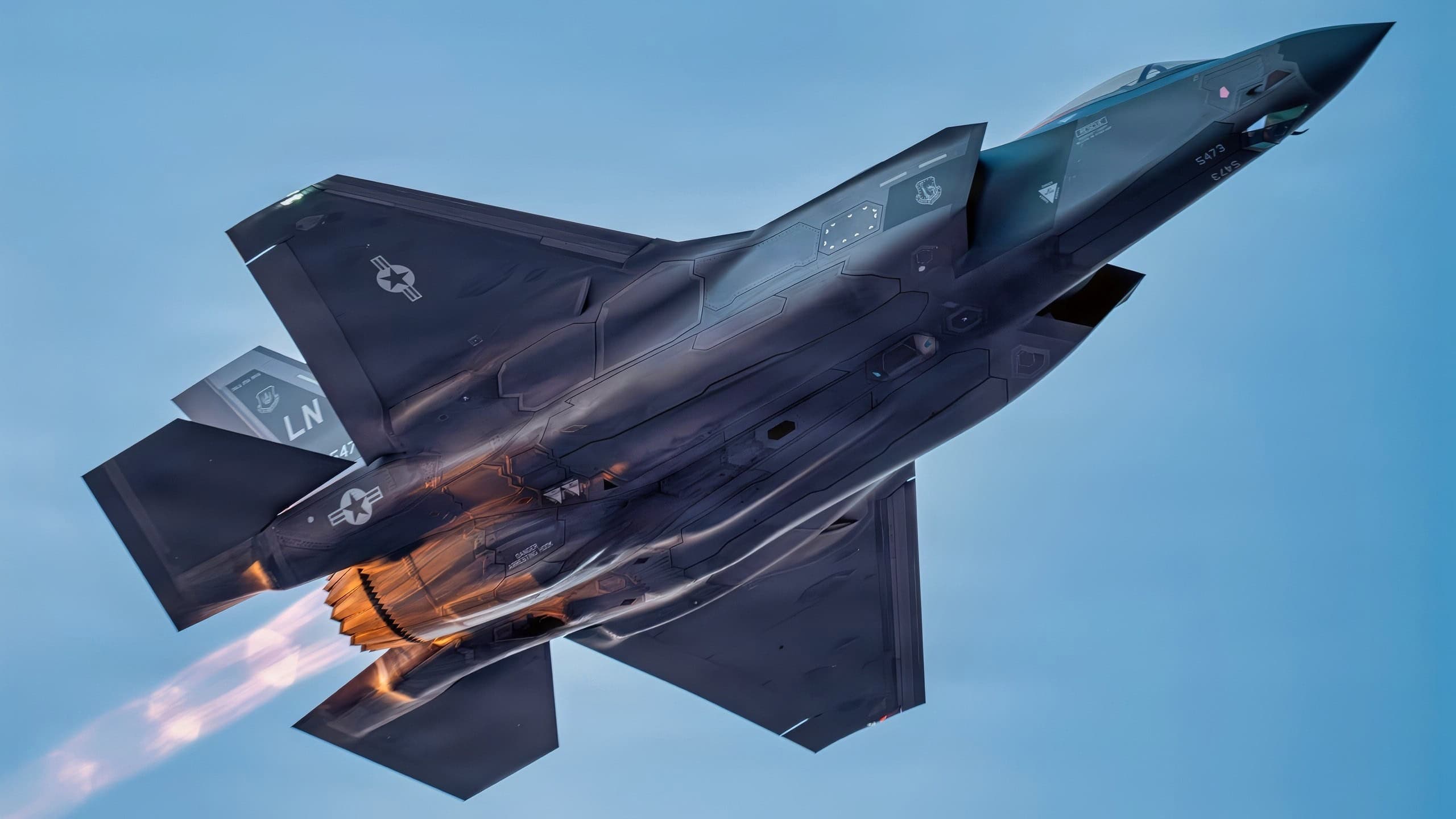
The talks may seem like an Iranian-American affair, but they are actually a test of the credibility of every Gulf defense contract. If Doha succeeds in opening a path toward a stable ceasefire, Gulf states will have the opportunity to rebuild their interceptor missile stockpiles, maintain aircraft, and fortify energy facilities. If they fail, the priority will revert to passive defense, fuel distribution, port protection, and training crews to operate in a disrupted communications environment. In either case, capitals will discover that purchasing F-35s or Patriots does not solve the problem of the absence of unified decision-making.
The war has also shown the limits of reliance on American protection. The United States remains the only power capable of providing a regional surveillance and long-range strike umbrella, but its presence is not an automatic commitment to engage in every round on behalf of its allies. When priorities change in Washington or the costs of energy and deployment rise, the Gulf faces a difficult question: does it want a defense partnership or a political insurance policy? The difference between the two is that a partnership requires local institutions capable of fighting, while the insurance policy waits for aircraft carriers to arrive.
The Next Test After the Vote
The crucial indicator is not the tone of Qatari statements, but what happens after November 3. If communications continue with a tangible reduction in strikes, the region may move toward a temporary arrangement that allows for repositioning and negotiating broader files. However, if U.S. or Israeli operations resume, mediation will turn into a short-term cover, and Gulf states will be forced to accelerate multi-layered defenses and link them to more independent national decisions.
In my view, the Gulf's problem is not a lack of weapons, but that its security is still tied to a contradiction that cannot be hidden in a defense exhibition: it wants decision-making independence, but it also wants an external party ready to go to war on its behalf. Iran-Qatar talks may mitigate the danger, but they will not resolve this contradiction. As any military personnel who has served in the region knows, a missile that has not been fired does not mean that the deterrent system has succeeded; it may only mean that politicians have not yet decided who will bear the cost.
Sources
Iran and Qatar are conducting diplomatic talks in Doha on November 2, 2026, aimed at resolving the ongoing conflict involving the US and Israel against Iran. Gulf nations are closely monitoring the situation, as the outcome may affect military operations and defense strategies in the region. The talks are seen as a critical test of Gulf defense credibility amid ongoing tensions.
- Iran and Qatar are holding talks to negotiate an end to the US-Israel conflict against Iran.
- Gulf markets are reacting cautiously to the potential for renewed military action.
- The outcome of the talks could impact Gulf defense strategies and military readiness.
- The US remains a key player in Gulf security dynamics, influencing military decisions.