
Russia's Bulava and North Korea's KN-25 Missiles Test the Western Pacific
 Marcus Chen
Russia's Bulava and North Korea's KN-25 Missiles Test the Western Pacific
Two very different missile events landed in the same operating picture last week. Russia fired a submarine-launched Bulava intercontinental ballistic missile from the Sea of Okhotsk toward the Chizha test range in the Russian Arctic. Two days later, North Korea launched ballistic missiles from Wonsan during a firepower demonstration for Kim Jong Un. The launches were not a coordinated attack, but they exposed a problem for U.S. forces and allies: the Western Pacific is now a test range for nuclear signaling, conventional strike, drones, and alliance response at the same time.
One theater, two missile problems
USNI News reported that the Pacific Fleet's Generalissimus Suvorov, a Borei-class ballistic-missile submarine, launched an RSM-56 Bulava from a submerged position. Moscow said the warhead package reached its designated area. The public reporting did not specify the launch date, but maritime warnings covered October 25 through 31. The event was therefore a planned strategic-force exercise, not an improvised response to Washington or Tokyo.
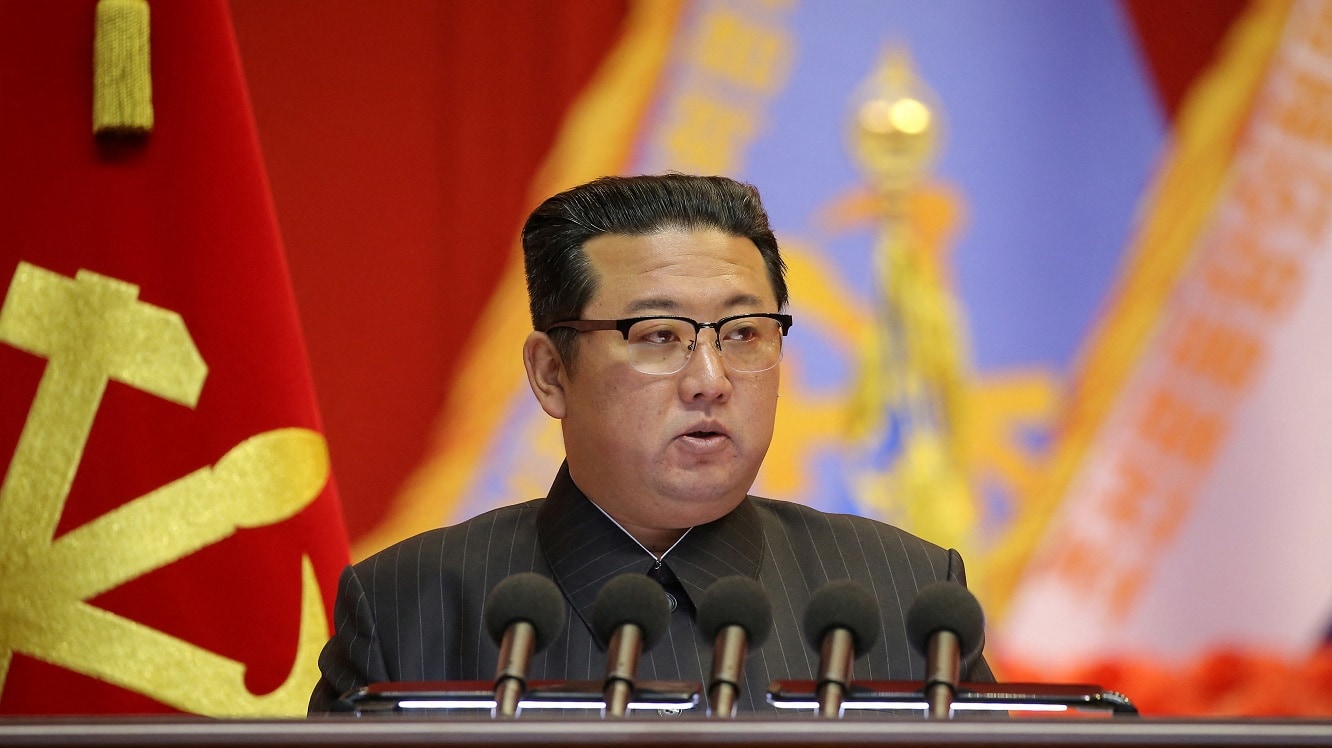
North Korea's October 29 activity was smaller in range but more complicated at the tactical level. The South Korean Joint Chiefs of Staff assessed 10 short-range ballistic missiles flying about 250 kilometers from Wonsan into the Sea of Japan. Japan's Ministry of Defense reported a ballistic-missile launch, while U.S. Indo-Pacific Command publicly counted two missiles. The different numbers are a reminder that open-source launch counts are often provisional, especially when several projectiles are fired during a demonstration.
Pyongyang presented the event alongside tactical suicide drones, cruise missiles, loitering munitions, and what it called a new 600mm precision multiple-launch rocket system, or KN-25. The display also included a previously unseen flying-wing unmanned aircraft. The point was not merely to show a missile. It was to show a kill chain: find a target, saturate defenses, and strike it with several cheap or expendable systems.
The math behind the signaling
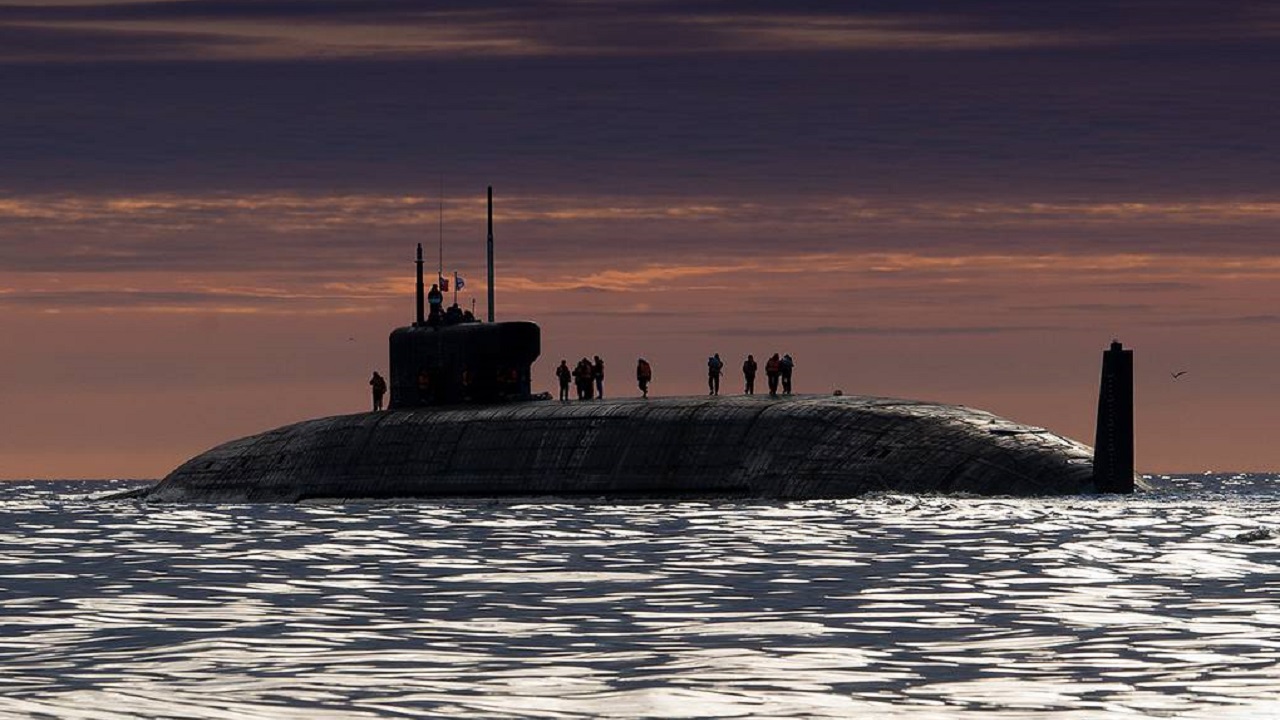
The Bulava and KN-25 do different jobs. A Bulava launch rehearses Russia's nuclear retaliatory force. A Borei-class submarine carries 16 missiles, and each missile is designed for intercontinental range. Even a single test forces U.S. and allied planners to track the submarine, interpret the launch, and separate an exercise from an operational move. That consumes intelligence, surveillance, and reconnaissance capacity before any conventional crisis begins.
The KN-25 is a theater weapon. A 250-kilometer flight does not threaten the U.S. homeland, but it puts South Korean and Japanese military facilities, ports, airfields, and command nodes inside a rapidly expanding danger zone. If a salvo is paired with drones and cruise missiles, the defender cannot solve the problem with one interceptor type. It needs sensors, electronic warfare, point defense, hardened facilities, and enough magazines to survive repeated attacks.
That is the real cost. A short-range missile can be cheaper than the interceptor assigned to defeat it. A drone can be cheaper still. North Korea does not need perfect accuracy if it can create enough simultaneous tracks to delay a decision or force aircraft onto the ground. Any commander who has watched a ship's combat system manage a dense raid understands the basic arithmetic: magazine depth matters as much as missile range.
What the United States can and cannot infer
U.S. Indo-Pacific Command said the North Korean launches posed no immediate threat to U.S. personnel, territory, or allies and that Washington was consulting with partners. That statement is appropriate for public reassurance, but it is not an assessment of wartime resilience. The launches were short-range and apparently directed into the sea. The harder question is whether the United States, Japan, and South Korea can sustain a high-tempo tracking and defense effort if the same systems are used during a crisis around the Korean Peninsula or Taiwan.
The answer is not yet convincing. The three governments share data and conduct missile-defense exercises, but their geography creates different priorities. Seoul worries about bases and population centers near the demilitarized zone. Tokyo worries about southwestern islands and sea lanes. U.S. forces need to preserve aircraft, tankers, ships, and logistics hubs for a wider campaign. A North Korean salvo does not need to defeat all three countries. It only needs to create enough uncertainty to complicate the larger plan.
Russia's launch adds a second layer. Moscow demonstrated that its Pacific Fleet can use the Sea of Okhotsk as a protected bastion for strategic-force training while North Korea advertises conventional strike and unmanned systems from the same broad theater. These are separate chains of command, but the surveillance burden converges on the same U.S. and allied networks. That convergence is useful to both Moscow and Pyongyang even without formal coordination.
The next test is endurance
It would be a mistake to call the launches a new Russia-North Korea missile alliance on this evidence alone. It would be an equal mistake to dismiss them as routine demonstrations. The pattern matters because it combines nuclear signaling, precision fires, drones, and information ambiguity in a region where American forces already have to ration bases, tankers, interceptors, and attention.
The immediate answer is not another declaratory policy. It is more usable capacity: distributed sensors, reloadable air defenses, hardened fuel and ammunition storage, and exercises that test command decisions under simultaneous missile and drone attack. The United States and its allies can probably track both events. Tracking is the easy part.
The uncomfortable question is whether they can keep doing it for thirty days, under attack, while still holding enough missiles and aircraft for the next crisis. The Western Pacific is no longer just a place where adversaries demonstrate weapons. It is where they are testing the endurance of the defense system.
Sources
Russia launched a Bulava intercontinental ballistic missile from the Sea of Okhotsk toward the Chizha test range on October 25-31, 2026. Two days later, North Korea fired 10 short-range ballistic missiles from Wonsan into the Sea of Japan. These events highlight the increasing complexity of military operations in the Western Pacific, where both nations are testing their missile capabilities and signaling to U.S. forces and allies.
- Russia launched a Bulava missile from the Sea of Okhotsk toward the Chizha test range.
- North Korea launched 10 short-range ballistic missiles from Wonsan into the Sea of Japan.
- The Bulava launch was part of a planned strategic-force exercise.
- North Korea's demonstration included tactical drones and a new 600mm rocket system.
- The Western Pacific is now a test range for various military capabilities.