
Iran Says It Owns Hormuz and Washington Cannot Ignore It
 Alexandra Reeves
Iran Says It Owns Hormuz and Washington Cannot Ignore It
Tehran is trying to turn a military choke point into a political one. Reuters reported on Aug. 28 that Iran's navy said it had “full control” over the Strait of Hormuz, only a day after Reuters also reported that Iranian officials were attaching conditions to any broader reopening arrangement. Read together, those signals matter more than the slogan itself. Iran is not merely claiming it can threaten shipping. It is trying to establish the idea that traffic through Hormuz now moves on Iranian terms, and that any reduction in pressure on the water must be purchased with concessions on sanctions, military posture, or both.
That is a problem for Washington and for every Gulf partner that still depends on maritime trade more than public diplomacy. The Strait of Hormuz is narrow, heavily surveilled, and geographically unforgiving. The U.S. Energy Information Administration has long described it as the world's most important oil transit chokepoint. That does not mean Iran can hermetically seal it for as long as it wants. It does mean even a partial threat, or a selective reopening under Iranian conditions, can impose immediate economic and political costs on the outside powers trying to keep the waterway open.
Control is not the same thing as closure
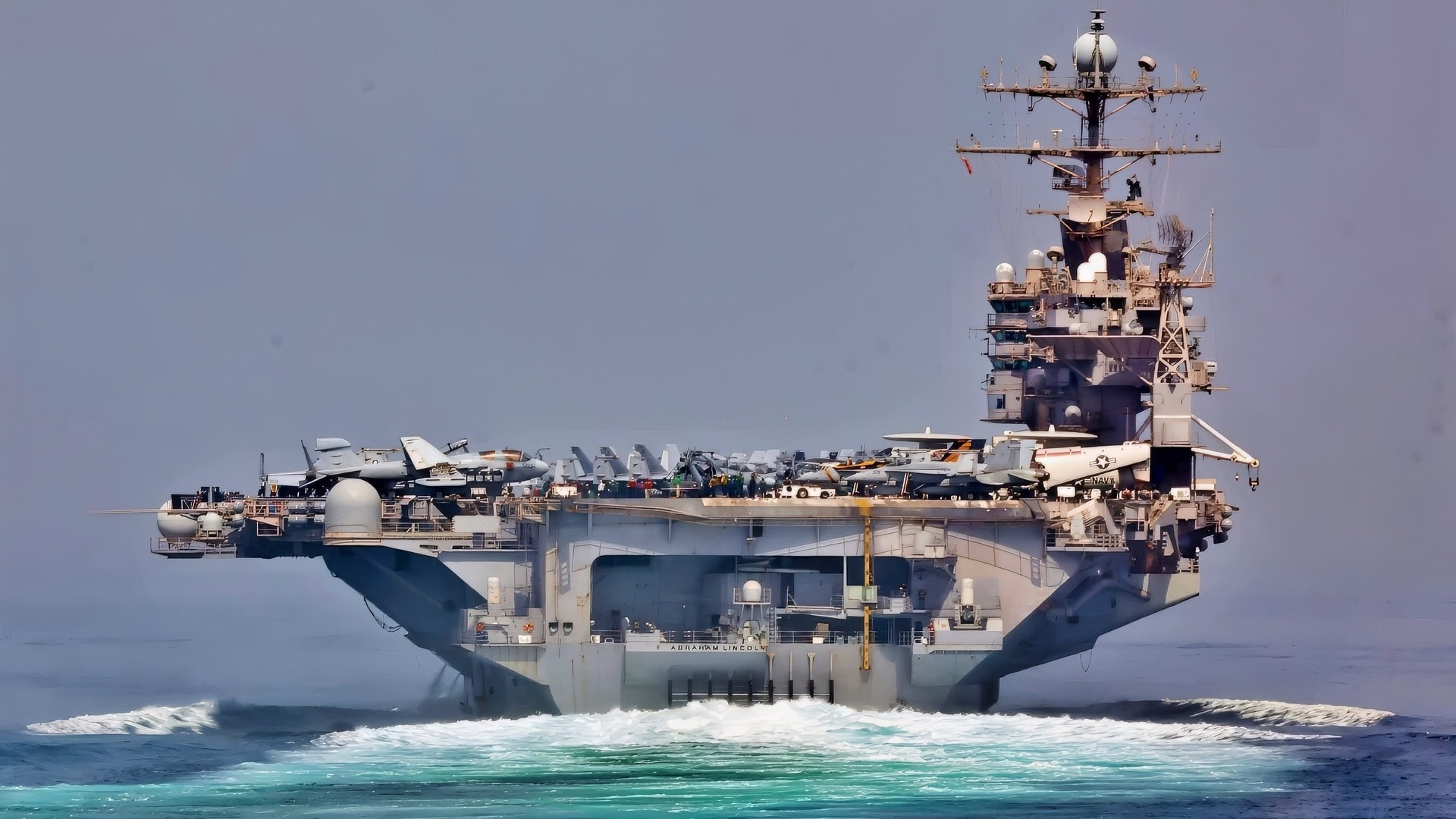
Iran's claim should be read carefully. Full control is not a literal description of the battlespace. It is a strategic message. Tehran does not need uncontested sea command to produce leverage in Hormuz. It only needs enough layered coercive power to make commercial shipping insurers, energy traders, and foreign navies price in risk every single day.
That layered power is real. Iran can combine shore-based anti-ship missiles, naval mines, drones, helicopters, and swarms of fast attack craft with the simple geometry of a strait that narrows shipping into predictable lanes. Even when the U.S. Navy remains the stronger force in absolute terms, the burden of protection falls on Washington while the burden of disruption falls on Tehran. Those are not symmetric missions. One side has to keep traffic moving. The other side only has to prove that movement is conditional.
That is why the recent reporting matters. Reuters' Aug. 27 account of Iranian conditions for reopening Hormuz, alongside later reporting echoed by other regional outlets that non-hostile ships might still transit, suggests Tehran is experimenting with a selective access model. In other words, Iran may be testing whether it can replace an all-or-nothing closure threat with something smarter: a regime of permission, intimidation, and ambiguity. From Tehran's perspective, that is more sustainable than a dramatic blockade that would invite a rapid and concentrated military response.
The alliance problem is political before it is naval
This is where the story becomes bigger than Gulf shipping. Alexandra Reeves' natural beat is alliance politics, and Hormuz is an alliance test as much as a maritime one. The United States can still assemble naval force in and around the Gulf. The harder question is whether Washington can maintain a credible coalition response when partners are exposed to different levels of risk and have different appetites for escalation.
European governments want freedom of navigation, but they do not all want to buy it the same way. Gulf states want de-escalation, but they also want proof that American guarantees still mean something after a year in which regional war has repeatedly exposed the cost of depending on U.S. protection. Asian importers want the sea lanes open while staying politically distant from the confrontation. That combination is exactly the kind of fragmented audience Iran prefers. Tehran does not need a formal split inside the coalition. It only needs hesitation, sequencing disputes, and arguments over what counts as a proportional response.
That is why the usual line that America will keep Hormuz open, full stop, feels too tidy. Of course the United States retains the capacity to strike, escort, and suppress. The real issue is endurance. If Iran can keep the threat below the threshold that triggers a unified retaliatory campaign, it can steadily move the argument from military access to negotiated access. Once that happens, even successful escorts start to look defensive rather than authoritative.
What Tehran is really trying to prove
The short answer is not that Iran can defeat the U.S. Navy. It is trying to prove something more useful: that it can make every outside power pay rent for stability. That rent may come in the form of sanctions relief, looser maritime enforcement, reduced strike pressure, or tacit acceptance that some ships move with lower risk than others. A state does not have to win the naval balance to win that bargain. It only has to make the alternative look expensive.
There is also a wider signal here for Russia, for China's energy planners, and for every government watching how U.S. power performs under stress. If a regional middle power can turn a chokepoint into a bargaining architecture, then deterrence starts looking less like prevention and more like managed disruption. That is bad news for an American security model built on the promise that sea lanes stay open because Washington says they do.
So yes, Iran's rhetoric is inflated. But dismissing it as propaganda misses the point. Propaganda is part of the mechanism. Tehran is pairing military nuisance capability with diplomatic conditioning and information pressure in order to redefine what normal transit looks like. That is a classic gray-zone move: not strong enough to win a war outright, but sharp enough to rewrite the terms of peacetime access.
What to watch next
Three indicators matter now. First, whether Iran keeps speaking in universal terms about control while quietly permitting selected traffic. Second, whether Washington and its partners respond with a coherent multinational escort and enforcement posture rather than a patchwork of national improvisations. Third, whether energy markets begin treating disruption in Hormuz as persistent rather than episodic. If all three move in Tehran's favor, then the strategic shift is real even without a formal closure.
The uncomfortable conclusion is that Hormuz is no longer just a passage to be defended. It is becoming a negotiation space shaped by coercion. Reuters gave the headline, but the harder truth sits underneath it: once Iran can make access look conditional, the United States is no longer proving command. It is proving how much it is willing to spend to stop control from being politically redefined.
Iran's navy claims full control over the Strait of Hormuz, asserting that maritime traffic will operate under Iranian conditions. This strategic messaging aims to leverage political and economic pressure on the U.S. and its allies, who rely on the waterway for trade. The situation poses significant challenges for coalition responses and highlights Iran's ability to influence maritime security without direct military confrontation.
- Iran's navy claims full control over the Strait of Hormuz.
- Iran is attempting to establish conditions for maritime traffic through Hormuz.
- The Strait of Hormuz is a critical oil transit chokepoint.
- Iran is using a strategy of intimidation and conditional access to influence maritime traffic.
- The U.S. and its allies face challenges in maintaining a unified response to Iran's actions.