
Germany wants to lead the NATO Military Committee in 2026 and confuses influence with defense capability
 Dr. Klaus Weber
Germany aims to lead the NATO Military Committee in 2026 and confuses influence with defense capability
Four options for Pete Hegseth by November 6, a choice of the 32 NATO Chiefs of Defense on September 19 in Copenhagen, but not a single additional European air defense battery: This is precisely the problem of the current debate about Europe's security. While Washington explicitly aligns its six-month review of the US troop presence in Europe towards a “more durable and powerful European-led conventional defense of the continent,” Berlin is reportedly trying to bring Inspector General Carsten Breuer to the head of the NATO Military Committee, according to Euractiv. Both are interconnected. But Berlin is confusing the wrong things. A higher position is no substitute for higher defense capability.
Why the position suddenly seems so important
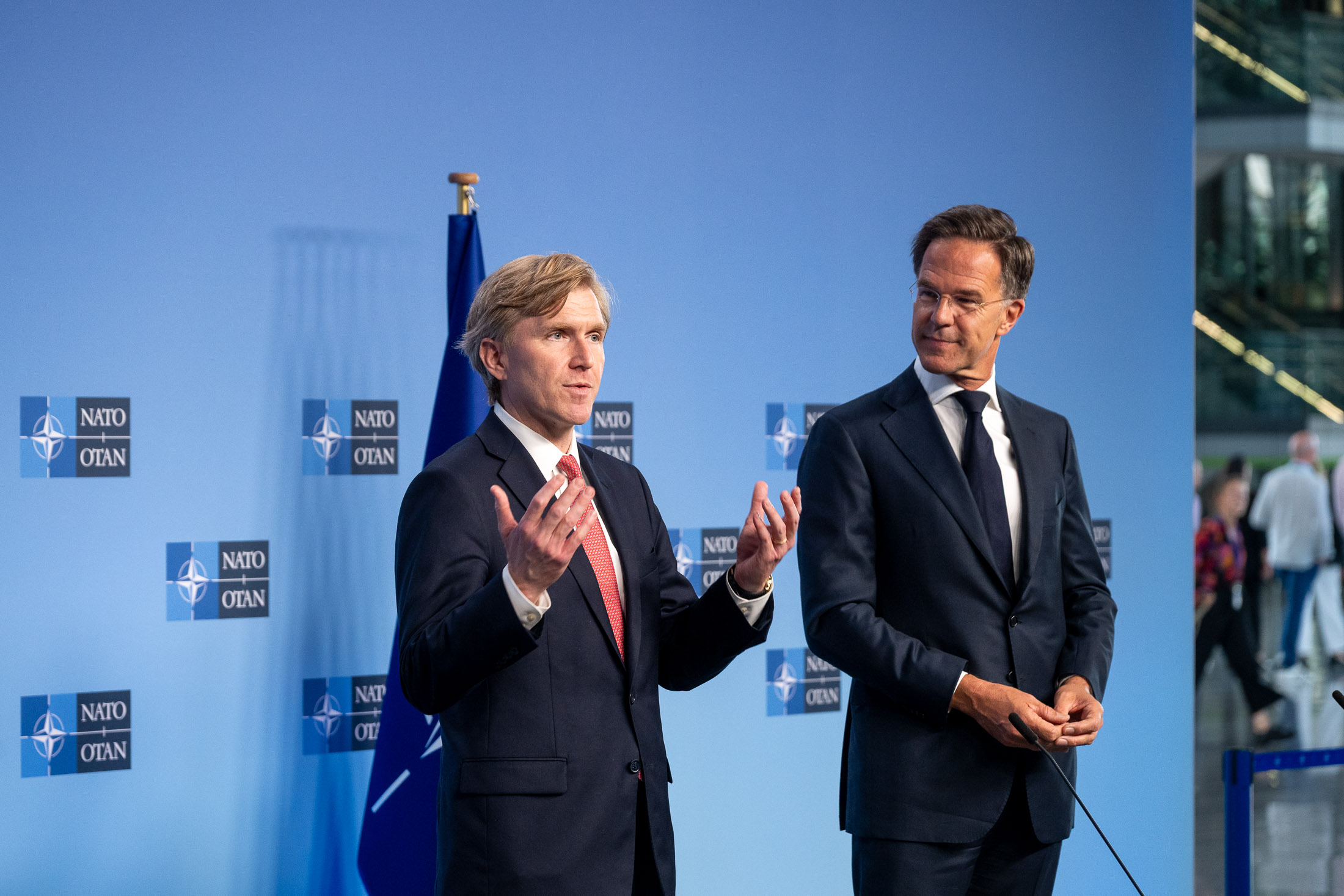
Reuters reported from Brussels on August 27 that Undersecretary Elbridge Colby explained to NATO ambassadors that the alliance must change. The ongoing review is “not a narrow review of locations and bases alone,” but a broad look at the strategic presence of the United States in Europe. The outcome is to be at least four options for Defense Minister Hegseth, and that by November 6, well ahead of the official conclusion in December. This deadline alone is a strategic message. Washington is no longer asking Europe for patience, but for structures that can politically and militarily sustain an American burden-sharing.
In this context, the German campaign for Breuer seems logical. Those who can no longer automatically expect protection in an alliance with a possible American withdrawal at least try to sit at the levers of military advice and priority setting. The NATO Military Committee is the highest military advisory body of the alliance. NATO itself announced that the military leadership of the 32 allies will discuss the implementation of the Ankara summit, deterrence and defense, innovation, and support for Ukraine on September 18 and 19 in Copenhagen. For Berlin, a German chairmanship at this moment would be politically attractive: it would stage the Zeitenwende as a claim to leadership within the alliance.
The institutional error in Berlin's calculation
However, the chairmanship of the Military Committee does not command armies. It has no stockpiles, no satellites, no air defense networks, and no industrial reserve. It organizes advice, not power. This is a classic European category error. In Brussels, influence is often confused with capability because institutions in the European Union and NATO are traditionally seen as power multipliers. This is true up to a point. But only up to a point.
When Colby speaks of a “European-led conventional defense,” Washington does not mean a European with more speaking time at NATO headquarters. It refers to a European continental defense that maintains reconnaissance, air defense, logistics, ammunition supply, and command capability even when the US shifts, reduces, or politically conditions forces. That is where the gap still lies. Europe can take the chair in more bodies without eliminating a single structural dependency. One can rise in the alliance and still remain operationally at the bottom.
Why Germany is still the natural candidate
The fact that Germany is even trying to bring Breuer into this position is no coincidence. Berlin has visibly gained weight within the alliance in recent years: through the brigade in Lithuania, through its role as a logistical hub, through political and financial contributions to support Ukraine, and through the attempt to redefine itself as the framework nation of European defense. That is precisely why the candidacy is plausible. Germany presents itself as the great, predictable organizer of Europe.
But is that enough? Germany exemplifies why organizational centrality must not be confused with strategic autonomy. The Federal Republic is important in the alliance because it can coordinate, finance, and host. However, it remains dependent on American infrastructure, American high-quality reconnaissance, American air defense levels, and American political guarantees in critical capability areas. A German chair in the Military Committee would not change this reality. At best, it would moderate it better.
What Washington actually demands from Europe
What is remarkable about Colby's statements in Brussels is less the tone than the institutional clarity. According to Reuters, the allies have already been sent a questionnaire on defense spending, strategy, procurement, and support for American foreign policy priorities. This is not an academic dialogue. It is an attempt to translate Europe's military seriousness into administrable criteria. Europe is not only expected to pay more. It must prove that it can partially replace the US as the leading conventional power on the continent.
That is precisely why Germany's grasp for the NATO Military Committee is ambivalent. On the one hand, it shows that Berlin has understood the new situation: In an alliance of burden shifting, institutional positioning becomes more important. On the other hand, it reveals that Berlin is still relying on the familiar European method of initially addressing a material problem with a governance instrument. This sometimes works with budget rules. In defense, it usually does not. Those who respond to a capability gap with a top position confuse seating arrangements with deterrence.
The real European test of endurance
The coming weeks will therefore decide less about Breuer's career than about the credibility of the European pillar in NATO. If Europe responds to the American review with personnel policy, it inadvertently confirms Colby's fundamental assumption: that the continent is still better at negotiating responsibility than at organizing defense capability. If Berlin, on the other hand, connects the symbolic value of a top position with real progress in ammunition, air defense, mobility, and command capability, the candidacy could become meaningful.
However, the contradiction remains. Europe needs more military independence in Washington's eyes. Germany seeks more institutional height in Brussels. Both are not identical. On the contrary: Those who win the chair without broadening the material foundations of deterrence only demonstrate how European this thinking still is. The NATO Military Committee can advise, prioritize, and warn. However, it cannot deploy a division, accelerate Patriot production, or eliminate strategic dependency. Therefore, Germany's possible success would also be a symptom of weakness. Precisely because Europe is to lead more, it must no longer confuse leadership with function.
Germany is positioning itself to lead the NATO Military Committee in 2026, reflecting its growing influence within the alliance. This move comes amid ongoing discussions about enhancing European defense capabilities and the future of U.S. troop presence in Europe. The NATO Military Committee will convene in Copenhagen to address these strategic issues.
- Germany plans to lead the NATO Military Committee in 2026.
- There is a debate on Europe's defense capabilities and U.S. troop presence.
- Berlin is attempting to position General Inspector Carsten Breuer at the head of the NATO Military Committee.
- The NATO Military Committee is the highest military advisory body of the alliance.
- The U.S. is seeking a more durable European-led defense strategy.