
Exit through Upper Lars — 113 thousand in a week as a harbinger of a new mobilization
 Dmitri Volkov
Exit through Verkhny Lars — 113,000 in a week as a harbinger of new mobilization
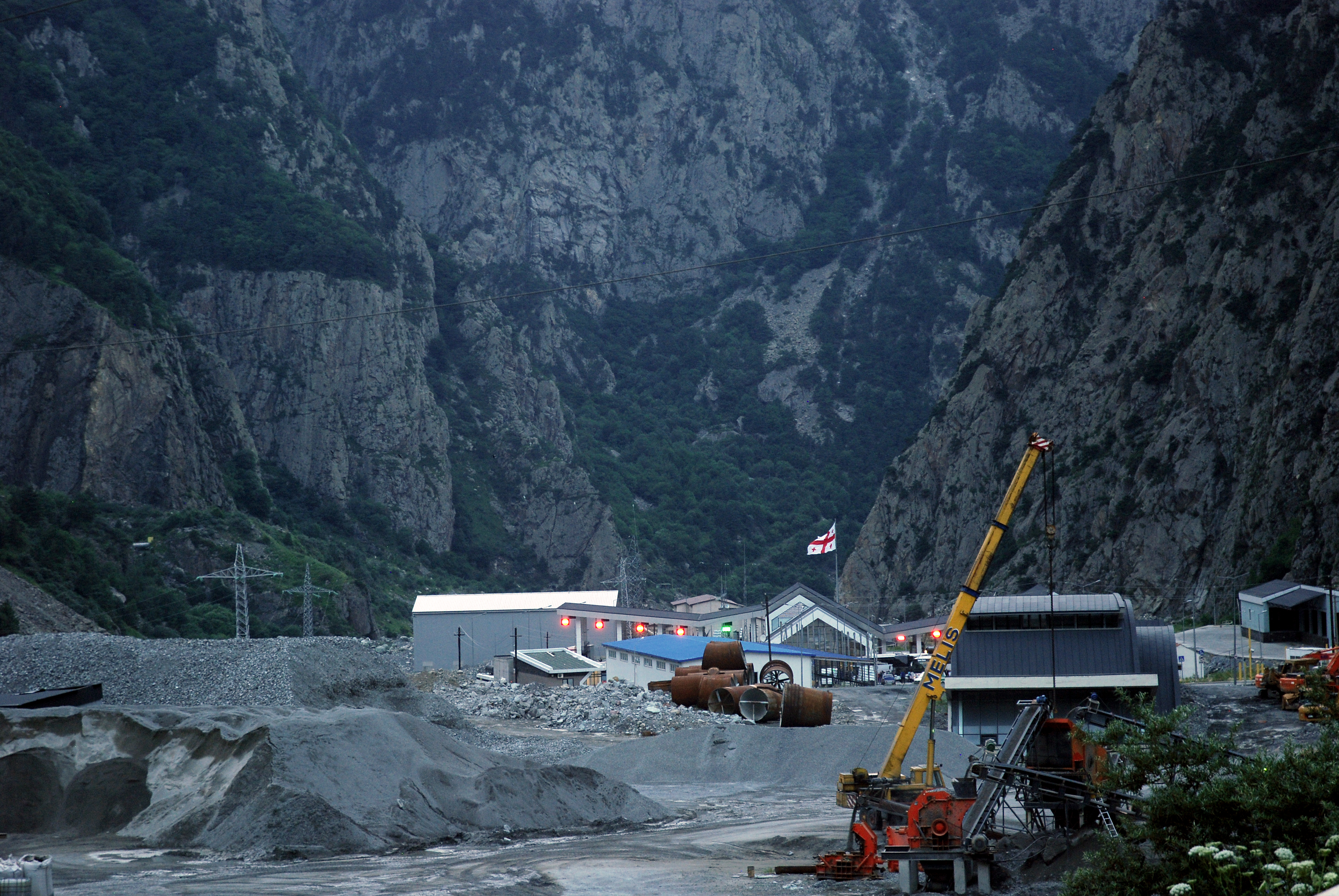
More than 113,000 Russians crossed the border into Georgia through Verkhny Lars in a week — the only land crossing where Russians still do not need a visa. In September 2022, when the Kremlin announced partial mobilization, Georgia received just over one hundred thousand refugees in a week. At that time, there was a presidential decree. Now there is no decree. And this is perhaps the most alarming: people are fleeing not from an announced decision, but from preparations that are being carried out in a mode of official denial.
The figure referenced by Politico (August 28, citing data from Vesti) should be viewed not as tourism statistics, but as a barometer. Russian authorities have been denying discussions about mobilization for months: the permanent representative to the UN, Vasily Nebenzya, stated that "mass mobilization is not planned," while Dmitry Peskov called these discussions "sown by the Ukrainian authorities." However, alongside these denials, work is being done that can only be described as preparatory.
Preparation without a decree
According to human rights defenders interviewed by Politico, the state has been systematically collecting personal data on reservists in recent months — through employers, including the addresses of relatives. People are being summoned to military enlistment offices and assigned to specific units, determining which division they will join when mobilization is announced. The founder of the "Conscription School," Alexey Tabalov, describes this as a "quiet" conscription technology: buses are brought to a metallurgical plant and a list of employees — Petrov, Ivanov, Sidorov — is taken.
A separate story is the National Guard. According to "Vyorstka," the agency is preparing for mobilization and military conditions in advance: Director Viktor Zolotov signed a project mandating the protection of facilities "from dangers arising during mobilization, military conditions, and wartime." Ukrainian expert Alexander Kovalenko calls this preparation for a harsher, "repressive" model of conscription involving law enforcement agencies. Formally, all of this is planned activity. In fact, it is infrastructure for a conscription that has not yet been announced.
Failure of voluntary recruitment
Why is the Kremlin even thinking about mobilization? Because voluntary recruitment is stalling. Former Commander of the Armed Forces of Ukraine Alexander Syrsky noted back in February that Russian army losses have for the first time exceeded the number of those willing to sign a contract. The program to recruit 80,000 "drone operator students" by July yielded about 8,000 — ten percent of the plan; the Conflict Intelligence Team and "Novaya Gazeta Europe" recorded the failure of the "student drone troops." In Penza, police and military personnel were taking men directly from the streets and bringing them to military enlistment offices — the authorities denied it, but residents began organizing self-defense units and filming "recruiters" on video.
The official target is also telling: 409,000 contract soldiers by the end of 2026. Given the current pace of recruitment and losses, this requirement seems unrealistic, meaning the gap between the front's needs and recruitment capabilities will be filled by something else. Logic suggests what that might be.
Political calendar
The timelines are known. In September, parliamentary elections will take place in Russia — and no source expects an official announcement of mobilization before then. According to Ukrainian intelligence (warning from the President's Office, August 27), Moscow plans to conscript 600,000 people in 2026–2027 — 300,000 per year. Zelensky clarifies: about 300,000 after the September elections to the State Duma, bypassing major cities to minimize protest risks. This is very much in line with Russian tradition: the 2022 mobilization was also announced as "partial" and also with an eye on the capitals.
"I think that the destruction of Ukraine is Putin's obsession, and this fixed idea requires manpower. The only remaining resource, given the failure of all other attempts, is mobilization," says Tabalov.
I agree with a caveat. Mobilization is not a sign of strength, but a sign of exhaustion. In 2022, it already cost the regime hundreds of thousands of refugees and dealt a blow to the "social contract." Now this contract, in the words of lawyers from the Russian Peace Plea, is "noticeably crumbling": ratings are falling at record speeds, pro-Kremlin parties are losing support, and the Supreme Court is removing even formal opposition from the elections. In such conditions, a conscription of 300,000 is not a solution to a personnel problem, but a delayed political crisis.
Price of the issue
What does this mean for the front? Those called up after the elections will not be the same fighters as in 2022: after four years of war, the most motivated either are already fighting or have left. Those remaining in reserve are people who consciously avoided the army; their combat value is lower, and the social cost of conscription is higher. The same applies to the exodus through Verkhny Lars: the country is leaving not the poorest and not the most loyal, but the most mobile and informed — those whom the system would like to conscript first.
A historical parallel suggests itself: before the eyes of a generation that witnessed the end of Soviet power — a country that first loses the legitimacy of conscription, then control over its borders, and then begins to look for culprits among its own. I do not predict a collapse — the current regime has far more resources than the late USSR. But if mobilization is announced in the fall after the elections, and it is conducted according to the Penza model — with street cleanups and buses at factories — the cost for the regime will be higher than any gain on the front. The Kremlin understands this, which is why it is dragging its feet until the last moment. The only question is how much of this "last" it has left.
Over 113,000 Russian citizens crossed into Georgia via Upper Lars in August 2023, signaling potential preparations for mobilization. The Russian government is reportedly gathering personal data on reservists and has been denying any plans for mass mobilization. However, the failure of voluntary recruitment efforts has led to speculation about a future conscription announcement, particularly after the upcoming parliamentary elections.
- Over 113,000 Russians crossed into Georgia through Upper Lars in one week.
- The Russian government is systematically collecting personal data of reservists.
- Preparations for mobilization are ongoing despite official denials from Russian authorities.
- The Kremlin is facing challenges in voluntary recruitment, leading to considerations of mobilization.
- Upcoming parliamentary elections in September may influence the timing of any official mobilization announcement.