
Iran threatens to respond to violations of the June 17 memorandum as Hormuz returns to the heart of Gulf deterrence.
 Ahmed Al-Rashid
Iran Threatens to Respond to Violations of the June 17 Memorandum as Hormuz Returns to the Heart of Gulf Deterrence
On July 4, Tehran returned to the phrase known to every officer who has served in the Gulf: responding to violations. The small news item reported by Chinese media regarding an Iranian stance on any violation of the memorandum of understanding was not just a passing diplomatic statement. It is a reminder that the June 17 agreement, which extended the U.S.-Iran ceasefire by 60 days, did not resolve the military issue in the Strait of Hormuz but rather shifted it from the arena of direct strikes to the arena of execution, interpretation, and bargaining over ships and frozen assets.
A Memorandum Unlike a Traditional Ceasefire
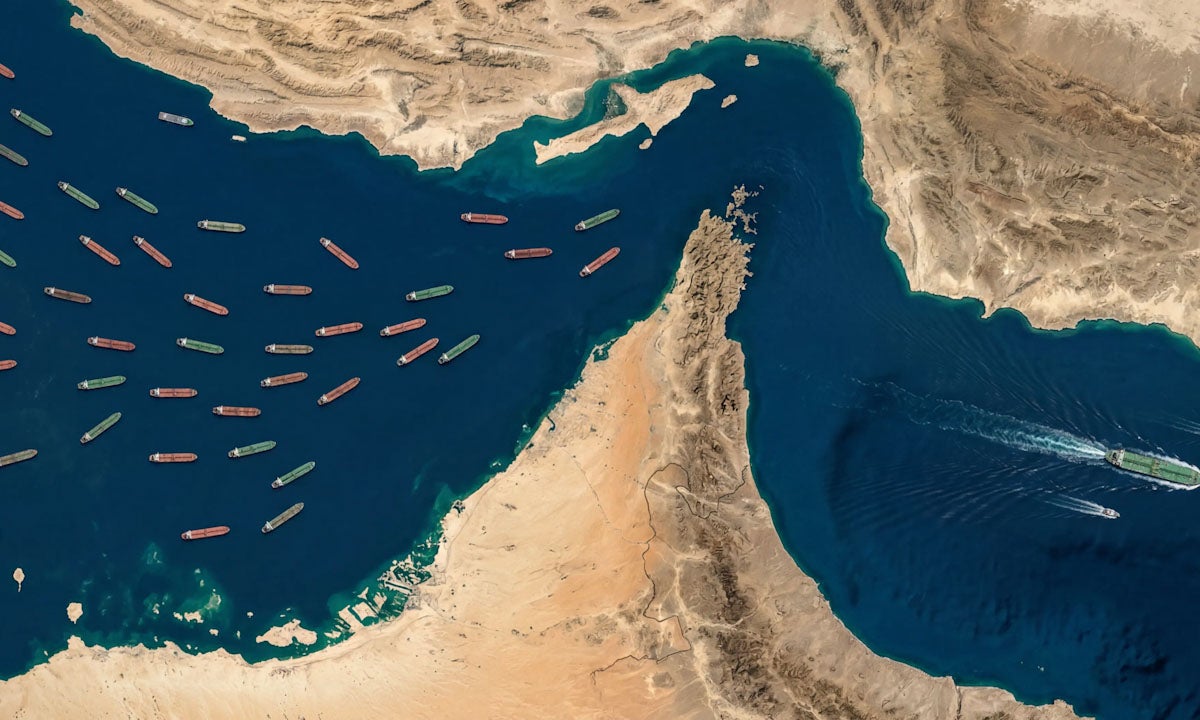
According to an Al Jazeera report on July 1, the Americans and Iranians signed a memorandum of understanding on June 17 that extends the truce for 60 days and opens the door for detailed negotiations regarding the Strait of Hormuz, frozen Iranian assets, long-term sanctions, and the nuclear program. This is not a list of separate political files. Militarily, it is a single pressure map: money alleviates Iran's need for escalation, its margin in Hormuz gives it a tool of pressure, the nuclear program sets the ceiling for threats, and sanctions determine whether the regime can sell the calm domestically.
The problem is that the two weeks following the agreement witnessed the opposite of what any mature ceasefire needs. The debate over the passage of ships in Hormuz continued, reports spoke of American strikes on Iran and Iranian attacks on American military assets in Kuwait and Bahrain, while the Lebanese front remained active due to Israeli strikes against Hezbollah's infrastructure. Therefore, when Iran says it will respond to violations, it is not only speaking to Washington. The message also reaches Kuwait, Bahrain, Qatar, Saudi Arabia, and the UAE, as the territories of these countries are the space where words turn into radar alerts or interception launches.
Hormuz is Iran's Cheapest Weapon
Iran does not need to completely close the strait to change the region's calculations. It is enough to make the passage of an oil tanker or a container ship a political decision that requires guarantees. This is where the value of Hormuz lies in the Iranian calculation. A ballistic missile is expensive and provokes a response, a drone can be shot down, while the legal and maritime ambiguity about who inspects, who escorts, and who pays for protection is a quieter and more enduring weapon.
In my estimation, this is what confuses Gulf capitals more than the threat of a direct strike. The Gulf can buy Patriot, THAAD, and NASAMS, but it cannot buy complete control over the American decision in a moment of crisis. Kuwait, for example, turned this summer to NASAMS worth nearly $400 million through the U.S. military sales program, according to Kongsberg's announcement. This is an understandable step after the Iran War, but it addresses only one layer of the threat. The NASAMS system is good against aircraft, drones, and cruise missiles within a certain range, but it does not grant Kuwait or others political authority over the rules of engagement in Hormuz.
Qatar as a Mediator, Not an Interception Umbrella
The meeting of Qatari Prime Minister and Foreign Minister Sheikh Mohammed bin Abdulrahman Al Thani with Steve Witkoff and Jared Kushner in Doha precisely illustrates Qatar's role. Doha can carry messages and open a technical channel regarding frozen funds and the details of the memorandum. However, it cannot unilaterally adjust the balance of deterrence in the Gulf. This is a point that some Western analyses overlook when treating mediation as a substitute for military engineering.
The United States, for its part, seems willing to give diplomacy a chance, while American officials insist that Iran is in a weaker position. This language is useful for domestic consumption, but it is not necessarily helpful for managing a maritime crisis. The military knows that a weak adversary at sea can be more dangerous than a strong adversary if it has the will to use cheap and multiple tools: fast boats, mines, suicide drones, coastal missiles, and a broad political interpretation of what sovereignty over the passage means.
Israel and Lebanon Add a Second Layer of Pressure
The Strait of Hormuz cannot be separated from northern Israel and southern Lebanon. Defense News noted in its report on the Iron Dome and Iron Beam test that Israel is experiencing high tension on its northern borders with ongoing threats from Hezbollah's drones and missiles. On July 4, new reports emerged about Israeli strikes against Hezbollah infrastructure in southern Lebanon. For Tehran, keeping Lebanon hot makes any negotiation regarding Hormuz part of a broader network of messages. For the Gulf, this means that calming the strait may be affected by a decision made in the Galilee or the suburbs, not in Muscat or Doha.
Here lies the dilemma of Gulf capability. Gulf states have built a large stockpile of interception systems, but they have not yet established a unified regional command capable of integrating alert, interception, and political decision-making quickly enough. Owning batteries is one thing, and turning them into a single network is another. The old military adage says that a gun that does not know who gives it orders is an expensive piece of iron. In the Gulf, there are many expensive pieces, but the chain of command is still longer than the time of a missile.
Air Defense Does Not Buy Political Independence
Practically, any escalation regarding the memorandum will reveal the difference between security as an American service and security as a local capability. When Iran strikes a target near an American base in Kuwait or Bahrain, Gulf governments find themselves in a sensitive position: they are geographically targeted, but they do not have complete decision-making authority in responding. And when Washington threatens to respond to any disruption of navigation, Gulf tankers are partially protected by external force, not by a unified Gulf policy.
This does not mean that purchasing NASAMS or developing layers of Patriot and THAAD is a mistake. The mistake is selling these purchases to public opinion as if they represent independence. Military independence requires joint training, a stockpile of missiles, command and control, local maintenance, and clear political decision-making before a crisis. Purchasing the system after missiles have fallen is often managing anxiety, not building deterrence.
What to Watch for in July
- Will there be a clear arrangement for the passage of ships in Hormuz, or will the formula remain deliberately ambiguous?
- Will the issue of $6 billion in Iranian assets turn into an early test of the memorandum?
- Will Israeli strikes in Lebanon decrease, or will they continue to provide Tehran with a pretext for pressure?
- Will Kuwait, Bahrain, and Qatar coordinate their alert and interception rules, or will each country continue to manage its airspace alone?
In summary, the June 17 memorandum did not stop the conflict; it rearranged it. Iran does not now need an open war to confuse the Gulf; it is enough for it to make every ship, every air defense battery, and every American base part of an ongoing negotiation. This is the contradiction that Gulf capitals have not yet resolved: they want American protection in times of danger, and they want political independence in decision-making, but Hormuz reminds them each time that borrowed protection always comes at a sovereign price.
Sources: Al Jazeera on Doha negotiations and the June 17 memorandum, Defense News on the integration of Iron Beam and Iron Dome, Kongsberg on the Kuwaiti NASAMS deal, and Huanqiu reports on the Iranian stance and Israeli strikes in southern Lebanon.
Iran threatened to respond to violations of the June 17 memorandum, emphasizing the strategic significance of the Strait of Hormuz. On July 4, Iran reiterated its military readiness, signaling to regional nations like Kuwait and Bahrain that any maritime incidents could escalate tensions. The situation remains complex, with ongoing negotiations involving U.S. and Iranian interests in the region.
- Iran threatens to respond to violations of the June 17 memorandum.
- The Strait of Hormuz remains a focal point for military and political tensions.
- Iran's military capabilities include ballistic missiles and drones.
- Regional countries are affected by Iran's threats, including Kuwait and Bahrain.
- The U.S. and Iran are engaged in ongoing negotiations regarding military and economic issues.