
Iran war may force US to shift missile defenses from South Korea, Seoul says
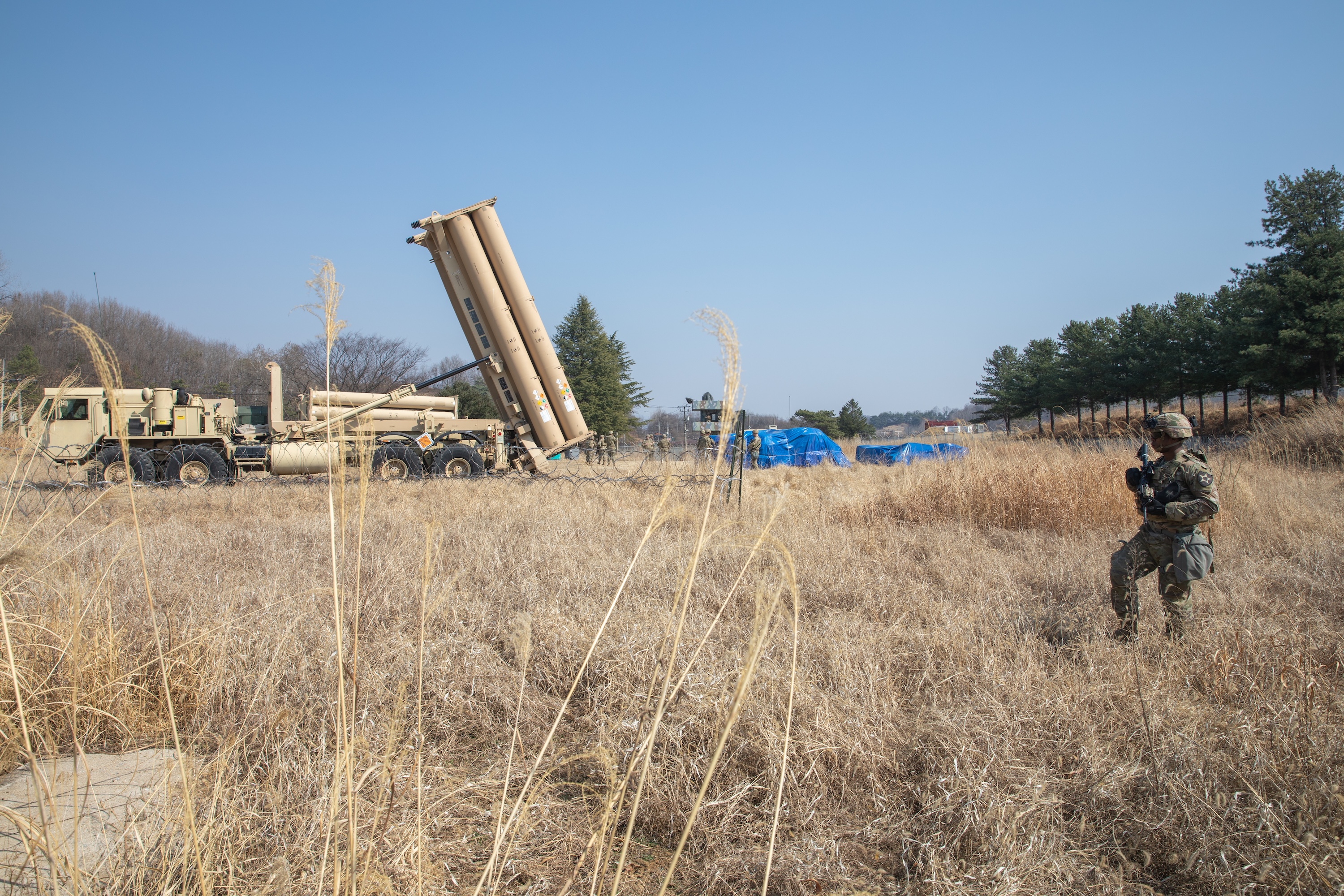
South Korea’s president said this week that some U.S. air defense systems stationed on the Korean peninsula could be deployed overseas as the United States’ war with Iran intensifies, a move that highlights how the ongoing conflict could force Washington to shift scarce missile defense assets across regions.
President Lee Jae Myung said during a cabinet meeting that U.S forces may dispatch some air defense systems abroad, depending on how the Middle East conflict unfolds, despite opposition voiced by Seoul. Lee acknowledged that it cannot bar the U.S. from relocating its own assets, but said that the country’s own defenses were sufficient for deterrence against North Korea.
‘Race of attrition’: US military’s finite interceptor stockpile is being tested
The Washington Post on Monday reported that the U.S. Army was moving parts of the Terminal High Altitude Area Defense, THAAD, system from South Korea to the Middle East and local news in Korea reported the departure of military transport aircraft to and from the region.
The Pentagon did not immediately respond to a request for comment.
THAAD, manufactured by Lockheed Martin, is designed to intercept short-, medium- and intermediate-range ballistic missiles. The system includes interceptor, radar, launcher and fire control system parts. It is not immediately clear which components may be relocating.
Satellite imagery analyzed by CNN last week suggests Iranian strikes may have targeted radar sites tied to U.S. missile defense systems in the Middle East, including radars associated with THAAD batteries.
THAAD saw its first known operational use in 2022, when a THAAD battery in the United Arab Emirates shot down a ballistic missile fired by Iranian-backed Houthi fighters in Yemen.
The system was originally deployed to South Korea in 2017 to defend against missile threats from North Korea, making it a cornerstone of the peninsula’s missile defense network.
The U.S. Army operates only a small number of THAAD batteries across the world, meaning that a deployment is a significant movement that can affect multiple theaters. When the U.S. sent a THAAD battery to Israel in 2024, Army leaders warned the move would strain the service and possibly complicate efforts to modernize missile defense systems.
The growing use of ballistic missiles and drones has made missile defense interceptors like THAAD essential in modern warfare, Wes Rumbaugh, an expert with the Center for Strategic and International Studies, wrote in a brief last December. The significant number of missile interceptors expended during the 12-day conflict between Israel and Iran in June highlighted the “scarcity and importance” of the systems, he argued.
The war with Iran is already testing U.S. missile defense capabilities. Analysts say recent operations have consumed a significant portion of the country’s THAAD inventory, raising concerns about America’s long-term defense capabilities if the timeline of Operation Epic Fury continues to consume weapons that cannot be replenished quickly enough to sustain wartime demand.
The U.S. Army may relocate THAAD air defense systems from South Korea to the Middle East as the conflict with Iran escalates. President Lee Jae Myung stated that while South Korea cannot prevent the U.S. from moving its assets, the country's defenses remain adequate against North Korea. Reports indicate that military transport aircraft have been seen departing for the region, and the U.S. THAAD inventory is being tested amid ongoing operations.
- U.S. may deploy THAAD systems from South Korea to the Middle East due to the Iran conflict.
- President Lee Jae Myung acknowledged the U.S. can relocate its assets despite South Korea's opposition.
- THAAD is designed to intercept various ballistic missiles and is a key part of South Korea's defense against North Korea.
- Recent operations have consumed a significant portion of the U.S. THAAD inventory, raising concerns about long-term defense capabilities.
- The Pentagon has not commented on the reported relocation of THAAD components.