
Iran's Attack on 85 American Sites in Kuwait and Bahrain Reveals the Cost of Gulf Deterrence 2026
 Ahmed Al-Rashid
Iran's Attack on 85 American Sites in Kuwait and Bahrain Reveals the Cost of Gulf Deterrence 2026
On the morning of July 8, 2026, the problem was not that President Donald Trump said from Ankara that the ceasefire with Iran "is over," but that the Revolutionary Guard simultaneously announced it had struck 85 American military sites in Kuwait and Bahrain. This number, even if part of an Iranian psychological war, is enough to explain to the Gulf armies a harsh reality: the American-Iranian war is no longer occurring on the peripheries of the Gulf, but within the security architecture that Kuwait, Bahrain, Qatar, the UAE, and Saudi Arabia rely on.
According to Al Jazeera, the American strikes came after Central Command stated it had targeted more than 80 sites inside Iran in response to attacks on three commercial vessels in the Strait of Hormuz. The mentioned vessels were the M/T Al Rekayyat registered in the Marshall Islands, the M/T Wedyan from Saudi Arabia, and the M/T Cyprus Prosperity from Liberia. The Revolutionary Guard then claimed it retaliated by targeting American sites in Bahrain and Kuwait, while the Gulf Cooperation Council condemned the attacks as violations of the sovereignty of the two countries and a direct threat to citizens and residents.
The Gulf Between the American Response and Local Costs
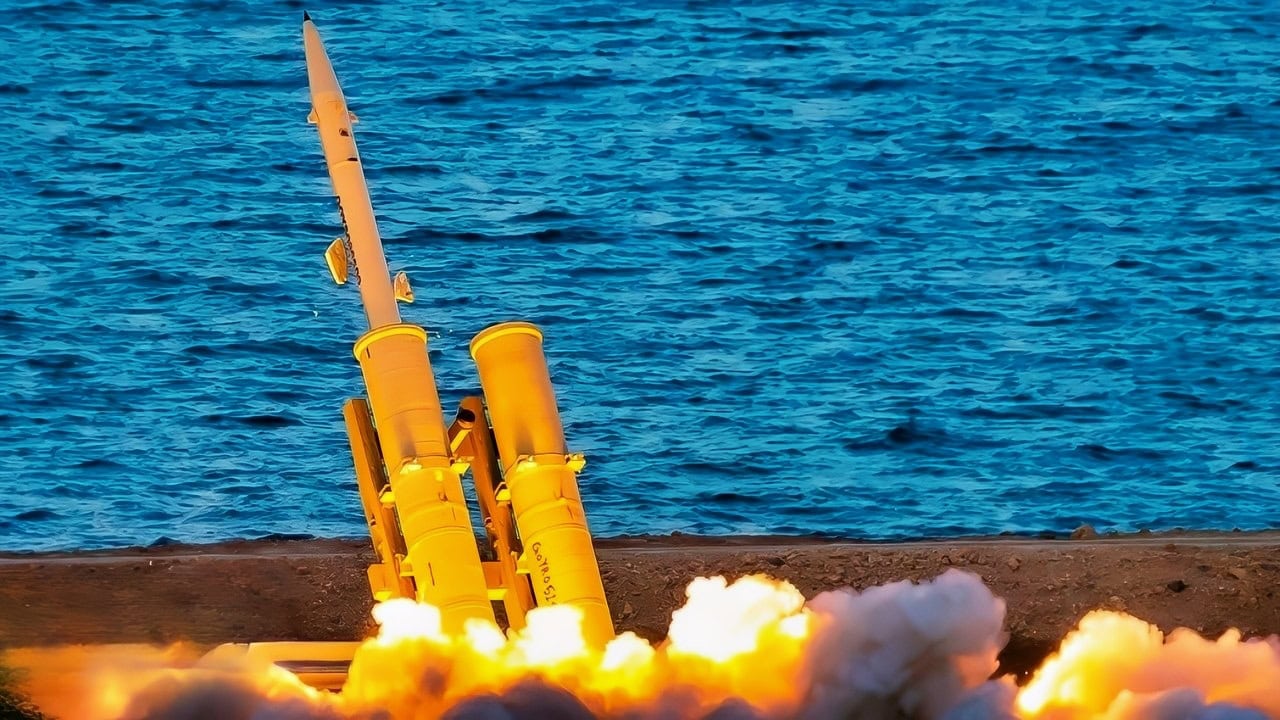
Militarily, what happened is not just an exchange of strikes. The United States stated it hit air defenses, command and control networks, coastal radar sites, anti-ship missile capabilities, and more than 60 small Revolutionary Guard boats near the strait. This is not a list of symbolic targets, but an attempt to reduce Iran's ability to turn Hormuz into a continuous extortion zone. However, the Iranian response chose the politically weaker arena: American bases within Gulf states.
Here lies the paradox known to any officer who has served in the region. The American base provides the Gulf state with a deterrent umbrella, but it makes its territory part of the adversary's target bank. Kuwait and Bahrain do not have the decision to fire American weapons, but they bear the cost of the Iranian backlash. Therefore, the condemnation from the Gulf Cooperation Council seems understandable, but it does not change the balance of power. A political statement does not intercept a missile, nor does it stop a drone, nor does it prevent an oil tanker from changing its course near the Omani coasts.
Hormuz Returns to the Center of Calculations
The strait through which about 20% of global oil trade passes is no longer just a maritime corridor. Iran, according to the published narrative, directed the ships to a "safe" route closer to its coast and considered part of the waters near Oman a restricted area, while Iranian sources stated that some ships ignored the warnings and may have approached mine-clearing areas. In contrast, Washington viewed this as behavior outside the memorandum of understanding that was supposed to guarantee freedom of passage for 60 days during negotiations.
The economic result was immediate: Brent crude jumped 6% to $78 per barrel, and European stocks fell 1.6%. These figures are important for defense as much as they are for energy, because every rise in oil prices increases market pressure on Washington, and every decline in maritime confidence gives Tehran room to negotiate. The weapon here is not just the missile, but the ability to make insurance companies, tankers, and governments act as if war has indeed returned.
Kuwait as a Model of the Defense Gap
Just one month ago, the U.S. State Department approved a potential $1.98 billion deal for Kuwait for Counter-UAS systems produced by Anduril. Defense News reported that the deal came after an Iranian attack on June 3 that damaged Kuwait International Airport, killed one person, and injured more than 60. The package includes command and control with the Lattice system, training, software development, and electronic and combat disruption capabilities against unmanned aerial vehicles.
This deal reveals what I call the triangle of capability: equipment, training, and institution. Purchasing counter-drone systems is a necessary step, but it is not enough if the warning and decision network remains distributed among national command, an American base, a joint operations center, and Western contractors. In real combat, the missile does not ask who owns the system, but who decides within thirty seconds and who has the authority to engage.
The biggest flaw in Gulf defense is not a lack of money. The Gulf has purchased Patriot, THAAD, NASAMS, and advanced radars, and is now buying counter-drone systems. The flaw is that air defense is still built on national islands, while the Iranian threat operates as a single network extending from the Iranian coast to Iraq, Yemen, and the sea. You cannot confront a network with fragments of a network.
Bahrain and Kuwait Are Not Marginal
The choice of Bahrain and Kuwait in the Iranian narrative is not random. Bahrain hosts a sensitive American naval presence in the Fifth Fleet area, and Kuwait represents a northern logistical gateway to Iraq and the Gulf. Striking these two countries, or even threatening to strike them, sends a message to Washington that any attack on Iran will incur costs on the American deployment network, not just on naval vessels in the strait.
But the second message is directed at the Gulf capitals themselves: American protection is not politically or militarily free. When Trump says the memorandum is over and then allows negotiators to continue, it means that war and negotiation will proceed together. In such an environment, no Gulf state can claim to be in favor of de-escalation while hosting the deterrent structure that strikes Iran.
What Gulf Armies Should Read
The practical lesson is not that the Gulf needs to buy more. It first needs to link air and naval defense layers into a single operational picture, and to have written rules of engagement before a crisis, not during it, and to conduct joint training that is not just a media showcase. It also needs passive defense around airports, ports, and power stations, because Iran does not always need to hit the runway directly; sometimes it is enough to disrupt civilian air traffic or ignite panic in the insurance market.
In my view, the most dangerous aspect of the July round is that it redefined the meaning of "Gulf depth." Depth is no longer the distance from the Iranian coast to the capital, but the state's ability to absorb a limited attack without the airport's operations collapsing, ports stopping, or the operations room waiting for external approval. The old military adage says that the weapon you do not own the decision for does not own its outcome. And this is the Gulf's dilemma today.
The new equation is simple and harsh: the more Washington can strike Iran from the Gulf, the more Iran can make the Gulf pay the price for those strikes.
Therefore, the attacks on Kuwait and Bahrain, whether they are complete as described by the Revolutionary Guard or limited as Western narratives may later suggest, reveal the same structural tension: Gulf states want the American umbrella while simultaneously wanting that umbrella not to turn into a magnet for missiles. This is not a contradiction that can be resolved with a single arms deal, but a continuous test between reliance on the ally and building a national capability capable of fighting when the ally leaves the decision room.
On July 8, 2026, the Iranian Revolutionary Guard attacked 85 U.S. military sites in Kuwait and Bahrain, marking a significant escalation in U.S.-Iran tensions. In response, the U.S. Central Command targeted over 80 sites in Iran following attacks on commercial vessels in the Strait of Hormuz. This exchange highlights the vulnerability of Gulf states hosting U.S. military bases and the broader implications for regional security and economic stability.
- Iranian Revolutionary Guard attacked 85 U.S. military sites in Kuwait and Bahrain.
- U.S. Central Command targeted over 80 sites in Iran in response to attacks on commercial vessels.
- The attacks signify a shift in the U.S.-Iran conflict dynamics within the Gulf region.
- Economic impacts included a 6% rise in Brent crude oil prices and a 1.6% drop in European stocks.
- The Gulf states face increased military risks due to their hosting of U.S. bases.