
Iran's Missile Strike Capability: A Battlefield Assessment After Eight Days of War
 Ahmed Al-Rashid
## Overview
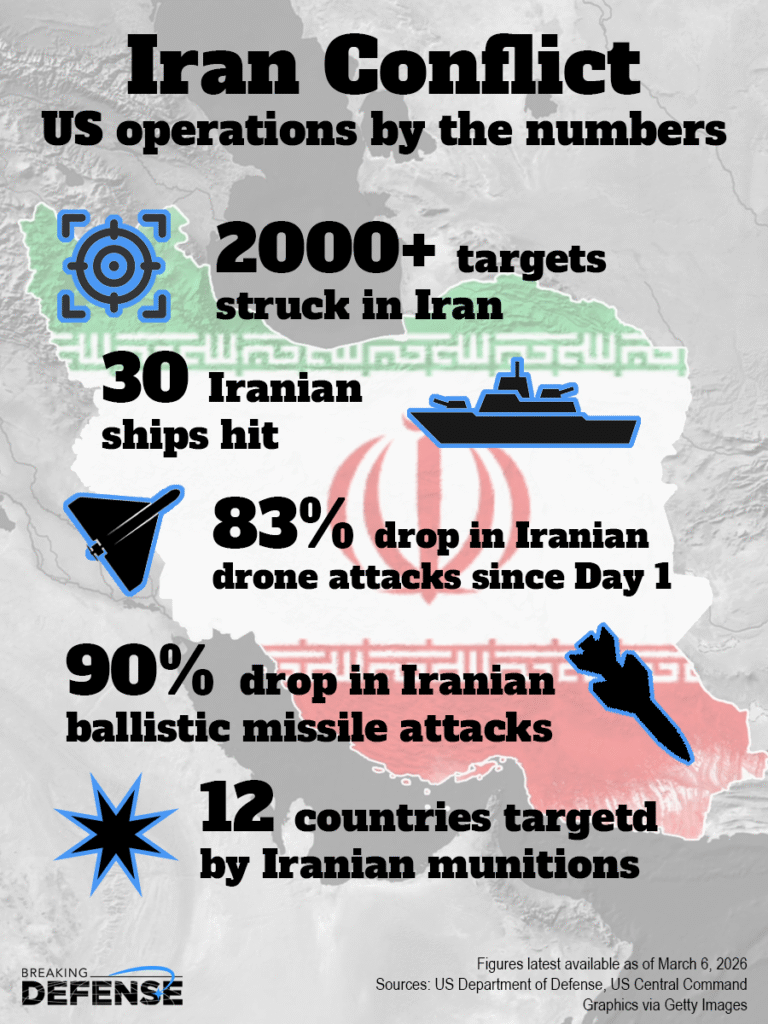
As of March 6, 2026 -- day eight of the US-Israel joint campaign against Iran -- the Islamic Republic has unleashed one of the most intensive missile and drone barrages in modern warfare. Iran has struck targets stretching from Israel's central coast to US military facilities in the Gulf states of Qatar, Bahrain, Kuwait, UAE, Oman, and Iraq. The opening salvo of this conflict has transformed the Middle East into a live testing ground for Iran's missile doctrine -- one built not on precision parity with the West, but on volume, saturation, and strategic endurance.
This assessment draws on data from CENTCOM, the Institute for the Study of War (ISW), IDF reporting, open-source intelligence, and regional media to evaluate Iran's real-time missile capacity, tactical patterns, and remaining threat duration.
---
## Iran's Missile Arsenal: Inventory and Classification
Pre-conflict IDF assessments placed Iran's ballistic missile stockpile at approximately **2,500 missiles** by February 2026, supplemented by an estimated production rate of over **100 missiles per month** (per US Secretary of State Marco Rubio). This inventory spans three operational tiers:
### Short-Range Systems (150-800 km)
The **Fateh-110** and its derivatives -- Zolfaghar and Qiam-1 -- form the backbone of Iran's rapid-strike capability. These solid-fuel, road-mobile systems are designed for fast deployment and concentrated volleys, compressing the window available for pre-launch detection and interception. Older **Shahab-1 and Shahab-2** variants (modified Scud derivatives) remain in inventory but are increasingly relegated to secondary roles due to their liquid-fuel limitations and lower accuracy.
### Medium-Range Systems (1,500-2,000+ km)
This category covers Iran's strategic reach toward Israel and Gulf basing. Key systems include:
- **Shahab-3 / Ghadr-1**: Liquid-fueled, range ~1,300-1,800 km. The original workhorse of Iran's deterrence posture.
- **Emad**: A precision-guided derivative of the Shahab-3 family with terminal maneuvering capability, specifically designed to defeat point defenses.
- **Khorramshahr / Khorramshahr-4 (Kheibar Shekan)**: Warhead mass ~1,500 kg; range ~2,000 km. Used in recent barrages targeting Israel.
- **Sejjil**: A two-stage solid-fuel missile (~2,000 km range) offering significantly faster launch readiness -- a critical survivability advantage under air campaign pressure.
- **Haj Qassem**: A newer GPS/INS-guided system with estimated CEP under 30 meters.
### Cruise Missiles and Drones
Iran has deployed **Soumar** (range ~2,500 km), **Hoveyzeh**, **Paveh**, and **Ya-Ali** cruise missiles alongside massive fleets of **Shahed-136**-type loitering munitions. Since the war began, Iran has launched over **2,000 drones** alongside the 500+ ballistic missiles, according to CENTCOM commander Admiral Brad Cooper (statement: March 3, 2026).
---
## Tactical Analysis: 23+ Strike Waves
### Target Selection Logic
Iran's targeting doctrine across 23+ documented strike waves reveals three overlapping strategic objectives:
1. **US Force Posture Disruption**: Strikes on Al Udeid Air Base (Qatar), Naval Support Activity Bahrain (home of the US Fifth Fleet), Ali Al Salem Air Base (Kuwait), and facilities in UAE and Oman signal a deliberate attempt to complicate US power projection across the theater. Forcing even partial evacuations or operational pauses from these hubs degrades US strike sortie rates against Iran.
2. **Israeli Home Front Pressure**: Ballistic missiles targeting central Israel -- including a March 3 strike near Tel Aviv carrying a **cluster munition warhead** that injured at least 12 civilians -- are designed to consume Arrow and David's Sling interceptors, strain emergency response systems, and exert political pressure on the Israeli government.
3. **Arab State Coercion**: Strikes on Bahrain's port (home to the Fifth Fleet), Kuwait City airport perimeter, and civilian-adjacent infrastructure in the UAE send a clear message to Gulf governments that hosting US forces carries a real and immediate cost.
### Strike Density and Timing
ISW-CTP tracking shows Iran conducted **at least two missile barrages on March 4 alone**, one between 8:00-16:00 ET. The cadence of strikes -- multiple waves per day interspersed with drone sorties -- appears designed to sustain alert fatigue across multiple air defense networks simultaneously. Analysts at the Center for a New American Security (CNAS) describe this as a "salvo competition" -- a war of volumes where the side with deeper magazines controls the tempo.
### Shift Toward Drones
A critical battlefield signal: ISW notes that **Iran's ballistic missile launch rates are declining while drone sortie rates are increasing**. This is consistent with two hypotheses -- either Iran is husbanding remaining precision ballistic missiles for high-value strikes, or US-Israeli degradation of missile launchers and storage facilities is forcing a tactical substitution. Both dynamics likely apply simultaneously.
---
## Air Defense Performance: Israeli and US Systems Under Pressure
### System Architecture
Israel's layered air defense consists of:
- **Iron Dome**: Short-range rockets/mortars (4-70 km). Not designed for ballistic missiles.
- **David's Sling**: Medium-to-long-range threats (40-300 km altitude intercept).
- **Arrow-2 / Arrow-3**: Exo-atmospheric and endo-atmospheric ballistic missile intercept.
US THAAD (Terminal High Altitude Area Defense) and **Standard Missile-3 (SM-3)** batteries deployed across the region provide an additional layer.
### Interception Rate Assessment
Reported data presents a complex picture:
- Arrow/David's Sling combined has intercepted **over 90%** of high-speed ballistic threats in peak performance windows (WION, citing IDF data).
- An Israeli Defense Ministry assessment of the prior June 2025 campaign assessed an overall **86% ballistic missile interception rate** (FDD analysis, July 2025).
- A senior Israeli intelligence official told NBC News that on at least one recent day, interception rates **dropped to 65%** -- a significant degradation that allowed multiple warheads to reach Israeli territory.
- During Operation True Promise III (2025), Iron Dome's ballistic missile intercept rate was only **20-30%**, with the Arrow systems absorbing the primary load.
**Analyst Assessment**: The 65% intercept day is the critical data point. It suggests that large-scale, simultaneous barrages incorporating both cruise missiles, drones, and ballistic missiles -- launched from multiple vectors -- can meaningfully suppress the layered defense architecture. Cluster warhead variants detected on March 3 further complicate intercept kill-chain calculations by distributing submunitions across a wider engagement volume.
### Interceptor Depletion Risk
At least one Gulf ally has begun requesting emergency interceptor resupply from the US (CNN, March 4). The Center for Strategic and International Studies' Missile Defense Project estimates the US consumed **20-50% of available THAAD interceptors** and approximately **20% of SM-3 stocks** during the previous 12-day Iran war in June 2025. Retired USAF Secretary Frank Kendall confirmed these are among the "least abundant" items in US inventory. At current burn rates, interceptor sustainability is a genuine operational constraint within weeks.
---
## Iran's Ammunition Burn Rate and Remaining Capacity
### Current Expenditure
With 500+ ballistic missiles fired in eight days, Iran is burning approximately **60-65 ballistic missiles per day**. Against a pre-war stockpile of ~2,500 missiles and a production rate of ~100/month:
| Category | Estimate |
|---|---|
| Pre-war stockpile | ~2,500 ballistic missiles |
| Fired (Days 1-8) | ~500+ |
| Production rate | ~100/month (~3.3/day) |
| Net daily drawdown | ~57-62 missiles/day |
| Estimated remaining stock | ~1,950-2,000 |
At this burn rate, Iran could exhaust its pre-war ballistic missile stockpile in roughly **30-35 days** without replacements. With ongoing production (~100/month), the effective drawdown is slower -- but US and Israeli strikes specifically targeting **missile production facilities, R&D centers, and launch infrastructure** are compressing this window.
### IDF Strike Effects on Production
The IDF's March 4 strikes on IRGC headquarters compounds in southeastern Tehran included the **IRGC Ground Forces Research and Self-Sufficiency Jihad Organization** -- the body responsible for ballistic missile R&D -- directly targeting Iran's regeneration capacity. Earlier strikes have hit storage facilities and mobile launcher units across Iran, degrading launch tempo even if stockpiles remain substantial.
---
## Threat Assessment: US and Israeli Bases
### Israel
Central Israel remains under sustained threat from Khorramshahr and Emad-class missiles with sufficient range and payload to cause significant civilian and infrastructure damage. The cluster warhead documented on March 3 represents a qualitative escalation -- submunitions scatter across hundreds of meters, complicating point defense and raising civilian casualty probability. **High threat level** for the next 2-3 weeks.
### US Gulf Facilities
Al Udeid, NSA Bahrain, Ali Al Salem, and Al Dhafra face persistent threat from short-to-medium-range Fateh, Zolfaghar, and Qiam-1 systems. These targets are at closer range, reducing flight time and warning windows. The Fifth Fleet's Bahrain homeport has already sustained one documented fire from drone/missile strike (March 1). **Elevated threat level** with interceptor supply concerns growing.
### Regional Shipping and Energy Infrastructure
Iran is targeting Strait of Hormuz shipping as an economic pressure tool. ISW notes the combined force has "severely degraded" the Iranian Navy, but shore-based anti-ship missiles and drone swarms retain disruption capability. **Moderate-to-high threat to commercial shipping** in the Strait and Red Sea adjacent zone.
---
## Conclusion: How Long Can Iran's Missile Threat Last?
Based on available data, my assessment is that Iran can sustain a **strategically significant but gradually degrading missile threat for approximately 3-5 more weeks** at current operational tempo.
Several factors support this conclusion:
1. **Stockpile depth**: ~2,000 remaining ballistic missiles is a meaningful reserve. Even at 60/day burn rate, this provides 30+ days of sustained fire.
2. **Tactical adaptation**: The shift toward drones conserves ballistic inventory while maintaining pressure on air defense networks.
3. **Interceptor attrition**: As allied interceptor stocks thin, penetration rates will rise -- meaning fewer missiles can achieve more effect, extending the strategic utility of the remaining arsenal.
4. **Production resilience**: Despite strikes on R&D infrastructure, dispersed manufacturing means Iran retains some regeneration capacity.
However, countervailing pressures are significant:
- Ongoing Israeli-US strikes on launch infrastructure are directly compressing operational capacity.
- Command-and-control degradation following IRGC HQ strikes on March 4 may slow coordination of complex multi-vector barrages.
- Gulf state interceptor depletion creates near-term windows but also triggers urgent US resupply missions that will restore defensive depth.
**Bottom line**: Iran entered this conflict with the region's largest missile arsenal and a clear doctrine of attrition. Eight days in, that doctrine is being tested -- but not yet broken. The next 10-14 days will be decisive in determining whether Iranian missile strikes remain a sustained strategic instrument or degrade into an operational nuisance.
---
*Analysis by Ahmed Al-Rashid, Middle East Analyst -- hiwars.com | March 6, 2026*
*Sources: CENTCOM (Adm. Brad Cooper statement, March 3), ISW/CTP Evening Reports March 4-5, Al Jazeera, Reuters, FDD, CNAS, CSIS Missile Defense Project, IDF official releases, Israel Alma Research Center.*
Iran launched over 500 ballistic missiles and 2,000 drones against US and Israeli targets from March 1 to March 6, 2026, employing a strategy of saturation. Key locations targeted include Israel, Qatar, Bahrain, Kuwait, UAE, Oman, and Iraq. The conflict has revealed a shift in Iran's tactics, with a decline in missile launches and an increase in drone sorties, while Israeli interception rates have decreased significantly.
- Iran has approximately 2,500 ballistic missiles pre-conflict and has fired over 500 in the first eight days of the conflict.
- Iran's missile strategy relies on volume and saturation rather than precision.
- The conflict has seen Iran targeting US military facilities in the Gulf and Israeli cities.
- Iran has shifted towards increased drone usage as ballistic missile launch rates decline.
- The interception rates of Israeli air defense systems have significantly dropped during the conflict.