

Iraq is at a new crossroads. On October 8 and 12, Iranian drones targeted Kurdish Iranian opposition groups based in northern Iraq. These are just several of more than 1,000 attacks by Iran on Iraq over the last eight months.
At the same time, Iraq has carried out new airstrikes against ISIS cells west of Kirkuk. This illustrates how Iraq now finds itself facing uncertainty as it seeks to navigate a new era where American troops are no longer present in the country.
Iraq In Flux: America Has Left
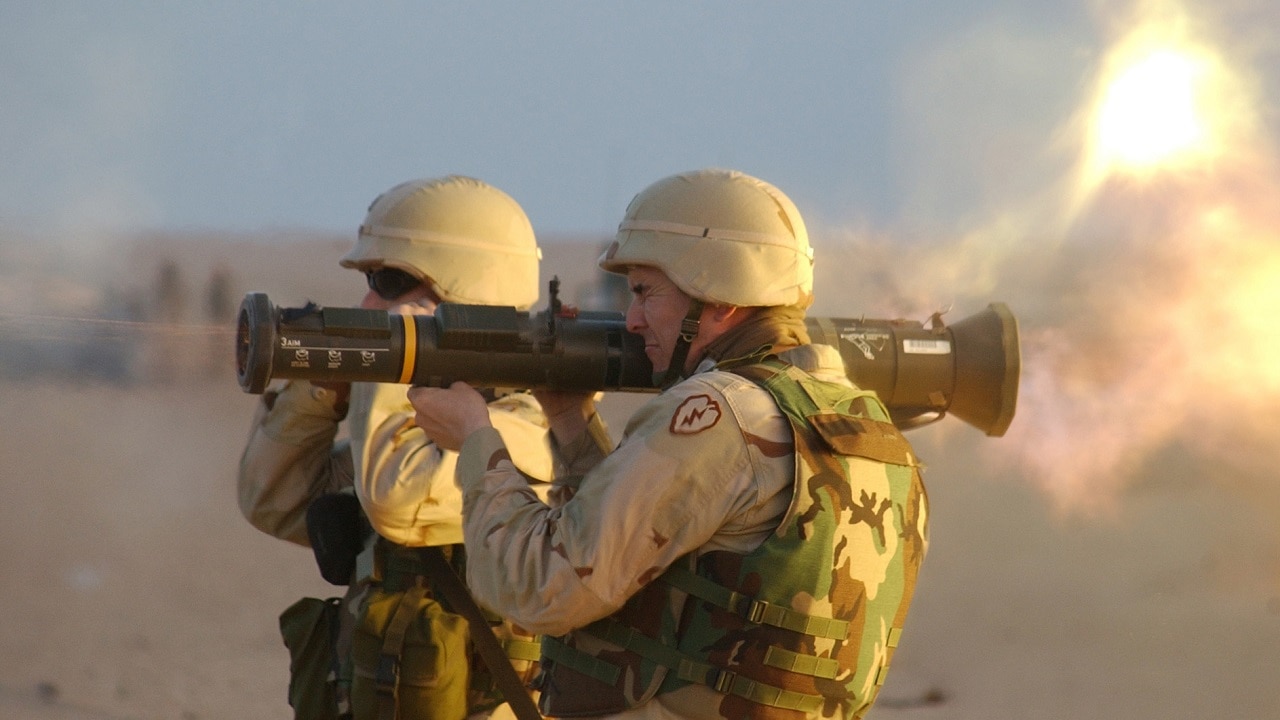
Spc. Thomas Johnson, a paralegal with HHC, 2nd Bde., shoots off an AT-4 round during weapon familiarization at the Udari range in Kuwait Jan. 30.
Soldiers of the 2nd Bde. Combat Team, 25th Infantry Division (Light) are currently preparing for their Operation Iraqi Freedom rotation.
US forces deployed to Iraq as part of the anti-ISIS coalition left Iraq on September 30.
The widely anticipated withdrawal matters for both the US and Iraq.
The US led the coalition that arrived in Iraq in 2014 after an invitation by the Iraqi government to help fight ISIS. At the time, Iraq’s army was collapsing, and it looked like ISIS was heading toward Baghdad. Now Iraq is stable, and ISIS appears to be kept in check. The question therefore is how to get Iraq right this time.
This matters because the US has been fighting in Iraq since the 1991 Gulf War. American forces were deployed to Saudi Arabia in 1990 as part of a coalition to push Saddam Hussein out of Kuwait.
US forces remained for a time in northern Iraq and also enforced no-fly zones in the 1990s. In 2003, America led an invasion to topple Saddam Hussein. What followed was years of insurgency and a US withdrawal in 2011. Now we are seeing the end of a new cycle.
Iraq wants to build a better bilateral partnership with the US after the withdrawal. Iraqi Prime Minister Ali al-Zaidi has received support from the White House over the last months. US President Donald Trump opposed former Iraqi Prime Minister Nouri al-Maliki seeking the office after the November 2025 general election. Zaidi became a compromise choice, and the White House welcomed him in July; he met Trump on the sidelines of the UN General Assembly in September.
Trump praised the withdrawal on September 30. “Today, I am pleased to announce that the last American Forces are leaving Iraq! It has been a long time, with very bad decision-making that got us involved in this quagmire in the first place, but soon, that will be part of history,” he wrote. He also endorsed Zaidi.
America’s New Iraq Strategy? Iraq and Syria Both Matter
The US investment in Baghdad’s new leader forms part of a larger policy. US Ambassador to Turkey Tom Barrack also serves as the US Envoy to Syria and Iraq.
This helps coordinate US policy on these two key countries. Trump has also backed Syria’s president Ahmed al-Shara’a, after a meeting early in Trump’s second term in 2024. ISIS plagued both Iraq and Syria, and the US deployed forces to both of them. Now US forces have left both. It is in US interests for both countries to remain stable and avoid repeating the problems of the last two decades.
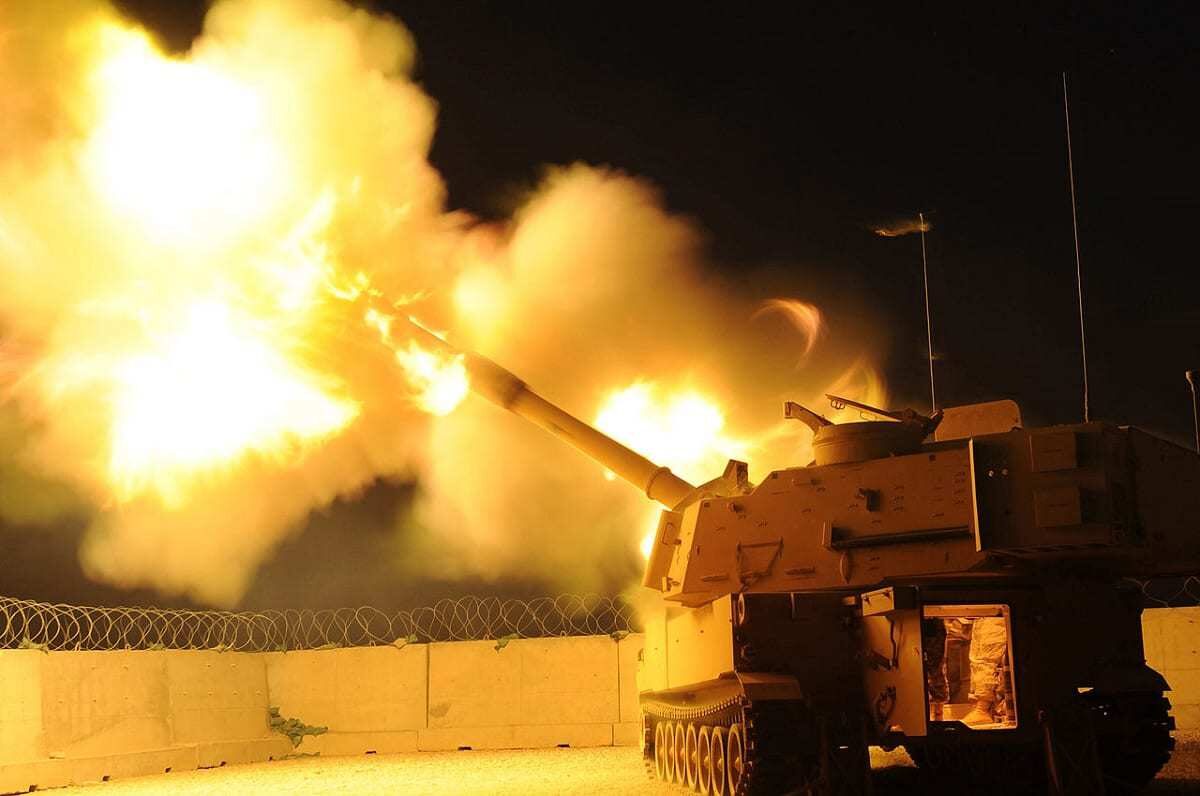
Col. David Mansfield, 407th Air Expeditionary Group commander fires an illumination round from a M-109A6 Paladin Self Propelled Howitzer here June 20 in support of Iraqi Police patrolling Nasiriyah, Iraq. The Soldiers of the 3-319th Airborne Field Artillery Regiment, 1st Brigade Combat Team, 82nd Airborne Division, regularly support Iraqi Police with illumination to help them secure the city. Colonel Mansfield was given a tour, a system capability brief and the opportunity to fire, under close Soldier supervision, so that he can better inform Airmen about the “outgoing fire” missions and thunderous explosions heard almost nightly here.
Iraq has different challenges than Syria. Iraq is on the border of Iran, and Iranian-backed militias are very powerful in Iraq. The militias are part of a government paramilitary force called the Popular Mobilization Forces.
Zaidi has vowed to bring the militias under state control by June 2027. Reports in Iraq suggest that Zaidi said that five militias have agreed to hand over their weapons. However, several powerful militias have not agreed. Among those that have refused are Kataib Hezbollah, a militia that is close to Iran’s Islamic Revolutionary Guard Corps. Kataib Hezbollah was behind a drone attack that killed three American service members in January 2024. It has also attacked Saudi Arabia.
Reining in groups such as Kataib Hezbollah is key to preventing Iraq from falling under more Iranian influence. The US and Israeli conflict with Iran that began in February also led to Iran carrying out more than 1,000 drone and missile attacks in Iraq. Most of the attacks targeted the Kurdistan Region. There were also 600 attacks on US facilities throughout Iraq.
Iraq as the Frontline
This shows how Iran sought to extend the current war into Iraq and turn Iraq into a frontline.
This reflects Iran’s policy in the Strait of Hormuz, Yemen, and other areas. It has sought to inflame the region and extend the conflict’s front line.
Preventing Iran from doing more damage in Iraq is important. In many cases, Iran targeted US diplomatic facilities. US forces in Iraq were not an effective deterrent. However, US support for the Kurdistan Region and the ability to supply air defenses was very helpful in protecting against Iran’s attacks.
Getting Iraq right this time will mean continuing support for the Kurdistan Region, which is an autonomous region, and also making sure Baghdad feels empowered to rein in the militias. Baghdad has shown that it is willing to act against anti-American displays. For instance, after American flags were trampled by a militia on October 1, Iraq condemned the incident and vowed to arrest the perpetrators.
In addition to reining in the militias and continuing US support for Baghdad and the Kurdistan Region, there are other policies that can help Iraq. Baghdad is seeking to export more oil via Syria and also repair a pipeline from Kirkuk to Syria.
In addition, Iraq is importing gasoline from Syria. This new economic corridor already has some American companies investing on both sides of the border. Continuing this trend is important.
The desert area of Iraq and Syria near Tanf and Albukamal, the border crossings in Western Iraq, were areas where ISIS was present over the last decade. US forces helped reverse this and defeat ISIS.
However, without US forces in Tanf, where they were deployed from 2015-2025, a power vacuum could emerge. Energy trade routes will mean more investment and more security.
A third important front in Iraq is the border that runs from Jordan to Saudi Arabia and Kuwait. All of these countries want Iraq to be stable. They also have bad memories. Iraq invaded Kuwait in 1990, and Saudi-Iraq relations have only recently improved. The militia attacks on Saudi Arabia caused Riyadh to retaliate under U.S. Central Command. Saudi Arabia will want to see Iraqi stability, but not want to see Iran using Iraq to attack the Kingdom. This is an important front to monitor.
One last area in Iraq that requires a spotlight is the Sinjar region. ISIS carried out a genocide against the Yazidi minority in 2014. ISIS was pushed out of Sinjar in 2015 and 2016. However, the area has remained unstable over the last decade.
Turkey carried out airstrikes in the area, targeting an affiliate of the Kurdistan Workers’ Party (PKK).
Now, with a PKK peace deal, it appears that Turkey may withdraw forces from a base near Bashiqa in Iraq, and this could reduce tensions in Sinjar. Enabling Yazidis to return and investing in Sinjar will help stabilize the border with Syria near Sinjar.
How Iraq Can Move Forward
Taken together, these challenges make it clear Iraq still has a long way to go. Getting to the militia disarmament goal in June 2027 will be one of the first major hurdles. A lot can happen in the next 9 months. Staying focused on getting Iraq right this time, via diplomacy, investment, and other means, will be important.
About the Author: Seth J. Frantzman
Seth J. Frantzman is the author of The October 7 War: Israel’s Battle for Security in Gaza (2024) and an adjunct fellow at The Foundation for Defense of Democracies. He is a Senior Middle East Analyst for The Jerusalem Post. He was born in Maine and holds a PhD from The Hebrew University of Jerusalem. He is also the author of Drone Wars: Pioneers, Killing Machines, Artificial Intelligence, and the Battle for the Future. Seth is now a 19FortyFive Contributing Editor. Follow him on X @Sfrantzman.