
IRIS-T and SAMP/T 2026 Europe's Air Defense Grows Slower than the Threat
 Dr. Klaus Weber
IRIS-T and SAMP/T 2026 Europe's Air Defense Grows Slower than the Threat
The 36th meeting of the Ukraine Defense Contact Group has once again put Europe's air defense to the test. The United Kingdom announced a package of £100 million for Ukrainian air defense in the coming winter, France reaffirmed the preparation of a SAMP/T battery along with missiles, and several states announced additional contributions to Patriot, drones, and ammunition. This sounds like a European response. In reality, it remains primarily a European financing of capabilities, the crucial parts of which are produced outside of Europe.
A Winter Package is Not Yet an Air Defense Architecture
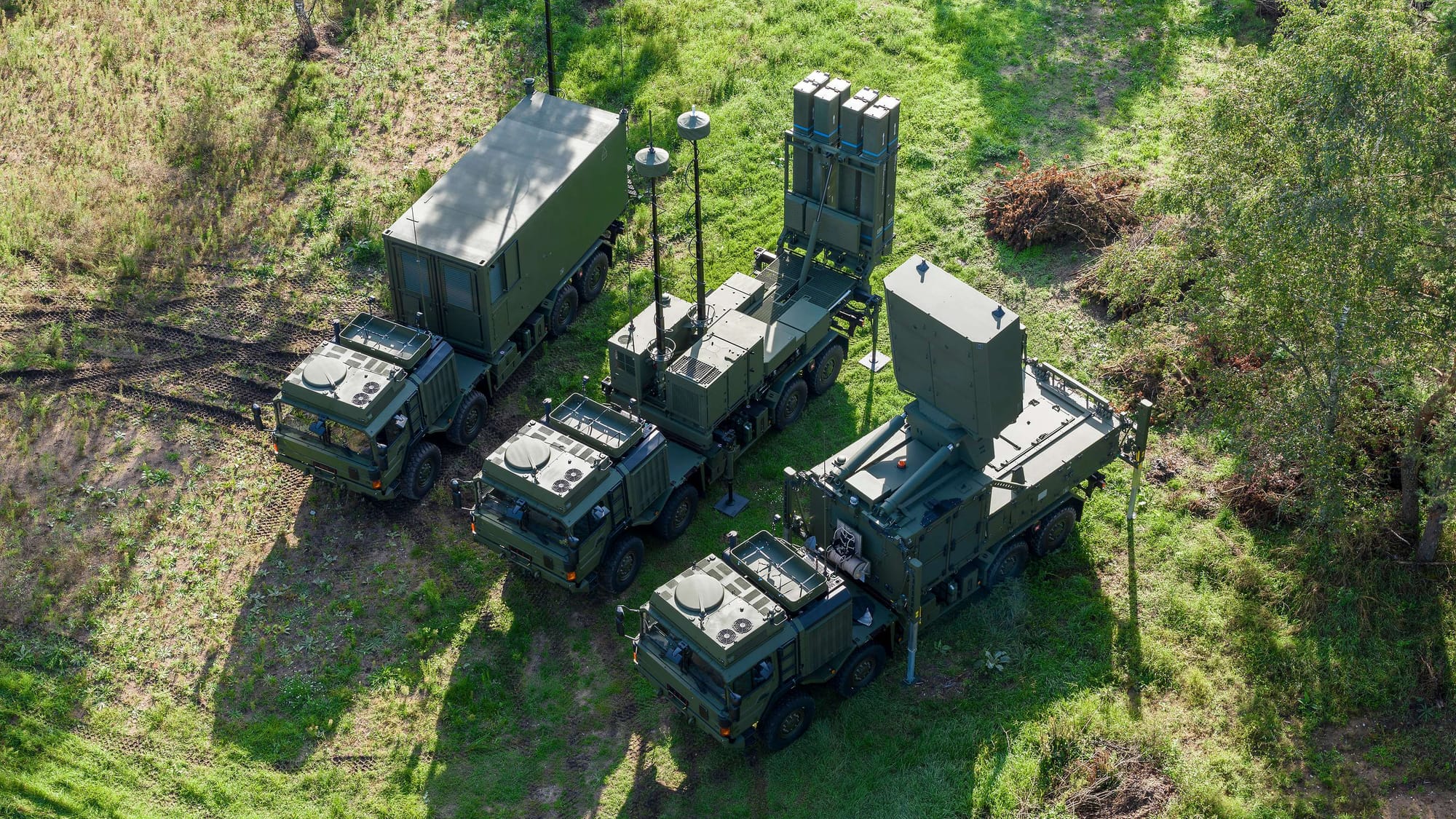
The British £100 million is politically relevant, but militarily only if it results in readily available interceptors, spare parts, operators, and protected command assets. A battery is not an isolated vehicle, but a system network of radar, command post, launcher, data link, logistics, and sufficient ammunition. With an expected Russian winter campaign against Ukrainian energy and transport infrastructure, it is not the number of press conferences that counts, but the number of operational shifts.
The difference between commitment and delivery is now well known in the European security discourse, but it continues to be politically suppressed. Patriot interceptors have long production times; SAMP/T uses the Aster-30 family, whose European production is strategically valuable but also cannot be accelerated arbitrarily. IRIS-T SLM covers a different range and target class. Only the interplay of these systems creates a multi-layered defense. Counting only individual batteries confuses platforms with sustainability.
France's SAMP/T is Europe's Most Important Signal
The French announcement is therefore more significant than its immediate scope. SAMP/T is a European system with the Aster-30 missile and thus an alternative to the structural dependence on Patriot. Its range and sensor capabilities make it relevant for ballistic and aerodynamic targets, but the crucial question is: How many operational systems can Europe simultaneously provide for its own NATO air defense and for Ukraine?
France possesses a European alternative with SAMP/T, while Germany has an important medium-range capability with IRIS-T SLM. Both programs demonstrate that European industrial policy can provide military benefits when focused on concrete quantities, shared spare parts pools, and standardized command networks. They also show the limits of national individual decisions. A French battery and a German system do not yet create a European air defense network as long as training, maintenance, and rules of engagement are not planned jointly.
The United States Remains the Invisible Supplier
The statements of U.S. Under Secretary of Defense Elbridge Colby at the Ukraine Defense Contact underscore the political shift within the alliance: Europe is expected to take on more responsibility and more costs. This is understandable given the American priority on China. However, it is not strategic autonomy if European states procure U.S. interceptors with their own budgetary resources, wait on American production lines, and then take political responsibility for their scarcity.
This is precisely where the institutional weakness of PESCO, the European Defense Fund, and the new EU funding instruments lies. They can mobilize money, but they cannot create an integrated air defense system out of nothing. Ukraine needs protection now; European factories need years to build capacities for missile engines, seekers, and warheads. A loan can finance an order, but it does not replace production planning or prioritization. Debt buys supply contracts; it does not automatically build interceptors.
The Real Problem is the Distribution of Risk
- Operational Risk: Ukraine continues to bear the immediate burden of Russian missile and drone attacks.
- Financial Risk: European states are paying for new packages, the delivery dates of which often lie outside their control.
- Industrial Risk: Europe must build capacities without knowing whether national procurement plans are permanently compatible.
- Strategic Risk: NATO talks about European responsibility but remains dependent on the United States for sensors, satellite reconnaissance, and parts of missile production.
The ninth wave of support following Ramstein is thus neither insignificant nor a turning point. It improves Ukraine's starting position before winter and proves that European governments can act when political pressure is high enough. However, it does not yet demonstrate that Europe can organize its own air defense as a joint capability.
What Berlin and Brussels Must Decide Now
First, Europe needs a binding priority list for air defense missiles that is not renegotiated with every national export decision. Second, IRIS-T, SAMP/T, Patriot, and short-range systems must be connected through common data and command standards. Third, every funding commitment must be accompanied by a verifiable delivery date, a quantity of ammunition, and a maintenance plan. Otherwise, European policy will remain stuck in announcement economics.
Europe is now taking on more responsibility. The open question is whether it will also gain more control over the necessary production chains.
The lesson from Ramstein 36 is therefore uncomfortable: Europe can stabilize Ukraine in the short term with American and European systems. However, a resilient European air defense will only emerge when Berlin, Paris, and Brussels are willing to force national stocks, industrial interests, and procurement rules into a common system. More money is necessary for this. It is just not nearly sufficient yet.
Sources: U.S. Department of War, Remarks by Under Secretary of War for Policy Elbridge Colby at the Ukraine Defense Contact, September 10, 2026; Ukrainian Ministry of Defense, Contributions after the 36th Ramstein Meeting, September 8, 2026; Élysée Palace, Information on SAMP/T and Patriot, September 9, 2026; Ukrinform, Report on Ramstein 36, September 10, 2026.
European nations are enhancing air defense capabilities for Ukraine and NATO, with the UK pledging £100 million and France preparing a SAMP/T battery. The report emphasizes the need for a cohesive air defense strategy amid ongoing Russian threats. U.S. officials stress that Europe must take more responsibility for its defense, highlighting the challenges of integrating various air defense systems.
- UK pledged £100 million for Ukrainian air defense this winter.
- France is preparing a SAMP/T battery with missiles.
- European nations are increasing contributions to air defense systems.
- The report highlights the need for a cohesive European air defense strategy.
- The U.S. is pushing Europe to take more responsibility for its defense.