
Israel buys 12 AH-64E Apache helicopters in 2026 to compensate for ground war gap
 Ahmed Al-Rashid
Israel Purchases 12 AH-64E Apache Helicopters in 2026 to Bridge Ground War Gap
On October 13, 2026, Israel and the U.S. Department of Defense signed an agreement to purchase 12 AH-64E Apache attack helicopters, after the deal nearly fell through due to internal financial disputes and bureaucratic delays. This news is not just about adding a small squadron to the Israeli Air Force; it reveals how the prolonged war has turned into a harsh test of the relationship between budgeting, readiness, and reliance on the United States.
A Small Deal with a Big Political Decision
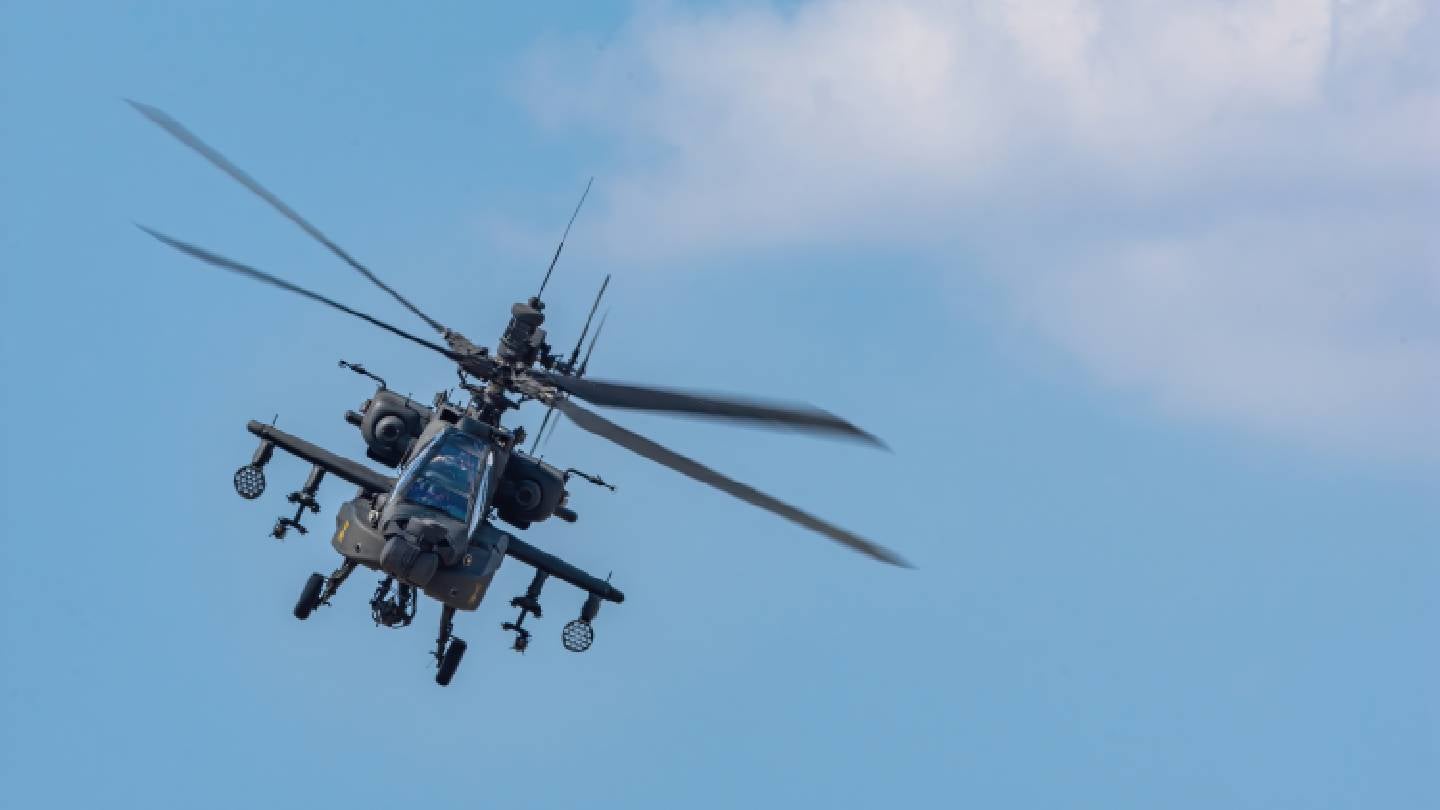
According to the Israeli Ministry of Defense announcement and details from Defense News, the helicopters are of the Echo variant, with deliveries expected to begin in the early next decade. Washington had extended the offer deadline several times, but the original deadline expired on October 7 without a final signature. At that point, the risk became practical: the production slot could be transferred to another customer, leading to longer waits and higher costs.
Therefore, an urgent phone vote was conducted in the Israeli government to approve the funding source, at the expense of a long-term national program unrelated to defense. This point is more significant than the number of helicopters themselves. When a government at war has to cut funding from a civilian project to avoid losing an American production slot, it indicates that defense planning is no longer separate from managing daily crises.
What Does the AH-64E Actually Add?
The Apache is not just an armed transport platform. It is a twin-engine, two-seat attack helicopter equipped with a targeting and weapon system capable of carrying up to 16 Hellfire missiles and 76 2.75-inch rockets, along with a 30mm M230 cannon with a stock of up to 1,200 rounds. The modern variant also includes network connectivity via Link 16, the ability to manage drones within a manned-unmanned teaming concept, and an open architecture that allows for the integration of software updates and new hardware.
Practically, these capabilities suit the combat environment where ground forces need precise fire over complex areas and a platform that can operate near the front line while maintaining a shared situational awareness of the battlefield. However, 12 helicopters do not create independent superiority. Their value depends on the availability of trained crews, spare parts, maintenance support, airport protection, and the existence of an intelligence network capable of providing reliable targets.
The Israeli Capability Triangle Under War Pressure
Any military personnel who have served in the region know that owning the platform is the easiest side of the capability triangle. The other two sides are training and infrastructure. Israel has extensive operational experience with attack helicopters, but prolonged warfare drains flight hours, pilots, and technicians before it wears down the metal itself. With deliveries expected to begin in the early next decade, the new Apache will fill a future gap more than it addresses the immediate need.
Here lies the contradiction. The military wants to buy quickly because operations are consuming stock and readiness, while the Ministry of Finance needs to control the deficit and reassess priorities. The United States provides assistance, but ties it to procurement processes and production timelines that do not wait for Israeli disputes. Reliance on Washington gives Israel access to the best equipment, but it limits the independence of defense decision-making when production lines, funding, and upgrades are outside the country.
A Message to Iran and Israel's Allies
Regionally, the deal is more a message of continuity than a message of escalation. Israel indicates that it is planning for the next war even as it pays the price for the current one. Iran, Hezbollah, and Hamas may view this type of investment as evidence that Israel does not intend to revert to a model of distant air power alone, but wants to maintain an organic capability to support ground units.
However, adversaries also know the weaknesses. The attack helicopter is vulnerable to portable air defenses, guided missiles, and threats to its bases. Therefore, the AH-64E will not be a magic solution in an environment filled with drones and loitering munitions. Its success requires real-time intelligence, electronic countermeasures, air protection, and coordination with ground forces. Purchasing the missile does not automatically buy freedom of flight.
The Broader Implications for the Region
For Gulf states, the deal offers a clear lesson in procurement management. Israel did not acquire the helicopters simply because it has the money, but because it linked the purchase decision to a chain of command, usage, and upgrades. Yet the deal nearly failed due to funding. This illustrates that even the most experienced armies cannot separate equipment from institutions.
In my view, the political value of the deal is greater than its numerical impact. It proves that American aid remains the backbone of Israeli capability, while simultaneously revealing that this backbone imposes its own rhythm on national decision-making. Israel desires military independence, but it needs an American production slot, American funding, and American upgrades. Between the desire for sovereignty and the need for a protective network, the new helicopter remains a symbol of a dilemma that cannot be resolved by purchasing 12 additional aircraft.
Sources
- Israeli Ministry of Defense, announcement of the purchase agreement for 12 Apache helicopters on October 13, 2026.
- Defense News, details of the deal, deadline, and weapon capabilities.
- Boeing AH-64 Apache, company information about the platform.
Israel signed an agreement on October 13, 2026, to purchase 12 AH-64E Apache helicopters from the U.S. to address gaps in ground warfare capabilities. The deal faced potential cancellation due to financial disputes but was finalized after urgent government voting on funding sources. This acquisition highlights Israel's ongoing military reliance on U.S. support and its strategic planning for future conflicts.
- Israel signed a deal to purchase 12 AH-64E Apache helicopters on October 13, 2026.
- The deal was nearly canceled due to financial disputes and bureaucratic delays.
- The helicopters are intended to address gaps in ground warfare capabilities.
- The delivery of the helicopters is expected to begin in the early next decade.
- The acquisition reflects Israel's reliance on U.S. military support.