
Israel experiences a "difficult night" as the US and Iran exchange harsh words.
Xinhua News Agency, Beijing, March 22 - The Islamic Revolutionary Guard Corps of Iran issued a statement on the 22nd, announcing that in the 73rd wave of the "Real Commitment-4" operation, it used various types of missiles and drones to strike multiple cities in southern Israel and some U.S. military bases in the Middle East. Israeli Prime Minister Netanyahu said the night of the 21st was "very difficult."
On the night of the 21st, the southern Israeli cities of Dimona and Arad were hit by missile attacks, both located near Israel's Negev Nuclear Research Center. According to the Associated Press, the center is located about 20 kilometers east of Dimona and about 35 kilometers south of Arad. Local emergency organizations reported that over a hundred people were injured and sent to hospitals.
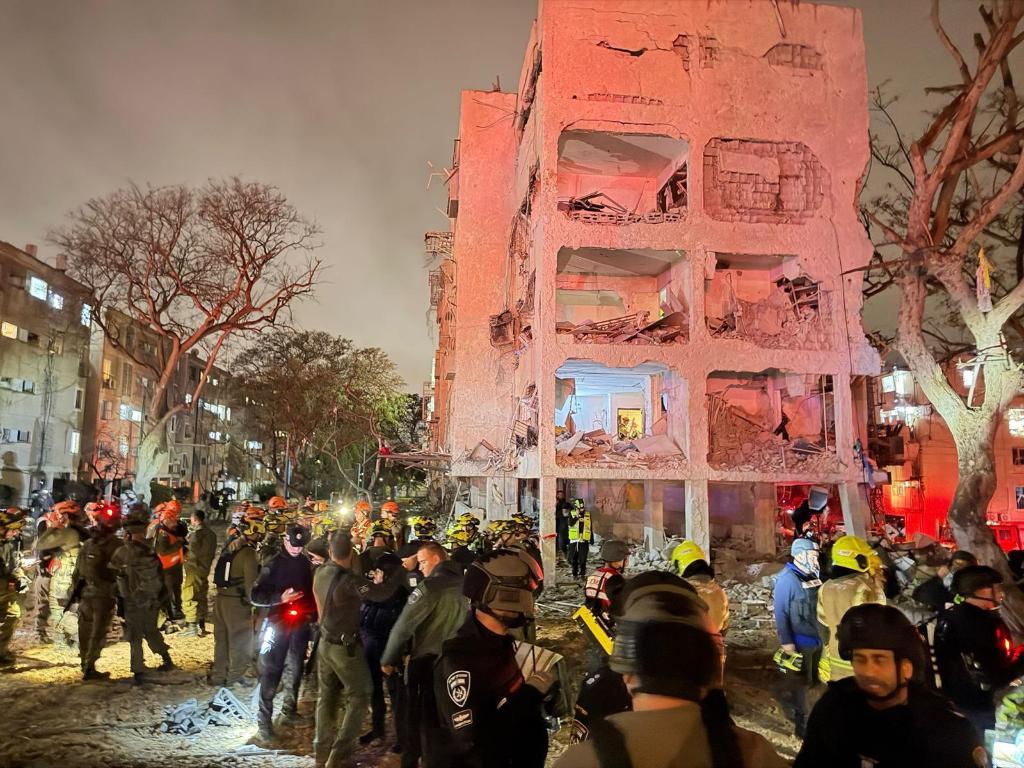
On the night of March 21, emergency responders worked at a missile strike site in the southern Israeli city of Arad (mobile phone photo). Xinhua News Agency provided.
The Israeli military admitted that it failed to successfully intercept the missiles fired by Iran towards Dimona and Arad and will conduct an investigation into this. Israeli Prime Minister Netanyahu stated, "This was a very difficult night."
According to the Associated Press, this is the first time since the U.S.-Israel military strike against Iran on February 28 that Iranian missiles have breached the air defense systems around the Negev Nuclear Research Center. It is widely believed that Israel is the only country in the Middle East with nuclear weapons, and Israel has always maintained a policy of "neither confirming nor denying" this.
Iranian state television reported, citing domestic experts, that the attack was a response to an earlier attack by Israel on Iran's Natanz nuclear facility.
Regarding the attack on the Natanz nuclear facility, the Israel Defense Forces stated that they were "unaware." Israeli public broadcaster reported, citing informed sources, that it was the U.S. military that launched the attack. The U.S. has not yet commented.
The International Atomic Energy Agency confirmed on the 21st that it had received reports from both Israel and Iran regarding the aforementioned attack, and there are no signs of damage at the Negev Nuclear Research Center, with no abnormal radiation levels detected at either the site or the Natanz nuclear facility. IAEA Director General Grossi urged all parties to "exercise maximum military restraint, especially near nuclear facilities."
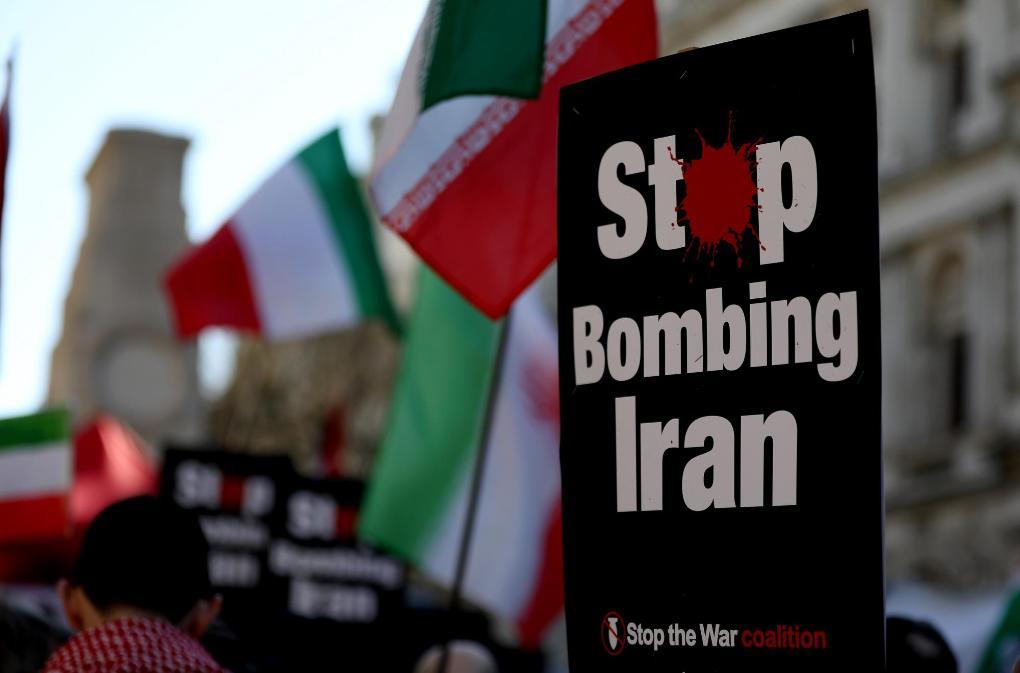
On March 21, people participated in a rally in London, UK, protesting against the U.S. and Israel's military strikes on Iran. Photo by Xinhua News Agency reporter Li Ying.
During the first week of U.S.-Israeli military strikes against Iran, and during the conflict between Israel and Iran last June, known as the "12-Day War," the Natanz nuclear facility was also attacked.
Russian Foreign Ministry spokesperson Zakharova stated that such attacks pose a "real risk" and could lead to a "serious disaster affecting the entire Middle East."
A spokesperson for the World Health Organization recently stated that attacks on nuclear facilities and oil fields have raised concerns about the risks of radioactive nuclear contamination and environmental pollution, and the organization is preparing to respond to potential situations.
Meanwhile, the U.S. President issued another stern warning to Iran. On the 21st, Trump stated on social media, "If Iran does not completely open the Strait of Hormuz without threats within 48 hours from this moment, the U.S. will strike and destroy all types of Iranian power plants, starting with the largest!"
According to Reuters, this statement implies that the U.S. is openly expanding the scope of its strikes to include infrastructure that affects the daily lives of the Iranian people.
On the 22nd, Iran's Tasnim News Agency quoted a spokesperson for the Iranian armed forces as saying that if Iran's fuel and energy infrastructure is violated by enemies, all energy, information technology, and freshwater facilities belonging to the U.S. and Israel in the Middle East will become targets for strikes.
As a result of the conflict, shipping in the Strait of Hormuz has been severely disrupted, international oil prices continue to rise, and various spillover effects are gradually expanding, increasing the pressure Trump faces domestically. (Chen Lixi)
On March 21, 2023, Iran's Islamic Revolutionary Guard Corps launched missile and drone strikes against the Israeli cities of Dimona and Arad, injuring over 100 people. Israeli Prime Minister Netanyahu described the night as very difficult, acknowledging the failure to intercept the missiles. This incident marks a significant escalation, as it is the first successful Iranian strike against the Negev nuclear research center's defenses since February 28.
- Iran's Islamic Revolutionary Guard Corps conducted missile and drone strikes on March 21, 2023.
- Israeli cities Dimona and Arad were targeted, resulting in over 100 injuries.
- Israeli Prime Minister Netanyahu described the night as very difficult.
- This marks the first successful Iranian missile strike against the Negev nuclear research center's defenses since February 28.
- Iran claims the strikes were a response to an earlier Israeli attack on its Natanz nuclear facility.