
Israel Receives First American-Made Tamir Missile in 2026 and Transforms Iron Dome into a Joint Production Network
 Ahmed Al-Rashid
Israel Receives First American-Made Tamir Missile in 2026 and Transforms Iron Dome into a Joint Production Network
On October 9, 2026, the Raytheon-Rafael facility in Camden, Arkansas announced the delivery of the first fully American-made Tamir interceptor missile to Israel. At first glance, the news seems like an industrial detail, but in reality, it changes the production location of the munitions that Israel relies on in the short-range layer of its air defense. After years of supplying American components to the Israeli production line, the United States now possesses the capability to manufacture the entire missile outside of Israel for the first time, at a time when interception stockpiles are under continuous pressure from multiple fronts.
From a military perspective, the significance of this step does not lie in the fact that Tamir is a new weapon. The missile was developed by Rafael in collaboration with Raytheon, and it uses radar and data exchange with the command center and an explosive warhead to intercept short-range missiles, projectiles, and drones. According to published data, it operates within an approximate range of 4 to 70 kilometers. The real value is in transferring part of the industrial capability from the formula of "American components within an Israeli system" to a formula of complete American production that can be integrated into the stockpile of the two allies.
The Camden Line is Not Just an Additional Factory
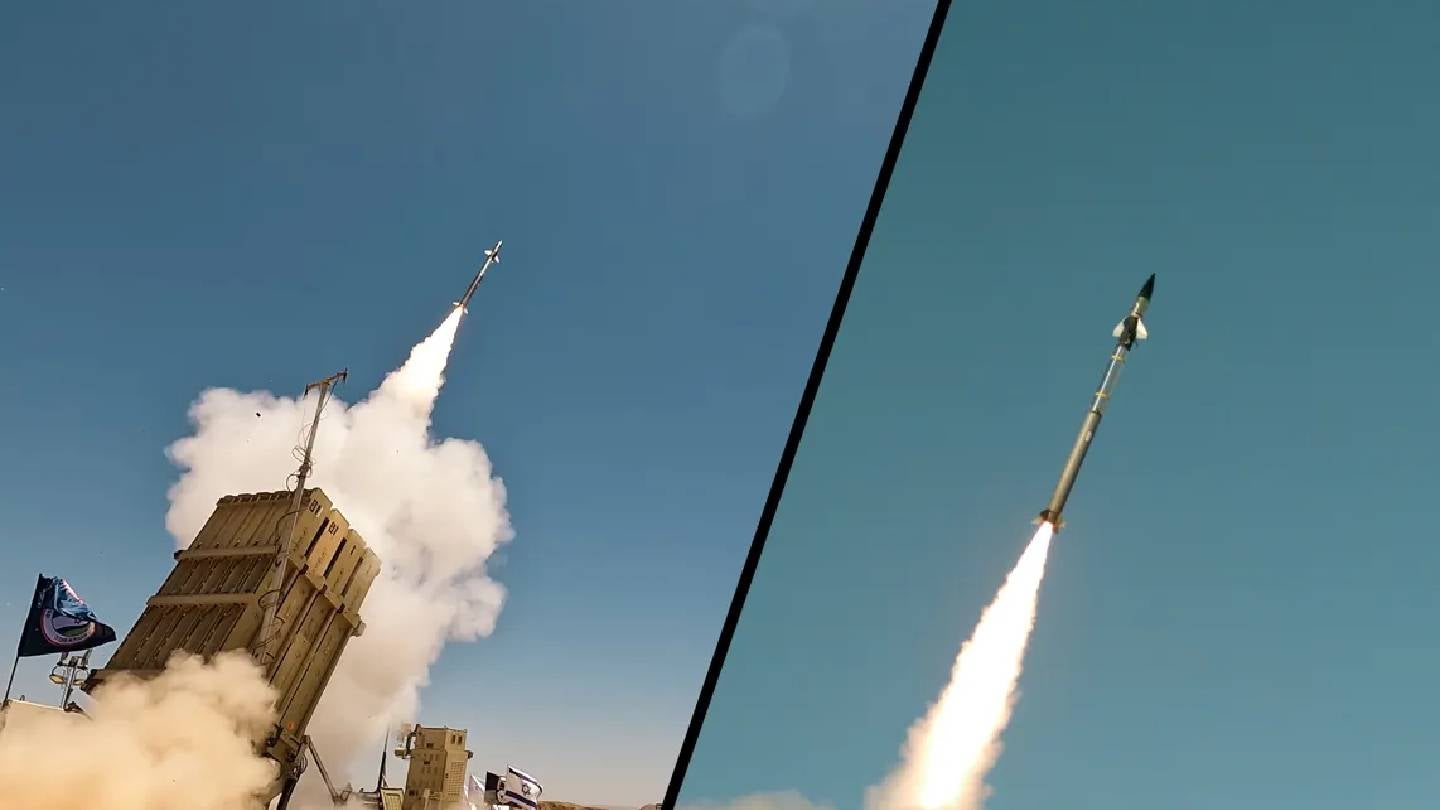
The facility in Arkansas is designed to be a reliable second source for Iron Dome missiles and to produce SkyHunter, the American version of Tamir intended for the U.S. Marine Corps' medium-range interception capability. This connection between Israel's needs and an American program is not an administrative detail; it creates a joint production economy. The more SkyHunter is produced for U.S. forces, the more experience the workforce and supply chains can be utilized to accelerate Israeli Tamir production, and vice versa.
This is the point that much of the discourse around air defense overlooks. A battery, radar, and successful interception in one test are not enough. Capability consists of three dimensions that I know well from military service in the region: equipment, training, and institution. Israel is advanced in all three dimensions, but a prolonged war consumes missiles much faster than it consumes radar. Therefore, an additional production line may be more impactful than purchasing a new battery that cannot be supplied with munitions when necessary.
What This Means for Israel
For Israel, American production provides greater flexibility in managing stockpiles and reduces the risk of a single line being halted due to an attack, malfunction, or shortage of raw materials. It also partially alleviates the competition between Israeli and American needs when the pace of interceptions rises simultaneously. However, this flexibility should not be mistaken for self-sufficiency. The new factory does not eliminate the system's dependence on American funding, software, and command networks, or on the political approvals that determine where the missiles go first.
Moreover, the Iron Dome is not a magic shield. Its primary mission is to intercept short-range threats that can be tracked and the cost of protecting civilian points from them. Long-range ballistic missiles and drones flying at different altitudes and trajectories require additional layers such as David's Sling and Arrow, as well as jamming and early warning capabilities. Improving Tamir production addresses the sustainability issue in one layer, but it does not close the gap between the intensity of the attack and the cost of interception.
The American Message in the Middle East
The decision also carries a political message to the region. Washington is not content with merely selling Israel a ready-made system; it is helping it build a joint capability within the American industry. This solidifies the defense relationship even when government positions change or aid is delayed. For Gulf countries, the lesson is not to buy Iron Dome immediately, but to ask who owns the production lines, who guarantees resupply, and who connects the radars and command centers in the event of a prolonged war.
Arab countries have spent billions on interceptor missiles, but they have often treated munitions as an add-on in the system contract. In reality, stockpiles, spare parts, crew training, and fire management determine whether the system will operate in the third week of war as it did in the first hour. There is little value in an excellent radar if the state does not have an alternative production or purchasing plan when multiple fronts are racing for the same missiles.
Industrial Independence or More Complex Dependence
Israel has presented its cooperation with Raytheon as a strengthening of both countries' capabilities, which is true from an industrial perspective. However, cooperation does not mean complete independence. Israel gains a second source, and the United States obtains a mature missile and an industrial program that serves the Marine Corps, while technology, funding, and the decision chain remain distributed between the two countries. It is a more flexible dependence, not absolute independence.
The air shield is not measured by the number of missiles the battery fires, but by the number of missiles the state can reproduce when the war drags on.
In my view, the first American-made Tamir is more important than its media image, but it is not a magical shift in the balance of power. It is an investment in the ability to sustain, which is the quality that determines modern wars after the initial stockpile runs out. Israel reduces the risk of dependence on a single factory, and the United States unifies part of an industrial base that serves it and its ally. However, the structural contradiction remains: the more the system becomes joint and scalable, the more Israel also becomes integrated into an American industrial and political decision that it does not have full control over.
Sources
On October 9, 2026, Raytheon-Rafael delivered the first Tamir missile manufactured in the USA to Israel. This marks a significant shift in the production of the Tamir missile, enhancing Israel's air defense capabilities. The new production line in Camden, Arkansas, will support the Iron Dome system and create a joint production network between the USA and Israel, improving logistics and supply chain resilience.
- Israel received its first Tamir missile manufactured in the USA on October 9, 2026.
- The production of the Tamir missile is now partially based in the USA.
- The Iron Dome system is transitioning to a joint production network.
- The new production line in Camden, Arkansas, will serve as a reliable second source for Iron Dome missiles.
- The collaboration enhances defense capabilities between the USA and Israel.