
Israel sells SPYDER system to Romania for $2.3 billion in 2026 and opens short-range air defense market
 Ahmed Al-Rashid
Israel Sells SPYDER System to Romania for $2.3 Billion in 2026 and Opens Short-Range Air Defense Market
On June 28, 2026, Israeli company Rafael announced that Romania has become the latest customer for the SPYDER air defense system, as part of a deal valued at approximately 2 billion euros, or about $2.3 billion. The figure alone is significant, but its military implications are greater than the value of the contract: a NATO member state, located on the direct front line of the Ukraine war, has chosen an Israeli short- and medium-range air defense layer to counter drones, cruise missiles, guided munitions, aircraft, and helicopters.
This is not just European news. From a Middle Eastern perspective, the contract says something important about the state of the Israeli defense industry after years of operational pressure, and about the type of air defense armies are looking for today. The problem is no longer just about having an expensive long-range system like Patriot or THAAD; the daily challenge is how to intercept a cheap drone or low-flying cruise missile without spending a missile that is worth many times more than the target.
Contract Details and What Romania Purchased
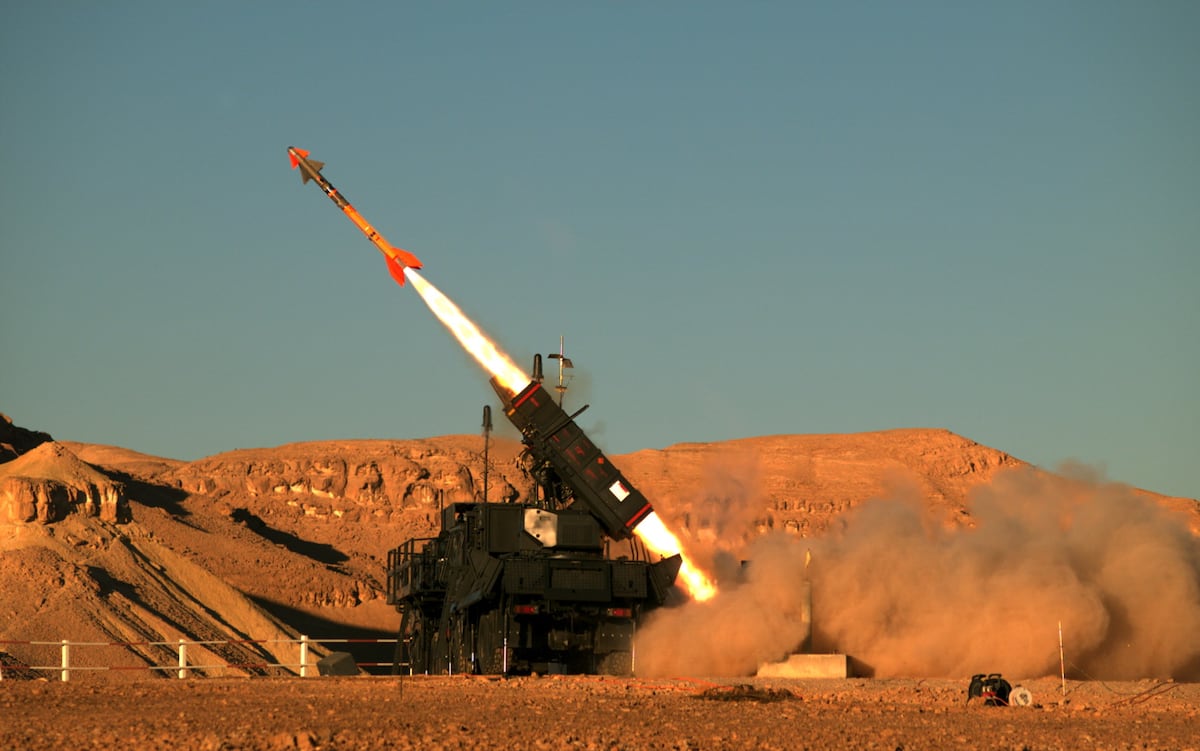
According to a Defense News report based on Rafael's announcement, the agreement includes the supply of launchers, interceptors, radar systems, training programs, and logistical support. Romania placed its first order under the framework agreement in the last week of June, with deliveries expected to begin within 36 months from the date of signing, achieving initial operational capability based on extensive industrial cooperation and local manufacturing within Romania.
This last detail is not mere political embellishment. In modern contracts, local manufacturing is not just a slogan raised at conferences; it is a means to shorten the supply chain in times of crisis, and to convince parliament and public opinion that the money does not leave the country entirely. Rafael stated that this is the largest contract in its history, which means that SPYDER has moved from being a successful system in limited markets to a major export platform in a NATO environment.
- Approximate value: 2 billion euros, or $2.3 billion.
- Components: Launchers, interceptors, radars, training, logistical support.
- Timeline: Deliveries to begin within 36 months.
- Required capability: Interception of drones, cruise missiles, guided munitions, aircraft, and helicopters.
Why Bucharest Chose an Israeli System Now
Romania is not a country far removed from the Russian-Ukrainian war. In recent weeks, reports have spoken of incidents involving the downing or explosion of drones near Constanța and Galați, names that are no longer just administrative on Romanian maps, but have become part of the air defense equation on NATO's eastern borders. When a drone falls near a port or near a residential building, the question is no longer political: Are we inside the war or outside it? The practical question becomes: Do we have a close interception layer sufficient to protect cities, bases, and ports?
From a military perspective, this is where SPYDER comes in. The system is built on Israeli air-to-air missiles adapted for ground air defense roles, most notably the radar-guided Derby and the heat-seeking Python 4 and Python 5, along with MMR radars from Israel Aerospace Industries. Rafael notes that the system is capable of launching four interceptors simultaneously, with a range of about 40 kilometers and an interception altitude of up to 12 kilometers.
These numbers do not make it a substitute for a long-range layer, but they make it a suitable tool for the gap between very short-range defenses and heavy systems. Every army that has served in this region knows that the gap between layers is where danger seeps in. In the Gulf, for example, we have seen drones and cruise missiles traverse long distances and confuse costly defenses, because the problem was not just having a strong radar, but building a network of layers that operate quickly and at an acceptable cost.
The Israeli Significance Goes Beyond Romania
For Israel, the deal is not just an export of a system. It is a declaration that Israeli air defense experience, with all its operational pressure in Gaza, Lebanon, Syria, and Iran, has become a strategic commodity in the international market. Iron Dome, David's Sling, and Arrow have given Israel a reputation in interception, but SPYDER sells something different: tactical flexibility and a layer closer to daily combat zones.
Here, an important paradox emerges. Many Arab countries view Israeli defense superiority through a political lens, which is understandable. But markets do not wait for emotions. If Israel can offer a functioning system, deliver it within a reasonable timeline, and link it to local manufacturing, it will enter direct competition with Europeans, Americans, Koreans, and Turks. This competition is not limited to Europe; the Gulf is also watching every air defense contract after the 2026 Iran war with a different perspective.
In my view, the real lesson for Riyadh, Abu Dhabi, and Doha is not to specifically buy SPYDER. The lesson is that air defense is no longer a ladder of a major system at the top and small systems at the bottom. It has become a network of consumption, interception, and replenishment. A state that does not calculate the cost of each interceptor missile, the annual production rate, and the radar repair time will discover in the first week of war that the offer was more beautiful than the reality of the stockpiles.
The Triad Capability Dilemma
I return here to the triangle I often repeat: equipment, training, institution. Romania has purchased important equipment, but it will not possess true air defense capability unless it builds continuous training and an operational institution capable of integrating SPYDER with other layers, early warning, and clear launch decision-making. Systems do not fight alone. The radar sees, but the human and the institution decide what the radar's observations mean.
This point directly affects Arab armies. We buy a lot, celebrate the contract, and then leave the heavy details to the technical appendix. But wars do not respect signing ceremonies. A system like SPYDER requires trained crews, maintenance chains, interceptor stockpiles, and integration with command and control systems. If any side of this triangle is missing, the contract becomes a showcase platform rather than a true shield.
Those who buy air defense are buying a complete rhythm of war: warning, decision, interception, replenishment, and then repair. Buying just the launchers is half a military sentence that does not complete its meaning.
What This Means for the Middle East
After the 2026 Iran war, demand in the Middle East for medium- and short-range layers capable of dealing with drones and cruise missiles will increase. But the market will not be solely American. Turkey is pushing systems like HİSAR and KORKUT, South Korea is offering attractive solutions, Europe is trying to regain its share, and Israel is providing operational experience that is hard to ignore even for those who politically disagree with it.
The Romanian deal gives Rafael a strong card in any discussion with new customers: If a NATO country trusts an Israeli system to protect its eastern borders, why wouldn’t countries facing similar threats from drones and missiles consider it? This question will be raised at upcoming defense exhibitions in Abu Dhabi, Riyadh, and Doha, even if it is not publicly stated on the platform.
But the most important takeaway is not commercial. The Middle East is entering a phase where air defense becomes a daily commodity rather than a symbol of prestige. The missile that intercepts a drone over an oil facility is more important than the image of a modern aircraft on the display runway. And here lies the structural tension that will not disappear: countries want defense independence, but they rely on external suppliers; they want cheap interception, but they have purchased expensive systems for decades; they want quick decision-making, but they sometimes manage air defense with slow bureaucratic logic. The Romanian SPYDER contract reminds us that the modern sky does not wait for those who review the specifications.
Israel sold the SPYDER air defense system to Romania for approximately $2.3 billion on June 28, 2026. The deal includes interceptors, launchers, radar systems, and training, aimed at enhancing Romania's air defense capabilities amid security concerns related to the ongoing conflict in Ukraine. Deliveries are set to begin within 36 months of the agreement.
- Israel sells SPYDER air defense system to Romania for approximately $2.3 billion.
- The deal includes supply of interceptors, launchers, radar systems, training, and logistical support.
- Romania aims to enhance its air defense capabilities amid regional security concerns.
- The first order under the framework agreement was placed in late June 2026, with deliveries starting within 36 months.
- The SPYDER system is designed to counter drones, cruise missiles, guided munitions, and aircraft.