
Israeli Army Launches "Largest" Offensive, Iran Reiterates Ceasefire on "All Fronts," Lebanon-Israel Conflict "Halts" US-Iran Talks
[Global Times Special Correspondents in the U.S. Xiao Da, Ywen, Wu Ming] "Iran has suspended peace negotiations in protest of Israel's military actions in Lebanon." According to reports from the Financial Times and Fortune magazine, Israel has expanded its ground offensive in Lebanon, launching the largest invasion in 25 years. On June 1, Israeli Prime Minister Netanyahu ordered an attack on the southern suburbs of Beirut. According to the Iranian Tasnim News Agency, Iran has suspended peace negotiations with the U.S. in protest of the escalation of Israeli military actions. Iranian Foreign Minister Amir-Abdollahian reiterated on the 1st that the ceasefire between Tehran and Washington "is undoubtedly a ceasefire on all fronts, including in Lebanon," and that "the U.S. and Israel should be held accountable for any violations of the ceasefire agreement." The expanding conflict between Lebanon and Israel, with the potential to spiral out of control, complicates U.S.-Iran negotiations. Prior to this, the ceasefire negotiations between the U.S. and Iran had already stalled, with U.S. media commenting that Iran's demands for a ceasefire in Lebanon have tied the success or failure of the protracted diplomatic negotiations between the U.S. and Iran to the Lebanon-Israel conflict. In response to the escalating situation, the United Nations Security Council is scheduled to hold an emergency meeting on June 1. According to AFP, this meeting was called at the request of France and is set to take place at 3 PM New York time (3 AM Beijing time on the 2nd).
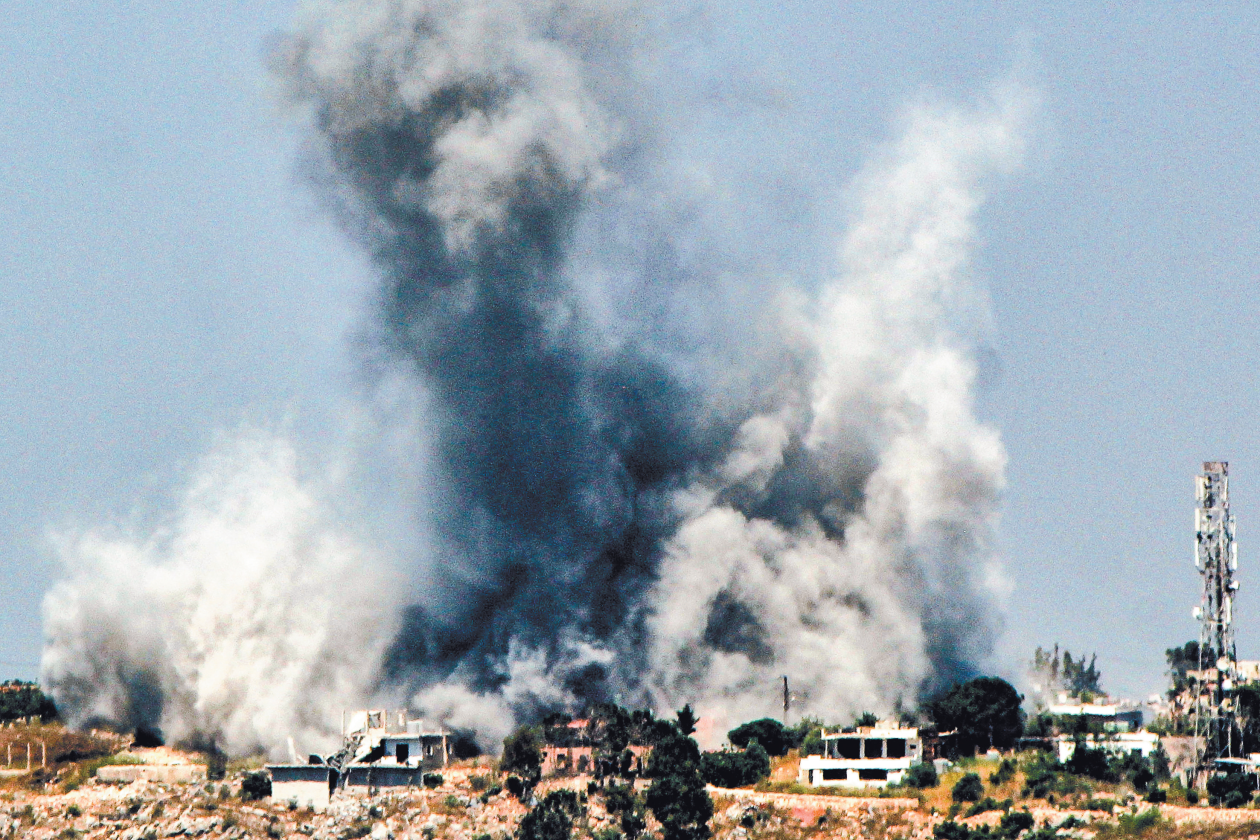
Military actions draw widespread condemnation
The Israeli Times reported on June 1 that Netanyahu and Defense Minister Katz stated that they had instructed the Israel Defense Forces to strike targets of Hezbollah in the southern suburbs of Beirut in response to Hezbollah's violations of the ceasefire agreement. Reports indicate that Israel had heavily bombed the area at the beginning of the conflict, but at the request of the U.S. government, Israel largely refrained from attacking targets in Beirut during the ceasefire. It was reported that just minutes after the above statement was made, Lebanese civilians began to flee the Dahiyeh area, causing severe traffic congestion.
According to Israeli media, Israel is lobbying the U.S. to allow it to resume large-scale airstrikes on Hezbollah strongholds. Netanyahu spoke with U.S. Secretary of State Rubio last Saturday, attempting to persuade him and other senior U.S. officials. The Israeli Times believes that, based on the statements from Netanyahu and Katz on the morning of the 1st, this request has clearly been approved.
Over the past weekend, Israeli forces crossed the Litani River and captured the Beaufort Castle located in southern Lebanon. The Associated Press stated that Beaufort Castle holds symbolic significance throughout the region. Imad Salami, a professor of international relations at the American University of Beirut, told Al Jazeera on the 1st that Israel is attempting to reshape security norms in southern Lebanon by crossing the Litani River. United Nations Security Council Resolution 1701 designates the Litani River as a security buffer zone between Israel and Hezbollah. Salami believes that Israel is sending a "clear signal" by further advancing north of the Litani River, indicating that they will no longer comply with this resolution and will seek to further destroy Hezbollah's military infrastructure and its popular support base.
Hezbollah accused Israel of violating the ceasefire agreement and claimed the right to resist the occupation by Israeli forces. According to Hezbollah, the organization conducted 21 military operations on May 31, including launching rockets at military infrastructure in northern Israel's Nahariya. Lebanese President Aoun stated on social media on June 1 that Lebanon is facing "a vicious and condemnable Israeli aggression" following Israel's intensified military offensive against Hezbollah by capturing Beaufort Castle. He condemned Israel's military actions and pledged to "commit to ending the suffering of the Lebanese people, especially those in the south."
According to statistics from the Lebanese Ministry of Health, at least 3,371 people have died in Lebanon since it was drawn into the U.S.-Israel-Iran conflict on March 2.
According to the Guardian on May 31, after Israeli forces captured Beaufort Castle, French Foreign Minister Barrow requested an emergency meeting of the United Nations Security Council on June 1. French President Macron called for a ceasefire on May 31, stating that "the significant escalation currently occurring in southern Lebanon has no justification." The UK and Germany also joined France in condemning Israel's military actions.
According to the Syrian state news agency on June 1, before the emergency meeting of the United Nations Security Council, Egypt, Qatar, and Jordan called for an immediate cessation of military actions, full implementation of United Nations Security Council Resolution 1701, and demanded the withdrawal of Israeli forces from Lebanese territory. Arab League Secretary-General Gheit also condemned the attack and urged the international community to take swift action to ensure a ceasefire and support stability in Lebanon. Reports indicate that these voices reflect the growing concern in the Arab world and the international community that the conflict may escalate and further undermine stability in the region.
It is noteworthy that this military escalation coincides with U.S.-Iran negotiations on the ceasefire agreement text. AFP cited analysts' assessments that Israeli officials and military commanders hope to inflict as much damage on Hezbollah as possible before any new restrictions are imposed or the current Israeli military offensive is halted by a potential U.S.-Iran agreement.
Iran "suspends" peace talks
In response to the developments in the Lebanon-Israel situation, Iran drew a "red line" on the same day. According to Iran News TV on the 1st, Iranian Foreign Ministry spokesman Baghaei stated that the region continues to face war provocations from the Israeli regime, and recent developments constitute a "clear and blatant violation" of the ceasefire agreement reached on April 8. He emphasized that a ceasefire in Lebanon is "an indispensable part" of the final ceasefire understanding between the U.S. and Iran, and he reiterated Iran's "commitment to take all possible actions to assist Lebanon and help the Lebanese resistance against the invasion and illegal encroachments of the Zionist regime."
Baghaei also stated that the U.S. and Israeli regimes cannot be viewed separately, and everything happening in the region is inevitably related to the U.S. Iranian Foreign Minister Amir-Abdollahian expressed a similar view on social media on June 1, stating that "violating the ceasefire agreement on any front is equivalent to violating the ceasefire agreement on all fronts."
The Financial Times reported later on the evening of the 1st, citing the Iranian Tasnim News Agency, that Iran has suspended peace negotiations with the U.S. in protest of Israel's military actions in Lebanon, further exacerbating the fragility of the U.S.-Iran ceasefire situation.
According to Iranian media, Iran "will not engage in any dialogue" until Israel completely withdraws from the occupied areas of Lebanon and stops military actions in Lebanon and Gaza. Additionally, Iran and the "Resistance Front" plan to completely blockade the Strait of Hormuz and initiate actions in other "fronts" such as the Strait of Mandeb. According to Axios on June 1, this news indicates that efforts to end the ongoing conflict that has lasted for more than three months through diplomatic means have collapsed. Following the release of this news, oil prices rose by more than 5%.
Prior to this, U.S.-Iran peace negotiations had already stalled. Last week, U.S. media reported that U.S. and Iranian negotiating representatives had reached an agreement on a memorandum of understanding valid for 60 days, pending approval from U.S. President Trump. Just as both sides seemed close to this "significant diplomatic breakthrough," Axios reported on May 30 that Trump, in a meeting with senior aides the day before, requested multiple revisions to the agreement text, particularly regarding the issue of Iranian nuclear materials. Additionally, Trump also sought to modify some wording related to the reopening of the Strait of Hormuz. U.S. officials stated that they were informed that Iran would need about three days to respond.
On June 1, Trump posted on social media that Iran "really wants" to reach an agreement, and that it would be "an agreement beneficial to the U.S. and our allies." However, the Iranian side has been more conservative in its statements regarding the negotiations. Iranian media had quoted insiders as saying that Iran is fully prepared for the situation where no agreement can be reached on the memorandum of understanding.
U.S. attempts to push for a Lebanon-Israel ceasefire
According to Axios on the 1st, the content of the memorandum of understanding from previous U.S.-Iran negotiations included ending the conflict in Lebanon. To advance negotiations with Iran, the U.S. has urged Israel for several weeks not to attack Beirut, but the most recent effort to promote a ceasefire in Lebanon seems to have failed.
Reports cited a U.S. official as saying that Secretary of State Rubio had spoken with Aoun and Netanyahu over the past two days, attempting to push a new ceasefire initiative. The U.S. proposed that Hezbollah first cease all attacks on Israel; in exchange, Israel promised not to escalate military actions in the direction of Beirut.
The official revealed that Aoun had worked to promote the proposal, but Lebanese Parliament Speaker Berri placed the responsibility on Israel, demanding that Israel should cease fire first. Reports indicate that the conflict between Lebanon and Israel is currently escalating and seems likely to spiral out of control.
Lebanese and Israeli diplomats are expected to hold a new round of talks in the U.S. this week. According to Al Jazeera on the 1st, Aoun stated that negotiations aimed at ending the conflict between Israel and Hezbollah "are still ongoing."
In addition to the spread of war in Lebanon, following Iran's announcement of the suspension of peace talks with the U.S., there is speculation about whether U.S.-Iran tensions will reignite. Both sides have recently engaged in sporadic exchanges of fire. The U.S. Central Command stated that U.S. forces conducted "defensive strikes" against Iranian military infrastructure over the weekend, in response, the Iranian Islamic Revolutionary Guard Corps stated on the 1st that it attacked a U.S. airbase that had previously targeted telecommunications towers.
On June 1, 2023, the Israeli Defense Forces launched their largest ground invasion in 25 years into southern Lebanon, targeting Hezbollah positions in response to violations of a ceasefire. Iran suspended peace negotiations with the U.S. as a protest against Israel's military actions, further complicating diplomatic efforts. The ongoing conflict has resulted in at least 3,371 casualties in Lebanon since March 2.
- Israel launched its largest ground invasion in 25 years into southern Lebanon on June 1, 2023.
- Iran suspended peace negotiations with the U.S. in response to Israel's military actions.
- At least 3,371 people have died in Lebanon since March 2 due to the ongoing conflict.
- The UN Security Council is set to hold an emergency meeting regarding the situation in Lebanon.
- Hezbollah claims to have conducted 21 military operations against Israel on May 31.