
Israel's 10 Deaths in Lebanon Expose a Ceasefire Nobody Controls
 Alexandra Reeves
Israel's 10 Deaths in Lebanon Expose a Ceasefire Nobody Controls
A ceasefire that still produces dead paramedics is not really a ceasefire. It is a holding pattern with better branding.
That is the uncomfortable lesson from southern Lebanon after Israeli airstrikes on Friday killed 10 people, including six paramedics and a Syrian girl, according to Lebanon's Health Ministry as reported by the Associated Press. Israel said it struck Hezbollah infrastructure around Hanouiyeh, where Hezbollah members were present, and that it used aerial surveillance and precise munitions to reduce civilian harm. The Lebanese ministry said the attacks violated international law.
The point is not that one side has suddenly abandoned restraint. The point is worse. The April ceasefire has become a mechanism for managing violence, not stopping it. Israel keeps freedom of action. Hezbollah keeps enough room to fire drones and rockets. The Lebanese state is left pretending it can negotiate a border arrangement while a heavily armed party inside Lebanon rejects the talks that are supposed to secure it.
The Strike That Cut Through the Diplomatic Language
AP reported that the first strike hit Hanouiyeh, killing four paramedics from Hezbollah's Islamic Health Association and wounding two others. A second strike in Deir Qanoun al Nahr, in the Tyre district, killed six people, including a Syrian child and two paramedics from the Al-Risala Scouts Association, a rescue group linked to Amal, Hezbollah's political ally. Six more people were wounded.
Those details matter because this is not just another exchange on a familiar border. Medical personnel and rescue organisations are now part of the military-information fight. Israel has previously accused Hezbollah of using ambulances as cover for militant activity, a claim AP noted was made without public evidence in this case. Lebanon and Hezbollah-linked groups frame the strikes as attacks on healthcare workers. Both narratives serve a purpose. One justifies continued Israeli strikes; the other makes Hezbollah's refusal to disarm look like protection rather than veto power.
The World Health Organization reported 169 confirmed attacks on healthcare workers and facilities in Lebanon since the latest Israel-Hezbollah war began, resulting in 116 deaths. A battlefield where ambulances are suspected, targeted, politicised, or all three is a battlefield where the normal boundaries of military necessity are already badly eroded.
Washington Has a Process, Not Control
The United States has spent the past month trying to convert a temporary cessation of hostilities into a political track. Le Monde reported that Israeli and Lebanese delegations met in Washington on May 14 and 15, agreed to extend the truce by 45 days, and set another round of political talks for June 2 and 3. Security issues are supposed to be handled at the Pentagon on May 29.
That sounds orderly. It is not.
According to Le Monde, the same agreement left the basic dispute untouched. Lebanon wants a full ceasefire, a withdrawal of Israeli forces, and an independent verification mechanism. Israel wants Hezbollah disarmed before it stops operations or leaves the southern security zone. Hezbollah rejects disarmament and opposes the direct talks themselves. That is not a negotiation gap. That is three different wars sharing the same map.
Reuters reported in late April that Israeli strikes had expanded into the Bekaa Valley despite the ceasefire, while Israeli troops continued to hold a strip of southern Lebanon and destroy structures they described as Hezbollah infrastructure. Hezbollah, meanwhile, kept up drone and rocket attacks against Israeli troops in Lebanon and northern Israel. The ceasefire lowered the tempo. It did not change the logic.
The Military Problem Is Political
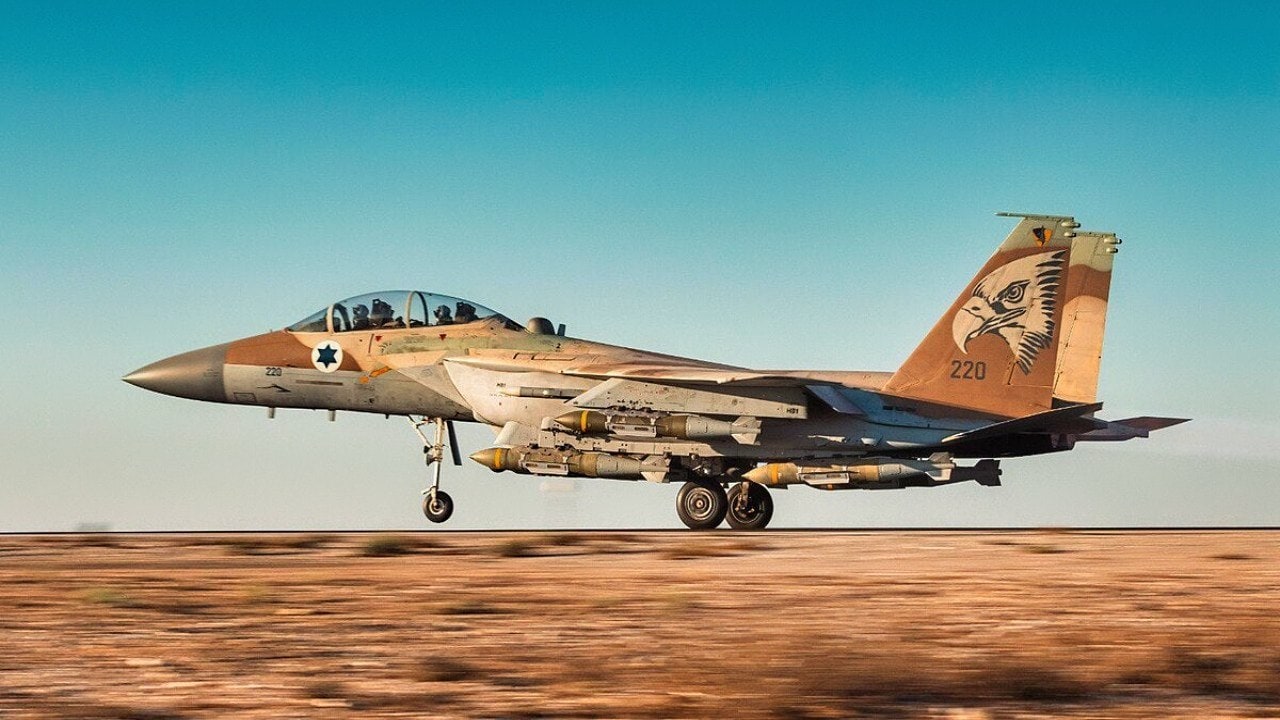
Israel's operational requirement is straightforward: prevent Hezbollah from rebuilding the launch cells, observation posts, weapons caches, and command links that made northern Israel unlivable during earlier phases of the war. The Israeli Air Force can do that for a while with fighters, armed drones, surveillance aircraft, and precision-guided munitions. An F-15I or F-35I sortie can hit a suspected site in Tyre or the Bekaa faster than diplomats can define a verification mechanism.
But airpower is a lousy substitute for a political end state. It can disrupt Hezbollah movement. It can kill commanders. It can make logistics expensive. It cannot make the Lebanese Armed Forces strong enough, legitimate enough, and politically free enough to disarm Hezbollah on command.
Hezbollah's problem is the mirror image. The group can still impose costs through drones, rockets, anti-tank weapons, and local knowledge of the terrain. It can also sabotage any Lebanese government attempt to negotiate a durable settlement. But the longer it does so, the more it confirms the argument used against it: that Lebanon cannot make sovereign security decisions while Hezbollah keeps an independent military chain of command tied to Iran.
Washington clearly understands that problem. AP reported Thursday that the U.S. sanctioned Hezbollah-affiliated parliamentarians, state security officials, and allies of the group for allegedly preserving Hezbollah's influence over Lebanese state institutions and obstructing disarmament efforts. AP noted it was the first time Washington had sanctioned sitting Lebanese state security officials from General Security and military intelligence over alleged illicit support to Hezbollah.
That is a hard signal. It also shows how little leverage the diplomacy has. If the American track were actually disciplining the battlefield, Washington would not need to punish Lebanese security officials while Israeli aircraft were still striking paramedic-linked sites.
The Regional Signal Is Bigger Than Lebanon
The lazy read is that Lebanon is returning to its old pattern: Israel strikes, Hezbollah answers, Washington mediates, Beirut absorbs the damage. That is only half right. This round followed the wider U.S.-Israel confrontation with Iran, and Hezbollah's March decision to fire at Israel in support of Tehran pulled Lebanon deeper into a conflict many Lebanese did not choose.
That matters for NATO and European security planners too. European governments are already stretched by Ukraine, Red Sea security, air defence shortages, and a less predictable Washington. A Lebanon front that never quite ends keeps pressure on U.S. regional assets, Israeli missile defence stocks, Gulf risk calculations, and European evacuation planning.
There is also a lesson here for anyone who thinks ceasefires are self-executing. They are not. A ceasefire without enforcement is just a pause that powerful actors reinterpret every day. A ceasefire without a monopoly on force is even weaker. Lebanon has neither the first nor the second.
What to Watch Next
The next markers are clear. Watch whether the Pentagon security track on May 29 produces anything more concrete than liaison channels. Watch whether the June 2-3 political talks can define a verification mechanism that Israel trusts and Lebanon can survive politically. Watch whether Hezbollah shifts from rhetorical rejection to direct military escalation if disarmament pressure grows.
The Friday strikes killed 10 people. The larger warning is that everyone involved is still acting as if the current ambiguity serves them. Israel gets operational freedom. Hezbollah preserves armed relevance. Washington keeps a diplomatic process alive. Beirut gets a little international cover.
That arrangement can last for weeks. It probably cannot produce peace. The real question is not whether the ceasefire is holding. It is whether anyone with guns on the ground actually wants it to become more than paperwork.
Sources: Associated Press reporting from Beirut and Washington, Reuters reporting on Israeli strikes in eastern Lebanon, and Le Monde's account of the Washington truce-extension talks.
Israeli airstrikes in southern Lebanon killed 10 individuals, including six paramedics, as they targeted Hezbollah infrastructure in Hanouiyeh and Deir Qanoun al Nahr. The Lebanese Health Ministry condemned the strikes as violations of international law. The ongoing conflict reflects a ceasefire that fails to halt violence, with both Israel and Hezbollah maintaining operational capabilities. The situation continues to escalate, impacting healthcare workers and complicating diplomatic efforts for a lasting resolution.
- Israeli airstrikes killed 10 people, including 6 paramedics and a Syrian girl.
- The strikes targeted Hezbollah infrastructure in southern Lebanon.
- The Lebanese Health Ministry reported the attacks as violations of international law.
- The World Health Organization reported 169 attacks on healthcare workers in Lebanon since the conflict began.
- The ceasefire has become a mechanism for managing violence rather than stopping it.