
Israel's Strike Near Beirut Before May 29 Talks Reveals Hezbollah Disarmament Deadlock
 Ahmed Al-Rashid
Israeli Strike Near Beirut Before May 29 Talks Reveals Hezbollah Disarmament Dilemma
On May 28, 2026, just one day before the launch of the security track at the Pentagon between military delegations from Lebanon and Israel, the Israeli Air Force carried out a strike on the Shweifat suburb south of Beirut, near the international airport, following days of expanded ground and air operations in the south. This is not a trivial field detail. When the strike moves from border villages to the vicinity of the capital on the eve of a military meeting in Washington, the message becomes more important than the munitions used: Israel wants to enter negotiations with firepower in hand, while Lebanon enters negotiations with a weak state behind it and an armed force not under its control.
According to the Associated Press, the strike hit a residential building in Shweifat and was the first strike close to Beirut since May 6, when Israel claimed it killed a military official in Hezbollah's Radwan Force. On the same night, Israel bombed the city of Tyre and areas in the south, with reports of at least 14 people killed in the south. If we combine this with the extensive evacuation warnings issued by the Israeli army to residents of southern Lebanon on May 27, we see a clear operational pattern: expanding the pressure belt before establishing any new security formula.
A Political Strike More Than a Tactical One
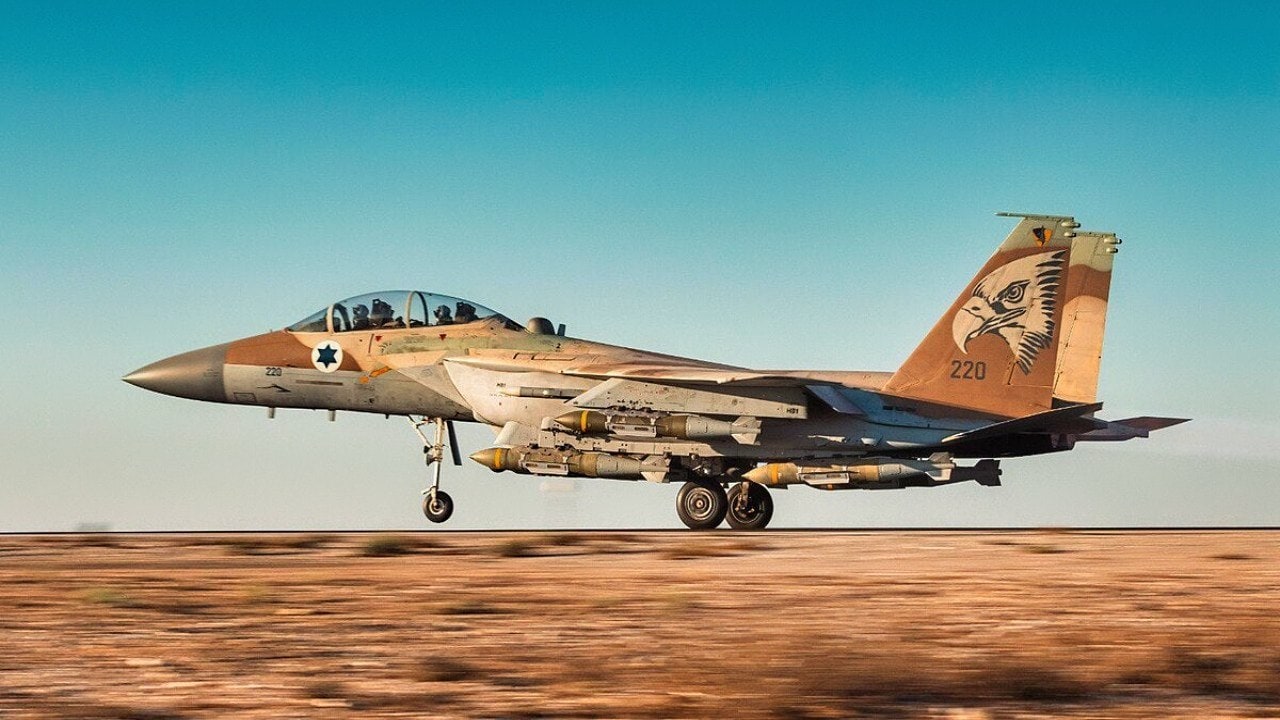
Militarily, Israel does not need to strike Shweifat to prove its ability to hit a target in the suburb or around Beirut. This capability has been practically established for years and has been repeated since the beginning of the 2026 war. What is new here is the timing. The U.S. State Department announced on May 15 that political talks would resume on June 2 and 3, and that the security track would commence at the Pentagon on May 29 with military delegations from both countries, along with a 45-day extension of the ceasefire agreement. The strike came between these two dates, in the space where military trust is supposed to be built.
In my estimation, Israel does not treat the ceasefire as a complete truce, but rather as a framework that allows it to continue depleting Hezbollah's structure until negotiations on borders and disarmament become closer to a security imposition than a political settlement. This is not a moral judgment but an operational reading. An army that strikes warehouses, leaderships, and observation centers before a military meeting wants to tell the other side: either these demands become a Lebanese mechanism, or they will remain an Israeli mechanism from the air and ground.
The Security Track at the Pentagon Pressures the Lebanese Army
The most sensitive point is not in Israel, but in Beirut. Washington has divided the file into two tracks: a political one at the State Department and a security one at the Pentagon. This division seems administrative, but in reality, it shifts the burden of implementation to the Lebanese military institution. What is required from the U.S. and Israel is to control the borders, confiscate weapons south of the Litani River, and perhaps later build a broader formula for disarming Hezbollah. But any officer who has served in the region knows that disarmament is not a checkpoint inspection. It is a confrontation with a social, security, and ideological network that extends from villages to state institutions.
The Washington Institute noted on May 28 that the separation of the security track came because the issue of disarming Hezbollah had stalled progress in previous rounds. This is a correct observation, but it does not answer the practical question: what can the Lebanese army do if asked to implement a decision that the state does not have internal consensus on? The Lebanese army is capable of deployment, monitoring, and managing limited friction. However, it is not designed to engage in an internal war against an armed force that possesses combat experience, short-range missiles, drones, and tunnels and storage in a civilian environment.
Here, the triple capability gap that I always repeat appears: equipment, training, and institution. The Lebanese army has professional units and relatively good training, but it suffers from weak funding, fragility in political decision-making, and limited mandate. Therefore, merely increasing equipment or talking about a new U.S.-backed brigade does not solve the problem. You cannot give a rifle to a soldier and then ask him to solve a problem that has lasted for four decades.
Hezbollah Between Losing Depth and the Danger of Stiffening
Hezbollah enters this phase weaker than it was before the Iran War of 2026. Leadership losses, pressure from air targeting, and reduced freedom of movement south of the Litani diminish its ability to rebuild the old deterrence pattern. However, it is not collapsing. Ideological organizations are not measured solely by the number of leaders killed, but by their ability to generate replacements, conceal systems, and turn loss into mobilization rhetoric. Therefore, assassinations and strikes, no matter how precise, may weaken the middle leadership but do not automatically produce a political decision to surrender.
The Associated Press also reported that the leader of Hezbollah called on the Lebanese government in May to withdraw from direct talks with Israel, describing it as a concession. This position is important because it reveals that the party sees negotiation itself as part of the battlefield, not just a diplomatic channel. The more Israel increases its pressure near Beirut, the easier it becomes for the party to tell its audience that the state is negotiating under bombardment, and that any agreement that does not pass through it is not binding.
Israel Expands the Demarcation Line South of the Litani
The recent operations near the Litani River carry greater significance than the names of the villages. The Litani is no longer just a symbol in Resolution 1701, but has become a flexible military line used by Israel to define the depth of the area it wants to cleanse of Hezbollah's capabilities. When Israeli forces cross or push their operations northward, they are not only looking for a missile launch platform but are testing the shape of the upcoming security belt: will it be Lebanese under American supervision, or Israeli by de facto rule?
In contrast, Lebanon faces a harsh dilemma. If it accepts the logic of the Israeli security belt, it gradually loses sovereignty. If it refuses to disarm Hezbollah, its south remains exposed to ongoing air and ground operations. This is not a fair equation, but it is the equation on the ground. And as military personnel in the field say: the map does not respect intentions, but respects those who have the ability to impose the lines.
What This Means for the Gulf and Iran
Lebanon cannot be separated from Gulf calculations after the Iran War. Gulf countries view what is happening in southern Lebanon as a test of Washington's ability to translate Israeli and American military superiority into a sustainable security arrangement. If the security track ends in a fragile ceasefire with continued strikes, Tehran will read that the deterrence axis has not broken but has changed shape. If the track succeeds in reducing Hezbollah's weapons south of the Litani, it will be a real blow to Iran's way of managing the Arab depth through armed proxies.
However, the Gulf must pay attention to another lesson. Relying solely on airstrikes does not build regional security. Israel can kill a leader in Shweifat or destroy a warehouse in Tyre, but it cannot build a Lebanese state on behalf of the Lebanese. And Washington can gather delegations at the Pentagon, but it cannot create a sovereign decision if the Lebanese elite cannot bear it. Therefore, the success of this track will not be measured by the number of meetings or airstrikes, but by the ability of the Lebanese state to possess legitimate arms in fact, not just in slogan.
Conclusion
The Shweifat strike before the May 29 talks is not just a field escalation. It is an early announcement of the nature of the next phase: negotiations under fire, and a ceasefire that can be extended does not mean the end of the war, and American pressure wants the Lebanese army to perform a political function before it has the tools to do so. Practically, Israel is winning freedom of movement today, Hezbollah is losing part of its depth, and the Lebanese state is paying the price for both.
The dilemma that no one wants to state clearly is that disarming Hezbollah cannot be achieved by an airstrike or an American statement, but it also cannot be postponed indefinitely without southern Lebanon turning into a permanent testing ground for Israeli power. Between sovereignty that does not have its tools and resistance that drags the state into a war it does not decide, Lebanon stands before the old truth: those who do not monopolize arms do not monopolize decision-making.
Sources
The Israeli Air Force conducted an airstrike on a residential building in Shweifat, near Beirut, on May 28, 2026, resulting in at least 14 casualties. This strike occurred just before military talks between Lebanon and Israel scheduled for May 29, indicating Israel's intent to apply military pressure in negotiations regarding Hezbollah's disarmament. The U.S. is facilitating these discussions, emphasizing the need for security arrangements.
- Israeli Air Force conducted an airstrike in Shweifat, near Beirut, on May 28, 2026.
- The strike targeted a residential building and resulted in at least 14 casualties in southern Lebanon.
- The airstrike occurred before military talks between Lebanon and Israel scheduled for May 29, 2026.
- Israel aims to exert military pressure on Lebanon ahead of negotiations regarding Hezbollah's disarmament.
- The U.S. is facilitating a security track for discussions between the two nations.